How to Get Rid Of Fleas On Cats: 7 Vet-Approved Methods

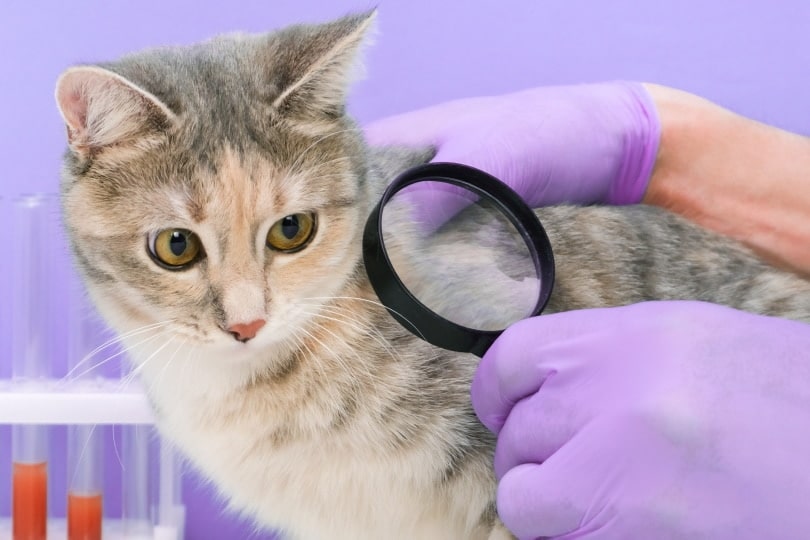
Fleas on cats can be a nuisance. Not only do they make your kitty itch, but they can also jump onto you and your other pets and transmit diseases. Fleas are a common problem for cats and can be difficult to get rid of. Luckily, there are many different methods that can be used to get rid of fleas on cats, some of which are more effective than others. Make sure to follow your vet’s advice for a solution tailored to your needs.
While there are numerous commercial flea treatments available, there are also several non-chemical additional methods to help you battle a cat flea problem. These include cleaning and disinfecting the house or keeping your cat indoors at certain times. The most effective way to get rid of fleas on a cat is to use year-round products and treat all pets in the household.
In this article, we will discuss seven different methods for getting rid of fleas on cats.

How Can I Tell If My Cat Has Fleas?
The presence of fleas on a cat can be determined by various signs and behaviors. Since cats are such meticulous groomers, you might not notice they have fleas right away. Knowing how to spot and kill fleas on your pet and in your home can ease their itching (and protect both of you).
It will require some investigation on your part to determine if your cat has a flea infestation, but there are several things that indicate it. Because fleas are so small—only 1/12 to 1/16" long—and they don’t spend that much time on your cat, they are often difficult to see. In addition, their reddish-brown color might blend in with your cat's fur. Rather than relying on your eyes to spot fleas in your kitty’s fur, look for these other common signs:
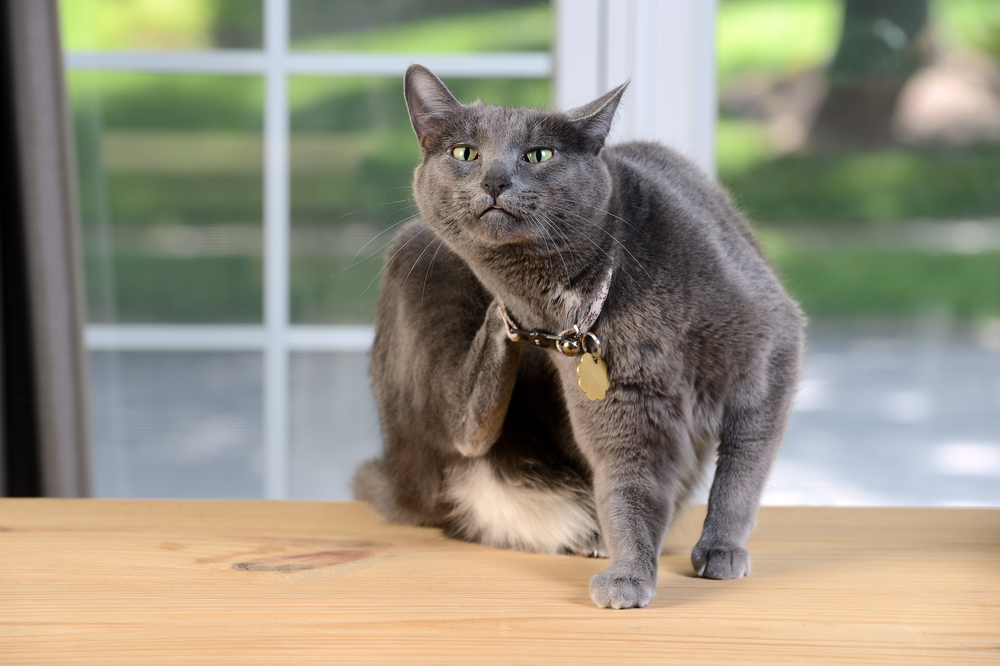
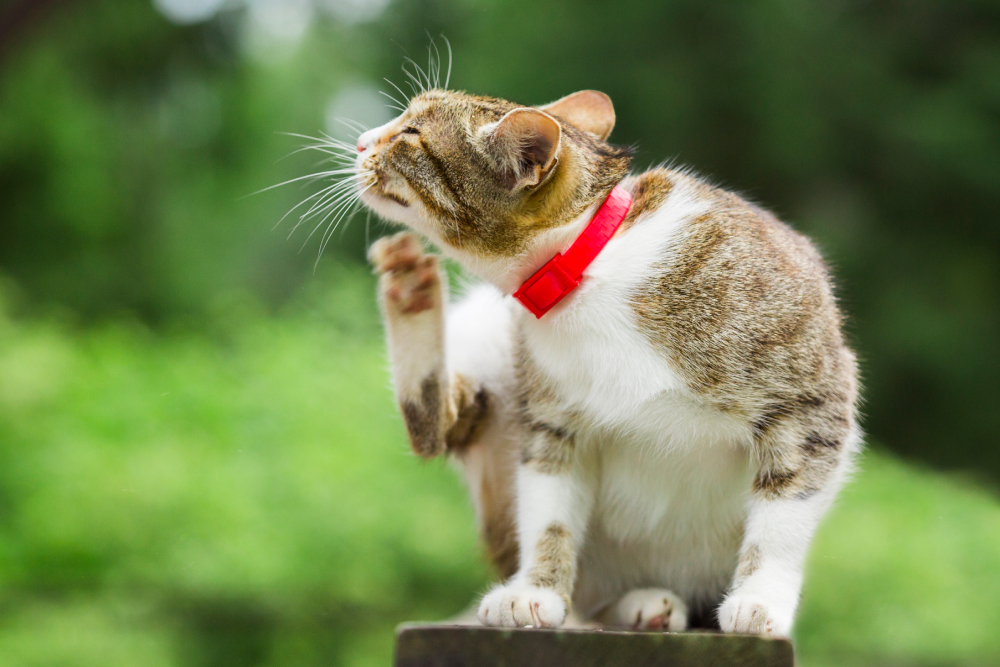
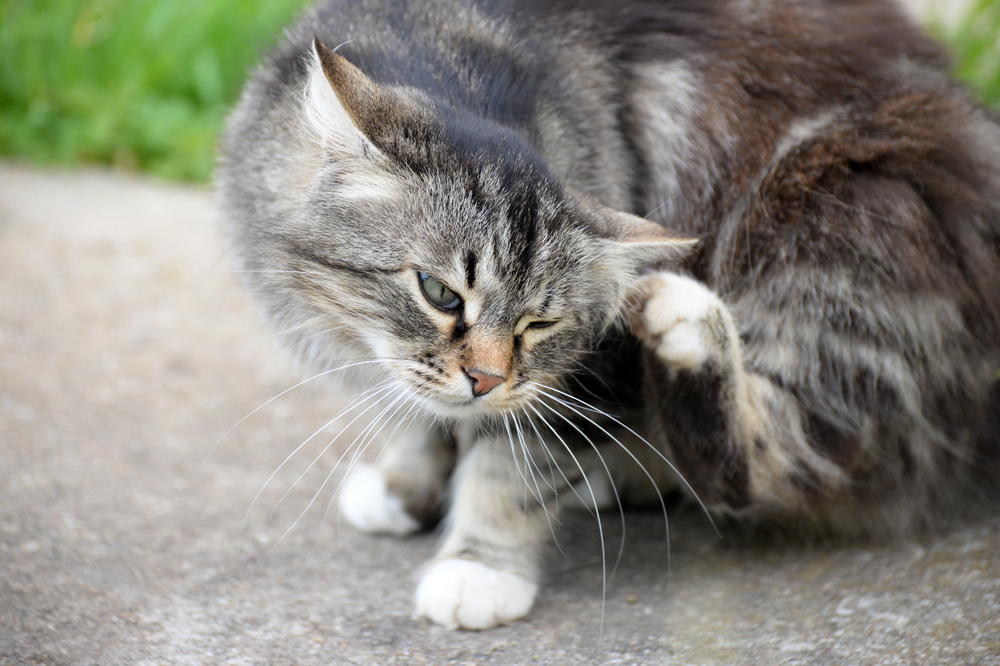
- Excessive scratching: Fleas can multiply quickly, but it doesn't take many to send your cat into a tizzy. In addition to fleas crawling across your pet's skin, your cat may also be allergic to flea saliva, which can cause sensitivity, itchiness, scratching, and even small scabs.
- Biting and gnawing: As well as scratching excessively, your cat may also chew on their fur, legs, or feet in an attempt to get some relief.
- Hair loss: Even a single flea bite can cause a severe reaction in allergic cats, and your cat can over-groom or scratch to the point of developing bald patches.
- Observation: You may start to see fleas once they multiply. Inspect your pet's coat or bedding for light-colored specks (flea eggs) or black, pepper-like stains (flea feces). In addition, you may see dark insects scurrying around inside your pet's fur.
- Listlessness: Fleas bite and suck blood constantly. A severe infestation can even cause anemia in newborn kittens.


The 7 Ways to Get Rid of Fleas on Cats
There are many different flea treatments available. Check out the following suggestions to find out which ones might be best for your furry friend, and remember, always ask your veterinarian for their input.
A regular, consistent flea control program is the only way to fully protect your cat from fleas. Make sure you keep track of the date you administered the first dose so you will know when to re-treat. There are many pet stores nationwide as well as many online pet stores where you can purchase the right product for your cat's age, weight, and severity of the infestation.
Important Note
1. Flea Spot-On
If you're looking for an easy way to get rid of fleas on your cat, spot-on treatments are the way to go! Plus, they can help protect your furry friend from getting pesky fleas in the future. The effectiveness of spot-on flea treatments can vary, though. Make sure you get a product recommended by your vet since many supermarket brands might be ineffective.
Cat owners can simply apply a monthly spot-on to the skin on the cat's neck at the base of the skull. The active ingredient is then released throughout your cat's body to protect nose to tail for up to 28 days. In addition to reducing the irritation caused by flea bites, it can provide relief for cats who suffer from flea allergy dermatitis (FAD), a skin allergy caused by flea saliva.
2. Flea Tablets
Flea treatments can also be administered as a tablet. There are different types of tablets, and they are not all equally effective. Flea tablets for cats come in a variety of different forms, including pills that are swallowed and chewable tablets.
3. Flea Collar

We had no idea that flea collars had come so far! Newer models offer an effective and easy way of treating flea infestations. In some cases, a flea collar can protect your kitty cat for as long as eight months—the active ingredients contained in the collar are released slowly over time.
Make sure to get a collar with a quick release so that your cat does not get caught on something. Another precaution is to avoid using collars if you have kids in the house since they may touch or play with them.
4. Flea Combs

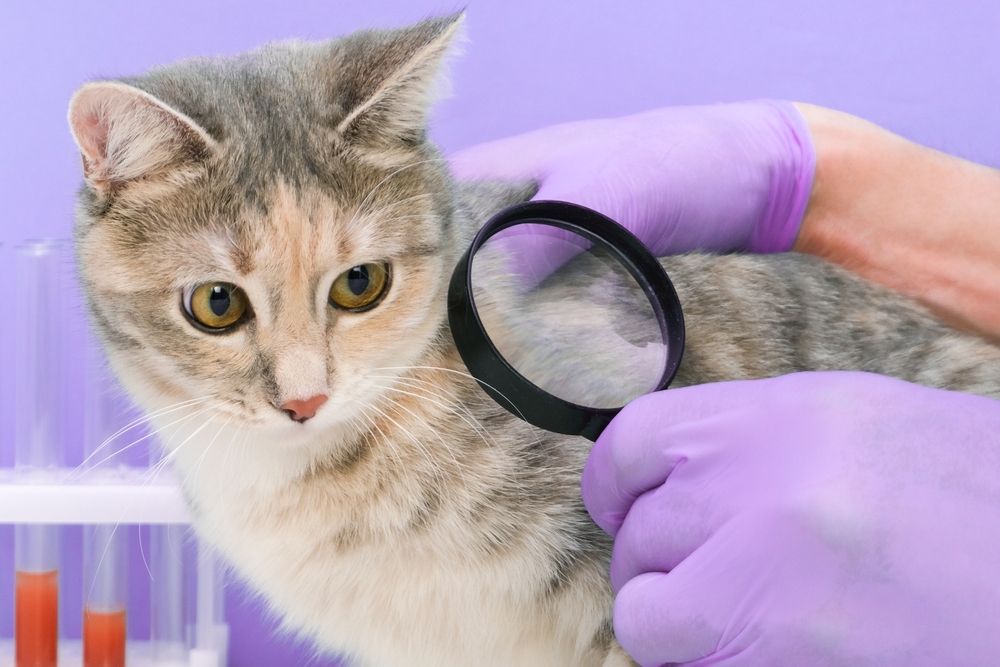
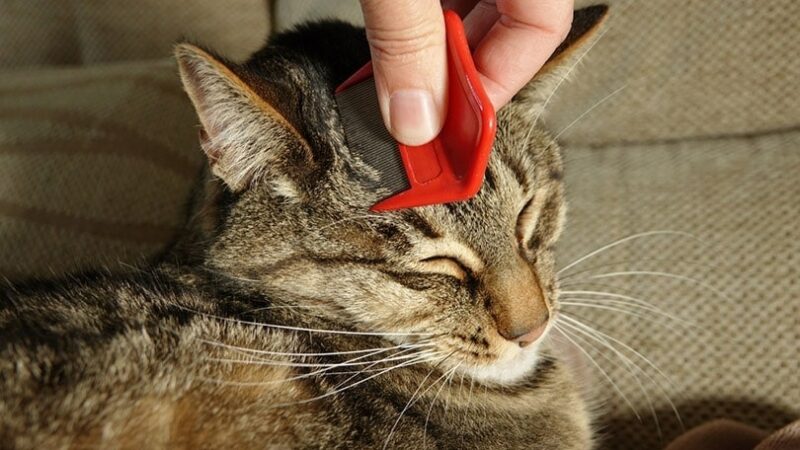
Flea combs are definitely not a foolproof way to treat or prevent fleas, but they can be really useful for checking your pet for any signs of those pesky parasites! Fleas on your pet can be very difficult to see with the naked eye because they are so small. Flea combs allow you to examine their fur in great detail. If you comb through your pet's fur while they're on a clean white surface, any black dots that appear could be fleas or flea poop (called flea dirt).
5. Flea Shampoo

There is a reason why veterinarians typically do not recommend using flea shampoo on cats, and that is because cats generally don’t enjoy being bathed.
In addition to this, flea shampoos are not effective at dealing with the immature stages of fleas and therefore are not too helpful in managing a flea problem.
6. Clean Everything Your Pet Has Come in Contact With
In order to get rid of your cat's fleas, you need to take the necessary precautions to prevent reinfection. Your clothes and bedding should be washed in hot water and your entire house vacuumed thoroughly.
Listed below are our flea treatment plans that you can use for both your cat and your home.
7. Fog or Spray Your Home

Use a flea spray in every room after vacuuming to get rid of any adult fleas, eggs, and larvae. Take the time to do this well, treating all the rooms in the house, the car, under the bed, and on the sofa.
Make sure you follow the instructions on the packaging about dosage and frequency and keep your pet and family away while it works. You might have to do a top-up treatment for eggs that haven't hatched yet. Foggers and flea bombs are great at covering a large area at once, but you might need a spray to reach areas that the fogger couldn't reach, like under furniture.

Conclusion
In conclusion, there are a few things that can be done to get rid of fleas on a cat. The most effective way is to use a topical treatment, ideally a prescription spot-on treatment. You can also treat the house and all pets in the family, or keep your cat indoors when fighting flea infestations is more difficult.
It is important to vacuum and thoroughly clean the areas where the cat spends time, to get rid of any fleas that may still be present. Remember to speak to your vet to get tailored advice for your specific needs.
See also:
Warbles (Wolf Worm) in Cats – (Vet Answer) Causes, Signs, and Care
Does Lysol Kill Fleas on Cats? Effectiveness & Safety Explored
Featured Image Credit: lev.studio, Shutterstock

Expert cat care, straight to your inbox
Vet-reviewed advice, behavior tips, and the best of Catster. Free, and you can unsubscribe anytime.
By signing up, you agree to our Terms & Conditions and Privacy & Cookies Policy.
Christian started writing for a local newspaper as a teenager, and he's been involved in the publishing industry for most of his adult life. Combining his love of writing with a passion for animals, he is currently the Director of Editorial at Pangolia and the Editor-in-Chief at Catster.
Christian lives in the Philippines with his wife, son, and four rescue cats: Trixie, Chloe, Sparky, and Chopper.
Join the conversation
Ask a question, share your story, or send private feedback.