Can Cats Have Asthma? Vet-Approved Causes, Signs, & Treatment Tips

In this article
Though it hasn’t been as extensively studied as asthma in humans, cats can indeed get asthma. Feline asthma can range from mild to life-threatening, and the signs vary from acute to chronic respiratory problems. It's an inflammatory disease of the airways within the lungs. It’s the most common chronic respiratory disease in cats, and it is estimated to affect 1% to 5% of house cats worldwide.
Asthma is incurable, but with an understanding of the condition and its treatments, you can manage your cats’ illness to help them live a long and happy life.

What is Feline Asthma?
Asthma occurs when a cat’s immune system overreacts to the presence of an allergen. This causes inflammation and swelling of the tissue lining the airways and contraction of the muscles around them. It results in the narrowing of the airway and causes a cat to struggle to breathe properly, especially when they try to breathe air out, resulting in wheezing and coughing.
The source and cause of feline asthma are debated, but it’s widely thought that it occurs when a cat’s airway is exposed to a stimulus that causes an allergic reaction, setting off an inflammatory response.
In addition to restricted breathing, asthma can cause excess mucus production. The mucus that cannot be cleared can cause an obstruction and increase the risk of respiratory infections. The obstructions also risk trapping air in the lungs, which can cause long-term lung damage.

Severity of Feline Asthma
Feline asthma is not a linear condition. The severity of the illness can vary, depending on the cat's condition. Vets will develop a treatment plan based on how serious the cat’s signs are.
- Mild: Only occasional signs that cause mild discomfort and do not impact the cat’s quality of life.
- Moderate: Signs are often present, but they don't disrupt their lifestyle or cause a significant impact.
- Severe: Signs occur daily and are very debilitating for the cat.
- Life-threatening: In the case of an acute crisis, a cat cannot get enough oxygen. Immediate care is required.
Causes of Feline Asthma
Asthma is an inflammatory reaction to a particular substance, known as an allergen.
Suspected allergens for feline asthma include:
- Tobacco smoke
- Dust (including from kitty litter)
- Vapors from cleaning solutions
- Aerosol sprays
- Pollen from trees, weeds, and grass
- Mold
- Smoke from fireplaces and candles
A cat’s immune system will recognize these substances as a threat and trigger an inflammatory response. Although the response is meant to prevent harm from coming to the body, it can be difficult for a cat to handle.
Asthma tends to get diagnosed in adults around 4–6 years old, but some cats initially have very mild signs that don’t get noticed.
Risk Factors
There is speculation that feline asthma has a genetic link. While there is no solid evidence to support the claim, a few cat breeds, such as Siamese, seem to have higher rates of asthma than others. Males and females are just as vulnerable to asthma, and there doesn't appear to be a sex-linked gene that would make one sex more susceptible to it than another.

Signs of Feline Asthma
General Feline Asthma Signs:
- Coughing
- Wheezing
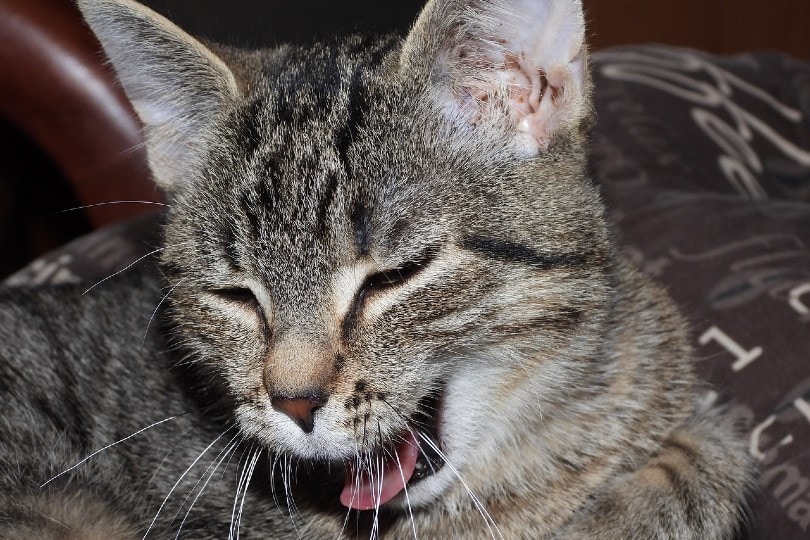
- Strange breathing, e.g., open-mouth, rapid, shallow, rattling
- Struggling to breathe after activity
- Bringing up foaming mucus
- Decreased appetite
- Weakness
Signs of a Severe Asthma Attack:
- Hunching and extension of the neck (much like vomiting)
- Blush lips and gums
- Gurgling sounds
- Frothing at the mouth
Seek veterinary advice if you’re concerned about your pet’s well-being.
Diagnosis
There is no sure-fire way for your vet to confirm your cat has asthma without performing tests. There is a process they will follow that eliminates other possibilities to confirm the presence of asthma.
- Physical exam: A vet can get a basic idea of what is going on from physical observations. They observe the pattern of breathing and where the cat uses the most energy (inhaling or exhaling.) With a stethoscope, they can listen to the lungs and identify abnormal breathing and the suspected presence of mucus.
- X-Ray: An X-ray will show the lungs' condition and spot any cases of overinflation. This occurs when air gets trapped in the lungs due to mucus obstruction or the inability to exhale completely.
- Fecal Test: Asthma cannot be detected in feces, but your vet will rule out the presence of a parasite called lungworm. The parasite can live in cats’ lungs and cause similar signs as asthma.
- Allergy Testing: A comprehensive test for common allergens might be suggested. If it comes back positive for something, the signs can be alleviated by trying to avoid the substance.
Based on these tests, a vet can rule out many other common diseases or parasites that cause the same signs as asthma and diagnose a cat with feline asthma.

Treatment
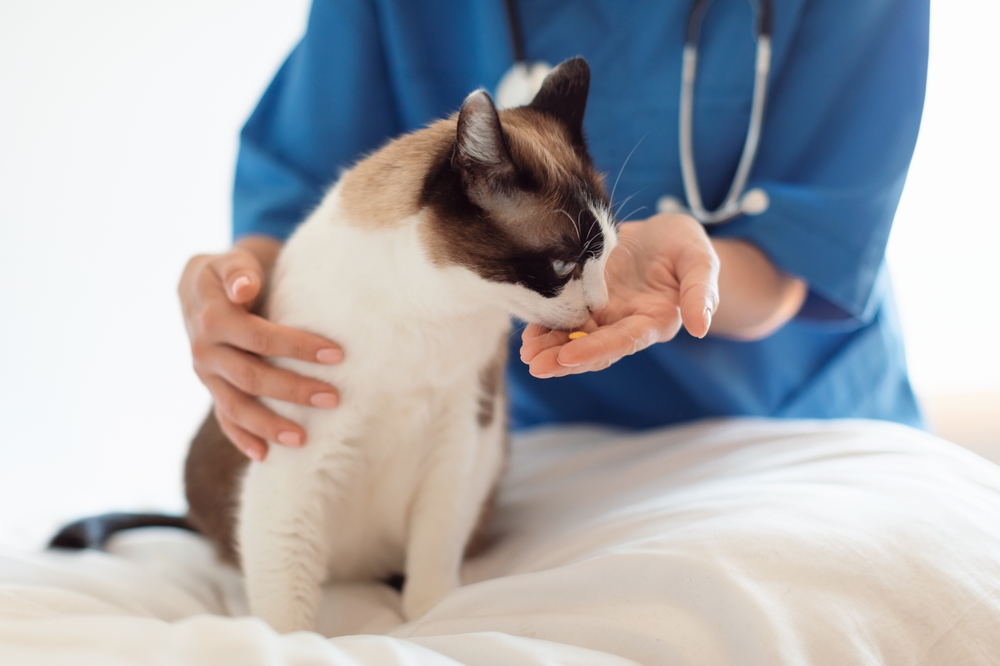
Feline Asthma has no cure. Instead, treatment is a management plan specific to your cat’s needs. Generally, a corticosteroid will be prescribed to help reduce inflammation. In conjunction, a bronchodilator is administered to open up the airways and increase oxygen flow.
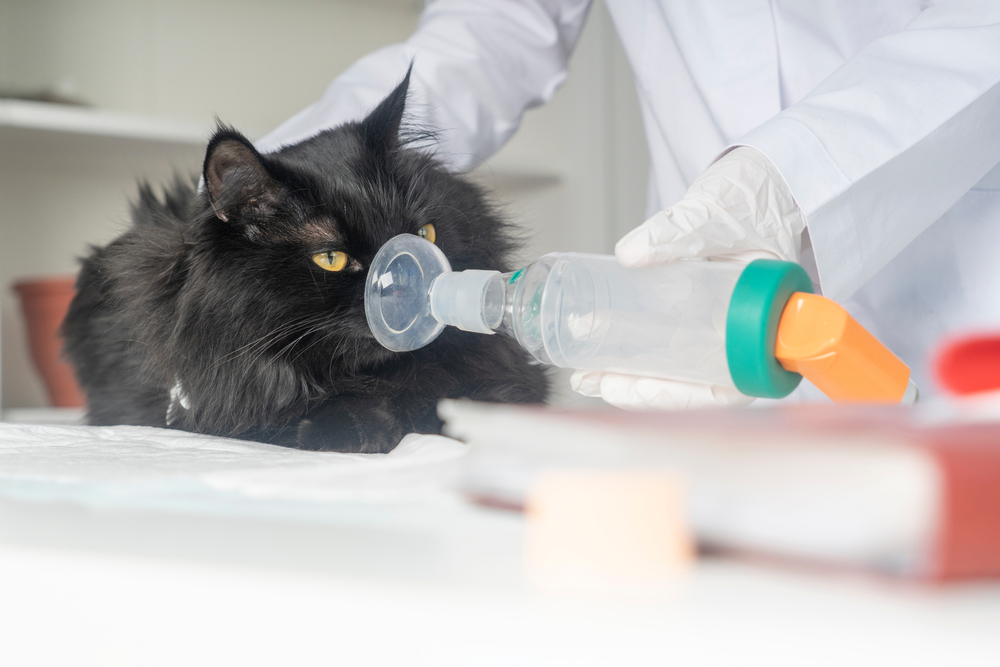
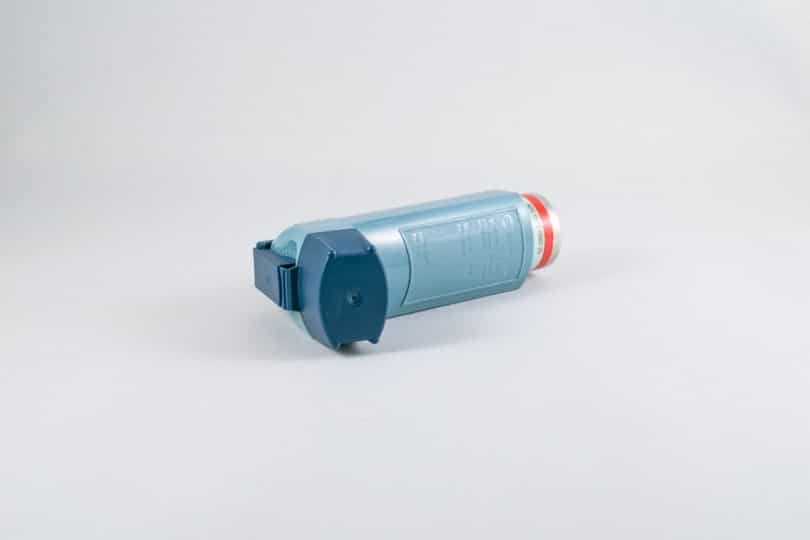
These two treatments can be given in a few ways, including tablets, injections, and inhalers. An inhaler delivers the medication directly to the airway's source of inflammation, and your vet will show you the easiest way to use it since it's challenging to give some cats medicine.
In severe cases of asthma, oxygen therapy must be used to increase your cat’s oxygen levels. If your cat experiences a life-threatening asthma attack, rush them to the veterinarian or emergency clinic.
You should follow your vet’s treatment plan thoroughly. Corticosteroid treatments come with some risks, unfortunately. Your vet will probably recommend an inhaler instead or tablets, and they will use the lowest effective dose to minimize the downsides associated with chronic corticosteroid use.
Caring for a Cat with Asthma
In addition to medical treatment, there are ways you can alleviate and manage your cat’s asthma signs at home.
Improve the Air Quality
Since you cannot pinpoint what is causing the asthmatic response in your cat, you should avoid:
- Smoking in the home
- Using dusty or scented cat litter
- Using harsh household cleaners
- Wearing strong perfume
- Using aerosols near your cat

Keep Your Cat Indoors
There are endless allergens present in the outside world, grass, and pollen the most prominent. If your cat has free range outdoors, you can no longer control what they are exposed to and what they inhale.
You should speak to your vet about your options. Generally speaking, to prevent the inhalation of the unknown, you should keep your asthmatic cat exclusively as an indoor cat.
Supplementation
Emerging studies are trying to confirm that some supplements are effective in relieving signs. Most notably, long-chain omega-3 polyunsaturated fatty acid (PUFA) and an antioxidant (luteolin) might be beneficial, but further studies are needed.
Final Thoughts
If your cat is diagnosed with asthma, visiting the vet regularly is essential. Your vet will monitor your cat's health and provide tips for making your home as comfortable as possible and maintaining a good quality of life for your pet.
You must maintain excellent air quality at home and keep your cat within a healthy weight range to reduce the pressure on the airway during activity. It’s also helpful to keep stress to an absolute minimum, as it can exacerbate an inflammatory response and compromise the immune system.
Related Read:
Featured Image Credit: Ro_ksy, Shutterstock

Expert cat care, straight to your inbox
Vet-reviewed advice, behavior tips, and the best of Catster. Free, and you can unsubscribe anytime.
By signing up, you agree to our Terms & Conditions and Privacy & Cookies Policy.
With an early start in the veterinary industry and as a conservation educator at Disney’s Animal Kingdom in Florida, Sophie has since been a successful Zookeeper and Conservationist, specializing in native New Zealand species. When she’s not bird watching in native forests or crawling through the underbrush at midnight searching for rare frog species, she can be found with her farmer husband on their sheep and beef station, far from civilization. Alongside them, they have 2 cats, 9 chickens, and 11 dogs (most notably, her sidekick, a black Labrador aptly named Jellybean). Sophie enjoys her writing career as it provides opportunities to help and support pet owners of all kinds to give animals the best welfare possible. The only downside is the long list of strange searches in her internet history!
Join the conversation
Ask a question, share your story, or send private feedback.