Get

In Your Inbox

Catster is reader-supported. When you buy via links on our site, we may earn an affiliate commission at no cost to you. Learn more.

Fluid in a Cat’s Lungs: Symptoms, Care, & Treatment (Vet Answer)

Share

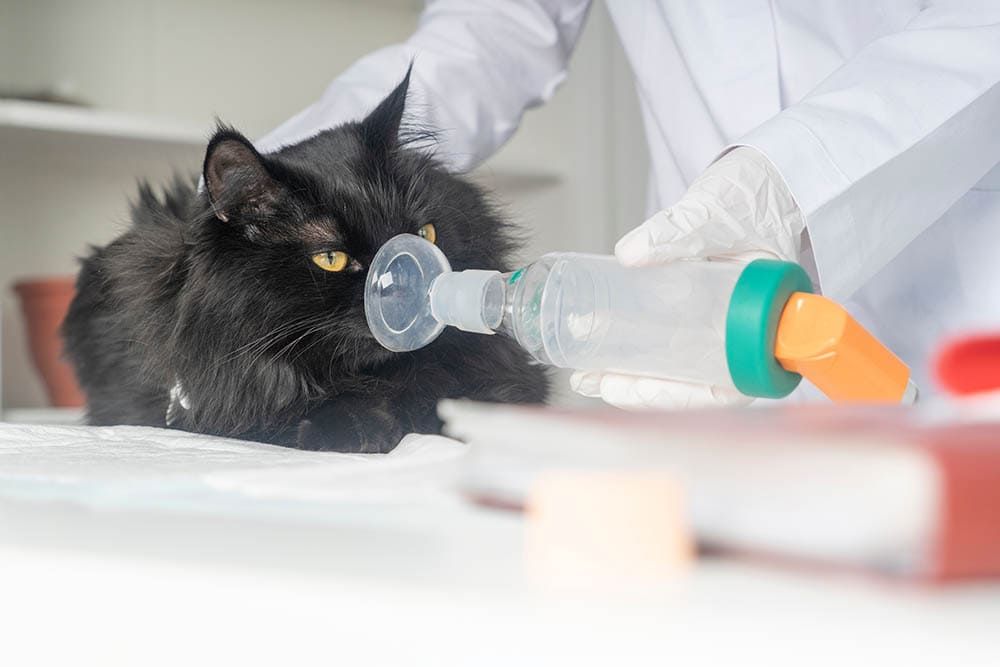
cat with inhaler

Fluid in the lungs, also known as pulmonary edema, is a serious condition that affects felines. If your cat receives this diagnosis from your veterinarian, you may wonder—what’s next? Why does my cat have fluid in their lungs, and what can be done to help them?

The following article will discuss pulmonary edema in cats, the symptoms and causes of this condition, and how it is diagnosed and treated. This will help you gain an understanding of what pulmonary edema may mean for your cat.

divider 3 paws

How Does a Cat’s Respiratory System Work?

The feline respiratory system functions to deliver oxygen to the lungs, where it is exchanged with carbon dioxide from the blood. In cats, the respiratory system is made up of large and small airways, and the lungs.

When a cat takes a breath, air travels down its trachea and into smaller tubes known as the left and right bronchi. From the bronchi, air moves into even smaller airways within the lungs that are called bronchioles. Bronchioles end in small sacs, known as alveoli, where the exchange of oxygen and carbon dioxide occurs.

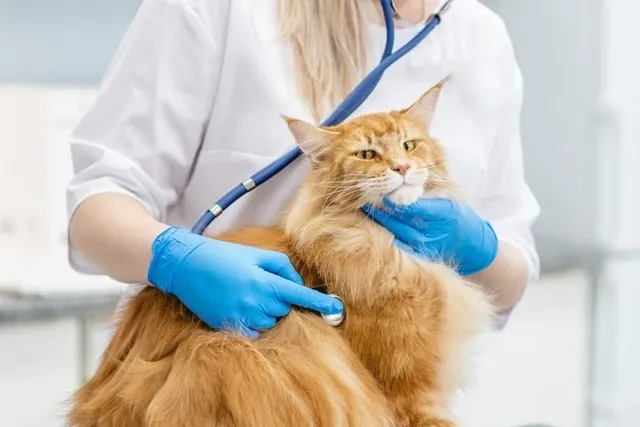
veterinarians examining a grey cat
Image Credit: Juice Flair, Shutterstock

What Is Pulmonary Edema?

Pulmonary edema is the abnormal accumulation of fluid within the alveoli of the lungs. When fluid builds up within the alveoli, gas exchange is negatively impacted, which results in poor oxygenation of the blood. A low blood oxygen level is problematic, as it will eventually lead to reduced functioning of organ systems and tissues within the body.

Pulmonary edema may be confused with pleural effusion, a condition in which fluid builds up in the space between the lungs and chest wall.

Symptoms of Pulmonary Edema

Symptoms of pulmonary edema in cats may vary, depending on the severity of fluid build-up, and the presence of any underlying conditions. However, cats with pulmonary edema often exhibit the following signs:

  • Difficulty breathing
  • Rapid respiratory rate
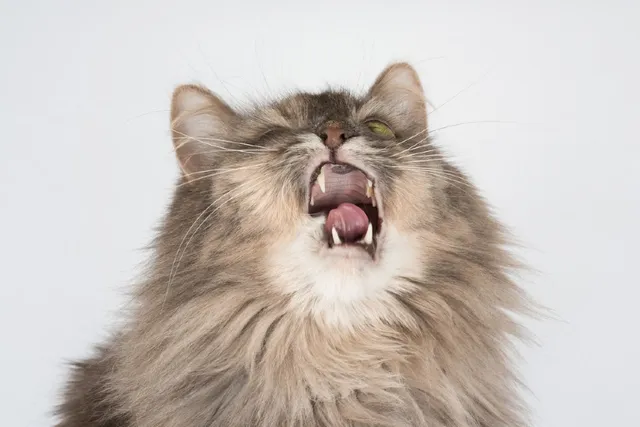
  • Open-mouthed breathing
  • Coughing
  • Cyanosis (having a blue or grey cast to the tongue, gums, or skin)
  • Rapid heart rate
  • Weakness or collapse

divider 3 paws

What Causes Pulmonary Edema in Cats?

Pulmonary edema is often referred to in terms of being either cardiogenic or non-cardiogenic.

Cardiogenic pulmonary edema occurs secondary to left-sided congestive heart failure (CHF). In felines, heart failure is most commonly caused by hypertrophic cardiomyopathy (HCM).

Common causes of non-cardiogenic pulmonary edema in cats may include acute respiratory distress syndrome (ARDS), sepsis, and electrocution, among other conditions.

How Is Pulmonary Edema Diagnosed?

Chest x-rays are the preferred test for diagnosing pulmonary edema. Your veterinarian will also perform a physical exam, and may note abnormal lung sounds, such as crackles or wheezes, a heart murmur, or an irregular heart rhythm while listening with their stethoscope.

Other diagnostic tests that may aid in a more specific diagnosis of cardiogenic pulmonary edema include an echocardiogram (ultrasound of the heart), and an NT-proBNP (a blood test used to evaluate for heart disease).

vet helping cat breathe
Image Credit: Kzenon, Shutterstock

Treatment for Pulmonary Edema in Cats

Treatment for felines with pulmonary edema will depend on the underlying cause. Initial treatment for cases of cardiogenic pulmonary edema in cats will likely involve the following:

  • Oxygen: Oxygen therapy is used to increase the level of oxygen in a cat’s blood. Cats will often be placed in an oxygen cage for this purpose.
  • Diuretic medication: Furosemide (Lasix) is the most commonly used diuretic medication to treat cardiogenic pulmonary edema. However, other medications may be considered as well. Furosemide works at the level of the kidneys and leads to the increased excretion of fluid via the urine.
  • Rest: Rest and stress reduction are important for cats that may be struggling to breathe due to pulmonary edema. Pain-relievers or anti-anxiety medications may be used to help affected felines remain calm.

Oftentimes, treatment for cats with non-cardiogenic pulmonary edema is less clear-cut, but will typically also involve rest and oxygen therapy. Depending on the underlying cause, other medications such as antibiotics may be beneficial. Cats with severe cases of non-cardiogenic pulmonary edema may need to be placed on a mechanical ventilator to help the lungs rest and recover.

vet doctor examining cat in x-ray room
Image Credit: PRESSLAB, Shutterstock

What Is the Prognosis for Pulmonary Edema?

Without prompt evaluation and treatment, pulmonary edema in cats will rapidly lead to respiratory distress and death. However, when treatment is initiated, the immediate prognosis for cases of acute cardiogenic pulmonary edema in cats is fair.

Long-term prognosis is guarded, however, as heart disease such as HCM is typically progressive. With appropriate long-term medical management, the median survival times for cats with HCM and CHF are 92–563 days.

The prognosis for non-cardiogenic pulmonary edema varies depending on the underlying cause. Cases caused by electrocution may have a more favorable prognosis when compared to pulmonary edema secondary to ARDS, which carries a poor prognosis even with aggressive treatment.

divider 3 paws

Conclusion

In summary, pulmonary edema in cats is a serious condition requiring immediate veterinary attention. While treatment options and prognosis vary between cardiogenic and non-cardiogenic pulmonary edema, your veterinarian will be able to offer the most accurate information regarding what this condition may mean for the long-term health of your feline friend.


Featured Image Credit By: Shveyn Irina, Shutterstock

Want content like this delivered to you?

Sign Up For Our Newsletter

News, insights, expert advice, and everything cat

* By submitting, you agree to our Terms & Conditions and Privacy & Cookies Policy.


How useful was this post?

Click on a star to rate (you can leave written feedback after clicking submit)

Help us improve Catster for pet parents!

Your feedback really matters.

What did you like about this post? Also how can we improve it?

Join the conversation

4 Responses

  1. My cat was 21 years old with kidney disease-Bun-56. Early in November, new vet wanted her to have .5 of Gabapentin to keep her calm for annual appt. My cat had not had a rabies shot for years,because of my fear for cat’s kidneys and former vet. Any way, I gave her .8 instead of .4-.5 Gabapentin. Rabies- Shot went well. was lethargic . The due to errands with her, she did not get water. Cat came home, drank much water, later lost control, peed and vomitted. I got her eating (appetite stimulant)and drinking and resting for over a month+. Then, she had respiratory distress and lungs with moderate to severe fluid. Vet hospital ER treated. Given diuretic, but we did not hospitalize, as advised for $4000 at home, she stopped eating and later blood test-Bun 80. We euthanized yesterday12/24.
    Was all this due to too much Gabapentin and then dehydration in Nov because she was running short-safe errands with me.
    I WONDER IF SHE HAD HAD KIDNEYS FLUSHED, IF SHE WOULD’VE FELT BETTER AND EATEN, BUT MY VET SHUT DOWN DUE TO HOLIDAYS.

    1. We are so deeply sorry for the loss of your sweet 21-year-old companion on Christmas Eve. Losing a friend who has been by your side for over two decades is a profound heartbreak, and it is completely natural to look back at the final weeks and wonder "what if."
      When a cat reaches 21 years of age with known kidney disease, their internal balance is incredibly delicate. Regarding your concerns:
      The Gabapentin: While you gave a higher dose than prescribed, gabapentin is primarily processed by the kidneys. In a 21-year-old cat with a BUN of 56, a higher dose would take much longer to clear their system, causing the prolonged lethargy you saw. However, gabapentin itself is not typically known to cause sudden, acute heart failure or fluid in the lungs.
      Dehydration and "Flushing": Dehydration is very hard on senior kidneys. If her kidneys had been "flushed" (IV fluid therapy) early on, it might have temporarily lowered her BUN levels and improved her appetite. However, there is a major catch: in cats with fragile systems, aggressive IV fluids can sometimes overwhelm the heart, leading to the exact fluid in the lungs (congestive heart failure) that she unfortunately experienced.
      The Fluid in the Lungs: At 21, it is very common for heart disease to develop alongside kidney disease. Once fluid is in the lungs (pulmonary edema), it indicates the heart can no longer pump effectively. This is a critical, end-stage condition that is very difficult to manage, especially in a cat of her age.
      Please try to be kind to yourself. You provided her with a remarkably long, 21-year life filled with care and love. The "errands" and the medication dose were small moments in a very long life, and her decline was likely the result of her body simply being at its natural limit. Choosing euthanasia to stop her respiratory distress was a final act of mercy and love.
      You may find this resource helpful as you navigate this difficult time: https://www.catster.com/lifestyle/cope-with-losing-a-cat/

  2. I am heartbroken- my best friend/partner had a 13 year old cat. I guess he had gotten increasingly frail over the last few months or more, but we put it up to his age. Yesterday, (11/28/25) he had repeated vomiting and kept straining trying to poop. We took him to the EV, and the doctor said he had alot of fluid in his lungs with probably a poor and expensive prognosis. My friend loved his cat dearly, but decided to put him to sleep right then. It was all so fast, and now I am having thoughts that I cant tell my friend about wondering if we asked enough questions. I did ask if the fluid could be from a non-serious cause, and he said no, he said it was either cancer, liver or heart. He said there was no poop needing to come out. What if it could have been a couple treatable/separate conditions? Opinion?

    1. Condolences, Susan Plank. That is an incredibly painful and difficult experience, and we are so sorry for the loss of your friend's 13-year-old cat. It is natural, in the aftermath of such a quick and final decision, to be heartbroken and wonder if every option was explored. Please know that your friend made the choice from a place of deep love and concern for the cat's suffering.
      We cannot offer a medical opinion or second-guess the diagnosis given by the emergency veterinarian (EV), especially regarding severe symptoms like fluid in the lungs, which suggests a critical cardiac or cancerous condition. When fluid is present in the lungs along with repeated vomiting and straining, the prognosis is often grave and requires expensive, intensive care with no guarantee of success. The EV likely recommended euthanasia based on this serious combination of terminal-stage symptoms.
      It is normal to question the speed of the diagnosis, but the decision was made to prevent further suffering, which is often the kindest choice for a frail, sick cat. Please be gentle with yourself and your friend during this time.
      You may find this article helpful as you process the grief:
      When to Euthanize a Cat? Vet-Reviewed Factors & FAQ : https://www.catster.com/cat-health-care/when-to-euthanize-a-cat/

      Why Euthanasia Is A Gift: Dr. Karyn Explains : https://www.catster.com/felines-weekly/why-euthanasia-is-a-gift/

Leave a Reply

You’re very welcome to leave a comment or question. Please know that all comments must meet our community guidelines, and your email address will NOT be published. Let’s have a positive and constructive conversation.


Talk With A Vet Online

Peace of mind,
anywhere, anytime

Affordable vet advice

The Cat Biting Mistakes Most Owners Make (And What Works Instead)

Cat bites sent more than 400,000 people to emergency rooms in the US each year.1 Not scratches. Bites. And the reason they’re so...

Do Cats Cause Schizophrenia? Scientists Find a Link – Here’s What It Means

Being a fierce advocate (and occasional recipient of) mental health support and awareness, the term ‘crazy’ is not one I like to fling...

One in 100 Cats Gets Diabetes – Here’s How to Catch It Early

One in every 100 cats develops diabetes.1 That’s not a rare, unlucky condition reserved for cats with obvious health problems. It’s common enough...

Dramatic Rescue Turns Into Dramatic Reunion

What started as a routine call for the RSPCA became a heroic, five-hour rescue featuring one trapped and traumatized cat, an emotional family...

More related

How to Bathe Your Kitten: 5 Vet-Approved Steps (With Video)

Water and kittens don’t make the best combination, but sometimes, it’s inevitable that you need to give your kitten a bath. They may...

Antifreeze Poisoning in Cats: Keeping Olga Safe From Toxic Chemicals

Hi, I’m Christopher! Read my introduction to learn more about me and my silly Russian Blue cat, Olga. Antifreeze and other chemicals containing...

Can Cats Get Hemorrhoids? Vet-Approved Explanation

Have you taken a look at your cat’s backside and noticed something unusual? Perhaps it isn’t looking as it normally does. You might...

Why Every Cat Parent Needs Petlibro In Their Home

Have you noticed a change on the shelves of your favorite pet store? Devices like automatic cat feeders and fountains are gradually becoming...

Keep reading

Is Patchouli Safe for Cats? Vet-Reviewed Health Facts

Humans have used essential oils for eons—as long ago as 4500 B.C. in Ancient Egypt, where they were used in ointments and cosmetics. Today, essential oils are used as part of aromatherapy and to help with minor health conditions. But...

Patchouli Flowers

Fish Oil Benefits for Cats: Vet-Approved Tips & Health Effects

While shopping for cat food you may have noticed that many recipes include fish oil in their ingredient list, especially higher-quality recipes. You may have even seen some fish oil supplements on the shelves of your local pet store. Fish...

cat reaching out on fish oil capsules

Are Polka Dot Plants Toxic to Cats? Vet-Reviewed Houseplants Examined

The polka dot plant (Hypoestes phyllostachya) is also known as the pink polka dot plant, the measles plant, baby’s tears, or freckle face. The green leaves have freckled markings of pink that look like polka dots. The more sunlight the...

Catster_Are Polka Dot Plants Toxic to Cats

Do Cats Like Change? Vet-Verified Behavior & Evolution Facts

One of the things that draws people to cats as pets is their independence. They require no walks, less training, and are generally happy in smaller spaces compared to dogs, which some people really appreciate, especially since you can travel...

Scared Tabby cat trying to hide

5 Best Spots to Pet a Cat: Vet Approved Tips

Cats are unique, fascinating creatures that have captured our hearts for generations. While some felines crave constant attention and physical touch, others are more reserved and only accept petting on their terms. To ensure that your cat feels comfortable and...

cat sitting on owners lap

Why Is My Cat Limping All of a Sudden? 7 Possible Reasons

Cats communicate differently than humans, so it’s helpful to observe and get to know your cat’s behavior. Understanding how your cat acts can help you catch any inconsistencies that point to underlying health concerns. If you notice that your cat’s...

calico cat standing up on hind legs

How Early Can You Hold a Kitten? Early Life & Vet-Reviewed Safety Tips

Cats are known to be exceptional at caring for their young ones, and there’s nothing more exciting than having a cat give birth to a litter of kittens at home. If you have a cat that has recently given birth,...

man-holding-kitten

Can Cats Eat Sweet Potato? Vet-Verified Facts & Feline Nutrition Tips

Sweet potatoes seem to be gaining traction in the pet food world. You may have seen dog foods advertised with sweet potato as a main ingredient. That’s great for dogs, but it may make you wonder, can cats eat sweet...

Can Cats Eat Sweet Potato

Love Cats? So Do We! Join the Catster Community

Stay informed with expert pet care insights delivered straight to your inbox! Discover professional guidance on animal behavior, feeding tips, trusted product picks, and much more.


Sign up for the Catster Email Newsletter

Stay informed with expert pet care insights delivered straight to your inbox! Discover professional guidance on animal behavior, feeding tips, trusted product picks, and much more.