Human Brains Age Like Cats – New Study Debunks the 7-Year Rule
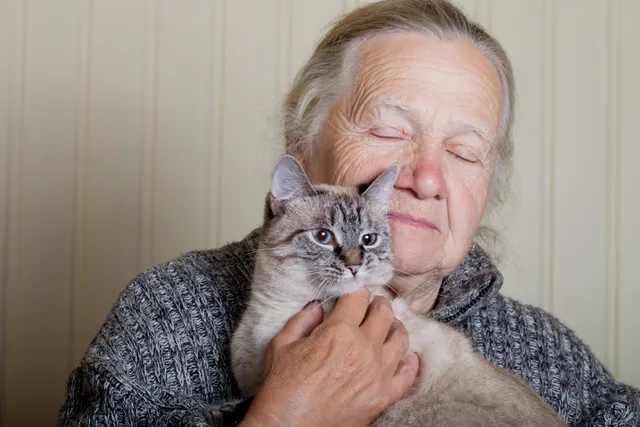
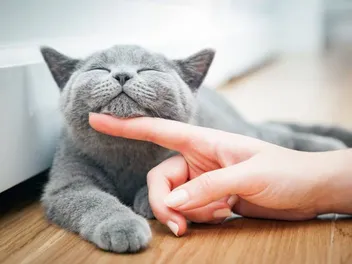
If you've ever caught your senior cat staring blankly at a wall, wandering the halls at 3 am, calling out for no clear reason, or seeming a little lost in their own home, you've probably filed it under "cats being cats." New research suggests something far more familiar might actually be going on underneath.
On June 22, 2026, researchers from the University of Bath in the UK, Auburn University in the US, and École Nationale Vétérinaire de Toulouse in France published findings in Biology Open showing that cat brains age in ways that look remarkably similar to ours. The study pulled together nearly 3,800 pieces of information on cats, humans, and other animals, things like brain scans, blood test results, health records, and everyday milestones such as when kittens first open their eyes or start playing. The goal was to figure out how aging actually unfolds species by species, rather than assuming every animal ages on the same universal dial.
Retire the Multiply-by-Seven Calculator

Most of us grew up believing one human year equals seven cat years; a quick and easy conversion that’s about as scientifically rigorous as reading tea leaves. This study replaces that napkin math with a biological model built from real, measurable changes: brain structure, blood markers, and developmental milestones, rather than an oversimplified and inaccurate multiplier.
What they found is that the passage of aging in both cats and humans more closely resembles a subway at rush hour than a smoothly flowing river. It picks up, it stalls, it speeds ahead in bursts depending on life stage, with cats and humans following a surprisingly similar schedule, especially later in the ride. Under this model, a cat in their mid-teens lines up neatly with a human in their 80s, so that ancient, sun-puddle-loving senior cat of yours has fully earned every one of their afternoon naps.
Brain Shrinkage: The Common Denominator
The most compelling evidence came from brain imaging. MRI scans showed that aging cats and aging humans develop several of the same structural changes: overall brain shrinkage, expansion of the fluid-filled ventricles inside the skull, and other alterations typically associated with age-related neurodegeneration.
Study co-author Brier Rigby Dames, a researcher at the University of Bath, described it plainly: cats show patterns of age-related brain atrophy similar to those seen in humans, adding to growing evidence that our companion animals can teach us something real about how aging works, not just how it looks from the outside. Cats live long enough to actually develop these changes, something most laboratory animals don’t survive long enough to do, and they do it on a dramatically shortened timeline compared to us, which makes them an unusually useful, and largely overlooked, natural model for studying how brains age.

Old Cat, New Clues
As veterinarians, we've long kept a close eye on feline cognitive dysfunction in older cats, and this study adds real scientific weight behind why. None of this means every graying muzzle is a five-alarm brain emergency, but disorientation, changes in sleep patterns, increased nighttime vocalization, and new litter box accidents in an older cat are not just "getting old" quirks to wave away without a second thought. They can be early signs of the same kind of brain changes this study is describing, and they deserve a veterinary conversation rather than a wait-and-see approach.
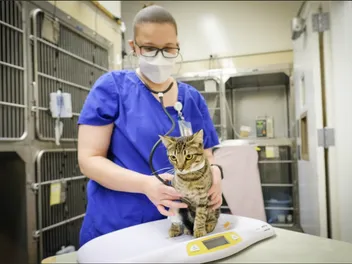
There's also a practical detail buried in this research: a growing number of cat owners are already requesting advanced brain imaging to investigate suspected disease in their cats. Every one of those scans quietly adds to a pool of real-world data that could eventually help both feline and human patients, a genuinely remarkable side effect for a routine vet visit to have.
A Two-Way Street
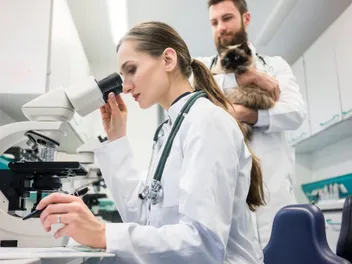
The team behind this work would like to see closer collaboration between veterinary and human medicine going forward, including large-scale companion animal health databases, similar in spirit to the human health databases already used in aging research. The logic is straightforward: cats already share our homes and, it turns out, a good deal of our aging biology. Formalizing that overlap into real research infrastructure could speed up our understanding of conditions like dementia, in cats and in us.
This study is part of a longer-running effort called Translating Time, which has spent years working out how to meaningfully compare ages across species instead of relying on rough conversions. Cats, it turns out, may be one of its most valuable case studies yet, whether or not they've read the paper themselves.
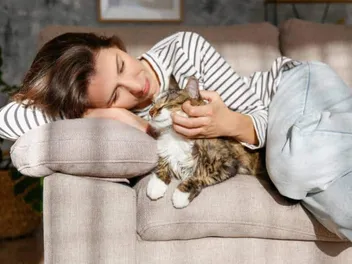
The same slow, quiet brain changes we associate with growing older in people appear to be unfolding in cats curled up on windowsills, beds, and laps around the world, and the next breakthrough in understanding human aging might come from something your cat is doing on the sofa right now. Well, maybe not that!

Feature Image Credit: U__Photo, Shuterstock
Did You Know?
- Our brand-new posts are rounded up and included in our weekly emails. Don't miss out on the latest - sign up for our newsletter below!
Expert cat care, straight to your inbox
News, insights, and useful advice, delivered to you.

No spam — unsubscribe anytime.
By signing up, you agree to our Terms & Conditions and Privacy & Cookies Policy.
How useful was this post?
Click a star to rate. You can leave written feedback afterwards. (We read all feedback.)

Dr. Paola Cuevas MVZ (Veterinarian)
Dr. Paola Cuevas is the Senior In-House Veterinarian at Pangolia, the parent company of Catster. She has over 18 years of experience as a veterinarian and animal behaviorist. Paola's focus is on preventive medicine and animal welfare. Paola has a large range of skills in from diagnostic imaging to nutrition and clinical pathology. Paola enjoys sharing her extensive knowledge of animal training with our Catster readers and is always happy to answer reader questions as our in-house veterinarian.