Get

In Your Inbox

Catster is reader-supported. When you buy via links on our site, we may earn an affiliate commission at no cost to you. Learn more.

Cat Brain Development: From Kitten to Adult (An Overview)
Share

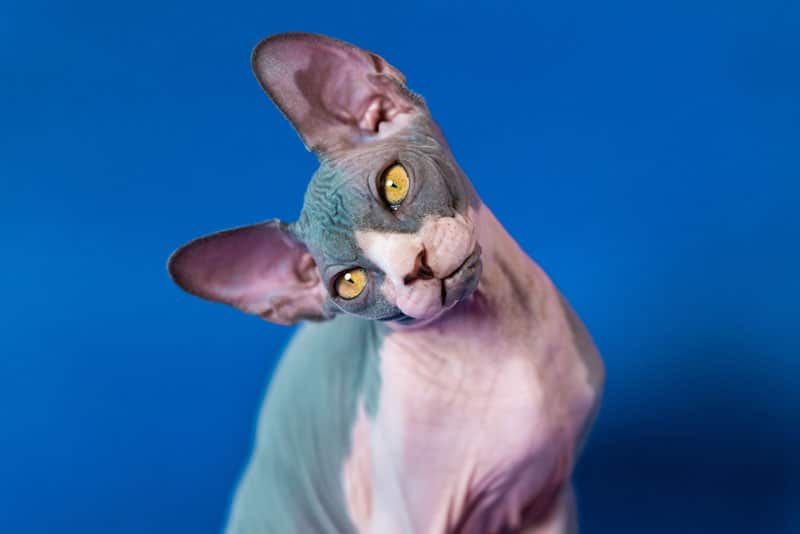
a close up of a canadian sphynx cat tilting its head

When I put away groceries, my cat, Phillip, studies my activities carefully, following me from the pantry to the refrigerator and back again. Sometimes I wonder if he’s memorizing the location of all his favorite people foods (that he isn’t allowed to eat) or devising a plan to open the cabinet doors to get to the cat treats the next time I leave the house. What’s going on in his brain, anyway?

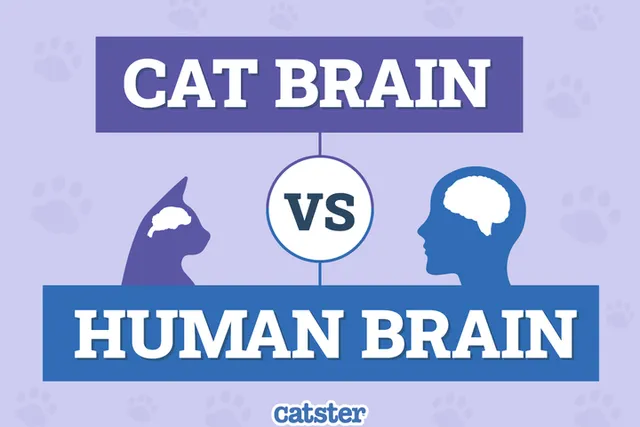
Physically, Phillip’s brain is not that much different than mine. In fact, though a cat’s brain is comparatively smaller than that of other mammals, the structure is quite similar to that of a human’s in that we both have cerebral cortices and lobes. Just as in humans, a cat’s cerebral cortex is responsible for decision-making, learning, and short- as well as long-term memories. So maybe Phillip really is memorizing where I keep those foods I won’t let him eat.

divider cats oct 2024

dramatic side view of cat face in the dark
Image By: Unsplash

Kitten

The cerebral cortex plays a critical part in a kitten’s development in that memory shapes so much of his ability to learn. A kitten takes note of what other cats, other pets, and even humans do through interacting with them, and this helps the other parts of his brain develop properly. When we first brought Phillip home at about 12 weeks old, he followed my older cat, Jack, around the house constantly and imitated many of Jack’s behaviors.

“Kittens in the early months need interaction with their own and other species to develop social skills (cerebral) and physical coordination (cerebellum) through play, exploration, and mock hunting,” said Heidi Pavia-Watkins, d.V.M., of the Airport Irvine Animal Hospital in Costa Mesa, California.

Don’t worry: If your kitten seems a bit shy and isn’t jumping feet first into the fray of the household, he probably still observes everything around him and learns from all of the various activities. you can gently coax him to play with interactive toys.

Be concerned: A kitten who struggles at mealtime or can’t seem to grasp the concept of the litter box may be dealing with an injury or illness. Take her to the vet as soon as you can.

Adult

As your cat moves out of kittenhood and into adulthood, he continues to learn through repetition and observation. This is why Phillip knows exactly where I keep his cat food, and why he waits under that cabinet every morning until I feed him. The different areas of a cat’s brain each perform specialized tasks; interconnections among these areas pass information back and forth rapidly, giving your cat the ability to react quickly to his environment.

brainy-cat-reading.jpg
Image by Shutterstock

Don’t worry: New situations or changes in your adult cat’s environment can throw her off a bit, and she may miss a jump onto a new couch or become confused if she can’t find something. Give her a little time to get used to the changes.

Be concerned: If your adult cat consistently seems unable to anticipate and remember the normal activities in your house or the layout of your furniture — or if he has a sudden change in his personality — he may need to be examined by a vet. “Adult cats with brain injury or disease will often have a change in behavior (aggression or stupor) or changes in coordination, routine, or appetite,” Dr. Pavia-Watkins said.

Senior

The brain of a senior cat can show signs of aging the same way as a human’s. In fact, the American Association of Feline Practitioners estimates that 50 percent of cats 15 years old and older exhibit some of these symptoms of cognitive brain disorders:

  • Decreased interaction with humans and other pets
  • Less desire to eat
  • Urination or defecation outside the litter box
  • Decreased problem-solving skills
  • Less awareness of their surroundings
  • Inconsistent sleep-wake cycles
  • Loud crying, especially during nighttime hours
mind-body-cat-brain-02
Image Credit: Shutterstock

Before diagnosing your cat yourself, however, make sure he receives a thorough veterinary examination. “A veterinarian should assess the cat to rule out specific organ or disease processes such as hypertension, hyperthyroid, gastrointestinal, or urinary tract disease,” said Dr. Pavia-Watkins.

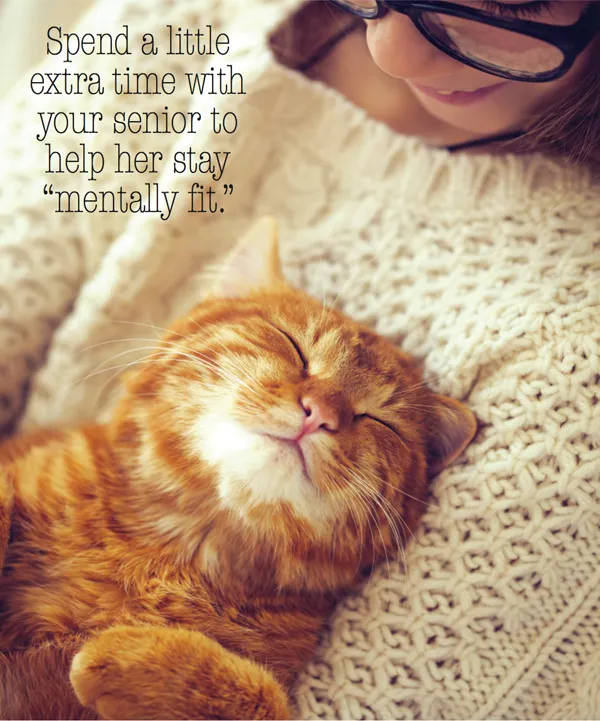
Don’t worry: Proper nutrition, regular mental stimulation, and a few safety precautions can help your senior cat fight the signs of brain aging. Spend a little extra time with your senior to help her stay “mentally fit.”

Be concerned: A senior cat with Cognitive Dysfunction Syndrome needs help from her owner to ensure she has the best possible quality of life, explained Dr. Pavia-Watkins. Make sure she has ready access to fresh water and food, appropriate shelter and a comfortable resting area, treatment for any pain or discomfort, freedom to express normal behavior, and freedom from fear or distress.


Featured Image Credit: Alexander Piragis, Shutterstock

Want content like this delivered to you?

Sign Up For Our Newsletter

News, insights, expert advice, and everything cat

* By submitting, you agree to our Terms & Conditions and Privacy & Cookies Policy.


How useful was this post?

Click on a star to rate (you can leave written feedback after clicking submit)

Help us improve Catster for pet parents!

Your feedback really matters.

What did you like about this post? Also how can we improve it?

Join the conversation

Leave a Reply

You’re very welcome to leave a comment or question. Please know that all comments must meet our community guidelines, and your email address will NOT be published. Let’s have a positive and constructive conversation.


Catster's Digital Magazine is Back!

Vet-approved health & behavior advice

Real cat stories & community features

Chatting with Devin About Here! Have a Kitten, Fostering, & Why Two Are Better Than One | Chatty Cattys, Episode 29

In this episode of Catster’s Chatty Cattys podcast, Nicole & Dr. Karyn sit down with Devin, the founder and one-woman show behind “Here...

Decoding The Cat Loaf: What It Means and When to Worry

Few cat behaviors have captured the internet quite like the loaf. Paws tucked neatly beneath the body, tail wrapped in, perfectly rectangular. As...

Your Cat Isn’t Picky – Their Nose Is Just Bored

If you’ve ever sighed while scraping uneaten cat food into the trash, you’re certainly not alone. Many cat owners know the routine: their...

Ask Dr. Paola – Help! My Kitten Won’t Use the Litter Box! (July 27, 2026)

Welcome to our “Ask Dr. Paola” series, where every Monday we bring expert advice straight from Dr. Paola Cuevas (MVZ) to help our...

More related

Short Hair Ragdoll Cats – Does This Breed Exist? Facts & FAQ

Ragdolls have long hair and were originally bred using only longhaired felines, so they do not have any shorthair genes that would allow...

Can Cats Eat Black & Green Olives? Vet-Verified Nutritional Science & Info

If you have ever been snacking on a jar of olives, you may notice your cat curiously sniffing whatever you’re snacking on. This...

Siamese Kittens For Sale in New Jersey: Breeders List 2026

Catster advocates for adopting before shopping, though we fully understand there are many reasons for seeking a breeder. So, we encourage it to...

Why Does My Cat Lick My Armpits: 5 Vet-Reviewed Possible Reasons

Cats are wonderful, but most people who’ve ever loved one of these perfect creatures had at least one moment when they wondered: what...

Keep reading

Can Cats Eat Mackerel? Precautions & Advice

If you have cats and opened a can of mackerel around them, they have probably started meowing like crazy, trying to get you to feed them some. After all, it’s no secret that cats love fish despite fish not being...

Can Cats Eat Mackerel

How Contagious is Feline Leukemia? Vet-Approved Facts & Explanation

Feline leukemia virus (FeLV) is a common infectious cause of disease in cats, affecting as much as 3% of the entire cat population in the United States and Canada,1 according to the Cornell Feline Health Center. Feline leukemia virus is...

cat lying on blanket looking sad or sick

Why Does My Cat Like Water & Swimming? Vet-Reviewed Feline Behavior Explanation

Cats have a reputation for disliking water. But, while it is true that some of our feline friends detest getting in baths and would never dream of taking a dip in the river or ocean, some breeds love nothing more...

Scottish straight-eared long-haired cat swimming

Your Cat Is Begging at Christmas Dinner – Here’s What’s Safe to Share

Your family is gathering around the Christmas table, passing dishes and laughing, when you feel it: those unblinking eyes burning into the side of your face. You glance down. There’s your cat, sitting perfectly still, radiating an intensity that suggests...

Bengal cat head peeks out from behind a table with Christmas cookies on a plate

Can Cats Eat Pumpkin? Vet-Reviewed Facts & FAQ

Yes, cats can eat pumpkin. It isn’t suitable as their whole diet or even most of their diet. However, it can be a nice treat or be used in specific circumstances to add nutrients to your cat’s diet. Pumpkin has...

Can Cats Eat Pumpkin

Why Is My Cat So Demanding? 6 Vet-Verified Ways to Deal with a Demanding Cat

One of the most endearing things about cats is their unique and diverse personalities. While some cats are quiet and unassuming, others are much more outgoing. However, when extraversion spills over into being excessively demanding of attention, it can leave...

Calico cat standing up begging for treat asking for food scratching leg looking up

Can Cats Eat Takis? Vet-Reviewed Precautions & Health Guidelines

Did you know that cats only have 473 taste buds1? Humans have about 9,000 taste buds. This means that a cat lacks a lot of flavor sensors, mainly sweet and also spicy. These flavors simply don’t register the same as...

Can Cats Eat Takis

How to Feed a Cat with a Cone: 5 Vet-Verified Tips

If your cat has just had surgery or is dealing with another medical condition, your vet may send you home with an Elizabethan collar or “cone” while they heal. Typically, the cones make your cat look like they’re wearing a...

British Shorthair cat with cone eating

Love Cats? So Do We! Join the Catster Community

Stay informed with expert pet care insights delivered straight to your inbox! Discover professional guidance on animal behavior, feeding tips, trusted product picks, and much more.


Sign up for the Catster Email Newsletter

Stay informed with expert pet care insights delivered straight to your inbox! Discover professional guidance on animal behavior, feeding tips, trusted product picks, and much more.