How Cats Are Helping to Cure Cancer

When most people think about medical breakthroughs, they picture scientists in laboratories and clinical trials involving human patients. Few would imagine that the cats with whom we share our homes and sofas would be involved in human cancer research, but it turns out that they may have a pivotal role to play.
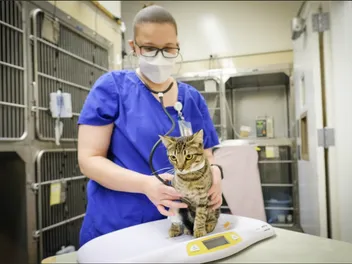
A recent study investigating a new treatment for feline oral squamous cell carcinoma, an aggressive cancer that affects the mouth, has highlighted the growing role cats are playing in cancer research. The experimental therapy showed promising results in feline patients, but researchers believe the findings may also help advance treatments for people with similar forms of cancer.
The study shines a spotlight on a fascinating field known as comparative oncology, where naturally occurring cancers in animals help scientists better understand the disease across species. It is an area of research that is transforming the way we think about both veterinary and human medicine.

What Is Comparative Oncology?

Comparative oncology is based on a simple but powerful idea: diseases do not always respect species boundaries.
Though vastly different in many ways, humans, cats, and other animals share numerous biological pathways. Cancer cells often use similar mechanisms to grow, spread, and evade the immune system, regardless of whether they develop in a person or a pet.
Researchers working in comparative oncology study these shared patterns to accelerate discoveries that may benefit multiple species. In many ways, it is a practical example of the One Health approach, which recognizes the close connections between animal health, human health, and the environments we share.
For cat owners, this means that advances in veterinary medicine can contribute to human healthcare, while innovations developed for people may eventually become valuable tools for feline patients, something that was also seen in the development of treatments for Feline Infectious Peritonitis (FIP) and human Coronavirus (COVID-19).

When Cancer Looks Surprisingly Similar Across Species
As veterinarians, we often need to remind pet parents that cats are not small humans. Their nutritional needs, behavior, and physiology are uniquely feline. However, when it comes to some diseases, the similarities between cats and humans can be remarkably striking.
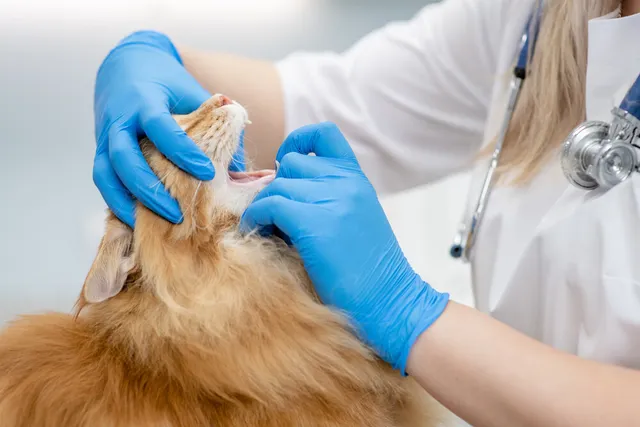
Certain feline cancers share genetic, molecular, and biological characteristics with cancers seen in people, and oral squamous cell carcinoma (SCC) is one such example. Although SCC in cats is usually slow-growing and rarely metastatic, it is also one of the most challenging cancers we encounter in feline medicine. The disease tends to be locally invasive, difficult to remove completely, and often only diagnosed once visible signs such as drooling, difficulty eating, weight loss, or bad breath start to appear, long after the cancer starts growing.
Because this cancer behaves in many ways like certain human head and neck SCC, researchers can learn valuable lessons from studying it in feline patients. Rather than relying solely on laboratory models, scientists are able to observe how cancer develops and responds to treatment in animals experiencing the disease naturally, in a way that is mutually beneficial to both species.
The recent study illustrates this approach in action. Researchers evaluated an experimental therapy known as a STAT3-targeted cyclic oligonucleotide (CS3D), designed to block a protein that helps many cancers grow and survive. Some cats with oral SCC experienced tumor shrinkage or disease stabilization, providing researchers with valuable information that could help guide future treatments for both feline and human patients.

Animal Testing, But Not As You Know It
One misconception about comparative oncology is that pets are being used simply to generate data for human medicine. In reality, the primary goal is to help both the animal and human patients. Some research is founded in veterinary medicine, with humans benefiting from the advances and discoveries being made; other times it is the opposite way around.
Cats enrolled in veterinary clinical trials are usually owned pets receiving medical care, not laboratory animals. Their welfare, comfort, and quality of life remain the highest priorities throughout the process. Any treatment being investigated must meet ethical and regulatory standards, and participation is always voluntary for owners.
In many cases, clinical trials provide access to innovative therapies that may not otherwise be available. Families facing a difficult cancer diagnosis are often searching for options that can improve comfort, extend quality time, or potentially improve outcomes.
The knowledge gained from these studies then helps future patients, both feline and human.

A New Era of Precision Medicine for Cats
This recent cancer therapy study is part of a larger trend in veterinary oncology. Researchers are learning more than ever about the genetic changes that drive feline cancers.
Large-scale investigations of feline tumors have revealed genetic mutations that closely resemble those found in human cancers, including breast cancer and several aggressive tumor types. These discoveries are opening the door to precision medicine, an approach that tailors treatment to the unique characteristics of the individual patient's cancer.
To understand the significance, imagine two cats diagnosed with what appears to be the same type of tumor. Under a microscope, the cancers may look similar, but at the genetic level they could behave very differently. Precision medicine aims to identify those differences and guide treatment decisions accordingly.
While this approach is still developing in veterinary medicine, it represents an exciting step toward more personalized care for feline patients.
Why This Matters to Cat Families
Cancer remains one of the most significant health challenges affecting aging cats. Although no owner wants to hear this diagnosis, advances in research are steadily expanding our understanding of the disease and improving the prognosis of the patient.
The most encouraging aspect of comparative oncology may be the way it creates a cycle of shared progress. Discoveries made in feline patients can help guide human medicine, while breakthroughs in human oncology can often be adapted to benefit cats.
For cat lovers, that means today's research has the potential to improve tomorrow's treatment options. It may lead to earlier diagnoses, more targeted therapies, fewer adverse effects, and ultimately a better quality of life for cats facing cancer.
Perhaps most remarkably, this research reminds us that the bond between humans and cats extends beyond companionship. By helping scientists better understand cancer, feline patients are contributing to discoveries that could improve care for future generations of cats and people alike. It is a powerful example of how progress in medicine can benefit all species.
Feature Image Credit: Kzenon, Shutterstock
Did You Know?
- Our brand-new posts are rounded up and included in our weekly emails. Don't miss out on the latest - sign up for our newsletter below!
Expert cat care, straight to your inbox
News, insights, and useful advice, delivered to you.

No spam — unsubscribe anytime.
By signing up, you agree to our Terms & Conditions and Privacy & Cookies Policy.
How useful was this post?
Click a star to rate. You can leave written feedback afterwards. (We read all feedback.)

Dr. Paola Cuevas MVZ (Veterinarian)
Dr. Paola Cuevas is the Senior In-House Veterinarian at Pangolia, the parent company of Catster. She has over 18 years of experience as a veterinarian and animal behaviorist. Paola's focus is on preventive medicine and animal welfare. Paola has a large range of skills in from diagnostic imaging to nutrition and clinical pathology. Paola enjoys sharing her extensive knowledge of animal training with our Catster readers and is always happy to answer reader questions as our in-house veterinarian.