Artificial Intelligence Takes on Feline Cancer: How New Technology Is Helping Treat Common Cat Cancers


If there is one diagnosis that is universally feared, it’s cancer. The great equalizer, cancer doesn’t care if you’re old, young, rich, poor, black, white, or beige. It also doesn’t spare our cats. Although a universal cure for cancer may be something of a fairytale, the treatment of cancer is a field that is constantly evolving. This week, we caught up with Dr Ilona Holcombe, the Director of Biosciences at ImpriMed, whose team is changing the way we treat cancer with the help of AI.
Whether we like it or not – sometimes, whether we know it or not – artificial intelligence is working its way into almost every aspect of our lives. Although we may not always welcome its presence in arts and literature, the virtually infinite problem-solving capacity of AI has the potential to find solutions that would otherwise take decades. ImpriMed is leading the charge against cancer by using this technology to create customized chemotherapy treatment protocols for humans and pets.
Wait, Chemotherapy for Pets?
When you think about the debilitating effects that chemotherapy often has on human patients, you would be forgiven for being horrified at the thought of exposing our pets to this form of treatment. The difference with veterinary chemotherapy is that the doses are significantly lower than those used to treat humans, making the side effects minimal. The compromise is that remission is usually the best we can hope for; the doses needed to achieve a cure would be too cruel to inflict on our pets. However, as many pet parents will attest, being able to extend the length of quality time they have with their pets is worth it.
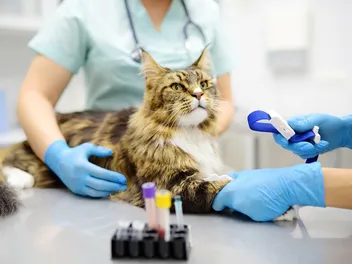
Of the dozen or so drugs used for chemotherapy, there are only a handful that commonly form part of a treatment protocol, with the rest reserved for unresponsive or relapsing cases. Treatment protocols are typically based on which drug combinations tend to be most effective against the specific form of cancer we are treating, but this can involve a certain amount of trial and error, tweaking drugs and doses depending on how the patient – and their cancer – responds.
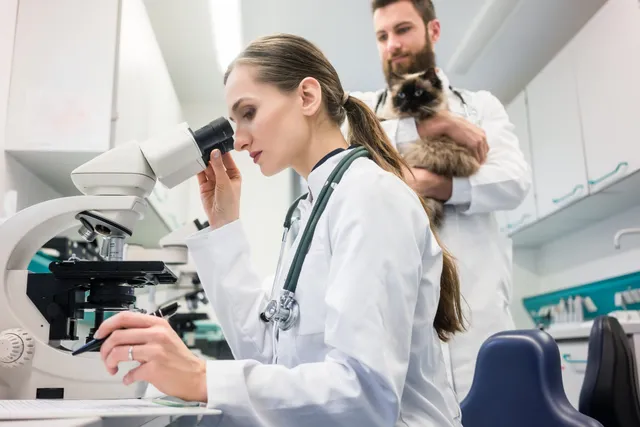
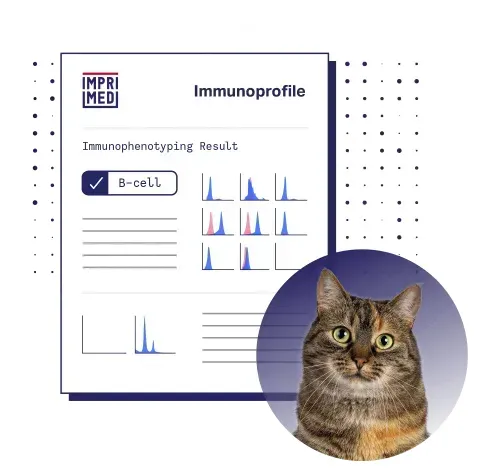
ImpriMed is removing this uncertainty by analyzing your pet’s cancer cells and using an AI program that has been created using years of statistics, case studies, and patient outcomes to determine not just how it might respond to certain chemotherapy treatments, but how it DOES respond to them.
Cancer Culture and Sensitivity
When treating an infection, an important step is culture & sensitivity testing, where a sample of the bacteria is grown in a lab in order to identify it and test which antibiotics will eliminate it. The process used at ImpriMed can be thought of in the same way. Cancer cells are isolated, identified, and put through multiple treatment combinations to determine which drugs are going to be the most effective, taking the guesswork out of treatment. Within a week, your vet will receive a personalized prediction profile for your pet.
Most of the side effects of chemotherapy occur because the chemicals used do not discriminate between cancerous and non-cancerous cells. They are most effective against rapidly dividing cells, which is why cancer cells are the ones most affected, but healthy cells can also be damaged and destroyed.
By using drugs that we already know are going to be effective against the cancer cells in this individual, those risks are reduced.
Does It Work on All Cancer?
At this stage, this AI service is only available for feline lymphoma, as well as canine leukemia and lymphoma, but there are plans underway to extend this into other common cancers seen in cats and dogs, as well as explore its use in treating feline inflammatory bowel disease. There is also hope that treatments could be found for forms of cancer that are currently unresponsive to chemotherapy, as well as look for different drug formulations and combinations.

It Must Be Expensive
We sadly live in a world where many medical and veterinary treatments are inaccessible to all but the super-rich. However, Dr. Holcomb, a self-confessed soft-hearted pet lover, seems determined to keep this technology within the reach of every pet owner, and the base price for a comprehensive personalized chemotherapy prediction profile will usually be around $1,000 from your vet*. This may seem like a lot of money, but when you consider the complexity of this technology, as well as how much time it saves getting your cat's treatment right the first time, it’s actually very reasonable.
*As of February 2025. Indicative prices only. Excludes veterinarian costs (eg. consultations, sampling fees, etc). Contact your vet for further information.
It’s refreshing to come across a company that seems to care about pets and their parents, and we can only hope that it stays that way. ImpriMed’s services are available throughout the country, as well as overseas, so if your pet has been diagnosed with cancer, you might want to talk to a vet about exploring this option.
Sources
Featured image credit: Maria Sbytova, Shutterstock
Did You Know?
- Our breaking news articles are featured in our weekly emails. Don't miss out on the latest and sign up for our newsletter below!
Expert cat care, straight to your inbox
News, insights, and useful advice, delivered to you.

No spam — unsubscribe anytime.
By signing up, you agree to our Terms & Conditions and Privacy & Cookies Policy.
How useful was this post?
Click a star to rate. You can leave written feedback afterwards. (We read all feedback.)
Dr. Karyn Kanowski BVSc MRCVS (Veterinarian)
Dr. Karyn comes from Queensland, Australia, and has lived in the UK for the past 10 years. In 2010, she graduated from The University of Queensland School of Veterinary Science and also has a Bachelor’s degree in Zoology. She is passionate about using evidence, experience, and owner collaboration to provide the best solutions for pets, and believes in making reliable information about animal health accessible to all. Dr. Karyn shares her home with five cats, four dogs, and one husband. When she is not in the scrubs, she spends her time writing, gardening, and cleaning up pet hair!