5 Most Common Cancers in Cats (Vet Answer): Signs, Causes & Treatments

It’s an unfortunate reality that cats are susceptible to cancer, just like humans are. Advances in veterinary medicine and pet care are making it easier to detect cancer, though, and with the subsequent increase in lifespans, the rates of diagnoses are increasing.
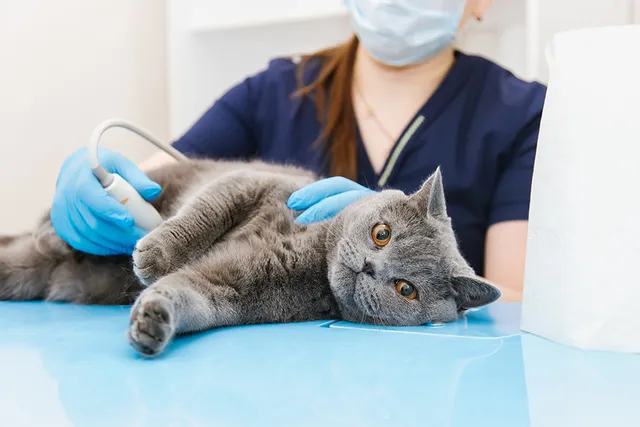
However, diagnosis can still be difficult, especially since older animals often suffer from other diseases. In many cases, differentiating cancer from these underlying diseases poses a medical challenge and typically requires a diagnostic process of bloodwork, ultrasounds, X-rays, and biopsies. So, what are the five most common cancers found in cats, and how serious are they?

The 5 Most Common Types of Cancers in Cats
1. Lymphoma
Lymphoma is cancer of the “lymphatic system,” a system of lymph nodes, ducts, and connecting vessels that run throughout the entire body. It is a vital component of the immune system in fighting disease. Since the lymphatic system is spread throughout many organs, lymphoma can be found in many different parts of the body, such as the chest, lymph nodes, and abdomen.
Although cats can be affected by lymphoma at any age, most animals tend to be diagnosed in their mid-life, between 10 and 12 years old. Due to its association with feline leukemia virus (FeLV), and feline immunodeficiency virus (FIV), it is most common in unvaccinated and unneutered outdoor male cats. However, control of these viruses with increased testing and vaccination is helping the incidence of certain types of lymphoma caused by the spread of these viruses.
Certain forms of lymphoma can be treated, and treatment can offer reasonably good survival times, between 2 and 4 years. It normally entails chemotherapy via a veterinary specialist oncologist. Depending on the type of lymphoma that is present, chemotherapy will be weekly infusions or daily tablets given to your cat by you at home. This can achieve a good remission rate of between 50% and 80%. Ensuring that your cat is vaccinated against FeLV and ensuring that they have no contact with FeLV- and FIV-infected cats will help with the prevention of lymphoma, though it does not eradicate the risk in its entirety.

2. Squamous Cell Carcinoma
Squamous cell carcinoma (SCC) is second to lymphoma as the most common tumor found in cats. During checkups, you may notice your veterinarian look into the mouth of your cat and rub their hands over their heads and ears. While this may look like a head massage, they are checking for signs of any tiny scabs that are typical of SCC. Cats that are particularly light in pigment are prone to SCC growth on their ears, temples, and nose, caused by exposure to ultraviolet light (i.e., the sun). Treatment often involves amputation of the ears, so it is helpful to prevent this type of cancer by applying cat-friendly sunscreen and zinc, particularly in hot countries where UV exposure is high.
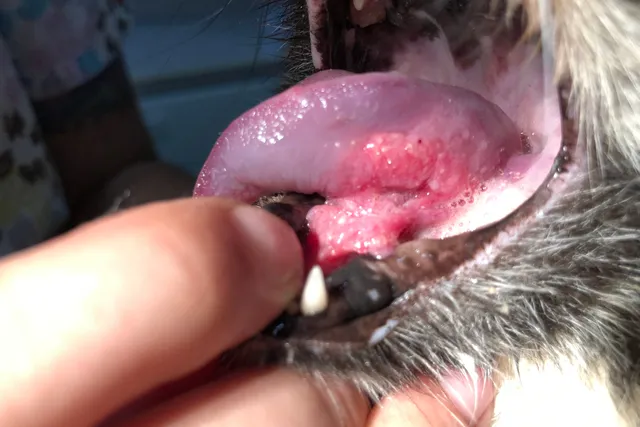
SCC tumors are also common in the oral cavity. They are particularly invasive and aggressive, spreading quickly to other parts of the body, such as the lymph nodes and chest. They also aren’t often caught early due to their location; it often isn’t until the cat is eating poorly or has bad breath that their owner notices something is wrong, contributing to a poorer prognosis. Treatment is difficult because oral surgery is complicated, and it can often be impossible to remove a mass from the mouth without resorting to things like jaw amputation. Additionally, SCC is typically not that responsive to chemotherapy.
3. Mammary Cancer
Mammary cancer is common in cats, and unfortunately, 80–96% of the tumors are malignant. Unlike humans, cats have eight mammary glands existing in two “chains” of four glands each, running parallel to one another. This means a tumor can start as a tiny nodule and spread through the gland, then the chain, and throughout the body.
To reduce the chances of mammary cancer, get your cat spayed before their first heat cycle, around 6 months of age. Spayed cats have a 91% less chance of developing mammary cancer, so it is an excellent preventative measure. In female cats older than 10 years, mammary cancer is the most common type currently diagnosed. If your cat will allow it, routinely examine your cat’s belly to check for any lumps and bumps (treat it like a nice massage). Due to this cancer’s aggressive nature, early intervention is key. Treatment normally involves surgery (removing the tumor or doing a complete “mammary strip” and taking out the entire chain of mammary tissue) or a combination of surgery and chemotherapy if the disease is at an advanced stage.

4. Fibrosarcoma
Fibrosarcomas are aggressive tumors in cats that typically present as lumps underneath the skin. While they can arise at any location in the body, they tend to develop in between the shoulder blades, and there may be a link between vaccinations and the development of fibrosarcoma at the injection site. Therefore, vets often vaccinate cats on alternating sides of the body, sometimes in the limbs, rather than injecting them in the scruff of the shoulders every time. Treatment normally involves a combination of surgery, radiation, and chemotherapy. Surgery can be curative if the tumor is small and found before it has spread.
It is normal for a cat to lump the injection site for up to 6 weeks after they’ve had their vaccinations. This is simply inflammatory and normally resolves on its own. However, if it doesn’t disappear or gets larger, get it checked out by your veterinarian.
5. Mast Cell Tumors
Mast cell tumors can be found in the spleen, the skin, or the intestines. On the skin, this tumor will present with a lump that is often small, raised, and itchy. The good news is that unlike in dogs, mast cell tumors of the skin in cats are often benign, meaning they won’t spread to other parts of the body and are curative with surgical removal.
However, mast cell tumors found internally are more aggressive and often spread to other organs in the body. Cats will show signs of being unwell, including weight loss, vomiting, diarrhea, blood in stools, and loss of appetite. Treatment is more complicated and compared to cats with the cutaneous form of the tumor, tend to have a poorer prognosis.
Conclusion
Cancer is never a nice word to hear in any context, but the more information you are armed with, the better you can prepare yourself for the decisions you may need to make about your cat. If you have any worries about your pet, it is always best to get them checked by your veterinarian. Early detection and intervention are essential for improving treatment outcomes, which is why veterinarians promote annual health checks at vaccination time. Cats are good at hiding signs of illness from their owners until their bodies can no longer handle it, so you must act as your cat’s advocate if they are showing signs of being unwell or have a particular lump or bump that you are worried about. See also:
Featured Image Credit: David Herraez Calzada, Shutterstock
Expert cat care, straight to your inbox
News, insights, and useful advice, delivered to you.

No spam — unsubscribe anytime.
By signing up, you agree to our Terms & Conditions and Privacy & Cookies Policy.
How useful was this post?
Click a star to rate. You can leave written feedback afterwards. (We read all feedback.)
Dr. Meg Barnes BVSC MRCVS (Veterinarian)
Originally from Australia, Meg is a veterinary surgeon, cat expert, and writer, currently living and working in Scotland with her family. She is a passionate advocate of preventative medicine, educating clients, and believes medicine never has a one size fits all approach. When not vetting, her happy place is either writing, or out walking the hills with her daughter and Labrador in tow.