Squamous Cell Carcinoma in Cats: Causes, Signs & Treatments (Vet Answer)
In this article
Squamous cell carcinoma is a type of locally aggressive (malignant) cancer that grows and spreads rapidly in the neighboring tissues, including at the bone level.
This type of cancer often occurs as a result of sun exposure, especially in cats with light-colored fur. Cats typically present at the vet clinic with skin ulcers, especially around the ears, eyes, and nose. If surgery is performed in time, the chances of survival increase.
In this article, you will learn what squamous cell carcinoma is, the causes of its occurrence, the clinical signs, and what you can do if your cat has squamous cell carcinoma.

What Is Squamous Cell Carcinoma?
Squamous cell carcinoma is a malignant cancer, meaning it can spread throughout the affected tissues and can spread to other areas. It is an aggressive local cancer, which grows quickly and invades the neighboring tissues, including the bone.
The most commonly affected cats are those between 7 and 15 years old that have been exposed to the sun for a long time (outdoor or outdoor-indoor cats, especially those with light-colored fur). Squamous cell carcinoma commonly appears in non-pigmented areas exposed to the sun. White cats are 13 times more prone to this type of carcinoma compared to colored cats.1
This type of cancer is located in different areas of the head, such as:
- Ear flaps (external pinna)
- Eyelids
- Skin of the nose
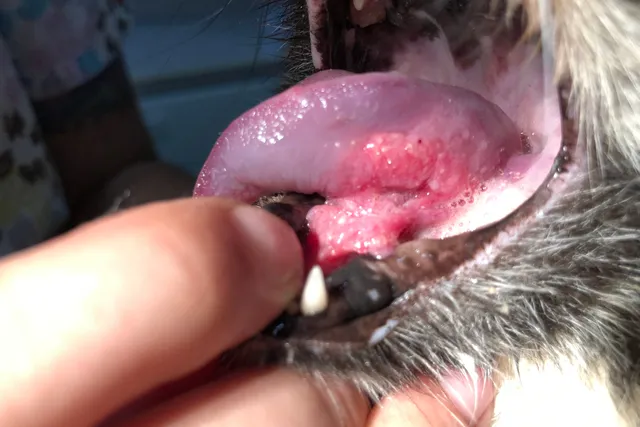
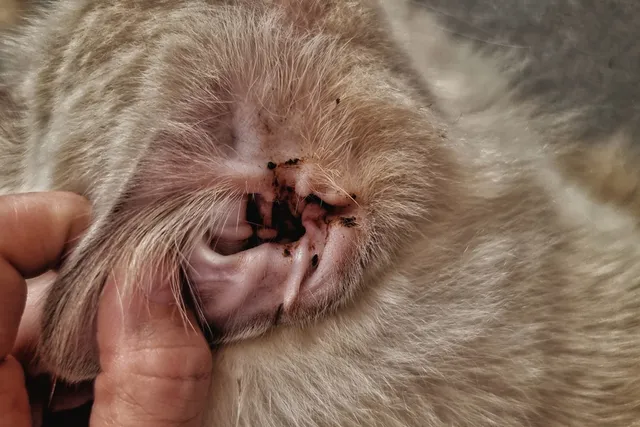
- Inside the mouth (on the lips, under the tongue, mandible, tonsils, gums, etc.)
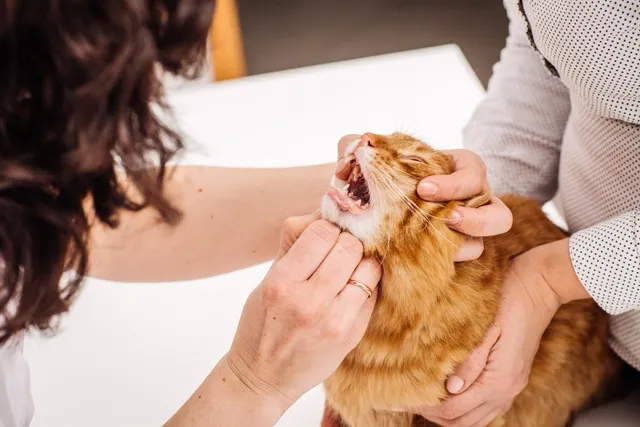
The diagnosis can easily be confused with benign ulcers, gingivitis, or other dental diseases, especially when accompanied by poor dental health.
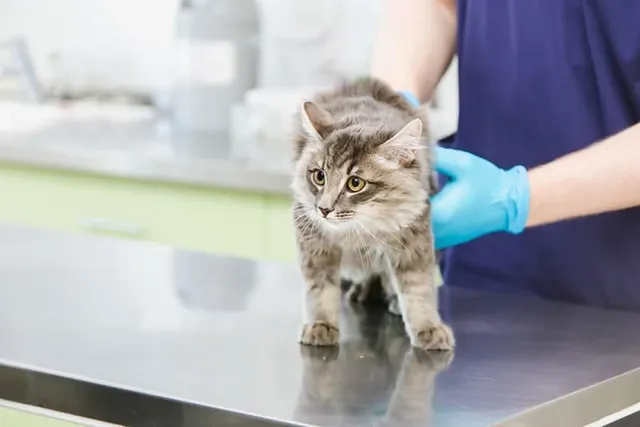
If your cat has skin ulcers or bloody lesions, take them to the vet for a correct diagnosis and appropriate treatment. Tumors located on the nose or ears can be noticed more easily by the owner, which leads to earlier detection and more effective treatment.

What Are the Signs of Squamous Cell Carcinoma in Cats?
The most common area where squamous cell carcinomas occur is the face, especially the ears. Other high-risk areas are those with maximum sun exposure.
Clinical signs of squamous cell carcinoma include:
- Irritation of the area
- Weeping sores
- Crusts
- Ulceration
- Local bleeding
Signs of oral carcinoma may include:
- Loss of appetite
- Weight loss
- Swallowing with difficulty
- Bad breath
- Excessive salivation (sometimes with blood)
In some cases, squamous cell carcinoma may appear as a raised, red area or cauliflower shape. It also has two stages:
- Initial stage: Red-pink nodular lesions appear. They are firm in consistency, with raised edges. The carcinoma looks like a firm skin nodule.
- Advanced stage: The tumor has a variable, irregular diameter and is ulcerated. The advanced phase is often associated with regional adenopathy (enlarged local lymph nodes).
Squamous cell carcinomas usually present as a solitary lesion (i.e., it occurs in a single area). However, there is a type of squamous cell carcinoma that is known as Bowenoid carcinoma or Bowen's disease.2 This carcinoma is a multicentric squamous cell carcinoma and occurs in several areas of the body, but is not technically a metastatic cancer.
When affecting the ears, squamous cell carcinoma usually presents with dark, crusting lesions on the tips of the ears, which may bleed or cause irritation.

What Causes Squamous Cell Carcinoma in Cats?
Any type of tumor or cancer is the result of uncontrolled multiplication of cells. What causes this loss of control does vary and usually several changes have to happen to cells before they will result in the growth of a tumor. In most cases, the cause of squamous cell carcinoma in cats is the prolonged exposure of unprotected skin areas (unpigmented, hairless areas) to UV rays. The UV rays cause damage to the skin cells. Cats between the ages of 7 and 15 are most commonly affected by this type of cancer.
In the case of oral localization, squamous cell carcinoma represents approximately 80% of oral tumors reported in cats, affecting cats 12–13 years old. Compared to the cutaneous form, oral squamous cell carcinoma is more aggressive and malignant.
How Is Squamous Cell Carcinoma Diagnosed in Cats?
A thorough general examination will highlight the presence of skin lesions. If the vet suspects squamous cell carcinoma, they will recommend a cytological examination. Your cat will be put under local or general anesthesia, and tumoral cells will be collected through fine needle aspiration. However, for a definitive diagnosis, a biopsy may also be recommended. This means the vet will remove a piece of the tumor or excise it completely and send it to the lab for diagnosis.
Additional tests can also be recommended, such as blood tests (to assess the general state of health) and chest X-rays (to see if the tumor has spread to the lungs—i.e., if it has metastasized). Fortunately, metastasis is rare, but it can spread to the lungs, liver and kidneys. In addition, the vet can also recommend a CT scan to determine the extent of the disease, especially in cases where the cancer occurs in the mouth.

What Are the Treatment Options for Squamous Cell Carcinoma in Cats?
Depending on the severity of the tumor and how much it has spread to the surrounding tissues, the treatment options for squamous cell carcinoma can be the following.
- Surgical intervention: In general, it is recommended that the excision of the tumor be done completely and widely because the recurrence rate for incomplete tumor resections is frequent. In the case of oral carcinoma, this is often extremely challenging due to the location of the tumor, and the fact that it has usually grown significantly by the time it is detected. Treatment for oral carcinoma may involve multiple modalities, but even so, the prognosis is often poor.
- Radiation therapy: In cases where the tumor is incompletely removed, radiotherapy can help delay or prevent relapse. If the tumor has not been surgically removed, radiation therapy can help slow tumor growth.
- Cryotherapy: Freezing the tumor or tumor margins can be a useful technique for masses that are difficult to access, particularly oral carcinoma.
- Chemotherapy: This type of therapy has minimal or no benefits in treating squamous cell cancer in cats because this type of cancer is considered resistant to traditional chemotherapy. However, there has been some success with injecting chemotherapeutic drugs directly into the tumor itself.
- Tyrosine-kinase inhibitors (toceranib phosphate, e.g., Palladia): This type of drug controls cellular functions like replication, growth, differentiation, etc. Studies have shown that cats with squamous cell carcinoma have a longer average survival time (123 days compared to 45 days in cats that have not been treated with toceranib).
- Other medications: Certain medications, such as COX inhibitors (non-steroidal anti-inflammatories) or buprenorphine (synthetic opioid), can increase your cat's comfort through the analgesic effect that they have. Oral antibiotics can also be prescribed if your cat has secondary infections.
How Do I Care for a Cat With Squamous Cell Carcinoma?
If your vet recommends surgical excision of your cat’s squamous cell carcinoma, time is of the essence. The earlier the mass is removed, the higher the chance of success. Once the tumor grows into deeper tissues, particularly if it affects the bone, prognosis is much less favorable.
If your cat has been diagnosed with oral squamous cell carcinoma, surgery may not be recommended, depending on the size and location of the mass. You may be referred to a veterinary oncologist to discuss the options. Even if you opt for palliative (end of life) treatment, which is very reasonable with this form of the cancer, it is always good to know your options.
The most important factor in caring for a cat with inoperable squamous cell carcinoma is monitoring their quality of life. Anti-inflammatories and antibiotics will help to keep them comfortable, but eventually, eating and swallowing will become difficult, and you will need to make a decision about euthanasia.


Frequently Asked Questions (FAQ)
What Triggers Cancer in Cats?
Several factors can trigger cancer in cats, including UV rays, chemicals, diet, etc. However, in most cases, the causes underlying the onset of cancer in pets are not known. To help reduce the risks of cancer and a range of other diseases, it is recommended to sterilize your cat, feed them a balanced diet, take them to periodic check-ups, and not expose them to chemicals like tobacco smoke. If you have a white cat, or one with white areas on their head, the best thing to do is protect them from the sun. Consider keeping them indoors, and treating windows with a UV-blocking film to reduce exposure to sun-loving cats.
How Do You Feed a Cat With Squamous Cell Carcinoma?
If your cat has been diagnosed with squamous cell carcinoma or any other type of cancer, it is best to feed them a diet that is low in carbs because they fuel the cancer cells. Your cat’s diet should be discussed with a veterinarian.

Conclusion
Squamous cell carcinoma is an aggressive cancer that can spread quickly to the surrounding tissues. This form of cancer mainly affects the tips of the ears but also the lips, tongue, eyelids, gums, etc. The development of this type of cancer is usually triggered by sun exposure, with white and short-haired cats being especially affected. The typical age of appearance of squamous cell carcinoma is 7–15 years.
Initially, the disease can be overlooked because the skin lesions are superficial. After advancing, though, squamous cell carcinoma produces local bleeding, permanent crusting, necrosis, and secondary infections. If you notice any new lesions on your cat’s skin that aren’t going away after a week or two, take them to see your. If the tumor is able to be completely removed, the prognosis is usually quite good. However, in tumors that have invaded deeper tissues, or in the case of oral squamous cell carcinoma, the prognosis is generally poor, with cats surviving 2–5 months, on average, after diagnosis.
Sources
Featured Image Credit: mojo cp, Shutterstock
Expert cat care, straight to your inbox
News, insights, and useful advice, delivered to you.

No spam — unsubscribe anytime.
By signing up, you agree to our Terms & Conditions and Privacy & Cookies Policy.
How useful was this post?
Click a star to rate. You can leave written feedback afterwards. (We read all feedback.)

Catster is a cat magazine and cat website where cat lovers come together and get expert advice about cat behavior, cat health and cat news.