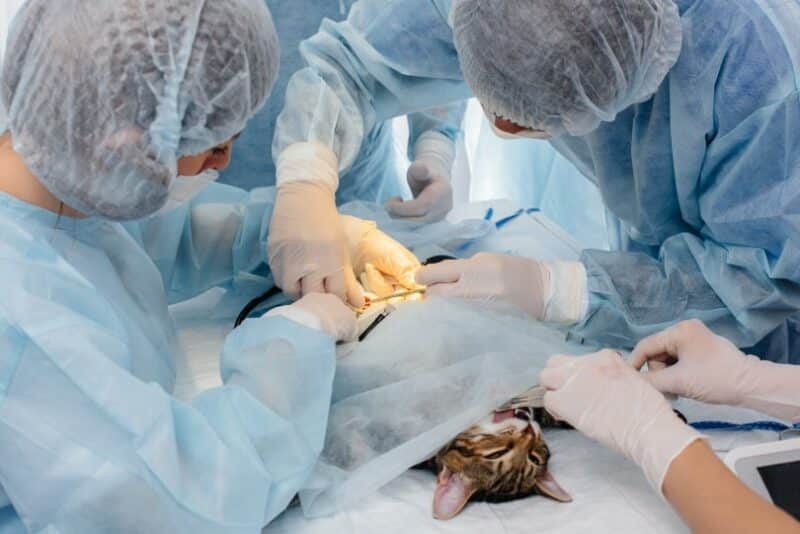
How to Care for a Cat After Surgery: 12 Vet-Approved Tips

In this article
The last thing that we want is for our cats to experience any kind of pain or discomfort, but surgery can be a necessary part of caring for them. Whether you’re having your cat spayed or neutered or something else crops up, we want to ensure that they recover and heal well.
When it’s time to bring your cat home after surgery, it can be nerve-wracking—you may have fears of complications like infections or sutures popping open.
It’s critical that you follow a veterinarian’s aftercare instructions, but we do have a few tips that should help you through this stressful time.

What Should You Do When Your Cat Comes Home After Surgery?
You should encourage your cat to rest and take it easy, which can be challenging, particularly if you had a kitten spayed. Kittens are just so full of beans, even when recovering from surgery!
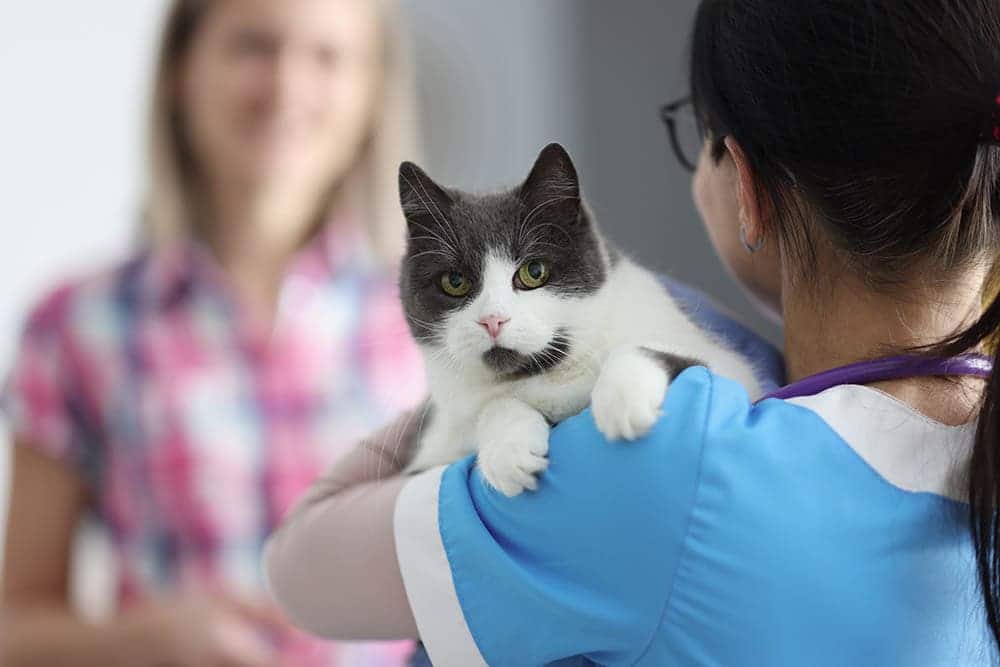
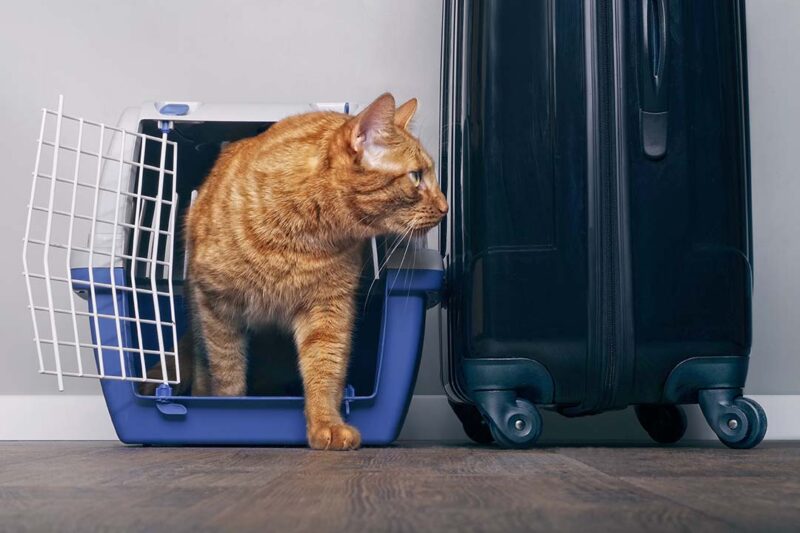
Your cat should be in a carrier after leaving the vet. Once home, wait for them to come out of the carrier when they’re ready. You should also avoid picking them up and moving them around as much as possible.
The 12 Vet-Approved Tips on How to Care for a Cat After Surgery
1. Set Up a Quiet Space
If you live in a quiet place without children or other pets, recuperation will be easier. But if you have a noisier household, you’ll want your cat to have their own room or space away from any chaos.
Ensure that they have everything that they need close at hand, like food, water, and the litter box. Also, make sure they have a comfortable bed, blankets, and whatever else will make them warm and comfortable. The room temperature should be 77 to 86°F (25 to 30°C).

2. Remove Temptations
By temptations, we mean shelves or anything that your cat will try to jump up on. This is particularly essential right after surgery, when your cat will still be groggy from the anesthesia.
There is also the concern of cats doing strenuous activities like jumping and running, which might affect the stitches. You can set up ramps or portable stairs so they can safely get to a favorite spot (although you can never guarantee your cat will decide to use them).
If your cat is an outdoor cat, you should keep them inside until the veterinarian says that they can go out.
3. Isolate Them
If you have children or other pets, you need to keep them away from your recovering kitty as best as you can. This is for as long as your cat needs the isolation in order to fully recuperate.

4. Use a Barrier
If you have stairs and want to prevent your cat from going up or down them, use a pet barrier or some kind of gate to prevent this.
5. Use a Crate
Depending on what the surgery was for, the vet might instruct you to put your cat on cage rest. The cage or crate must be large enough to fit your cat’s things like food and water bowls, litter box, and soft bedding. But it should not be so large that your cat can run around and climb.
Be sure to spend time with them, and make a point of talking to and petting them. Follow the vet’s instructions on how long they should remain on cage rest.
6. Give Medication to Your Cat
If the vet prescribed medication for your cat (pain relief, antibiotics, anti-nausea, or other kinds of medication), follow their instructions and read the medication labels. Even if your cat seems better, you must continue to give them their medicine unless the vet says that it’s okay to stop. It might be in pill or liquid form, which can be tricky to give to your cat. Ask the vet for tips on the best ways to give your cat their medicine.
If it makes your cat sleepy and disoriented, this is even more reason to keep them confined to a room that’s cat-proofed or a crate for their own safety.
7. Put an E-collar on Them
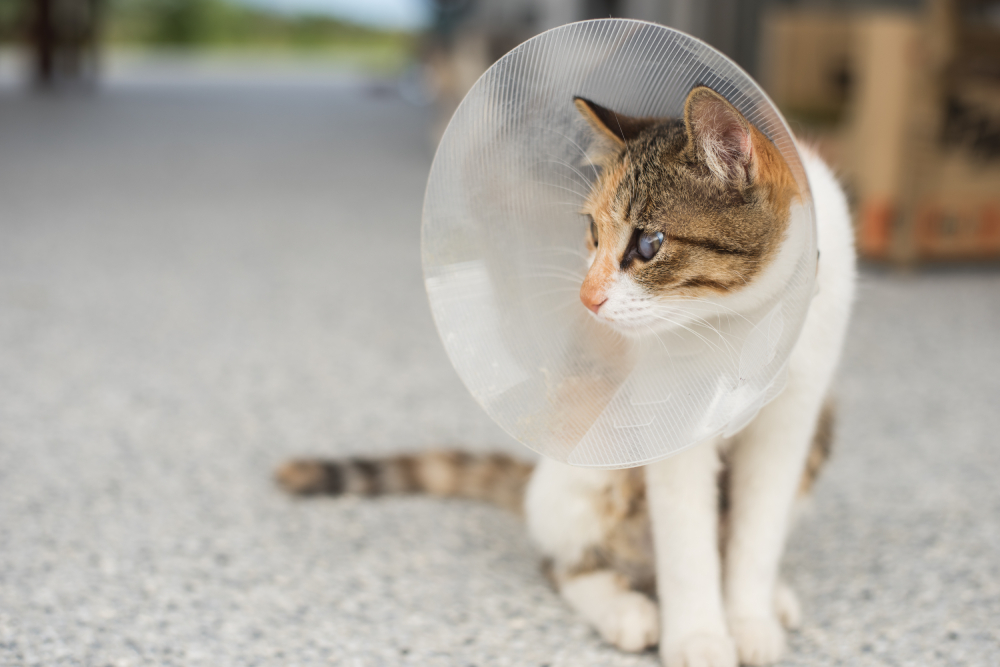
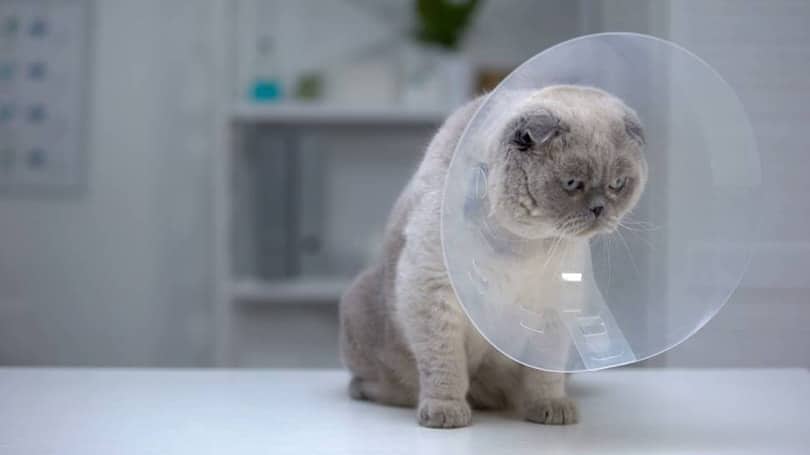
It’s quite likely that the vet will give you an e-collar (Elizabethan collar) to prevent your cat from licking the incision. Your cat will want to give it a thorough cleaning, but this can lead to infection or cause the incision to open.
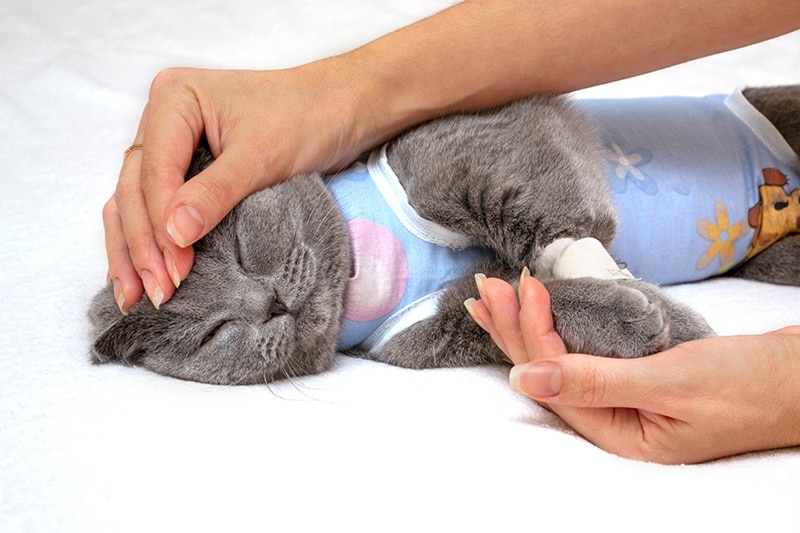
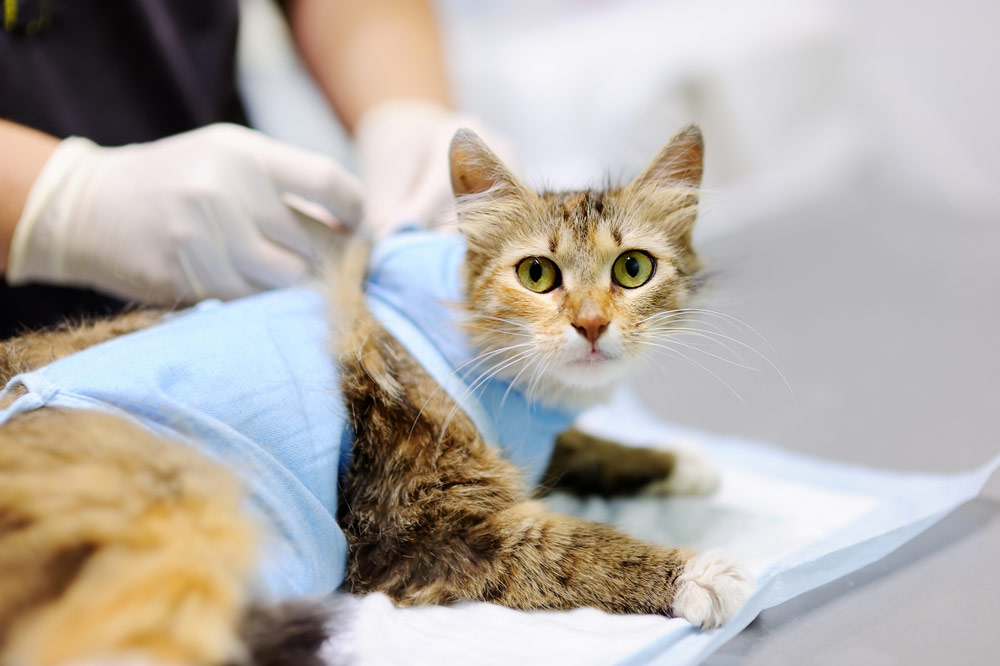
You can also try a recovery suit, which is like a onesie for cats, but be aware that this only protects the body and not the legs, head, or genitals.

8. Use Appropriate Litter Boxes and Litter
This probably won’t be as necessary for surgeries like spaying and neutering, but some recovering cats might need a different litter box. It should have a lower side that makes it easier for your cat to get in and out of. You should also opt for litter that won’t get stuck to the wound. Paper-based pellets are generally recommended.
Your cat should urinate as usual but might have difficulty defecating at first because anesthesia tends to slow things down. Call a vet if your cat seems to be having trouble urinating or they are straining to defecate without success.
9. Check the Incision
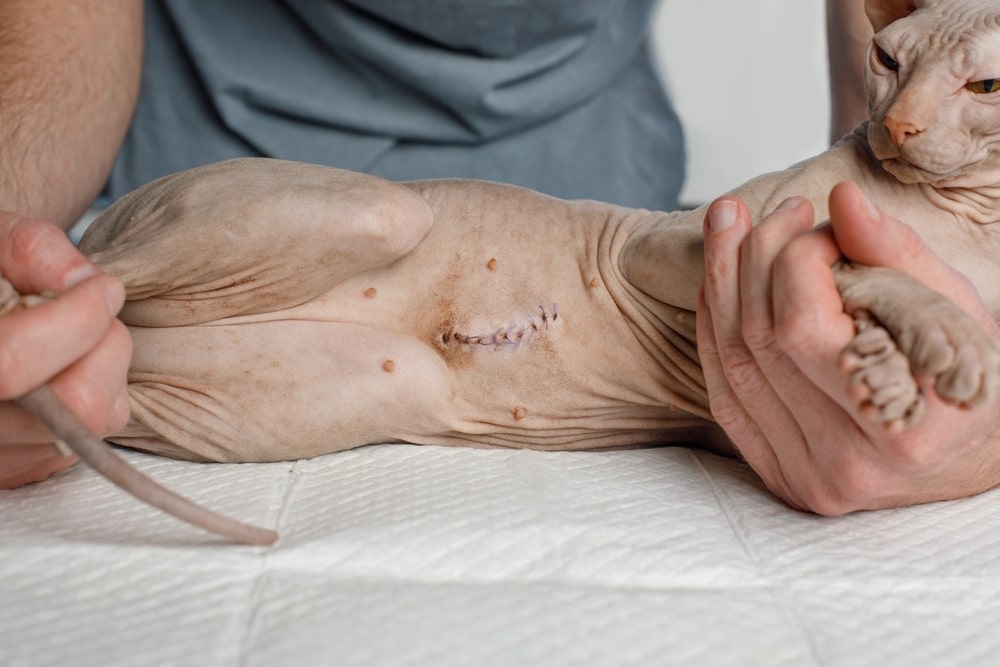
You should inspect the incision every morning and evening. It’s normal for it to be a bit red and swollen for the first day or two, but it should steadily improve.
However, if it continues to stay red and swollen or you start to notice swelling, redness, discharge, bruising, or a bad odor, see a vet.

10. Ensure That They’re Eating and Drinking
Unless otherwise instructed, you can provide your cat with their usual food a few hours after they’ve come home but only give them half of the usual amount. If your cat eats everything and still seems hungry, you can offer the rest of the food about an hour later. Some cats experience nausea due to the anesthesia, so smaller portions might help. But they should always have constant access to clean water.
For cats having certain types of surgery, such as dental extractions or gastrointestinal surgery, feeding instructions may include soft or bland food, so ask a veterinarian if you are unsure.
11. Give Them Attention
Feel free to give your cat tender, loving care. Just be sure to keep your interactions calm. Read your cat’s mood; some cats will prefer to be left alone for the first few days, anyway. Spending time with your cat is even more important if they are on cage rest.

12. Check In With a Vet
This may not be the case for a standard spay or neuter surgery, but more complicated surgeries will require a vet visit for a recheck. This might be to remove sutures or drains or just to put on a fresh dressing. The vet might also need to run blood and urine tests, X-rays, and a physical exam.
It's essential to bring your cat in for these exams as requested and scheduled by the vet to ensure that they fully recover.
If you are concerned or have questions about your cat's health, you can also speak to a vet from the comfort of your own home to help make a plan. They can determine when an in-clinic vet visit should be made.
When Do the Stitches Need to Be Removed?
Most stitches tend to be removed 10 to 14 days after the procedure, but this depends on the type of surgery that your cat had. Also, the vet might have used dissolvable sutures that don’t need to be removed. These are used under the skin and will take a few weeks to months to dissolve.
The vet will let you know if and when your cat needs to come in to have their stitches removed.
When Can Your Cat Resume Their Usual Activities?
This entirely depends on the type of surgery that your cat underwent, but the average time can be 1 to 2 weeks of restricted activity, and 6 to 12 weeks for orthopedic procedures. The vet will give you specific instructions for their recovery.
Conclusion
The most important things to do after your cat has had surgery are to give them time to heal and a quiet place to rest, follow the veterinarian’s instructions, remove anything that your cat can jump onto (like their cat tree), and keep an eye on their sutures.
If you have any concerns throughout the healing process, don’t hesitate to speak to a vet. But hopefully, your cat will heal without any issues and will be back to their usual rambunctious self!
Featured Image Credit: Motortion Films, Shutterstock

Expert cat care, straight to your inbox
Vet-reviewed advice, behavior tips, and the best of Catster. Free, and you can unsubscribe anytime.
By signing up, you agree to our Terms & Conditions and Privacy & Cookies Policy.
Kathryn was a librarian in a previous lifetime and is currently a pet writer. When she was a child, she hoped to work in ZOOs or with wildlife in some way, thanks to her all-consuming love for animals. Sadly, she's not strong in the sciences, so she fills her days with researching and writing about all kinds of animals and spends time playing with her adorable but very naughty tabby cat, Bella. Kathryn is hoping to add to her family in the near future – maybe another cat and a dog.
Join the conversation
Ask a question, share your story, or send private feedback.