Get

In Your Inbox

Catster is reader-supported. When you buy via links on our site, we may earn an affiliate commission at no cost to you. Learn more.

How to Tell Cat Gender By Face? 3 Vet-Approved Ways

Share

close up amber smoke norwegian forest cat

Male and female cats can have physical and behavioral differences. Additionally, each faces its own unique health challenges, which can make it essential to know what sex you’re adopting.

The only 100% reliable way of knowing a cat’s sex is by looking at their genitals, some subtle differences in their facial structure may be able to provide insight. Read on to learn more.

Note: While the words “sex” and “gender” are often used interchangeably, there is a distinction between the two terms with “sex” referring to the biological, chromosomal and physiological characteristics and “gender” being more complex to define and primarily a human concept and social construct. In this article we are referring to a cat’s biological sex.

divider cat paws 2 oct 2024

The 3 Tips on How to Tell a Cat’s Gender By Their Face

1. Head Shape

close up of a tabby cat
Image Credit: elifilm, Shutterstock

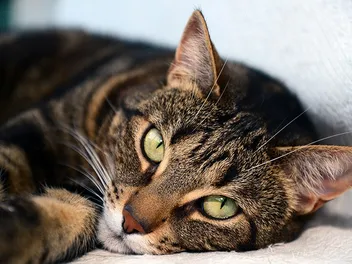
Males, especially unneutered ones, have large, rounded heads with angular facial structures. Their broader faces are due to hormones, namely testosterone. Testosterone is a major factor in muscle development and stimulates the release of growth hormones, which contribute to bone density and growth.

Females will generally have a softer facial shape and more delicate features.


2. Jowls & Snout

Anatolian cat face close up
Image Credit: Vershinin89_Shutterstock

Intact males, in particular, have very prominent jowls (also sometimes adoringly referred to as “tomcat cheeks”) due to the presence of testosterone. A tomcat’s chubby cheeks are more than just a cute facial feature; they can also protect their face and neck during fights.

Their snouts can also be longer and broader than females.


3. Whiskers

close up long white whiskers and nose of a gray cat
Image Credit: Nneirda, Shutterstock

Cats use their whiskers to learn more about their world. Brushing whiskers against objects provides information about the object’s size and texture. A cat’s whiskers come in handy when they’re trying to gauge whether they can fit into tight spaces. So, it makes sense that a male’s whiskers would be longer simply because they’re larger than females.

Intact adult male cats often have larger whisker pads than their female counterparts, adding volume to their face and giving a softer appearance.

divider cat paws 2 oct 2026

How to Tell a Cat’s Gender by Their Genitals

How Do You Determine a Cat’s Sex
You are free to use this image but we do require you to link back to Catster.com for credit

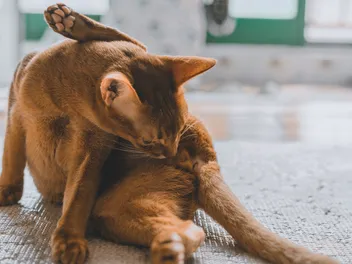
The only surefire way to tell a cat’s sex is by examining its genitals. This can be more difficult before a kitten is 6 weeks old as their genitalia is still underdeveloped and not easily visible. When you have a litter of kittens it can be helpful to compare littermates.

Once they’ve hit 6-8 weeks of age, determining a cat’s gender is usually pretty simple. You’ll need to focus on two things:

  • The distance between the genital open and the anus
  • The shape of the genital opening

To figure out what sex your kitten is, follow these simple steps:

  • Choose a time when your kitten is relatively calm. This will most likely be right after a meal before they settle down for a nap.
  • Sit down on the sofa or a chair and lightly hold the kitten in your lap.
  • Gently lift their tail and look at their back end.
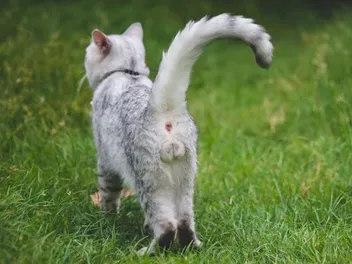
  • The distance between the anus and the opening to the penis in males is more significant when compared to the distance between the anus and the vulva opening in females. The penile opening is circular, while the vulvar opening is more like a straight line.
  • A male kitten’s testicles won’t usually be visible until 6 to 10 weeks of age but you might be able to see excess fur and tissue between the anus and penis where they will be.

If you’re still not sure, your veterinarian can help.

divider cat paws 2 oct 2026Final Thoughts

Male cats are larger in height and weight than their female counterparts, and the same rule applies to their faces. Males, especially intact ones, will have chubbier “cheeks” and large, rounded heads. Their snouts and whiskers are generally longer. Females have softer facial shapes and more delicate features.

While you can use your cat’s face to guess its sex, this isn’t a foolproof method. If you want to know your cat’s gender with 100% certainty, you’ll need to examine their genitals.


Featured Image Credit: Next is nicer-K-R7, Shutterstock

Want content like this delivered to you?

Sign Up For Our Newsletter

News, insights, expert advice, and everything cat

* By submitting, you agree to our Terms & Conditions and Privacy & Cookies Policy.


How useful was this post?

Click on a star to rate (you can leave written feedback after clicking submit)

Help us improve Catster for pet parents!

Your feedback really matters.

What did you like about this post? Also how can we improve it?

Join the conversation

4 Responses

  1. With this new information, I’ll start looking at cats more closely to see if I can identify their gender.
    I also wanted to comment on another article by Chantelle Fowler. Ultrasonic deterrent sounds CAN be heard by children. My sons were able to hear this when they were in high school along with the younger kids in our neighborhood. Another reason to not use this in your home.

    1. Thank you for your comment and feedback, Chris Smith. We are happy to hear you enjoyed our cat gender cues post. You are right, ultrasonic deterrents should be used with caution and never near small children.

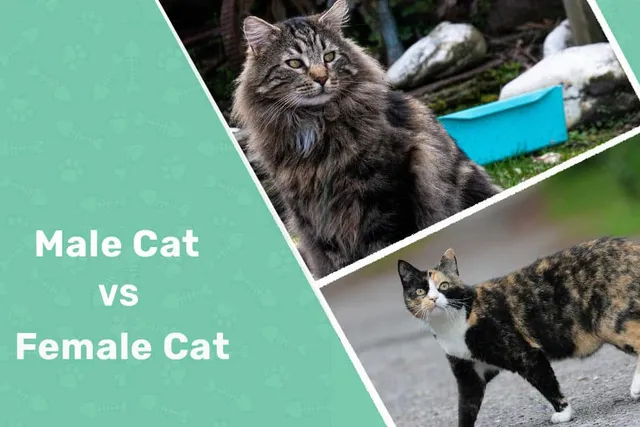
    1. That's right, Vivian ????. You might enjoy the cute graphic in this post: https://www.catster.com/lifestyle/male-vs-female-cats/

Leave a Reply

You’re very welcome to leave a comment or question. Please know that all comments must meet our community guidelines, and your email address will NOT be published. Let’s have a positive and constructive conversation.


Catster's Digital Magazine is Back!

Vet-approved health & behavior advice

Real cat stories & community features

Chatting About the Importance of Spaying/Neutering, Cat Retail Shopping Ban & Red-Level Storms | Chatty Cattys, Episode 30

In this episode of Catster’s Chatty Cattys podcast, Nicole and Dr. Karyn are celebrating a major legal win for pets before diving into...

Is Your Cat Happy? Here’s How You Can Tell

Cats have a reputation for being indifferent, even inscrutable. But despite their seemingly ambivalent appearance, cats experience many emotions, including happiness, and they...

Human Brains Age Like Cats – New Study Debunks the 7-Year Rule

If you’ve ever caught your senior cat staring blankly at a wall, wandering the halls at 3 am, calling out for no clear...

Chatting with Devin About Here! Have a Kitten, Fostering, & Why Two Are Better Than One | Chatty Cattys, Episode 29

In this episode of Catster’s Chatty Cattys podcast, Nicole & Dr. Karyn sit down with Devin, the founder and one-woman show behind “Here...

More related

Why Do Cats Trill When They Jump? 4 Vet-Reviewed Reasons

In the wild, cats remain fairly silent. Their purrs, hisses, growls, and yowls are mainly for communication, not something they do casually as...

6 Best Cat Tents in 2026 – Reviews & Top Picks

Do you have an indoor cat who yearns for the wind on their whiskers, but needs a gradual introduction to the great outdoors?...

Why Is My Cat Vomiting Blood? Our Vet Explains 10 Possible Causes

Occasional vomiting by a cat is not necessarily an issue, but a cat throwing up blood is a sign of a health problem...

Are Flea Collars Safe for Cats? Vet-Verified Facts & Alternatives

Whether yours is an indoor cat or an outdoor cat, fleas are a constant and potential health hazard. An outdoor cat may be...

Keep reading

Can Cats Control Their Tails? Vet-Verified Positions & Movement Explained

Cats use their tails to communicate to the world through body language. You can tell a lot about a cat’s disposition by what their tail is doing. With that being said, cats have full control of their tails. The tail...

tail of a cat on vintage background

How to Choose Your Second Cat: Vet-Approved Tips for Finding a Great Friend for Kitty

If you currently have a cat and are planning to add another to your family, there are several critical factors to consider and steps to take before you can bring your new feline companion home. Once you’ve thought things through,...

two cats playing

Can a Cat Detect Seizures? – Anecdotal Reports and Scientific Facts in Perspective

Most people know that certain dogs qualify as service animals under the Americans with Disabilities Act (ADA). Dogs have the ability to detect seizures in humans before they happen, or respond once they begin, and these dogs are known as...

Domestic cat lying on owner's lap

Can Cats Eat Octopus? Vet-Approved Nutritional Facts

Octopus is considered a delicacy around the world, and you might find yourself wondering if it’s okay to give your cat a piece. After all, we associate cats with seafood, so is safe for them? Octopus is indeed safe for...

Can Cats Eat Octopus

Can Cats Eat Blackberries? Vet-Reviewed Facts & Safety Information

Unlike dogs, cats are extremely fussy eaters, so you don’t often have to worry about them chowing down on something they are not supposed to. Some cats will surprise you, though, and they’ll eat things you wouldn’t think they’d like—such...

Can Cats Eat Blackberries

How to Stop a Male Cat From Mounting: 7 Vet-Reviewed Reasons & What To Do

Watching your male cat mount various objects, you, or even other animals around your home can be frustrating and confusing. It doesn’t make sense, especially if your cat is neutered. To get the behavior to stop, we have to understand...

cat humping another cat

How Do Cats Carry Their Kittens? & Why It Doesn’t Hurt Them (Vet-Verified Info)

If your cat has recently had kittens, you’ve probably seen her moving the kittens around by the scruff of their necks. Many pet parents worry that this hurts the kitten and that the mother cat does it as a form...

Mother cat running with newborn kitten in her mouth

What Is a Normal Heart Rate for a Cat? Vet-Approved Facts & Health Tips

Cats have smaller bodies than we do, so it’s only natural that they’d have faster heart rates. The normal cat resting heart rate is between 160–220 beats per minute (bpm). Recent physical activity will influence a cat’s heart rate, so...

veterinarians examining a grey cat

Love Cats? So Do We! Join the Catster Community

Stay informed with expert pet care insights delivered straight to your inbox! Discover professional guidance on animal behavior, feeding tips, trusted product picks, and much more.


Sign up for the Catster Email Newsletter

Stay informed with expert pet care insights delivered straight to your inbox! Discover professional guidance on animal behavior, feeding tips, trusted product picks, and much more.