How To Keep Your Cat From Jumping After Surgery: 10 Vet-Approved Tips



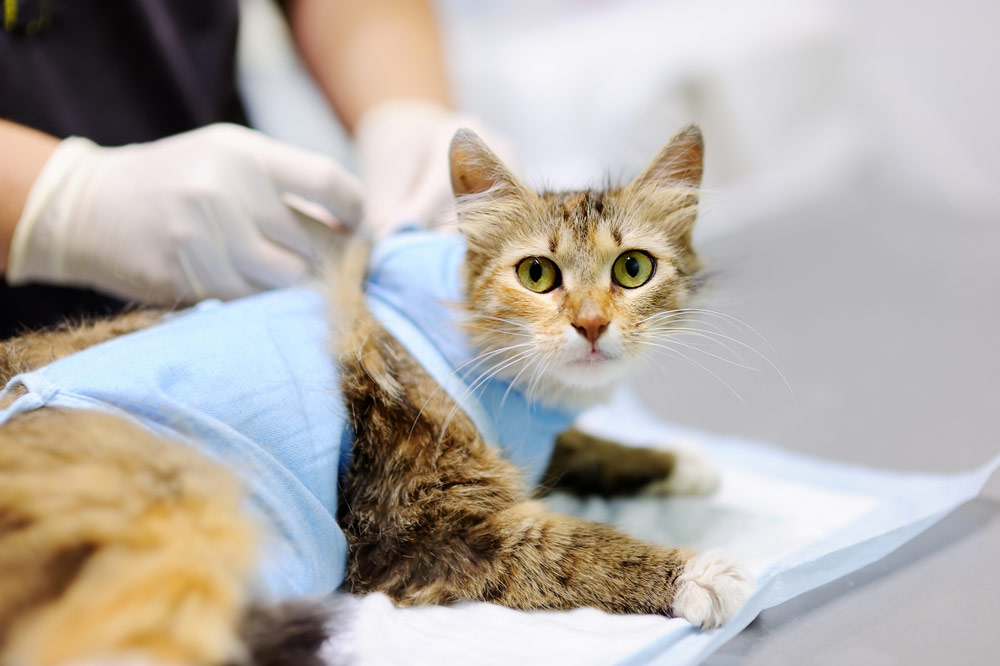
There can be many reasons why your cat has undergone surgery, and we bet you’re just happy to have them home now. Regardless of the cause, your vet provided you with post-operative care instructions and may have asked that you prevent your cat from jumping around. It's important to follow your veterinarian's instructions closely, as jumping or any other strenuous or athletic activity can cause further complications and/or injuries. This affects not only your cat’s health and well-being but also your bank balance and peace of mind.
So, how exactly are you supposed to keep these little predators from leaping and jumping? There are a few things that can help.

The 10 Tips to Keep Your Cat From Jumping After Surgery
1. Provide a Comfortable Recovery Space Where You Can Keep a Close Eye on Them
This is a key point, as this area is where they will be spending most of their time. It needs to be safe, secure, and comfortable. Prepare a quiet and comfy area for your cat to rest and use soft bedding so they can get comfy and hunker down. Ensure the space is warm, free from drafts, quiet, and close to you so that you can closely monitor them. Make sure they have easy access to all their essentials as well, like water, food, and their litter box.

2. Monitor Activity and Boredom
One of the best ways to ensure your cat isn’t jumping is to keep a close eye on them throughout the day. If they start to get bored or a bit too rowdy, redirect their attention to quieter activities or cuddle time with you. During this recovery period where their usual lifestyle, mobility, and activities are restricted, boredom can set in easily. Boredom can and often does lead to restlessness, frustration, and may lead to behaviors that cause injuries. Try to provide suitable activities like food puzzles, your attention, calming pheromone sprays, and treats to soothe them during this period.
3. Confine Them to a Crate
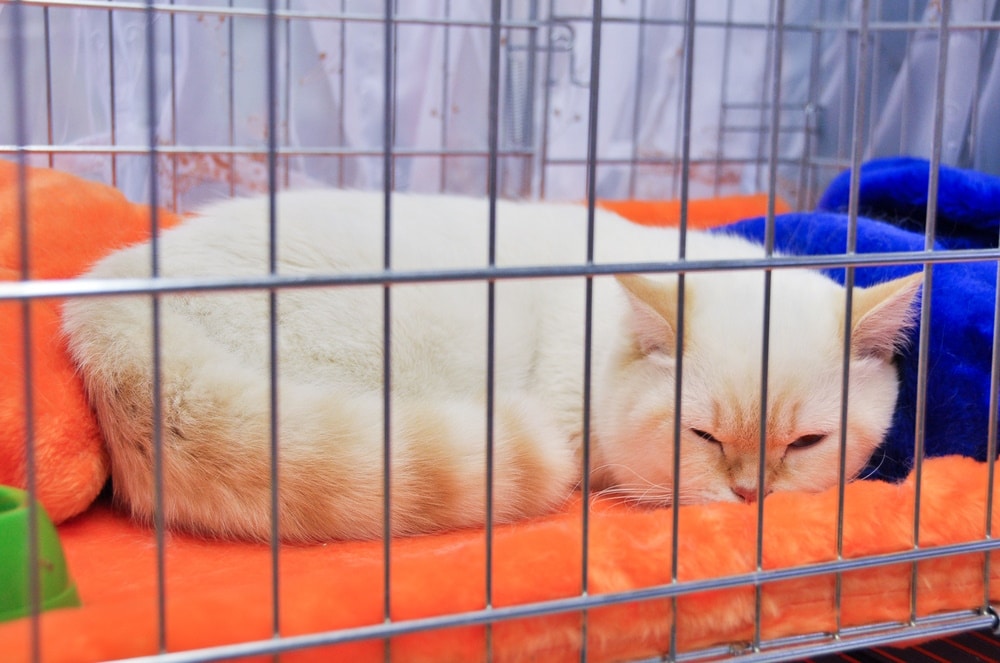
Crates are ideal to use if you have access to one or can borrow one. All your cat’s bedding and essential items mentioned in the first tip can be placed in the crate, but be sure that they have enough room to turn around and stand with ease and are able to move within the limits allowed by your vet.

4. Remove Any Toys That Encourage Movement/Pouncing
Even though your cat loves their wand toys, it’s best to put these away for the time being. Also temporarily remove anything that encourages your cat to bounce off the walls, like springs, catnip toys, or flopping fish. Instead, consider using a puzzle feeder at this time so your cat remains mentally stimulated without having to move too much.
5. Keep Your Cat Indoors
The outdoors simply has too many hardships that aren’t ideal for a recovering kitty, some of which would definitely encourage your cat to jump, like predators and other cats. Even if your cat was outside for most of the day before their surgery, inside is the best place for recovery and monitoring. Don’t worry, you can let them back out once you’ve gotten it cleared by your vet.
6. Temporarily Remove All Cat Towers or Things They Like to Climb
One of the best things you can do to discourage your cat from jumping after surgery is to eliminate any item they frequently climb on, such as cat towers and window perches. Of course, you won’t be able to remove the furniture in your house that your cat frequents, but taking away some of the more enticing climbing apparatuses is a good start. And remember, they’ll be more likely to stay still and rest if you’ve already provided them with a safe and comfy place to recover.
7. Use the Cone of Shame
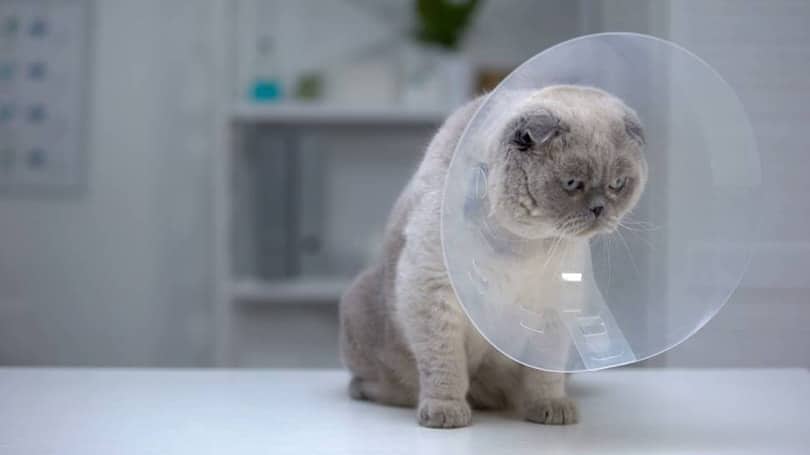
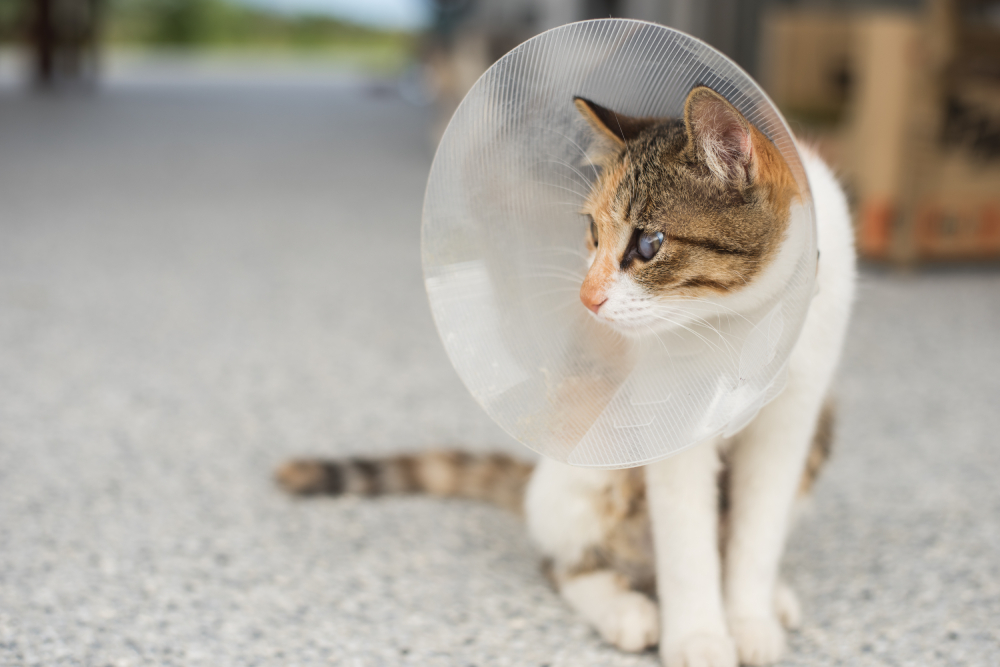
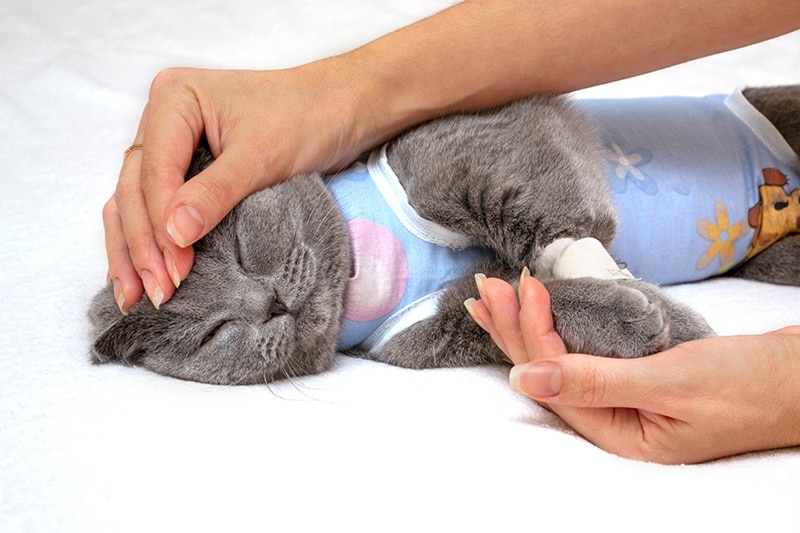
Your vet might recommend using a cone or Elizabethan collar to prevent your cat from licking or biting at the surgical site, which helps to prevent infections and other complications from occurring. These collars may also discourage jumping while your cat gets used to navigating while wearing one. Your cat probably won’t be happy about wearing it, but remember that it’s only temporary and might be best for their recovery.

8. Restrict Noises and Other Scary Things
If your cat is known to be scared of certain noises, whether the culprit is inside or outside, try to prevent them from hearing any sudden loud noises, as they might cause them to jump in fright and/or try to run away. Use a TV or radio to muffle any outside noises, and don't make any extra noise if you can help it. Don’t forget to close windows and curtains as well.
9. Keep Them Separated From Other Pets
It is best to keep your cat away from other cats or pets in the house during their recovery. Other pets encourage playtime and grooming, both of which might cause issues with your cat’s incision. If you have two pets that are closely bonded to one another, consider swapping their bedding so that they can be comforted by the other’s smell.
10. Use a Calming Spray
There are several cat-calming sprays on the market that come in both plug-in and spray forms. These are used to destress and calm cats, and they work by using synthetic pheromones that mimic the chemicals of a mother cat. This will help to make your kitty feel safe and relaxed and should help to keep them from getting too wound up while they recover.

Post-Operative Complications
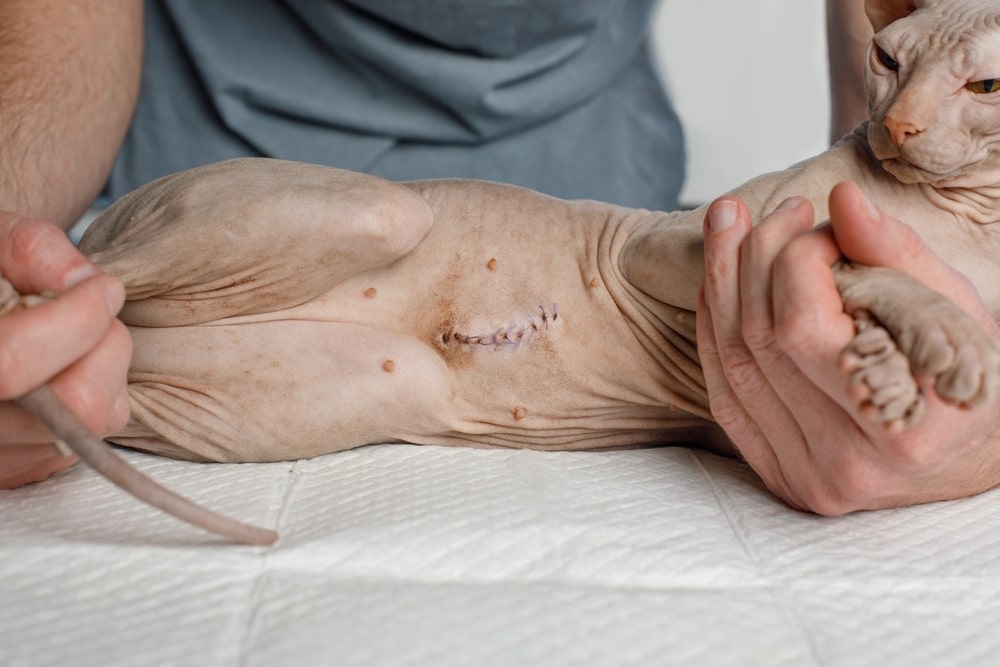
Unfortunately, it’s probably not possible for you to watch your recovering cat every second of every day. If they happen to sneak in a jump during their recovery period, it’s best to keep an eye on the incision site. If you notice any redness, bleeding, or swelling, call your vet immediately and let them know what happened. If they seem uncomfortable or not themselves at any point, then you should also seek advice from your vet.
Conclusion
It is not always easy to keep your cat still while they recover, as they are not always keen to cooperate. But as long as you pay attention, do your best to follow the guidance from your vet and contact them whenever you are concerned, then your cat should recover well and be back to normal in no time at all.
Sources
https://www.cats.org.uk/help-and-advice/health/caring-for-your-cat-after-an-operation
https://vcahospitals.com/know-your-pet/care-of-surgical-incisions-in-cats
https://vcahospitals.com/know-your-pet/post-operative-instructions-in-cats
https://www.picoriveravet.com/site/blog/2022/04/15/stop-cat-jumping-after-surgery
https://www.deerparkvet.com/site/blog/2022/02/28/keep-cat-from-jumping
Featured Image Credit: BadPixma, Shutterstock

Expert cat care, straight to your inbox
Vet-reviewed advice, behavior tips, and the best of Catster. Free, and you can unsubscribe anytime.
By signing up, you agree to our Terms & Conditions and Privacy & Cookies Policy.
Annaliese qualified as a veterinary nurse from Edinburgh and went on to attain a diploma in advanced veterinary nursing in surgery from London. Throughout this time, she worked in both small and mixed veterinary practices and gained head nurse status.
Having cared for thousands of patients and owners, and after more than two decades in the veterinary and pet care industries, both as a vet and a writer, she has now officially retired her scrub suit and now works as a full-time writer.
Join the conversation
Ask a question, share your story, or send private feedback.