How Do Cats Ask for Help? Vet-Verified Signs to Look For



Anyone who has ever lived with a cat has probably wondered more than once what their buddy was trying to tell them. Cats meow, stare, and even paw at us to get our attention, but is there a way to know if they’re asking for help or searching for a treat or a few cuddles? While it’s not always possible to know precisely what cats want, you can sometimes figure out if they’re asking for help mainly through the process of elimination.
Cats show they need help in different ways depending on the situation. Many felines meow when they want help with something, as it is thought that meowing is something domestic cats use to solicit favors from humans. Keep reading for more on the ways cats ask for help.

How Do Cats Ask for Help?
Your cat may show several signs that they need help with something. It’s important to keep in mind that not all signs necessarily indicate trouble. Cats may also communicate with you if they want treats, cuddles, food, or if they just enjoy your presence and companionship.
1. Meowing
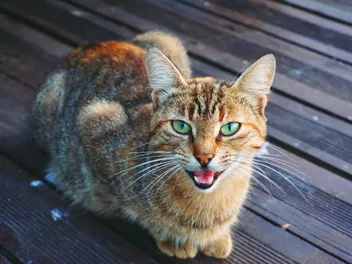
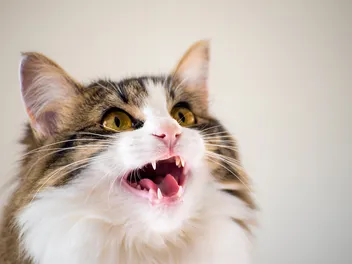
Adult cats generally use a meow as one of the most common means to communicate with humans. So, when your cat is meowing at you, there is a good chance they’re telling you something is up or asking for you to feed, help, or play with them. Cats meow when they’re hungry, and some even stand by their food bowls when it’s past their meal time.
They also meow if they need your assistance getting down from high perches like cabinets and bookcases or if they get stuck somewhere, such as behind a locked door. Many look deeply at their humans and meow while standing near toys when interested in some playtime.

2. Yowling
Yowling is referred to as prolonged, incessant low-pitched meows that cats may sometimes produce. Broadly speaking, yowling is usually associated with pain, discomfort, or distress - signs that your cat might need assistance. It is also sometimes associated with other signs of pain, stress, or illnesses, which we’ll discuss shortly.
Yowling can also be associated with a female cat in heat. Cats in heat often yowl in an attempt to escape to find a mate or to lure males to their location. Male cats that are intact and able to smell or hear a female in heat may also yowl in an attempt to escape and mate with the female.
3. Refusing to Use the Litter Box
A cat in distress or pain and in need of help (in the form of a behavior or medical intervention) might refuse to use their litter box. In some instances, your cat may want to use a litter box, but a medical issue might lead to an inability to urinate or defecate.
In such instances, your cat may painfully yowl when trying to use the litter box, appear very distressed, and show other signs of pain. This is considered a medical emergency, and if your cat cannot pass urine or feces, you should immediately seek veterinary attention.
Other Signs Your Cat Might Be in Pain
At other times, your cat might be refusing to use the litter box because it’s not up to their preference. Some cats often refuse to use stinky litter boxes, and it’s the only way they can communicate their need for a clean place to relieve themselves. Cats have incredible noses, so it makes perfect sense for them to be particular about litter box smells.
Litter boxes should be scooped daily to keep the material fresh for your cat. Change the entire litter about once a week, and remember to give the box a good wash with unscented soap and hot water to remove odors.
Some cats dislike the smell of scented litter and may go outside the box if they’re repulsed by the aroma. However, unscented products with odor-absorbing additives often control smells without adding a perfumed fragrance.
4. Spraying
Cats may spray when feeling insecure or threatened. Neighborhood cats can trigger the response, as can the introduction of a new pet or another cat to the home. It’s a way of marking territory, as feline urine contains pheromones cats use to communicate information about themselves and notify other animals that a particular area has already been claimed.
Both male and female cats spray, but it’s most commonly seen in intact male cats. Identifying and removing stressors often remedies the problem. Sprayed urine tends to be more pungent than regular cat pee, so consider using a good enzymatic cleaner to prevent lingering smells.
5. Hiding
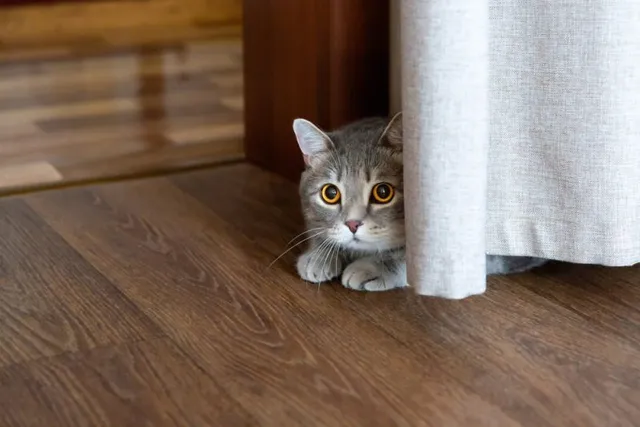
Cats often hide when stressed, particularly when something new and unexpected spooks them. They can also be overstimulated by loud, repetitive noises and massive environmental upheavals, such as during home renovations. Providing cats with feline-friendly spaces where they feel safe and protected often goes a long way toward reducing stress and anxiety.
Providing a room far away from loud noises and off-limits to any adventurous pets gives cats a place to retreat when overwhelmed and anxious. Cat trees and shelves provide vertical play and lounging room, which often helps calm cats, as they often feel more secure at high elevations.

6. Change in Grooming Habits
Most adult cats are fastidious when it comes to keeping themselves clean. Kitties often spend hours grooming daily, so it’s usually a sign that something’s not right when cats stop grooming themselves effectively. Cats with joint problems such as osteoarthritis sometimes have difficulty grooming due to their reduced flexibility.
Cats experiencing pain caused by other conditions often have problems bathing themselves as well. At other times, a cat that’s unwell (such as down with a flu) may simply not groom themselves because they’re not up for it.
Sometimes, though, a cat might be in need of help if you notice them over grooming themselves, almost compulsively. This can be an indication of a behavior problem, or may also be caused by other issues, such as a food intolerance/allergy or external parasites, such as fleas or mites. A cat that overgrooms may sometimes be seen biting their skin as they groom and may sometimes bite or scratch themselves to the point where they end up with wounds or patches of skin without any fur.
7. Not Eating
Cats often eat less or show a lack of interest in food when they’re unwell. Disinterest in food can be a sign of illness; this includes diseases as well as issues such as extreme distress or fear. A loss of appetite can occur for several reasons, but it’s a serious condition that requires prompt veterinary assistance.
Cats have a very low tolerance for prolonged periods of fasting. Therefore, if your cat refuses to eat for a period of time exceeding a day at most, you should seek veterinary advice.

Conclusion
Cats ask for help in many ways. They often meow when they want food or attention, but they may also yowl when in pain. However, some of the indications that cats need assistance are more subtle. Behavioral changes, including litter box problems, may signal that your cat requires your help. Interpreting your cat’s physical and verbal cues for help is challenging, but if you’re concerned about your pet’s behavior, it’s best to visit the veterinarian for a complete examination.
Sources
Featured Image Credit: New Africa, Shutterstock
Expert cat care, straight to your inbox
News, insights, and useful advice, delivered to you.

No spam — unsubscribe anytime.
By signing up, you agree to our Terms & Conditions and Privacy & Cookies Policy.
How useful was this post?
Click a star to rate. You can leave written feedback afterwards. (We read all feedback.)
Lorre Luther is a writer who is firmly convinced that cats are smarter than humans. She left her law career in the United States and moved to the Netherlands to follow her dream of becoming a writer. Lorre currently lives in Rotterdam, she enjoys traveling and greatly appreciates the beauty of nature. Lorre has a spot for animals and admires the intelligence of cats.