Intestinal Blockage in Cats: Vet Reviewed Signs, Causes & Treatment

If you suspect your cat may have an intestinal blockage, please know that your cat needs emergency treatment ASAP.
Knowing the signs of an intestinal blockage is imperative for all pet owners. Puppies and kittens are especially prone to this condition because of their curious natures. Dogs and cats explore their worlds via their mouths. So, a playful feline may ingest something they shouldn’t, leading to this medical emergency.

What Is an Intestinal Blockage?
An intestinal blockage is a gastrointestinal obstruction confined to the intestines. It can be either partial or complete. The result is an animal that can’t eliminate digested food. It’s not hard to imagine how it can quickly become life-threatening. Scientists have also identified a type usually seen only in cats called a linear obstruction. A linear obstruction occurs when a feline ingests a piece of string or a similar object.
Unfortunately, it’s a common pet emergency in both dogs and cats. Felines are curious about the world around them, and a shoelace or cord on a jacket makes the perfect “prey.” A cat may inadvertently swallow something indigestible that may or may not pass, which can become a real problem.
Usually, the waves of muscle movement in the intestines or peristalsis will get the foreign body out of the cat’s system. It becomes serious if multiple objects create a complete blockage. An ingested string can get stuck inside the animal’s body. Complications can occur if whatever the pet ate damages the internal organs or perforates the intestines.

What Are the Signs of an Intestinal Blockage?
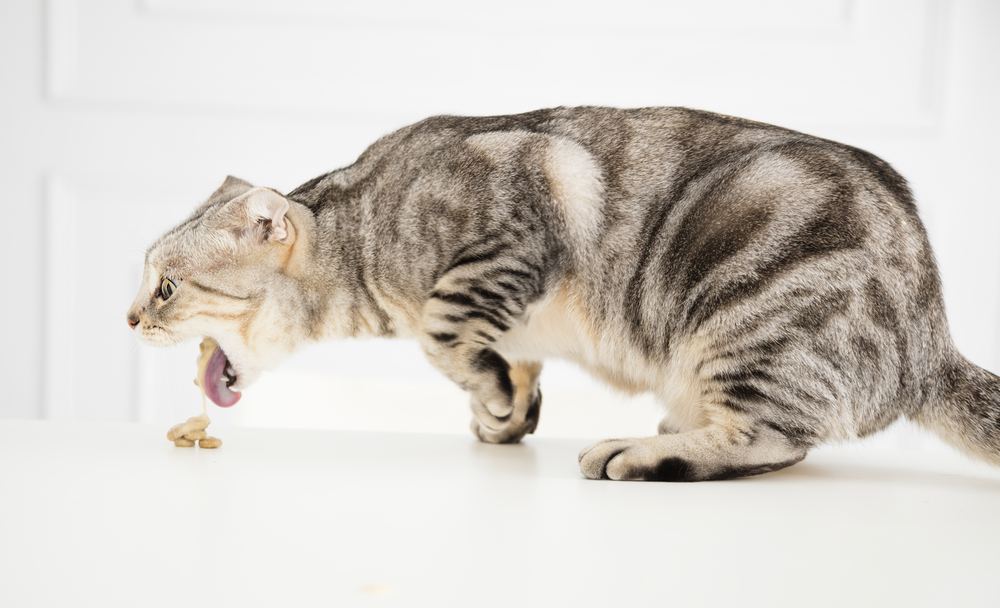
Your cat might not show any signs of an issue if it’s a partial obstruction. It may just pass the foreign body. If the blockage is interfering with your pet’s elimination, though, you’ll likely see more dramatic signs that something is wrong. One of the first signs you may notice is changes in behavior and hiding. Being sick or injured is a sign of weakness to these animals, making this thing instinctive.
Other signs include the following:
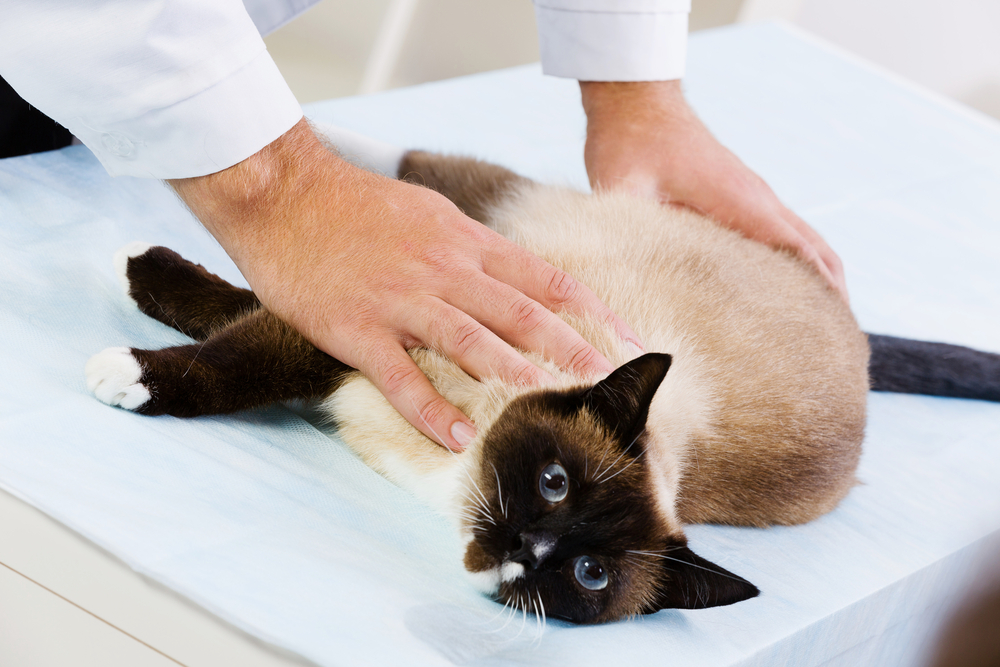
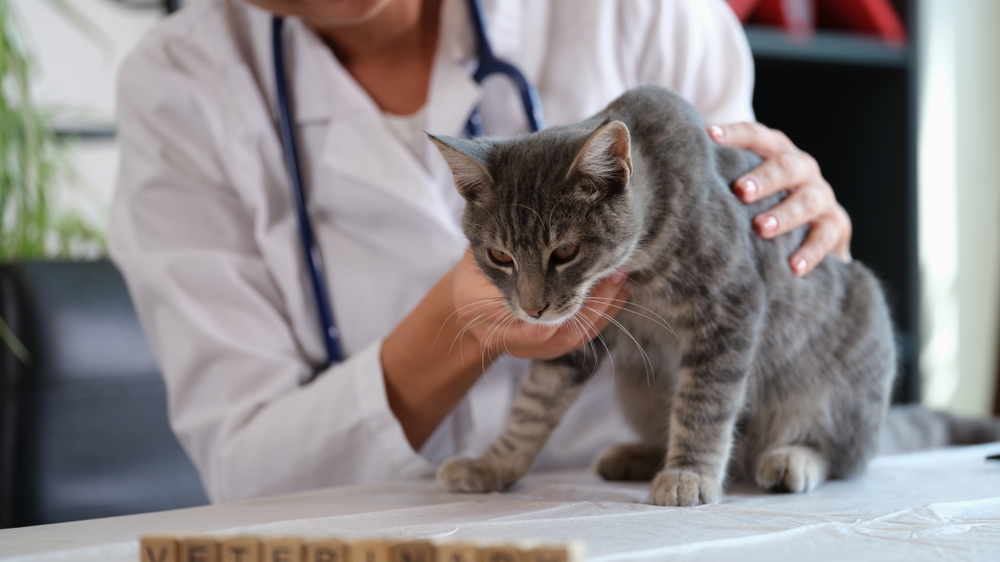
A vet will likely start with a physical exam and a history of your pet’s symptoms. If necessary, they will usually follow these preliminaries with X-rays and an abdominal ultrasound. The former can identify solid objects, such as coins or toys. The latter is useful for other foreign bodies, like a piece of string that wouldn’t show up on an X-ray.
Seek veterinary advice if you’re concerned about your pet’s well-being.
What Are the Causes of an Intestinal Blockage?
One of the most common causes of an intestinal blockage is a foreign body your cat has ingested. However, other things may lead to this condition that are often seen more in felines than canines. They include the bane of every cat owner, hairballs. Frequent grooming can lead to the ingestion of large quantities of hair, which can affect the animal’s quality of life or even their lifespan.
Other causes include tumors in the cat’s GI tract that can interfere with peristalsis. A complication of a spinal injury can induce severe constipation and lead to the enlargement of the pet’s colon. Veterinarians call this abnormal enlargement megacolon. In rare cases, the intestines may telescope into themselves, resulting in a condition called intussusception.
Several things can bring about intussusception, including drastic diet changes, internal parasites, and ingestion of foreign bodies. That can complicate the treatment of an intestinal blockage and increase the risk of complications. It’s worth noting that pets infected with parasites usually show other signs of a health issue, including diarrhea and vomiting.
How Do I Care for a Cat With an Intestinal Blockage?
If you’re sure your cat ate something, the vet may hospitalize your pet and monitor them to see if they pass the foreign object. That’s an option if the item is small and smooth. More often than not, surgery is the best treatment. Even though it’s invasive and risky in itself, it reduces the chances of complications caused by further damage to the intestine.
The veterinarian will attempt to remove the foreign object based on the imagery data. If it caused damage, they might need to take out severely damaged sections of the intestine or reconstruct parts of it. Linear items, like string or rubber bands, can make an already invasive procedure even more complicated, particularly if it has become embedded or attached to other structures.
Your cat will likely remain hospitalized for a couple of days so the vet can monitor your pet’s recovery. They’ll likely receive IV fluids, pain meds, and antibiotics if deemed necessary. The immediate goal is to ensure your kitty is keeping down food and eating on its own. Much depends on how well your pet manages this highly stressful situation.
Once your cat is home, supportive care involves following up with any meds the vet has prescribed. They’ll likely recommend restricting your pet’s activity to allow the stitches to heal. They may also schedule an exam to check on the incision site and ensure your kitty is healing properly. Treatment costs will undoubtedly run into four figures if emergency surgery is needed.

Frequently Asked Questions
What Is the Prognosis for a Cat Diagnosed With an Intestinal Blockage?
It depends on what your pet ingested and how soon you act. An object with rough edges is more problematic and also reduces the treatment options. A bit of string is bad, but a lengthy strand is worse. The prognosis is good in many cases. However, if the obstruction has caused complications like an infection, the chances of a complete recovery are less clear.
Does Pet Insurance Cover the Treatment for an Intestinal Blockage?
If you opt for a comprehensive plan, your insurer will likely cover GI obstructions. Your out-of-pocket cost will depend on your deductible and the amount of coverage. We suggest determining if the company will cover this procedure if you're bringing a new kitten home.

How Can I Prevent an Intestinal Blockage From Occurring?
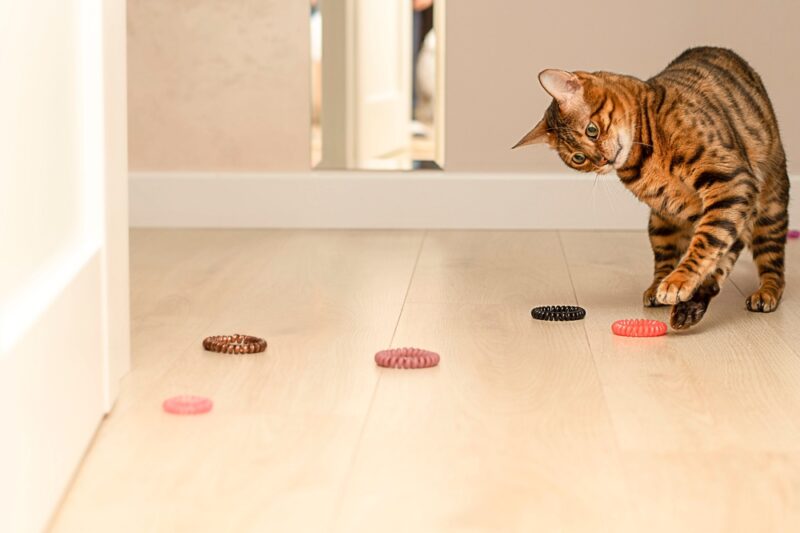
Sometimes, owning a cat is like having a toddler in your home. You’ll have to cat-proof your home with many of the same mom tricks to keep them out of mischief. We recommend picking up any strings, rubber bands, or similar materials your pet will treat as a toy.
Conclusion
An intestinal blockage is a medical emergency requiring prompt treatment to ensure your cat's survival. You should always contact a vet if you notice any abrupt changes in your pet’s behavior. It may point to something less serious. However, given the importance of immediate care, it’s not worth the risk of allowing your cat’s symptoms to resolve on their own.
Featured Image Credit: Bogdan Sonjachnyj, Shutterstock

Expert cat care, straight to your inbox
Vet-reviewed advice, behavior tips, and the best of Catster. Free, and you can unsubscribe anytime.
By signing up, you agree to our Terms & Conditions and Privacy & Cookies Policy.
Chris has been a science-focused pet writer since 2009, specializing in health and the environment. She lives with her husband Norm and three amazing cats in the land of 10,000 lakes. When she's not writing about cats, Chris also enjoys boating and sampling wine. She has her WSET 1 and 2 certifications and is currently pursuing her Certified Wine Specialist Award (CSW).
Join the conversation
Ask a question, share your story, or send private feedback.