7 Ways to Keep Cats Safe From Skunks (Vet Approved Tips & Advice)


In this article
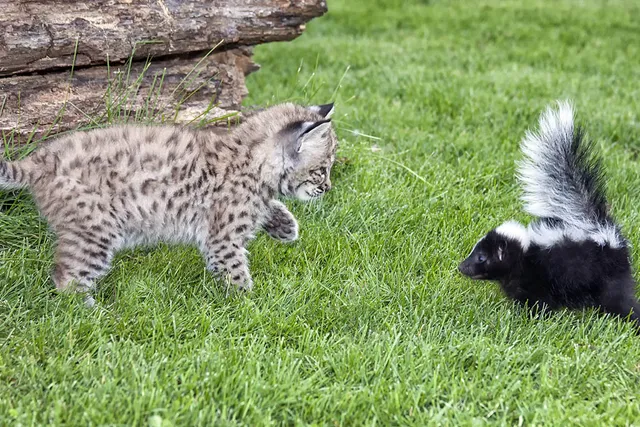
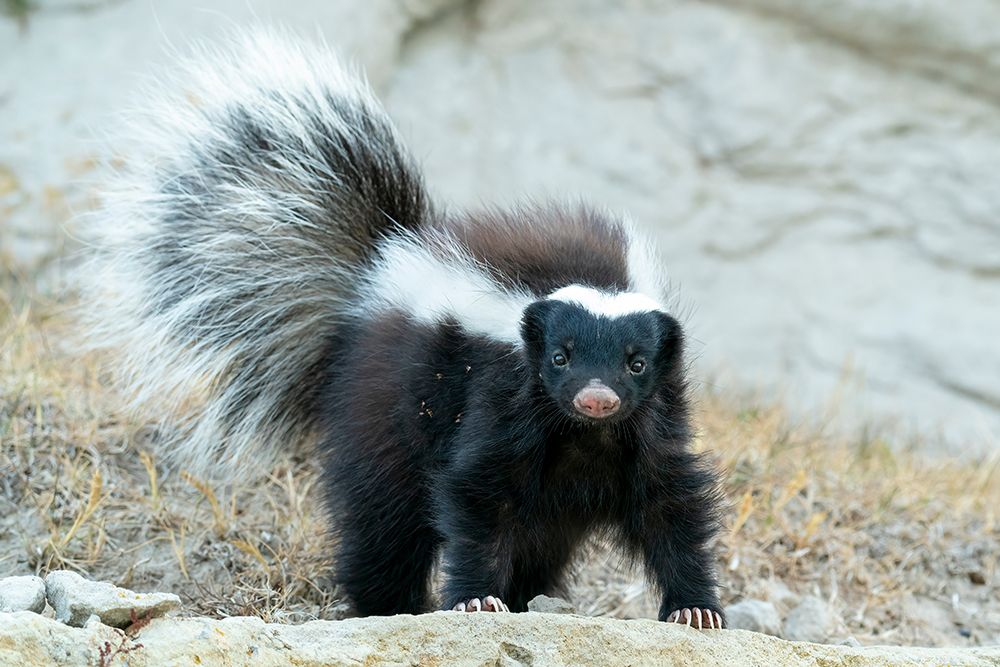
Wildlife can be adorable, graceful, and intimidating–but in the case of the skunk, it can also be a hassle. If your cat has been sprayed by a skunk before, it was surely an experience you do not want to be repeated. Rather than simply hoping that a skunk doesn’t choose to terrorize your cat and your home again, you can take proactive steps to prevent another nasty stink bomb.
In this article, we will look at seven ways to keep cats safe from skunks. There are a variety of tips and tricks in this list, so there is surely a solution for everyone in this list.

The 7 Ways to Keep Your Cat Safe From Skunks
1. Keep Your Cat Indoors
Keeping your cat indoors is the only way to be certain that they will never be sprayed by a skunk.
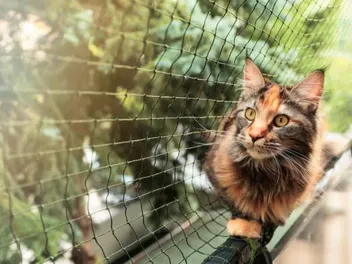
If your cat has been an outdoor cat for a while, you may worry about suddenly keeping them indoors. While it may be a tough adjustment at first, your cat can be trained to enjoy and thrive indoors, even if they have experienced outdoor life before.
To encourage your cat to stay indoors, give them plenty of vertical climbing spaces and toys. This will keep them active during the day and ensure that they don’t need to wander outside to explore. Likewise, give them lots of attention. If they are feeling lonely, then the desire to go outdoors may be stronger.

2. Make Your Yard Unappealing to Skunks
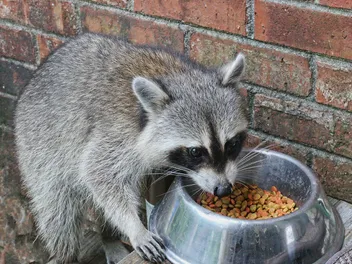
Skunks, like other wild animals, are opportunists. If you have an unsecured garbage can or a bowl of cat food left out, they are going to be attracted to your home. This increases the risk of your cat being sprayed by a skunk.
Therefore, to keep your cat safe from skunks, it is a good idea to make your yard as unappealing as possible to wild animals. Keep your trash and recycling secure, and do not leave any pet food out in the open. This will make skunks less inclined to wander into your yard.
3. Prevent Skunks From Denning
If a skunk finds a den to live in near your home, you can bet that they will keep showing up. The chances of them running into your cat will be worryingly high.
If you spot a hole you think a skunk is dwelling in, you should first try and determine if it is empty. Loosely fill the den holes with leaves, straw, soil or other natural materials. Skunks are nocturnal and if there is a resident skunk it will be able to push past the obstruction to reopen the hole. If the hole remains plugged for two or three nights, you can assume that the den is unoccupied and it can be filled in and sealed off.

4. Use Humane Repellents
Another way to keep skunks out of your yard is to use humane repellents. Used kitty litter or homemade castor oil repellents are two possible deterrent options.
When using repellents, place them around or inside the suspected skunk den. Focus on one side so that the skunk is forced to pass them to enter or exit.
As annoying as skunks can be, they are still living creatures deserving of dignity and respect. Therefore, it is vital that you do not use inhumane methods such as poisons to eradicate the skunk.
5. Become a Nuisance
Skunks bother you, so why not bother them back? By becoming a harmless nuisance, you can annoy skunks into leaving your home alone.
You can do this by continuing to loosely pack their den hole with soil or other natural materials, as well as adding lights and noises around their den. When disturbing the skunk, make sure none of your methods are cruel or harmful, and that the skunk is not close by when setting up the disturbances. Likewise, ensure that your tactics don’t disturb your neighbors by accident.

6. Clean Up Your Yard
This method may be a bit more laborious than some of the others mentioned, but it can be incredibly effective. Since skunks like to build dens, it is advised that you clean up your yard to make that more difficult and less appealing for them.
For instance, if your yard is littered with debris or covered in tall grass, then skunks will have plenty of nooks to hide in. Keeping your yard in good shape is a great way to keep skunks away from your home.
7. Eliminate Under-Structure Access
Another way that skunks like to create their dens is by finding under-structure spaces. This can include crawlspaces, space beneath decks, or even sheds. If possible, eliminate these under-structure spaces by filling them in.
If it isn’t possible (such as a crawlspace), then it is recommended that you board it up or otherwise prevent easy access to the space. Wooden boards, wire mesh, and other obstacles are great tools. However, first check these spaces to ensure that no wildlife is inside when you block it in, or else they will be trapped inside.

What to Do if Your Cat Is Sprayed by a Skunk
Even when you take precautions, a skunk may still spray your cat. So, what do you do if a skunk sprays your cat?
Firstly check your cat for any bite or scratch wounds. If your cat has a wound then seek veterinary treatment as soon as possible.
Skunks can carry rabies which can be transmitted through bite and scratch wounds, so it’s important to make sure your cat is up to date with rabies vaccination. If your cat has been sprayed directly in their face, which is not uncommon, you should also get them checked. As first aid you can flush their eyes with cool, clean water but skunk spray can damage a cat’s eyes. If the spray has been inhaled or ingested it can cause drooling, vomiting and, in rare cases, even cause hemolytic anemia.
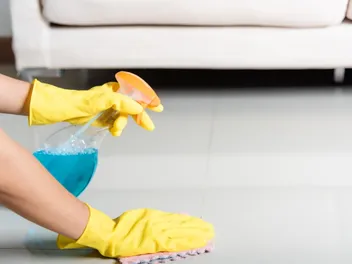
Your cat will need to be washed, we recommend using a commercial special pet shampoo designed for this purpose, and keeping one to hand if you know skunks are a risk in your area. A homemade mixture used for skunk odor removal is recommended on many online sites containing: 1 quart of hydrogen peroxide (3%), 1 teaspoon of liquid soap/baby shampoo and ¼ cup of baking soda .
Cats are much more sensitive to hydrogen peroxide than dogs and we would only recommend using this concoction under veterinary direction. They are also more difficult to bathe and you must keep it away from your cat’s eyes, nose and mouth when washing them. Use it in a well-ventilated area and never store the solution.
One wash may not be enough to eliminate the odor entirely, so be prepared to bathe your cat multiple times.

Conclusion
It’s never pleasant to have your cat sprayed by a skunk. While you can wash the odor from their skin and coat, it is much preferable to prevent the skunk from spraying them in the first place. We hope this article has given you some ideas to keep skunks away from your home and your pet and hopefully spare you from dealing with such a terrible stench.
Sources
Featured Image Credit: Rob Jansen, Shutterstock
Expert cat care, straight to your inbox
News, insights, and useful advice, delivered to you.

No spam — unsubscribe anytime.
By signing up, you agree to our Terms & Conditions and Privacy & Cookies Policy.
How useful was this post?
Click a star to rate. You can leave written feedback afterwards. (We read all feedback.)
Cats are Jordyn’s passion. Whenever she has the opportunity she loves to learn about animals and share her knowledge with everyone. She is devoted to her sassy tabby cat named Jack and works hard to buy him his favorite treats and toys. Discovering new ways to better care for her cat is always on her to-do list, and she is eager to help pet parents everywhere. In Jordyn's spare time, she loves to write, read, and take long walks. She has a creative spirit, which often helps her to come up with funny cat names.