Get

In Your Inbox

Catster is reader-supported. When you buy via links on our site, we may earn an affiliate commission at no cost to you. Learn more.

6 Most Common Worms & Parasites in a Cat (Vet Answer)


Share

Cat with fleas

No one likes to think of worms and parasites infesting their pet cat. But what exactly are they, and what are the most common ones we see in cats? “Parasite” is a general term for an organism found on the skin and includes mites, ticks, or fleas. Worms, on the other hand, live in various parts of the intestinal tract.

Many cats get parasites or worms from living outside and the environment they live in or from catching prey. Sometimes, cats get parasites from other cats or dogs. Rarely do cats get parasites from people, nor do they bring them into the house.

There are many types of worms and parasites, and each is unique. Read on to learn more!

divider cat faces oct 2024

The 6 Most Common Worms & Parasites in Cats

1. Fleas

close up fleas on cat
Image By: KanphotoSS, Shutterstock

Most people have heard of fleas. In many instances, fleas are easy to spot and diagnose at home. The same fleas that affect dogs affect cats, and they can bite humans, too! Cats generally acquire fleas by exposure to another cat, dog, or other outdoor animal that has them.

While there are multiple types of fleas, the cat and dog flea is called Ctenocephalides felis. Cat fleas carry risks that many people aren’t aware of. Aside from being itchy and annoying, cat fleas can also carry diseases.

Cats that ingest fleas while grooming can develop tapeworms. Fleas can also cause “cat scratch fever,” which infects humans and causes lymph node swellings and fever from a bacterial infection. Likewise, fleas can cause anemia (lack of red blood cells), which can even lead to death—especially for kittens.

Generally, cats that are worse off can have an allergic reaction to flea bites. In these instances, even a single flea bite can cause scabbing, itching, and discomfort.


2. Ticks

cat with tick
Image Credit: anastasiya parfenyuk, Shutterstock

Ticks are insects that are picked up from surrounding plants, which can cause concern if your cat goes outside regularly. Although many types of ticks exist, only a few can infect cats, and they tend to vary by geographic location.

If you find your cat with a tick, the removal is key. Remember that ticks can carry other diseases, such as Lymes’ disease, so prompt and accurate removal is important. Contact your vet first to find out how they want you to proceed. Some will have you bring your cat in for this.

If you need to speak with a vet but can't get to one, head over to PangoVet. It's an online service where you can talk to a vet online and get the advice you need for your pet — all at an affordable price!

PangoVet_Mention-in-Content for PangoVet2 save money


3. Tapeworms

tapeworm in a cat's stomach
Image Credit: Todorean-Gabriel, Shutterstock

Tapeworms, also called flat or ribbon worms, are segmented into small pieces. They live in the intestine of cats, where pieces of them will break off periodically to secrete eggs into the environment, and continue their life cycle. These segments can be seen by the naked eye and often look like grains of rice around your cat’s anus. When fresh, they can be seen crawling!

Cats acquire tapeworms through fleas or when hunting outdoors.


4. Roundworms

cats roundworms
Image Credit; Todorean-Gabriel, Shutterstock

Roundworms look more like true worms; they are round and often many centimeters long. They produce eggs that are invisible to the naked eye, unlike tapeworms. Cats can get roundworms through hunting or from their mother. They can also get them through other infected cats in the household.


5. Giardia

giardia parasites
Image By: Kateryna Kon, Shutterstock

Giardia is a type of parasite called a protozoan. They are too small to see with the naked eye. They are generally contracted by ingesting contaminated feces.


6. Ear Mites
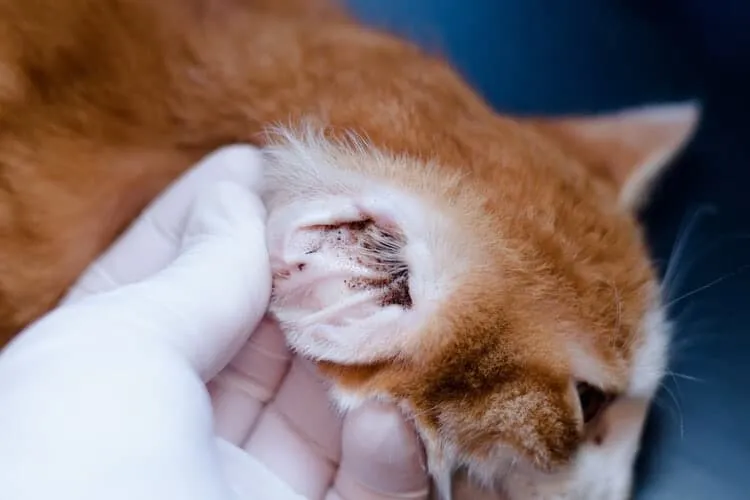
kitten with ear mites
Image By: Todorean-Gabriel, Shutterstock

Ear mites are barely visible to the naked eye. They live in the ear canal and exist on ear wax and other secretions.

divider 1 paws

What Are the Clinical Signs of Worms & Mites in Cats?

Worms can cause various clinical signs, including itching of the affected area, discharge from the affected area, diarrhea, or skin conditions if they are present on the skin.

How Are Worms & Parasites in Cats Treated?

Often, the best option for treatment is a prescription from your vet. This can be in pill or liquid form or even a topical treatment applied to your cats’ skin every 1 to 3 months. Sometimes, it may take two medications to treat the issue since some will only treat fleas or worms, but not both.

cat examined by Vets
Image Credit: Kzenon, Shutterstock

divider 1 paws

Conclusion

Even the most common worms and parasites in cats can be daunting. That is why knowing more information about them can certainly help with identifying if an issue is present. Don’t ever hesitate to contact your vet if you have questions. And, if you think your cat may have a worm or parasite, take a photo or video, and grab a stool sample or hair sample to bring to your vet. They can help identify what is going on, and the treatment for your cat can begin much sooner.


Featured Image Credit: Maja Marjanovic, Shutterstock

Want content like this delivered to you?

Sign Up For Our Newsletter

News, insights, expert advice, and everything cat

* By submitting, you agree to our Terms & Conditions and Privacy & Cookies Policy.


How useful was this post?

Click on a star to rate (you can leave written feedback after clicking submit)

Help us improve Catster for pet parents!

Your feedback really matters.

What did you like about this post? Also how can we improve it?

Join the conversation

Leave a Reply

You’re very welcome to leave a comment or question. Please know that all comments must meet our community guidelines, and your email address will NOT be published. Let’s have a positive and constructive conversation.


Talk With A Vet Online

Peace of mind,
anywhere, anytime

Affordable vet advice

Why Your Cat’s Poop Smells Like a Biohazard

Nobody enjoys litter box duty, but sometimes it gets unbearable. The smell hits you from across the room. You’re scooping faster, lighting candles,...

RIP Your Furniture? Not With This Guide to Cat Scratch Damage Control

Your couch looks like it survived a minor apocalypse. The curtains have mysterious vertical shreds. That new rug you splurged on is already...

Celebrating 15 Years as the Most Popular Resident of No. 10 Downing Street

For almost 300 years, a rather unassuming Georgian building of black bricks with a shiny black door has been the official residence and...

Ask Dr. Paola – Help! My Kitten Pukes After She Eats! (March 2, 2026)

Welcome to our “Ask Dr. Paola” series, where every Monday we bring expert advice straight from Dr. Paola Cuevas (MVZ) to help our...

More related

Prednisone & Prednisolone for Cats: Usage, Safety, Side Effects & FAQ

A common medication to go out the veterinary door is prednisone. It can be prescribed for nearly every ailment in nearly every animal...

Why Do Cats Like Feet? 8 Interesting Reasons

Cats can be quite quirky, often making toys out of the most ordinary objects that they can find. One mundane thing that cats...

4 Vet-Reviewed Natural Home Remedies for Blood in Cat Stool

Since cats normally do their business in the same place, it can be easy to tell when something is amiss. Changes to your...

Can Cats Eat Prunes? Risks & Safe Alternatives

For humans, the health benefits of antioxidant-packed dried plums can’t be understated. They’re commonly eaten to ease constipation and nausea. Therefore, you may...

Keep reading

Human-Grade Cat Food: What Does It Mean? Facts & FAQ

Of all the food available for feeding your cat, human-grade cat food is probably one of the most confusing despite its popularity. It’s a cat food that’s made under FDA regulations for human consumption. However, the principle cannot be applied...

cat eating smalls freeze-dried raw food

Will My Cat Calm Down After I Neuter Him? Vet Reviewed Behavioral Changes

Spaying and neutering are two common surgeries for cats, especially when they are still young kittens. Many new pet parents have questions about the procedures, though. For example, some wonder if male cats calm down after being neutered. It’s true...

vet putting on surgical suit to a cat after surgery

Cat Lymph Nodes: Vet-Verified Health Facts, Guide & Diagram

Lymph nodes are present in humans and cats, but most of us are not aware of their existence unless there’s a problem. They play a crucial role in preventing infections in cats, but unfortunately, lymph node diseases are fairly common....

Hands checking cat with lymph nodes

What Is Cat “Rust”? Causes & What to Look Out For (Vet-Verified Info)

Black cats have long been associated with bad luck, but their luck has changed significantly in the last few decades. With the rise of social media cat groups, more and more people come together to discuss their love of “voids”,...

7 Best Cat Foods for Firm Stools in 2026 – Reviews & Top Picks

Because we scoop out the litter box, we’ll notice if our cat’s stool is runny. Sadly, some cats have weaker digestive systems than others, causing them to develop runny stools more often. What a cat eats plays a significant role...

grey cat just finished eating

How to Trim Kitten Nails in 4 Simple Steps: Vet-Approved Advice

As a pet parent, you’ve seen your new kitten sharpening their claws on everything from the carpet to the couch more than once. Not only that, but kitten’s claws are incredibly sharp, and if you don’t do something about them,...

kitten nails trimming

How to Moisturize Cat Paws: 6 Vet Approved Tips & Tricks

Your cat’s paws are an important tool for navigating the world. Each paw pad has a cluster of nerve receptors that relay information about their surroundings, which can be compromised if they become dry and cracked. The discomfort may also...

cat reaching its paw out

Is Cat Snoring Normal? Facts & When to Worry

Picture this—your cat is sprawled out beside you, snoozing away, when suddenly you hear the cutest sound from them. What is it? They’re snoring! A snoring cat can be downright adorable (and occasionally a bit annoying if they’re a particularly...

White and orange kitten snoring while sleeping

Love Cats? So Do We! Join the Catster Community

Stay informed with expert pet care insights delivered straight to your inbox! Discover professional guidance on animal behavior, feeding tips, trusted product picks, and much more.


Sign up for the Catster Email Newsletter

Stay informed with expert pet care insights delivered straight to your inbox! Discover professional guidance on animal behavior, feeding tips, trusted product picks, and much more.