Get

In Your Inbox

Catster is reader-supported. When you buy via links on our site, we may earn an affiliate commission at no cost to you. Learn more.

Do Cats’ Waters Break During Labor? Our Vet Explains Feline Pregnancy Facts


Share

Orange Pregnant cat

Whether you’ve experienced it yourself, know someone who has, or watched it on practically every sitcom in existence, you know what it means when a pregnant woman’s waters break—it’s baby time!

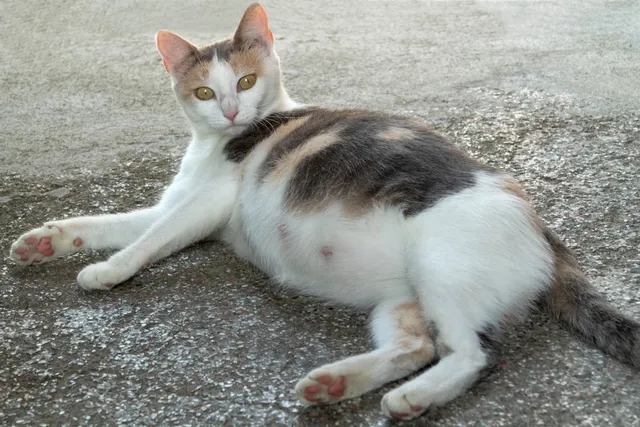
If you’re awaiting the arrival of some kittens, you’ll want to know what you should look out for. Will there be contractions? Yes. Panting? Sometimes. Screaming? No. Crying? Not usually. And, will you see the telltale sign of a pregnant cat’s waters breaking? Not exactly, because each kitten is enclosed in their own amniotic sac and is generally born inside their sac with it still intact.

So, what does a cat’s water breaking look like? For everything you need to know about what happens when a cat gives birth, keep reading.

divider 2 cats

What Waters Are Breaking?

For humans, when the fetus is ready to leave the safety of the womb, the cervix dilates, causing the mucus plug that has been blocking the entrance to the uterus to dislodge, and the amniotic fluid surrounding the baby rushes out, sometimes discreetly, sometimes all over your shoes.

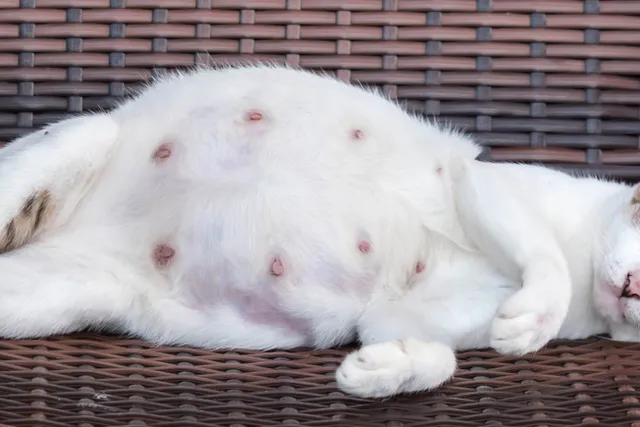
With cats, there are usually multiple fetuses inside the womb—typically around four to eight, with each contained within their own amniotic sac. Much of the time, the kitten is delivered still enclosed within the sac, so no amniotic fluid comes out before the birth. If the sac does break before the kitten is delivered, you may notice a very small amount of fluid coming from the mother cat’s (queen) vulva, but most of the time, she will clean it up before you’ve had a chance to notice anything. The fluid may be clear, greenish, or pink-tinged. Brown, red, yellow, or black discharge means it’s time to phone the vet.

So, if you’re expecting a dramatic flood of fluid to let you know that kittens are on the way, you’re in for a disappointment. This is why cats so often manage to sneak off and deliver their kittens without anyone noticing.

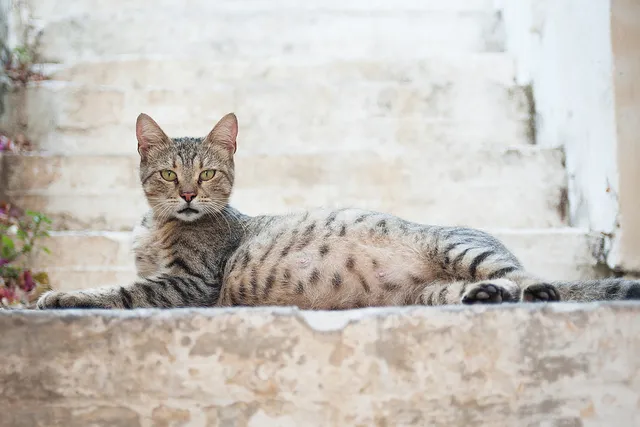
Pregnant cat laying on a staircase
Image Credit: Jim Polakis, Shutterstock

What Are the Signs That My Cat Is in Labor?

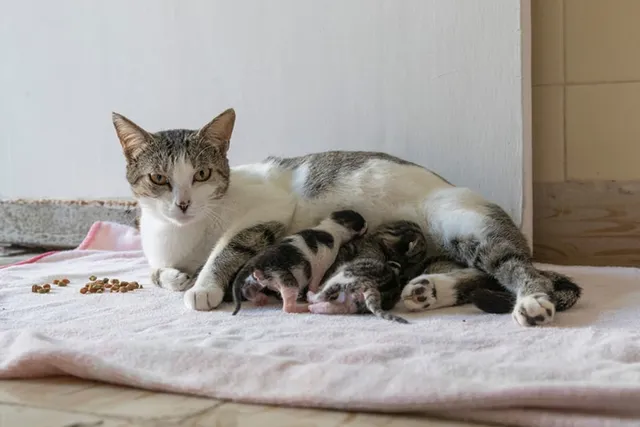
If we can’t rely on breaking waters to let us know that a cat is in labor (also called queening), what other signs can we be looking out for? Cats are notoriously stealthy when it comes to giving birth, and often, the first sign we will see is the sudden presence of kittens by her side! Most cats prefer to give birth in private, so don’t be too committed to the idea of holding her paw through the process.

If you want to know when kittens are on the way, here are a few signs you can watch out for:
  • Nesting: This might include gathering blankets, getting comfortable in a bed you’ve provided, or finding herself a cozy spot of her choosing.
  • Pacing: As the kittens are shifting into position and contractions are starting up, your queen may pace and seem uncomfortable or unsettled.
  • Vocalizing: For cats, birth is normally a fairly quiet affair, but some cats might let out some small meows, squeaks, or squawks if things get a bit uncomfortable, particularly if this is their first litter.
  • Licking: One of the main reasons you’ll see very little in the way of discharge before, during, or after the birth of kittens is that the queen will be focused on cleaning her vulva, the kittens, and any fluids. This is an evolved survival technique, minimizing the scent of newborn kittens that could attract predators.

Before a kitten appears, you will usually see a “bubble” appear at the entrance to the vagina. This is the amniotic sac. The queen will usually take care of breaking the sac and crushing the umbilical cord, so only intervene if there seems to be a problem.

How Long Will Labor Last?

female feline cat give birth
Image Credit: Anna Krivitskay, Shutterstock

Once queening has commenced, expect to see a kitten at least every hour, but it is not unusual for the delivery to be much quicker than this. It is also not unusual for there to be a pause in the delivery for the queen to rest, and many cat owners have woken the next morning to find two or three more kittens!

What Are Signs of Problems?

In the vast majority of cases, cats will deliver their kittens with very little difficulty and without the need for human intervention.

However, there is always a chance of things going wrong, so here are some red flags to look out for:
  • Lots of licking, but no kittens after 1 to 2 hours
  • Brown, black, red, or yellow discharge
  • Lethargy in queen or kittens
  • Lack of interest in kittens or not allowing them to suckle
  • Crying, pacing, and distress—a little is normal, but if it continues, there is likely a problem

Be sure to have a vet on speed dial in case you have any concerns or need advice.

If you need to speak with a vet but can't get to one, head over to PangoVet. It's an online service where you can talk to a vet online and get the advice you need for your pet — all at an affordable price!

PangoVet_Mention-in-Content for PangoVet2 save money

divider 3 paws

Should I Let My Cat Have Kittens?

It is a common myth and misconception that female cats should be “allowed” to have a litter before they are spayed. There is absolutely no scientific evidence to support this notion, having come from the anthropomorphic (applying human emotional experiences to other animals) idea that all females should experience motherhood.

If you are thinking about breeding your cat, first consider these statements:
  • Tom cats have a barbed penis, so intercourse is unlikely to be an enjoyable experience for females. Males also usually grip the female’s scruff in their teeth to stop them from getting away.
  • Kittens are weaned when they are 6 to 8 weeks old, and female cats often don’t tolerate their offspring hanging around much beyond that.
  • There are around 30 to 40 million cats in animal shelters across the US.

This is why our advice is to spay and neuter your cat. However, if you really want to allow your cat to have a litter, then please ensure that you have already found a loving home for all of the kittens. However, by bringing more kittens into the world, you would be taking away the opportunity for already existing kittens to get adopted.

Orange cat snuggling with owner
Image Credit: rzarof, Shutterstock

divider 2 cats

Final Thoughts

If you are waiting to see your pregnant cat’s waters break, you are likely to be disappointed. Although they technically do experience a similar process to that seen in humans, the volume of “water” is so small that it’s likely to be missed, if not already cleaned up by the queen before you have a chance to see it. Additionally, most kittens are born still contained within the amniotic sac, so the fluid is contained until after the birth.

It’s important to be aware of what is and isn’t normal when it comes to queening, but even more important is knowing that there are millions of cats in desperate need of homes, and adding to that population unnecessarily is something that should be carefully considered. So, it’s often best to spay or neuter your cats.


Featured Image Credit: Boy67, Shutterstock

Want content like this delivered to you?

Sign Up For Our Newsletter

News, insights, expert advice, and everything cat

* By submitting, you agree to our Terms & Conditions and Privacy & Cookies Policy.


How useful was this post?

Click on a star to rate (you can leave written feedback after clicking submit)

Help us improve Catster for pet parents!

Your feedback really matters.

What did you like about this post? Also how can we improve it?

Join the conversation

2 Responses

  1. Hola!!!! En mi casa tengo un fondo con sus respectivas medianeras que lindan con casas vecinas. Hay muchos gatitos por la zona y muchos (aparentemente) no tienen dueño. Uno de ellos desde la medianera miraba mi fondo. Comencé a hablarle y me hacía ojitos. Hasta que un día bajó y resultó ser gata. Es miedosa, teme que la toquen y suele arañar. Por supuesto, comencé a alimentarla. El 12/10/2025, creí que había desaparecido, hasta que escucho un maullido detrás de plantas. Había parido tres gatitos. Leí que lo conveniente es esperar entre 8 y 12 semanas hasta darlas en adopción. A la fecha 21/01/2026, siguen pegados a la madre y pretendiendo mamar. Son inquietos, simpáticos, se alimentan bien. Temo darlos en adopción y que sufran. Qué me sugieren? MUCHAS GRACIAS!

    1. La mejor recomendación es castrarlos a todos. ¿Sabías que con tan solo 16 semanas de edad pueden comenzar a reproducirse? Los gatitos sufren mucho en la calle: hambre, sed, parásitos y enfermedades. Teniendo una familia que los cuide, viven más felices. Pero definitivamente la prioridad número uno es la esterilización. De no ser así, esa gatita volverá con otra camada antes de lo que imaginas. Si hay muchos gatos sin dueños en tu zona, podrías considerar solicitar servicios de campañas de esterilización y control animal; de otro modo, ellos se van a multiplicar muy rápido. Algunas veces las facultades de medicina veterinaria pueden apoyarte ya que sus estudiantes requieren pacientes para sus prácticas.

Leave a Reply

You’re very welcome to leave a comment or question. Please know that all comments must meet our community guidelines, and your email address will NOT be published. Let’s have a positive and constructive conversation.


Talk With A Vet Online

Peace of mind,
anywhere, anytime

Affordable vet advice

Why Chicken Bones Are More Dangerous for Cats Than Most Parents Realize

Chicken bones seem harmless enough, but for cats, they can cause serious damage quickly. Whether your cat swiped a piece off the counter...

Fantastic Pet Pantries and Where to Find Them

Let’s face it: times are really tough right now, and those of us in the 99% are struggling with the cost of just...

Ask Dr. Paola – Help! My Cat Refuses to Drink Water! (April 13, 2026)

Welcome to our “Ask Dr. Paola” series, where every Monday we bring expert advice straight from Dr. Paola Cuevas (MVZ) to help our...

Why Healthy Cats Still Vomit Sometimes (And How to Respond)

A cat that just vomited needs a specific kind of care, and the feeding decisions you make in the next few hours actually...

More related

Artist Sasky D Talks About Her “Crap Drawings” of Cats

One of the greatest cat-related distractions on the Internet is a little something called Crap Drawings Drawn Crapily. It’s the brainchild of a...

What Is Cat Grass? Vet-Reviewed Benefits, Safety & Growing Tips

You may have seen your outdoor cat nibbling on the grass outside and wondered what they were up to. Many cats enjoy eating...

Toyger vs. Bengal: Main Differences (With Pictures)

Choosing a cat to give a forever home can be a challenging task, especially when you’re trying to decide between two similar breeds....

8 Munchkin Cat Breeds (With Info & Pictures)

Munchkin cats, also known as sausage cats, have longer bodies and short, stubby legs caused by a genetic mutation. They are the feline...

Keep reading

Do Flea Collars Work on Cats? Vet-Approved Facts & FAQ

As much as we love our cats, dealing with fleas can be a huge pain. Flea collars are one method of flea prevention that many pet owners opt for, but do they actually work? The answer is yes, but they...

tortie Oriental cat wearing flea collar

Do Cats Get Annoyed? 10 Vet-Reviewed Signs & What to Avoid

Cats can get annoyed just like humans, although they usually express it differently than us. Even the most loving and content feline can experience annoyance. It is one of the many emotions cats can feel. A cat will show clear...

An annoyed cat or angry cat with a ball toy.

Why Do Cats Have a Henry’s Pocket? What Is It For? Vet-Verified Info

Henry’s Pocket is the little flap of flesh you see on the outer part of a cat’s ear. Cats’ outer ears resemble triangles and are called pinnae. On the outside of the pinna, there’s a small pocket close to the...

close up cat ears pinna

When Do Cats Stop Growing & Reach Their Full Size? Vet-Verified Facts & FAQ

As you witness a kitten starting to grow up, you may wish they could remain at a young age for as long as possible. But, as we all know, that tiny, fluffy, playful period has to come to an end...

Tabby Cornish rex kitten sitting on owners lap

Why Does My Cat Sleep With Me and Not My Husband? 6 Likely Reasons

Often, our cat’s behaviors can seem strange. One point of confusion is often the places our cats try to sleep. They seem to sleep in the oddest places and may prefer to sleep with only one person. They may even...

cat sleeping on bed

How Long Do Cats Live? Feline Lifespan Facts Explained (Vet Approved)

We’ve all heard that cats have nine lives. But how much of that is actually true? Do cats seem to escape brushes with death regularly? If the cat lives an expected average of years, how long is that usually? According...

Silver Tabby Norwegian Forest Cat

Are There Cats Without Whiskers? Vet Reviewed Facts & FAQ

If you’re a cat lover or even a casual observer, you’ve probably noticed that cats have long, delicate whiskers protruding from their faces. But have you ever wondered if all cats have whiskers? The Sphynx cat and other breeds with...

close up of cat whiskers

Can Cats Eat Frosty Paws? Vet-Reviewed Nutritional Facts & FAQ

When it comes to our pets, we often want to share delicious treats with them. For multi-pet households, keeping up with your pets’ snacks can be a bit overwhelming, especially when you’re a pet parent to both cats and dogs....

Can Cats Eat Frosty Paws

Love Cats? So Do We! Join the Catster Community

Stay informed with expert pet care insights delivered straight to your inbox! Discover professional guidance on animal behavior, feeding tips, trusted product picks, and much more.


Sign up for the Catster Email Newsletter

Stay informed with expert pet care insights delivered straight to your inbox! Discover professional guidance on animal behavior, feeding tips, trusted product picks, and much more.