How Many Stray & Feral Cats Are There in the US? 2026 Facts

Appearing in over a third of U.S. homes, domestic cats are so well-accepted that most of us don't realize that they become one of America's most impactful invasive species once they leave the house.
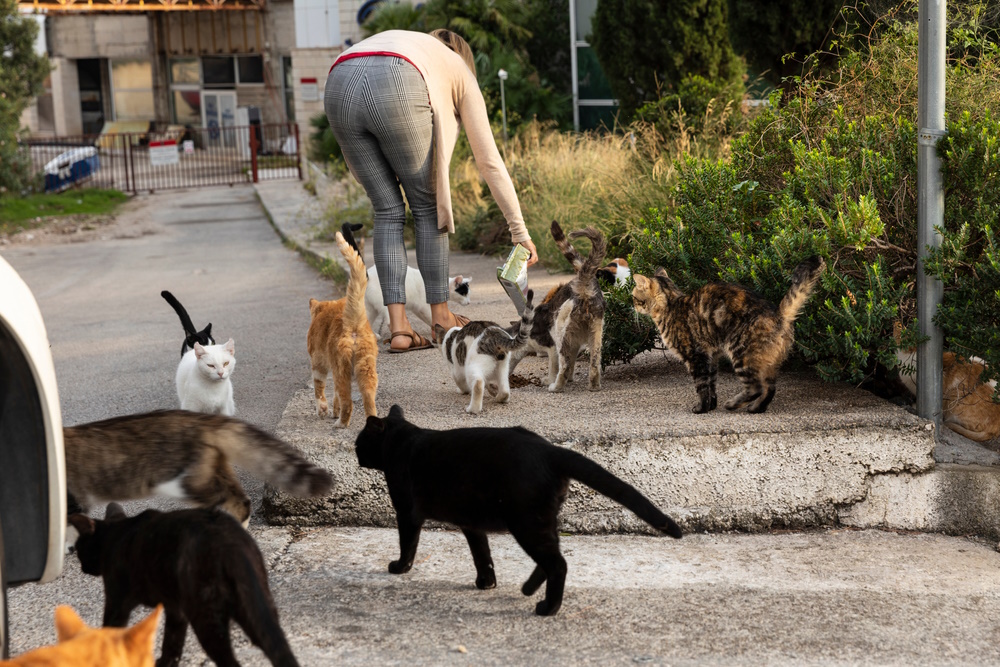
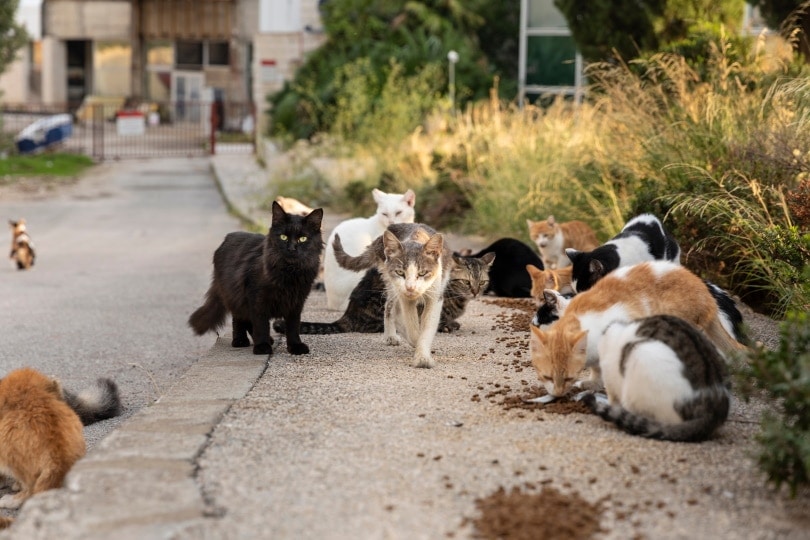
For decades, stray and feral cats have presented animal welfare groups with several ecological, economic, and ethical problems. Yet, the issue of unowned cats has always been a community concern. Currently, it is estimated that there are between 60 and 100 million stray and feral cats in the United States. While animal shelters and governments shoulder most of the load in managing the size and health of stray cat populations, much of the blame for the situation (and the solutions to it) falls on owners.
To lend some perspective to the current crisis, we'll explore how many stray and feral cats there are in the U.S., why they are a problem, and where owners can make a difference.

Origins of Stray and Feral Cats
1. There are 60–100 million stray and feral cats in the United States.
(Zoonoses Public Health)
The general understanding among many experts is that the homeless cat population is growing and currently sits at around 60–100 million cats. Other estimates are more conservative at 30–80 million.

2. Only 85% of pet cats are spayed or neutered.
(Humane Society)
Spaying or neutering pets is one of the most fundamental aspects of controlling stray and feral cat populations. When pets escape or roam outside, they can mate with neighborhood cats, perpetuating the problem.
The closer we get to 100% pet neutering, the more we reduce the strain on welfare groups and the current homeless cats in our communities. But while the 85% spay and neuter rate in 2020 was better than the 82% in 2000, it was also a substantial decrease from the 93% rate in 2016.
The drop-off comes amidst a pandemic decrease in available spay-neuter services. Lockdowns severely hindered veterinarians and staffing in animal welfare groups, creating new obstacles in providing necessary medical procedures. The result was an estimated 2.7 million missing surgeries from 2020 through 2021, a sure setback for those groups trying to control feral and stray animals.
3. Roughly 15% of cat owners lose their pets at some point during a 5-year period.
(Animals)
Cats and dogs will want to roam when the front door swings open. A 2012 study found that approximately 15% of surveyed cat owners lost their pets over five years. But only 75% recovered their cats, a stark difference from the 93% return rate for dogs. Extrapolating the numbers based on APPA calculations, the study estimated that over 3 million cats became lost and never returned home over those five years.

Lost Cat Statistics
4. 59% of lost cats that return home come back on their own.
(Animals)
They don't belong out in the wild any more than their canine counterparts, but cats fail to garner the same attention as dogs when they wander from home. Loss rates are similar for both pets. Yet while most of the 93% of dogs that showed as coming back in the 2012 lost pet survey did so because their owners searched for them, 59% of cats returned by themselves.
The finding suggests a much different approach to searching out lost pets. A separate study from 2007 found that 66% of cats return on their own, with neighborhood postings being the second-most common way of locating them. Cases of cats returning because of identification are rare.
A high percentage of people who lose their cat consider them "indoor-only" and thus don't follow adequate microchipping or marking methods. In the 2012 study, less than half of all lost cats wore a collar, and only 15% had a microchip. Of the 55 found cats, only one returned thanks to a microchip or tag.
5. Less than 3% of cats that enter shelters return to their owner
(Shelter Animals Count)
Cat adoption rates have increased from 59.5% in 2019 to 64.6% in 2022. Meanwhile, feline euthanasia decreased by 5%. The positive trend occurs as intakes outpace outgoing animals, possibly due to slowing adoption rates since the pandemic pet boom.
A more unfortunate takeaway comes in the return-to-owner rate. While cats had an 11% higher adoption rate than dogs in 2022, a canine RTO rate of 18.5% vastly exceeded the 2.8% RTO rate for cats. One explanation could be more unowned cats entering shelters, given the higher number of stray cats compared to stray dogs. But the owner's response also plays a vital role.
Prior studies in Montgomery County, OH, showed dog owners began searching for missing pets within one day. Around 75% contacted shelters, and in the end, three-quarters of all owners retrieved their pets.
By contrast, cat owners waited three days before searching. Only 7% contacted a shelter, waiting an average of 8 days between follow-ups. Roughly half of all cat owners reclaimed their pets. As shelters often only hold strays for a few days before releasing or euthanizing them, it's possible that many owners needlessly lose pets due to a lack of urgency.

6. Only 38% of microchipped cats in shelters return to their owners.
(Ohio State University)
Owners calling shelters to see if their cats showed up is only one side of the RTO coin. The other side comes in pet identification and the agency contacting the owners.
In the Ohio studies, nearly 50% of dogs had some form of identification (e.g., tag, microchip), but less than 20% of cats did. Without owners calling to ask about their pets, shelters have a much lower chance of finding them.
Worse still, those cats with microchips still aren't guaranteed to find their way home. Only 38% of cats in shelters with microchips go back to their owners, primarily because of dated information. While a quarter of owners in another Ohio State study didn't return calls, most microchips had incorrect phone numbers linked to them, weren't registered, or had registration in an unknown database.
The problem isn't solely on pet owners. Microchipping has no standardization, with various unrelated companies, scanners, and databases making it confusing, time-consuming, and often impossible to find owner information. Even with updated information, the lack of resources means shelters rarely locate owners if they scan the chips in the first place.
Stray Cat Adoption Statistics
7. Roughly one-quarter of acquired cats are strays.
(ASPCA)
According to the ASPCA, 27% of cat owners got their pets as strays, a rate that supports Best Friends Animal Society data, which put stray adoption at 24%. Meanwhile, only 4–6% of acquired dogs were strays, though this is likely due more to lower availability. At a population of around 1.3 million, stray and feral dogs are not nearly as prevalent as community cats in America.
Potential pet parents could seemingly do more to help stray cats in shelters. The 27% of cats acquired as strays in the ASPCA's most recent numbers are significantly lower than the 35% in 2012. Although 85% of people state they would look into adopting their next pet from a shelter, only half that amount finally do so.

8. Around 13% of shelter cats die at the shelter.
(Shelter Animals Count)
According to the ASPCA and the Shelter Animals Count database, the cat euthanasia rate in shelters is approximately 13–17%. Numbers have declined dramatically in the past decade, with total euthanasia numbers for cats and dogs dipping below one million in 2019. For comparison, shelters euthanized roughly 2.6 million in 2011.
The improvement in outcomes for cats and dogs is even more shocking when you look back several decades. In the 1970s, shelters euthanized 12–20 million cats and dogs every year, which gets more egregious when you consider the number of pets was half of what it is today.
The Impact of Stray and Feral Cats
9. Free-ranging domestic cats kill 6.3–22.3 billion mammals each year in the United States.
(Nature)
Perhaps the worst side of the stray and feral cat problem in the United States is the effect on wildlife. As with the stray cat population, the numbers are impossible to specify, but the following are what experts estimate free-ranging cats kill annually in the United States:
3–22.3 billion mammals
3–4 billion birds
228–871 million reptiles
86–320 million amphibians
Although outdoor-owned cats contribute to the numbers, unowned cats account for 89% of these deaths.

10. Only 25% of feral kittens survive past 6 months of age.
(Journal of the American Veterinary Medical Association)
Even with a responsible owner, kittens have a hard enough time navigating the various diseases, defects, and other hazards that threaten them in their young lives. In the urban wild, where help is infrequent or non-existent, feral kittens have only a 25% chance of survival. Trauma is the most common cause of death. Yet, while mortality is high, the average cat's rapid reproductive rate sustains the outdoor population.
11. 88% of field services involve the trap-neuter-release of cats.
(Shelter Animals Count)
Using shelters as a midway point for getting pets into homes isn't the only way welfare groups are addressing the street cat and dog issue. Field services are crucial to reducing stray animal populations and helping owners while relieving shelters. Services include trapping and neutering, community education, and returning lost pets.
The Shelter Animals Count 2021 dataset breaks down field service interactions with stray cats and dogs and the outcomes, whether the animal underwent trap-neuter-release (TNR) or returned to their owner following a microchip scan. The roles are diverse, but services overwhelmingly focus on one task, painting a clear picture of the difference between stray cats and stray dogs in America.
Over 88% of field services in 2021 involved TNR for cats. There were 16,829 reported cases of cats being trapped, neutered, and returned to the area where agents picked them up, accounting for 99.8% of all TNR activities. Meanwhile, dogs made up less than 3% of all field pickups. Among those, over 93% returned to their owner.

Frequently Asked Questions About Stray and Feral Cats in the US
What Percent of Cats Are Strays?
Thanks to ever-increasing adoption rates, stray and feral cats on the streets likely now account for less than half of all cats in America. Over 45 million households had at least one cat in 2022. While there are broadly 30–100 million unowned community cats in the country, the total pet cat population still exceeds some of the higher estimates.
(III)
How Many Animals Does a Cat Kill Each Year?
One cat kills about 100–200 mammals annually, eradicating animals with shocking efficiency. In a famous case study of a cat's killing capacity from the late 1800s, Tibbles, a lightkeeper's cat, and her offspring killed every living specimen of the Stephen's Island wren. The flightless songbird endemic to the New Zealand island was extinct in less than a year.
Globally, studies have connected cats to 63 extinctions, presenting critical concerns over the impact of cats, whether stray, feral, or owned. In the U.S., many offer the counterargument that they also cull non-native species, such as rats and house mice. With the true impact in question, activists on both sides of the debate can't agree on the best way to manage feral and stray cats.
(People and Nature)

How Can We Control the Feral Cat Population?
Experts agree that an integrated approach is crucial to reducing the number of stray and feral cats in the U.S. Stray cat laws need clarification, visibility, and stricter requirements. On their part, animal welfare groups offer information and removal services, often involving trap-neuter-release to quell numbers without harming the livelihood of existing community cats.
Governments, shelters, and experts are crucial in providing education and resources, but owners retain the most responsibility in reducing the homeless cat population. Thousands of pet cats go missing each year, and even those that come home can significantly affect local stray cat numbers and endanger wildlife.
Cat owners must appreciate the possibility and impact of missing pets, even those they consider 100% indoor animals. Responsible adoption, containment, neutering, and identification are crucial. By stopping reproduction, reducing abandonment, and making it easy for shelters to locate owners, the possibility of needless euthanasia and packed shelters will be much less common.
Final Thoughts
Our responsibility to cats extends far beyond those we call pets. Stray and feral cats are a community concern, a mess we created that does little more than make our favorite animals suffer and negatively impact the environment. The solutions are simple. But compliance will be crucial if we hope to maintain these positive trends we've seen in homeless cat statistics.
Sources
Featured Image Credit: Lea Rae, Shutterstock

Expert cat care, straight to your inbox
Vet-reviewed advice, behavior tips, and the best of Catster. Free, and you can unsubscribe anytime.
By signing up, you agree to our Terms & Conditions and Privacy & Cookies Policy.
Join the conversation
Ask a question, share your story, or send private feedback.