How Far Can Cats Travel in a Day? Facts & FAQ

Big wild cats roam vast territories daily to find prey, keep out competitors, and generally keep an eye on their land. The average tiger needs around 20 square miles to sustain itself and can cover anywhere from 5 to 60 miles daily. They can even comfortably swim up to 7 miles to keep watch on their favorite waterways!
Lions have territories varying from as tiny as 8 square miles to as vast as 150 square miles. The latter usually only occurs when there’s not much food around. Lions tend to wander anywhere from 2–8 miles per day.
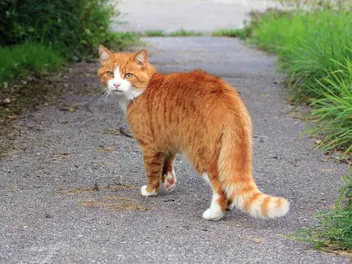
But what about your allegedly domesticated feline companion? Cats can have territories that reach 2½ square miles or so, but most top out around ¼ square miles.

How Far Do Cats Travel From Home
Male cats have larger ranges than female cats and are more likely to roam further from home. Male kitties often have ranges that extend ¼ square miles and can often be found up to 1,500 feet from where they live.
Female cats tend to have smaller ranges, typically under ⅒ square miles, and most won’t wander more than 750 feet from home.
Cats have exceptional navigation skills, and it’s common to hear stories of kitties covering long distances to return to their old haunts after a recent move. Howie, a Persian cat living in Australia, walked over 1000 miles after being sent to stay with relatives in a remote town while his family was on vacation.
A Canadian kitty, Madonna, walked 150 miles from Kitchener to Windsor after her humans moved. Evidence suggests that cats have a homing instinct or sixth sense that gets them back to where they belong.
Scientists aren’t entirely sure how the skill works, but many think cats tap into scent information and can read the earth’s electromagnetic fields. The instinct is so strong that up to 30% of cats will attempt to return “home” in the days right after a move.
To be safe, don’t let your kitty outside unsupervised for at least 30 days after a move. If your cat absolutely must get a bit of fresh air, consider taking them for a walk on a leash to ensure they don’t attempt to escape and return to their old home.

Why Do Cats Wander Away From Home?
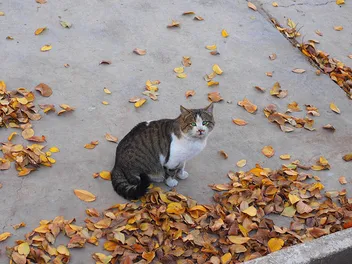
Domestic cats will often wander in search of food and mates. Outdoor cats roam the ranges to find food while hunting. Intact cats can cover a great deal of ground when looking for a suitable mate.
Male felines, in particular, hit the road to ensure other cats stay out of their hard-won territory. Female cats are more inclined to have territories that overlap with those of other cats, allowing them to have smaller ranges that require less exploring and defending.
Why Do Cats Fail to Return Home?
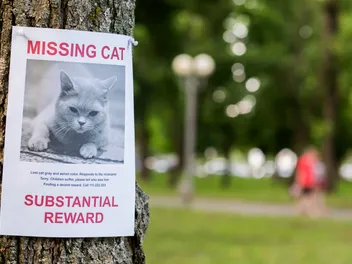
Cats that fail to return home sometimes do so because they’re sick or injured. Kitties who’ve been in a fight or become ill will often hide in the safest nearby place they can find to heal, often under a porch or in a barn.
Outdoor cats have also been known to find calmer places to lay their furry ears when their home environments become too chaotic or overstimulating for their liking.

What’s the Best Way to Keep My Cat From Wandering?
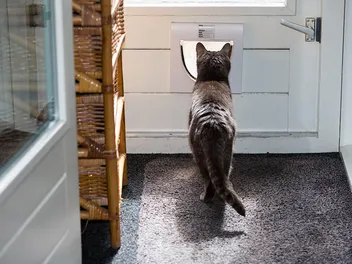
The best way to keep your cat safe is to not allow them outside without supervision. Not only will this prevent your cat from wandering off, but it’ll also prevent them from getting into dangerous encounters with wild animals like raccoons and squirrels. The chances of your feline sustaining a severe injury in a catfight also go way down.
Keeping your pet inside is also the best way to keep them from being exposed to dangerous diseases such as feline leukemia, feline HIV, and rabies. Also, cats are vulnerable to being preyed upon by larger aggressive animals such as dogs, eagles, and coyotes.
Outdoor cats are also vulnerable to trauma, including the chance of being hit by a motor vehicle. By keeping your pet indoors, you can be sure you won’t have an angry neighbor complaining about your cat’s behavior. Most importantly, outdoor kitties tend to live much shorter lives. The average outdoor cat dies 10 years earlier than most indoor kitties.
In addition, keeping your cat indoors or taking them for supervised walks on a leash helps minimize the ecological impact your pet has on the environment. Every year, cats are responsible for the deaths of anywhere from 1.3 to 4 billion birds. Cats also seriously impact small mammals and reptile populations since they often have a taste for moles, rabbits, lizards, and shrews. Domestic cats were responsible for hunting 20 species on the Australian continent to extinction.
Spaying or neutering your cat is another excellent way to limit their desire to wander. Unaltered cats regularly take to the streets in search of mates. Unspayed indoor female cats are notorious for escaping and wandering when in heat. Unneutered male cats are often aggressive, have a tendency to spray inside, and are more likely to get into fights.

Final Thoughts
The best way to keep your cat from wandering is to keep them indoors unless supervised and restrained on a leash, and well-cared-for indoor cats get more than enough mental and physical stimulation!
You can play several games with your four-footed buddy and purchase toys to keep your companion healthy and happy. There are even, believe it or not, nature videos designed for cats that’ll keep your pet entertained while you’re away!
Related Reads:
Sources
Featured Image Credit: Seregraff, Shutterstock
Expert cat care, straight to your inbox
News, insights, and useful advice, delivered to you.

No spam — unsubscribe anytime.
By signing up, you agree to our Terms & Conditions and Privacy & Cookies Policy.
How useful was this post?
Click a star to rate. You can leave written feedback afterwards. (We read all feedback.)
Lorre Luther is a writer who is firmly convinced that cats are smarter than humans. She left her law career in the United States and moved to the Netherlands to follow her dream of becoming a writer. Lorre currently lives in Rotterdam, she enjoys traveling and greatly appreciates the beauty of nature. Lorre has a spot for animals and admires the intelligence of cats.