How Long Do Outdoor Cats Live?? Average Lifespan & Info


In this article
Under natural conditions, cats are potent predators that effectively stalk and capture prey in a variety of outdoor environments. However, cats have become domesticated in the last 10,000 years, and in modern times, the number of domesticated cats exponentially outnumbers true wild cats remaining in natural habitats.
Domestic cats are found in just about every sector of human society, and just as humans exist in conditions varying from squalor to luxury, so too do cats. The sad truth is that for creatures living in terrible conditions that often lack shelter, food, and adequate health care, life expectancy is low. Of course, the opposite is true for humans and their pets that exist on the opposite end of this scale— good health is a result, and life expectancy is higher.
The true lifespan of an outdoor cat isn’t consistent across studies and geographic locations. Some studies have postulated an average lifespan of outdoor cats at around 9 years or so. The average lifespan of an unowned feral cat isn’t well established. However, they are generally thought to live much shorter lives than their pet counterparts. Read on to find out more.

How Long Do Outdoor Cats Live?
There are varying degrees of “outdoor” cats, as you may have already realized and wondered about. Let’s take a look at some typical scenarios and how they might affect a cat’s longevity.
True wild cats in natural environments can live up to 15 years of age. Even small wild cats the size of average domestic cats are apex predators and as such, are at lower risk of predation themselves. Natural environments are less stressful and disease transmission is low compared to urban areas with a high density of humans and other animals. The risk of injury or death at the hands of humans is negligible. There is no cruelty, no neglect, no traffic, and fewer encounters with larger dangerous animals, such as dogs, and easier escape options in this likelihood.
Now, let’s discuss domesticated outdoor cats. There are two general types of feral or free-ranging cats, with many that fall somewhere between these types. The first type is the feral cat, which can be found in squalid conditions. These are usually economically impoverished human settlement areas, often in third-world countries. These cats live in unhygienic conditions and often have little access to food or shelter. Veterinary care is non-existent, and they certainly would not be sterilized. Animal cruelty is frequently rife, and these cats are often very fearful of humans. These are the cats that would generally not live beyond 5 years of age if that.
The second is the feral cat that can be found in economically robust urban areas. These cats are often tended to by welfare organizations and unofficially cared for by kind local inhabitants. Many would be sterilized. They could realistically live longer than the aforementioned cats.
The life expectancy for these kinds of outdoor cats is understandably lower than for a cosseted and much-loved pet cat. The risks of death and injury from human-associated causes such as rogue dogs, cars, cruelty, population density-related disease, and parasites are proportionately greater, particularly for the first type discussed. In addition, they’re more likely to contract viruses from other cats which can be transmitted via their bites or scratches. For these reasons, having outdoor access is negatively associated with the average lifespan of cats 2.
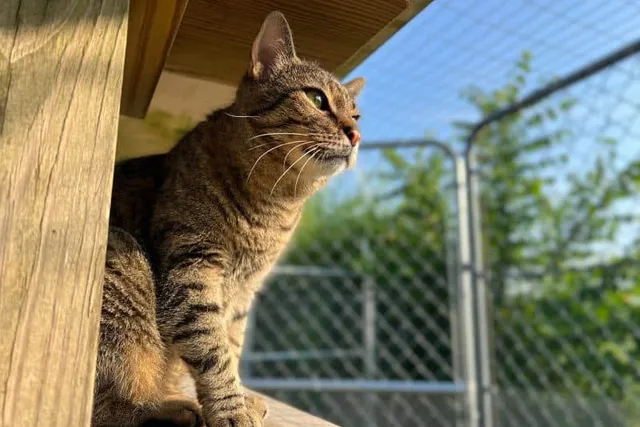
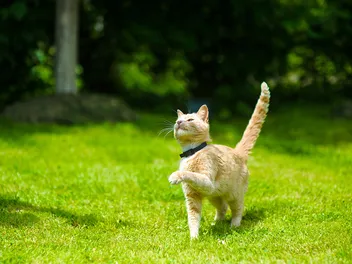
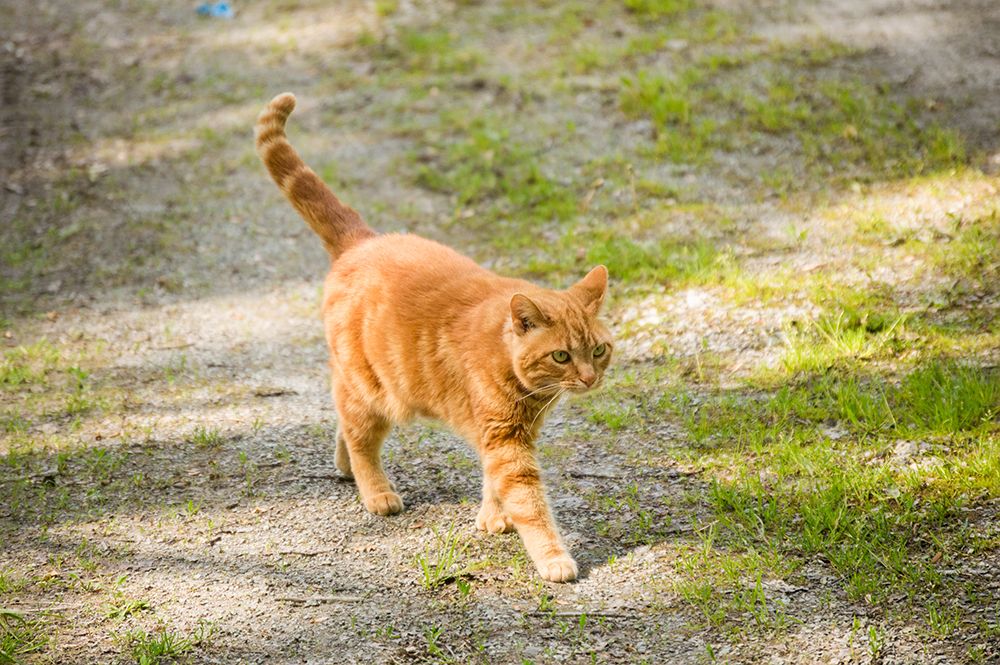
Many pet cats are outdoor cats, too. They may range from felines that prefer never to set foot inside the house to those that are free to come and go as they please. The latter you will probably find curled up in bed with their human for part of the night. The risks are much lower for these cats, and their life expectancy will probably be higher than for feral cats; the study on outdoor pet cats cited earlier has documented some individuals living up to 12.92 years. The highest risks for this group are cars, dogs, and injuries resulting from neighborhood catfights.

The Definition of an Outdoor Cat
There are varying degrees of “outdoor” cats, as you may have already realized and wondered about. Let’s take a look at some typical scenarios and how they might affect a cat’s longevity.
True wild cats in natural environments can live up to 15 years of age. Even small wild cats the size of average domestic cats are apex predators and as such, are at lower risk of predation themselves. Natural environments are less stressful and disease transmission is low compared to urban areas with a high density of humans and other animals. The risk of injury or death at the hands of humans is negligible. There is no cruelty, no neglect, no traffic, and fewer encounters with larger dangerous animals, such as dogs, and easier escape options in this likelihood.
Now, let’s discuss domesticated outdoor cats. There are two general types of feral or free-ranging cats, with many that fall somewhere between these types. The first type is the feral cat, which can be found in squalid conditions. These are usually economically impoverished human settlement areas, often in third-world countries. These cats live in unhygienic conditions and often have little access to food or shelter. Veterinary care is non-existent, and they certainly would not be sterilized. Animal cruelty is frequently rife, and these cats are often very fearful of humans. These are the cats that would generally not live beyond 5 years of age if that.
The second is the feral cat that can be found in economically robust urban areas. These cats are often tended to by welfare organizations and unofficially cared for by kind local inhabitants. Many would be sterilized. They could realistically live longer than the aforementioned cats.
The life expectancy for these kinds of outdoor cats is understandably lower than for a cosseted and much-loved pet cat. The risks of death and injury from human-associated causes such as rogue dogs, cars, cruelty, population density-related disease, and parasites are proportionately greater, particularly for the first type discussed. In addition, they’re more likely to contract viruses from other cats which can be transmitted via their bites or scratches. For these reasons, having outdoor access is negatively associated with the average lifespan of cats 2.
Many pet cats are outdoor cats, too. They may range from felines that prefer never to set foot inside the house to those that are free to come and go as they please. The latter you will probably find curled up in bed with their human for part of the night. The risks are much lower for these cats, and their life expectancy will probably be higher than for feral cats; the study on outdoor pet cats cited earlier has documented some individuals living up to 12.92 years. The highest risks for this group are cars, dogs, and injuries resulting from neighborhood catfights.
The Indoor Cat
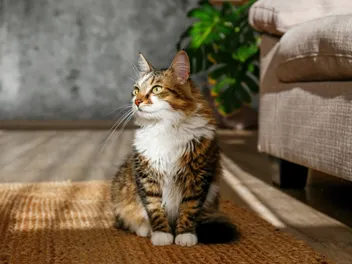
Depending on one’s strict definition, an indoor cat could also be a part-time outdoor cat, so it’s worth discussing them. For many cat lovers, the risks associated with allowing their beloved kitty to come and go from the home at will are, understandably, too great. In many instances, such as apartment living in cities, it’s simply not possible for them to do so.
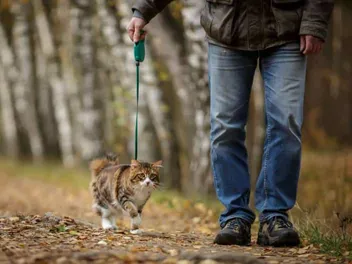
Some apartment-dwelling felines enjoy walks on a lead with their humans and this is a great way for them to satisfy their natural curiosity. Others may have a yard that they are allowed to explore under supervision. Cats that live under these conditions will probably realize their optimal life expectancy, provided they remain healthy in other respects.
Some indoor kitties will never visit the outdoor world and they may be happy with this arrangement. Interestingly, felines in this situation could experience stress and anxiety when forced to go outdoors, which could potentially cause health issues and compromise their well-being and overall longevity. Next, we will provide a few useful tips for keeping the stresses of indoor living to a minimum.

Tips for Keeping the Indoor Cat Healthy, Happy & Entertained
Here is a short checklist of considerations to help keep your exclusively or mostly indoor cat content:
How Do You Decide Whether to Allow Your Cat to Go Outdoors?
Deciding whether or not to allow your cat outdoors and how will require careful evaluation of your particular kitty, as well as deciding what risks you, as their fur parent, are comfortable taking. If you are not comfortable making the decision alone, you should chat with a veterinary practitioner for some advice. As a general rule, given the legal implications of allowing your cat outdoor access (on top of the myriad health risks), it’s best to keep your cat indoors whenever in doubt.
Some cats will let you know in no uncertain terms what they prefer in terms of living environment. Some may naturally make themselves comfortable indoors, venturing outside very seldom, while others may sit at doors and windows waiting for any opportunity to escape. Hopefully, you are in a situation that allows you to satisfy your kitty’s wants and desires.
There is usually no need to force a cat that prefers the indoors to go outdoors, but it may be necessary to restrict an outdoor-loving cat’s movements. If the latter is the case, our tips for keeping an indoor cat entertained will hopefully help.
Do keep in mind that allowing a pet cat to roam is also a huge ethical debate. Cats are considered invasive species in many parts of the world (introduced by humans) and can be extremely destructive to ecosystems. They have and continue to contribute to the loss of local species (including extinctions in some cases).
Conclusion
The life expectancy of an outdoor cat has a broad range, and there are risks associated with allowing your kitty to explore the great outdoors. It will ultimately be your decision as to what is best for your precious feline. When in doubt, it’s best to keep your pet indoors. However, circumstantial exceptions may exist. For instance, by training your feline to walk on a leash, you can allow them to enjoy the best of both worlds without the risks.
We hope this article has provided you with enough information to help make the decision, as well as some useful tips and suggestions to manage your cat’s well-being in either an indoor or outdoor living arrangement.
Sources
Featured Image Credit: Jenny Margarette, Shutterstock
Expert cat care, straight to your inbox
News, insights, and useful advice, delivered to you.

No spam — unsubscribe anytime.
By signing up, you agree to our Terms & Conditions and Privacy & Cookies Policy.
How useful was this post?
Click a star to rate. You can leave written feedback afterwards. (We read all feedback.)
Eleanor is a freelance writer, science, and math high school teacher. She lives in South Africa's picturesque KwaZulu Natal Midlands with her six-year-old son, cat, horse, and three chickens. She is happy to be able to convert her enthusiasm for animals, science, and life-long learning into valuable and interesting writings. Eleanor and her son enjoy exploring their wonderful nation in their spare time. Road trips to exotic camping places are a cherished pastime. They particularly like unwinding near the sea, in the mountains, or among African animals.