10 Exotic Cat Breeds That Are Legal to Keep as Pets in the US (With Pictures)
In the United States, the most common cat is the American Shorthair. Many cats at shelters are mixed breeds, but the American Shorthair appears often because it is one of the most popular breeds in this part of the world. However, quite a few exotic breeds are legal to own in the United States. Some are only considered exotic in the US because they look nothing like the American Shorthair.
The laws regarding exotic cats for each state in the US are different. What is legal in some states is banned in others. Some breeds may require a license to be owned in certain areas, and some states have confusing and complicated laws, such as not exporting cats from other areas. This is because exotic cat breeds like wildcats are not suitable to keep as pets.
They are usually not domesticated and would rather live in the wild than in a human household. Adopting a domestic cat from a shelter is much better than paying the sky-high price for an exotic cat. If your heart is set on an exotic feline, check your local laws before purchasing one.
Important Note: Laws and regulations regarding the ownership of exotic cats change. It is important to contact your state's government agency about the current restrictions on exotic cat ownership.

Top 10 Exotic Cat Breeds That Are Legal to Keep as Pets in the USA
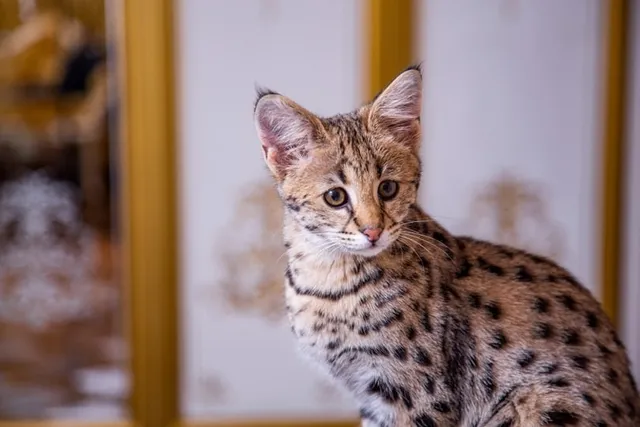
1. Serval

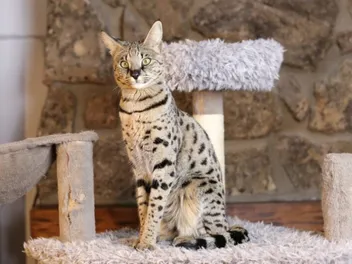
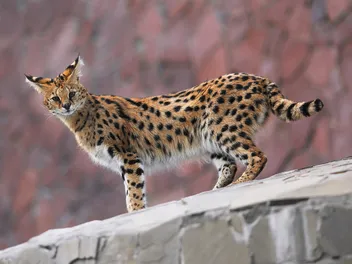
A Serval is an African wildcat that is legal in some areas of the US. They weigh 20–40 pounds, which makes them about the size of a medium dog. They are tall and skinny, with cheetah-like patterns on their coat. They are somewhat similar to cheetahs and are often mistaken as them. However, they are much smaller.
Servals are aloof and independent. They will flee and hide from people they do not know and aren’t affectionate. Typically, they are not threatening or dangerous to people unless they feel cornered. They would much rather flee when stressed out than have a confrontation.
They eat small prey in the wild, typically rats and similar rodents. They will occasionally take down a bird or small antelope. While in captivity, they eat 2–3 pounds of meat daily. They are more of a runner than a climber, making them easier to care for than other large exotic cats. They don’t get into things as often or try to escape because they prefer to keep their feet on the floor.
They don’t meow like domestic cats. Instead, much of their communication is done through hissing. Their hissing isn’t necessarily bad; it is simply the only way that they can communicate.
Serval Legal Ownership Status in the US
| Legal: | Alabama, Illinois, Louisiana, Michigan, Montana, North Carolina, South Carolina, Tennessee, West Virginia |
| Legal with Ownership Permit: | Arkansas, Florida, Idaho, Indiana, Maine, North Dakota, Oklahoma, Pennsylvania, Texas, Wyoming |
| Legal with Import Permit: | Kansas, Kentucky, Mississippi, Missouri, Washington, Wisconsin |
| Legal with Ownership & Import Permits: | Nevada, South Dakota |
Source: https://worldpopulationreview.com/state-rankings/serval-legal-states
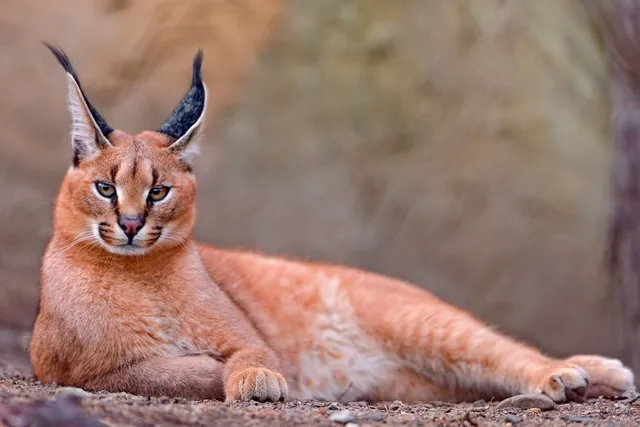
2. Caracal Cats

The Caracal is native to Africa, the Middle East, India, and Central Asia and can weigh 19 to 40 pounds. Females are significantly smaller than males. In the wild, they prey on small mammals, rodents, and occasionally antelopes.
They act similarly to how you would expect a domestic cat to act. They are playful and interact with their owners, but only when they want to. They seem to have the independence of a domestic feline but to the extreme. They can ignore their owners for days before deciding that they want cuddle time. However, they are more active than other cats.
They can exhibit destructive behaviors, such as tearing up furniture, if not properly exercised. They need an enclosed area to run and play, and “catios” are recommended. These outdoor areas need to be much larger than those for domestic cats, however. Like many medium-sized wild cats, Caracal cats will hiss to communicate everything. It can sound threatening, but the cats are rarely aggressive toward people.
Caracal Legal Ownership Status in the US
| Legal: | Arizona, Arkansas, Delaware, Florida, Indiana, Maine, Mississippi, Missouri, Montana, North Dakota, Oklahoma, Pennsylvania, South Dakota, Tennessee, Texas |
| Legal with Permit: | South Carolina, Idaho |
| Unregulated: | Alabama, Illinois, Michigan, Nevada, North Carolina, Wisconsin |
Source: https://worldpopulationreview.com/state-rankings/pet-caracal-legal-states
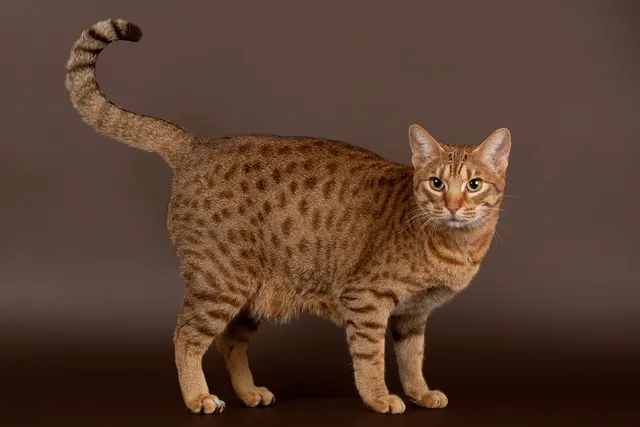
3. Ocelots

Ocelots are sometimes kept as domestic pets. However, they are illegal in many areas and quite rare. Unlike other cats on this list, there are no domestic breeders in the United States, so they are wilder than other cats. They are generally more challenging to keep as pets.
Ocelots often refuse to listen to people due to their fierce independence. They are challenging to train and will not pay attention to your commands. They can be somewhat playful with their people but tend to be aloof and would rather spend time alone.
They are not that social and will hide whenever visitors come over. Ocelots are not recommended for most pet owners, as they don’t adapt well to houses. There is a reason that they are rarely kept as pets.
Ocelot Legal Ownership Status in the US
| Legal: | South Carolina |
| Legal with Permit: | Arizona, Idaho, Indiana, Maine, Mississippi, Missouri, North Dakota, Pennsylvania, Rhode Island, South Dakota, West Virginia, Wyoming |
| Unregulated: | Alabama, Delaware, Nevada, North Carolina, Oklahoma, Wisconsin |
Source: https://worldpopulationreview.com/state-rankings/ocelot-legal-states
4. Canadian Lynx

As the name suggests, this Lynx is native to northern North America. They are active climbers and prefer to be above everyone else. The home needs to be designed with that in mind. If you don’t provide this cat with appropriate climbing places, they will find places to sit high up.
Canadian Lynxes will get into things they shouldn’t and attempt to climb equipment that cannot hold them, like TVs. They don’t bond closely with people and generally live solitary lives. However, they are adaptable, not too temperamental, and can easily adapt to home life.
Don’t expect them to interact quite as much as domestic cats. They’re far more prone to doing their own thing than playing. They are one of the few exotic cat breeds on this list that doesn’t like being walked, perhaps because they prefer to climb.
Canadian Lynx Legal Ownership Status in the US
| Legal or No Regulation: | Alabama, Delaware, Nevada, North Carolina, Oklahoma, Wisconsin |
Source: https://bigcatrescue.org/state-laws-exotic-cats/
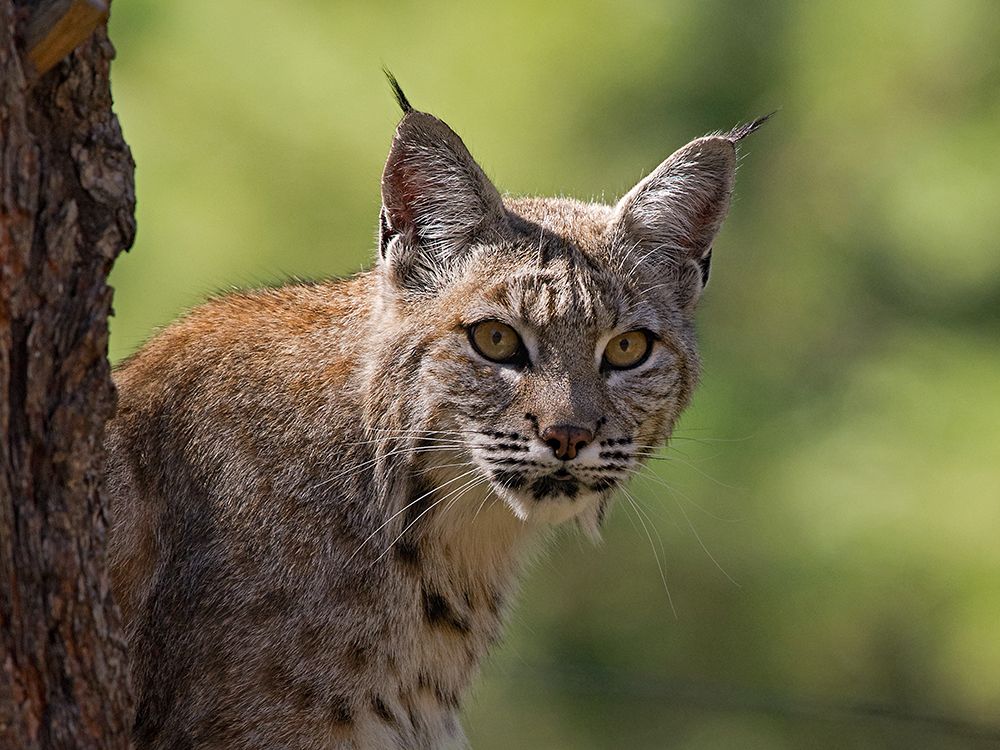
5. Bobcats

These short, muscular cats are native to North America. The Bobcat is one of the few exotic cats that enjoy being around people and will often bond with their owners. However, they are dangerous to keep if they are not raised properly. They are similar to large dogs that have not been domesticated.
They are not recommended in households with children due to their size and strength. Supervision is constantly required, but sometimes, that isn’t enough for these fast cats.
Bobcat Legal Ownership Status in the US
| Legal: | North Carolina, South Carolina |
| Legal with Permit: | Arizona, Delaware, Florida, Indiana, Maine, Mississippi, Missouri, Montana, North Dakota, Oklahoma, Pennsylvania, Rhode Island, South Dakota, Texas, Wisconsin, Wyoming |
Source: https://worldpopulationreview.com/state-rankings/pet-bobcat-legal-states
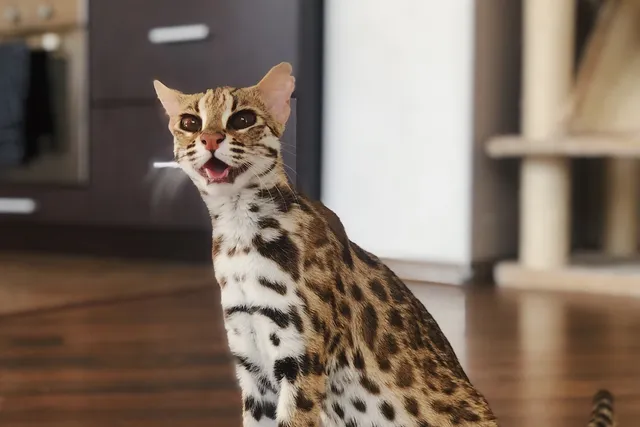
6. Asian Leopard Cat

Asian Leopard Cats are sometimes kept as pets, but they’re not ideal. They are nocturnal and shy. Most hide from humans and take an extremely long time to warm up to their owners. They are hardly ever accepting of visitors or anyone from outside the household. They are easily startled and will run away quickly, but if socialized extensively, they can become relatively docile pets.
Often, the Asian Leopard Cat requires a license to own. They can be challenging to purchase legally and require specific documentation. Some subspecies are endangered, which makes them even more challenging to own.
Asian Leopard Cat Legal Ownership Status in the US
| Legal with Restrictions or Permits: | Alabama, Delaware, Idaho, Indiana, Kansas, Louisiana, Mississippi, Nevada, North Carolina, North Dakota, Oklahoma, South Carolina, Texas, Washington |
Source: https://bigcatrescue.org/state-laws-exotic-cats/
7. Siberian Lynx

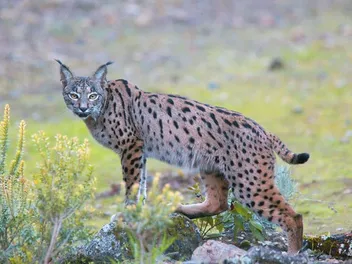
The Siberian Lynx is an entirely different species from the Canadian Lynx, though they are similar. Both species are Lynxes, so they act similarly when kept as domestic pets. However, they are rarer and more difficult to find in the U.S.
Males are usually larger than females and can weigh up to 80 pounds. A cat that size can quickly kill an adult human if they want to, so extra care must be taken when owning one of these animals as a pet. Females are much smaller and can weigh as little as 40 pounds, though that is still a large exotic cat as far as felines are concerned.
Siberian Lynxes are playful and hyperactive. They need a great deal of exercise and room to roam. Otherwise, they may become bored and get into trouble. Owners recommend having an outdoor area for them to run around in, even if you plan to have them spend much of their time inside. They like walking on a leash and are known for having a dog-like temperament.
Siberian Lynx Legal Ownership Status in the US
| Legal or No Regulation: | Alabama, Delaware, Nevada, North Carolina, Oklahoma, Wisconsin |
Source: https://bigcatrescue.org/state-laws-exotic-cats/
8. Savannah Cat

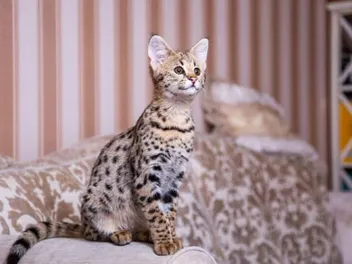
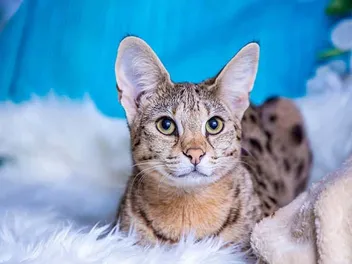
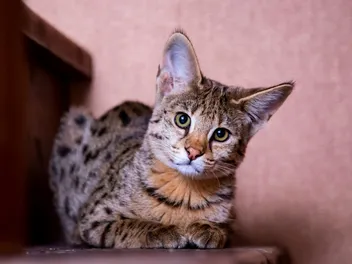
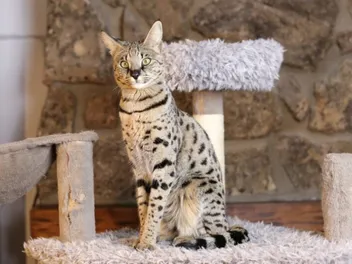
The Savannah cat is the best of both worlds. They are a mix between a domestic cat and a Serval. Often, breeders raise several generations of Savannah cats. F1 Savannahs have the most Serval blood, and they are larger and act more like wild cats. As you move down to F2 through F4 cats, they get smaller and tamer. This allows you to choose the exact mix of wild and domestic.
Cats with savannah coloring are often more expensive than those that inherit a domestic pattern. If you’re willing to give up the wild-looking pattern, you can save quite a bit on these cats. There are many breeders in the US, but demand is relatively high. You often have to wait a while before a Savannah is available.
Savannah Legal Ownership Status in the US
| Legal, All Generations: | Alabama, Arizona, Arkansas, California, Connecticut, DC, Florida, Idaho, Illinois, Kansas, Kentucky, Louisiana, Maine, Michigan, Minnesota, Mississippi, Missouri, Montana, Nevada, New Jersey, North Carolina, North Dakota, Ohio, Oklahoma, South Carolina, South Dakota, Tennessee, Utah, Virginia, West Virginia, Wyoming |
| Legal, F4 and Later Generations: | Alaska, Colorado (not city limits of Denver), Delaware (permit), Iowa, Massachusetts, New Hampshire, Vermont |
| Legal, F5 and Later Generations: | New York (not in NYC proper) |
| Some Restrictions and Permits: | Indiana (permit required), Maryland (weight restrictions), New Mexico (permits required), Oregon (restrictions), Texas (limited counties), Washington (not Seattle). |
Source: https://savannahcatassociation.org/states-that-allow-savannah-cats/
9. Chausie

The Chausie is a hybrid cat that is a mix between a Jungle Cat and a domestic cat. They were first bred and recognized in 1995, so they have been around longer than other exotic cat breeds sold as pets. Most Chausie cats sold are the fourth generation, so they are pretty tame. These cats are also fully fertile, which isn’t true for cats higher up on the family tree.
In general, Chausies are intelligent and outgoing. However, it depends on the domestic cat used in the breeding. Chausies can be hyperactive and seem to be all over the place as kittens. Adults tend to calm down and are quieter, though they are still more playful than your average cat.
Unlike many cats on this list, the Chausie does not like being alone. They require regular human contact to remain happy. They can get along with other cats and even dogs if raised beside them. They usually cannot be successfully rehomed as adults, so be sure you can commit to caring for a wild kitten.
Chausie Legal Ownership Status in the US
| Legal, All Generations: | Alabama, Arizona, Arkansas, California, Connecticut, DC, Florida, Idaho, Illinois, Kansas, Kentucky, Louisiana, Maine, Michigan, Minnesota, Mississippi, Missouri, Montana, Nevada, New Jersey, North Carolina, North Dakota, Ohio, Oklahoma, South Carolina, South Dakota, Tennessee, Utah, Virginia, West Virginia, Wyoming |
| Legal, F4 and Later Generations: | Alaska, Colorado (not city limits of Denver), Delaware (permit), Iowa, Massachusetts, New Hampshire, Vermont |
| Legal, F5 and Later Generations: | New York (not in NYC proper) |
| Some Restrictions and Permits: | Indiana (permit required), Maryland (weight restrictions), New Mexico (permits required), Oregon (restrictions), Texas (limited counties), Washington (not Seattle). |
Source: http://www.savannahcatsandkittens.com/laws-for-owning-savannahs-and-other-hybrid-cats/
10. Bengal Cat

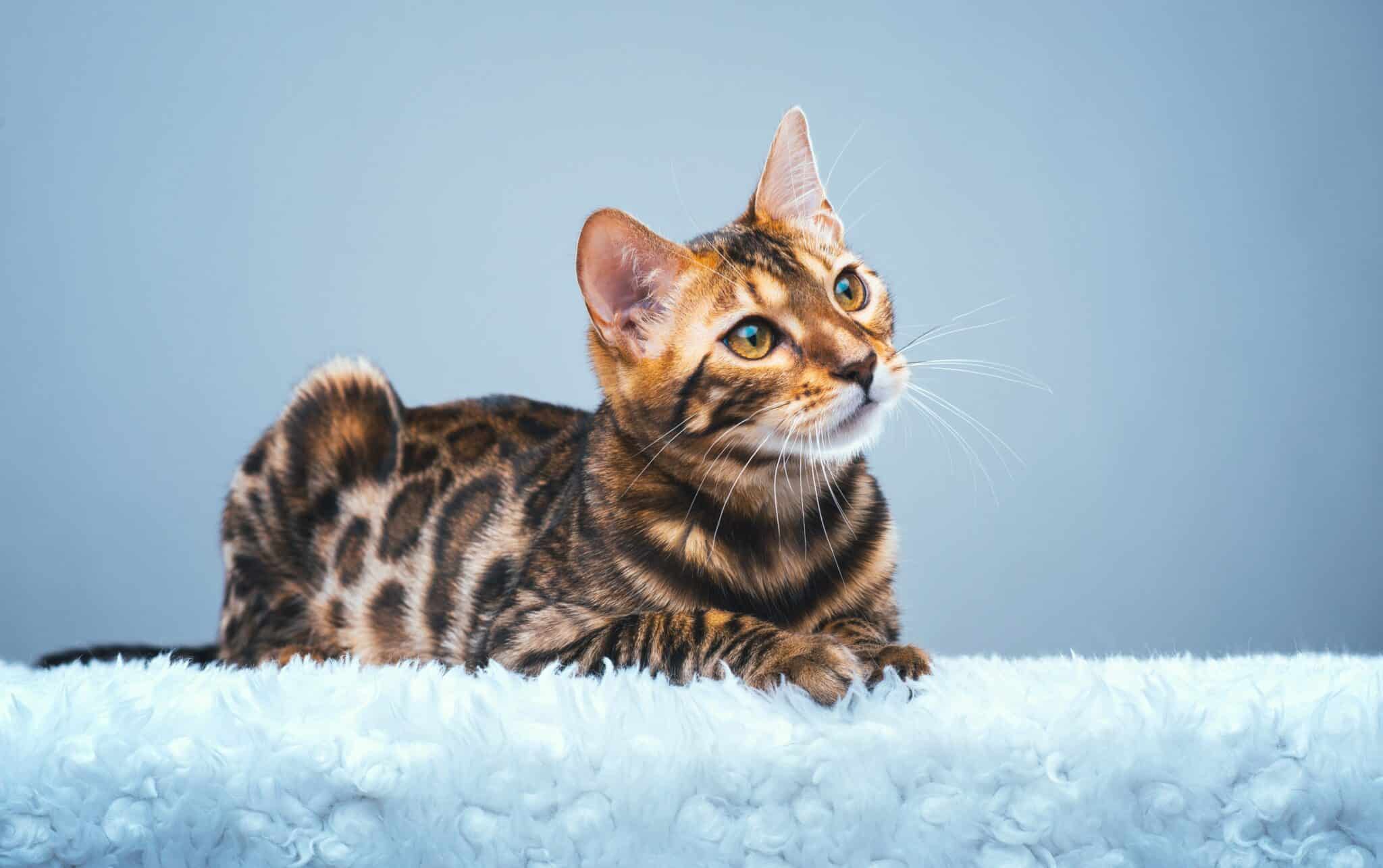
This hybrid is created by breeding a domestic cat with an Asian Leopard cat. The domestic breed is typically an Egyptian Mau since they are spotted and resemble an Asian Leopard cat. Bengals have a wild appearance and a gleaming coat. Many cat owners choose cats due to their appearance, but ensuring that you have space and the ability to care for them is crucial.
They are incredibly energetic cats and need plenty of play and exercise. If their needs aren’t met, they can become irritable and destructive. They require more work than your average cat due to their high mental and physical stimulation needs.
Bengals are regulated in a few states and outright banned in some cities. Cats in the F5 generation and further are considered entirely legal and can be kept in most places.
Bengal Legal Ownership Status in the US
| Legal: | Connecticut, Delaware, Idaho, Indiana, Iowa, Kentucky, Louisiana, Maine, Maryland, Michigan, Minnesota, Missouri, Montana, Nebraska, Nevada, New Hampshire, New Jersey, New Mexico, North Dakota, Oklahoma, Oregon, Pennsylvania, Rhode Island, South Carolina, South Dakota, Tennessee, Utah, Vermont, Washington, West Virginia, Wisconsin, Wyoming |
| Some Restrictions and Permits: | Alaska, Arkansas, Colorado, Florida, Illinois, Kansas, Massachusetts, North Carolina, Ohio, Pennsylvania, Texas, Virginia |
Source: https://kamanlaw.com/why-are-bengal-cats-illegal-in-the-u-s/

Summary
Exotic cats require far more work and planning than an average domestic cat. Even hybrids require a lot of time from their owners, though that doesn’t mean they’re more affectionate or loving. Many are not as adaptable to human homes, so they are not an excellent fit for everyone. You must be completely aware of what you’re getting into before purchasing. Exotic cats are often only suitable for particular people.
Related Reads:
Featured Image Credit: Laurie E Wilson, Shutterstock
Expert cat care, straight to your inbox
News, insights, and useful advice, delivered to you.

No spam — unsubscribe anytime.
By signing up, you agree to our Terms & Conditions and Privacy & Cookies Policy.
How useful was this post?
Click a star to rate. You can leave written feedback afterwards. (We read all feedback.)

Christian started writing for a local newspaper as a teenager, and he's been involved in the publishing industry for most of his adult life. Combining his love of writing with a passion for animals, he is currently the Director of Editorial at Pangolia and the Editor-in-Chief at Catster.
Christian lives in the Philippines with his wife, son, and four rescue cats: Trixie, Chloe, Sparky, and Chopper.