Cat Dogs: Cats for People Who Think They Don’t Like Cats

Hi, I’m Dr. Lauren! Read my introduction to learn more about me and my two adventurous cats, Pancake and Tiller.
Cats are not small dogs, we often say in veterinary medicine. And we use this statement to discuss why feline medicine is just so inherently different from its canine counterpart.
However, today, let’s take a diversion from science, and medicine, and delve into the more abstract world of human pet ownership. And pet personality theory. Ok, maybe we aren’t completely stepping away from science, but it’s a bit of an exploration, to be sure. In the process, we will attempt to answer the question of the mysterious cat dog.
Why Do We Have Pets?
So, pets. Why do we have them? Is it for the potential health benefits, as I discussed in a previous article? Or is there something else?
Pets certainly offer comfort, and possible health benefits such as improved mental health, and lowered blood pressure. Conversely, pets also offer potential zoonotic diseases, and bite and scratch wounds. When deciding on a pet, you also decide whether you are a glass-half-full or glass-half-empty sort of person, based on these factors. In fact, if you’re a glass-half-empty sort of person, you might smartly decide to avoid the risks of a pet altogether.

Cats vs Dogs
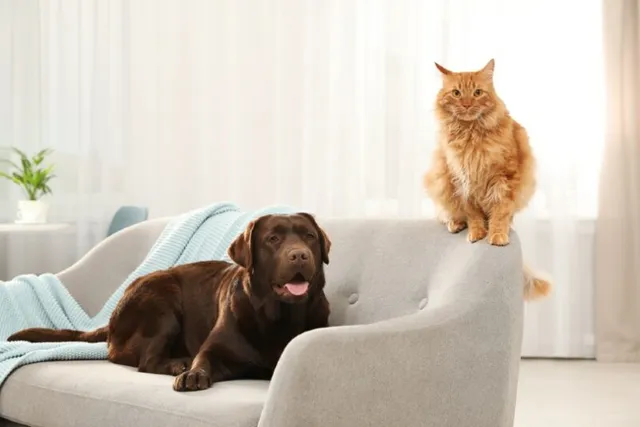
But for those of us who take the plunge, how do we select the pets we do? And are cats truly different from dogs? If so, why? Interestingly, people that own dogs tend to score higher on personality traits such as warmth and rule consciousness, amongst others. Cat people, on the other hand, tend to score higher on traits such as general intelligence and self-reliance.
This may reflect the general societal attitudes in the West that dogs are gregarious and man's best friend, while cats are aloof, distant, and conniving.
Even Rudyard Kipling himself elocuted on the tale of how cats became domesticated, but only after canines, and only to an extent of their choice. Cats, the literature therefore tells us, are apart, distant, and judging. And sadly, our society has generally embraced this.
In a similarly unhelpful way, most behavioral research in veterinary medicine has tended to focus on the behavioral problems of our pets, until recently, Thus, we know a fair amount about problematic personality issues such as anxiety, and aggression, but little about cat and dog personalities themselves. In fact, for a long time, it was argued that pets and animals didn’t have personalities, and the concept was dismissed.
Personality
Personality is defined as consistent individual behavior patterns, and only recently, has come to focus on pet cats. The implications of such research may have direct positive benefits, as management and welfare strategies may be better placed to target these specific personality traits based on such data. Therefore, a better understanding of our pets may lead to better lives, healthcare, and welfare for all.
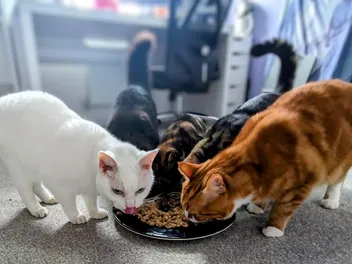
And research is now emerging, that does speak to feline personalities and measurable traits within. Dubbed the “feline five”, five personality traits were investigated from a cohort of almost 3,000 pet cats in Australia and New Zealand. These factors included neuroticism, extraversion, dominance, impulsiveness, and agreeableness. Meanwhile, while our study of cat personality remains in its infancy, we are still apt to judge books, ahem cats, by their covers. One study found that people were more likely to attribute orange cats with being friendly, and tri-colored cats to having indifferent personalities; white cats were assessed as less bold and more calm than other coat colors. And this may be doing some cats a disservice. Especially those cats for whom research has not yet caught up with, and may never will: the elusive cat dog.

The Cat Dog
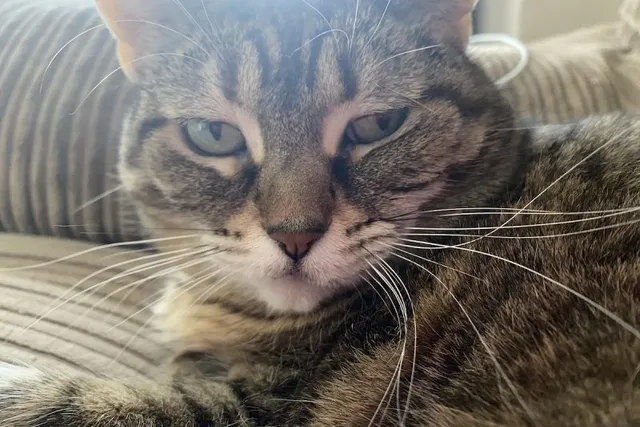
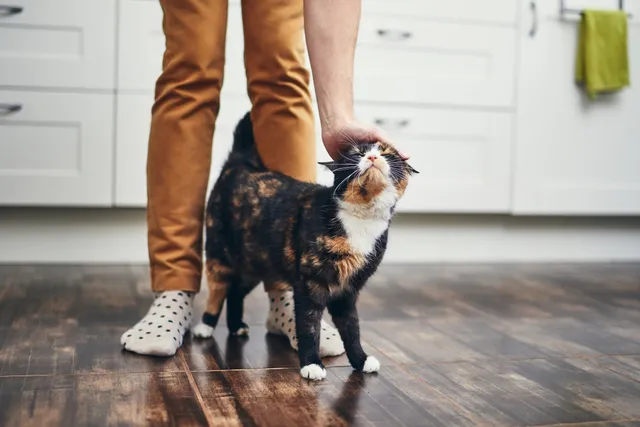
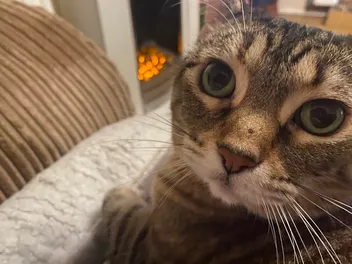
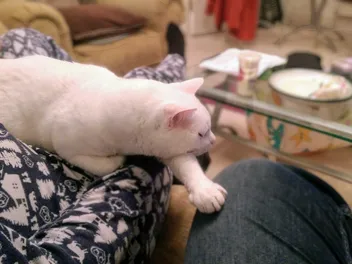
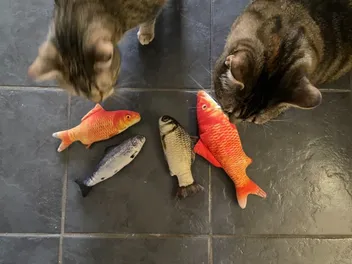
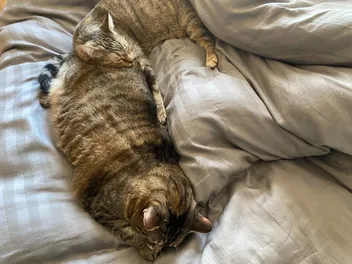
The cat dog is a cat, that is more dog than cat. They fetch. They play. They love attention. They are intertwined in all family affairs and love every minute. Call your cat or dog, and they come running. Go to bed, and your cat dog is already snuggled in waiting for you. Get sick or sad, and your cat dog comforts you. These aren’t myths, but comments I hear time and again from some of the wonderful cats and cat owners that I have met in practice throughout the years: cat dogs are the cats that people who say they don’t like cats, need to meet.
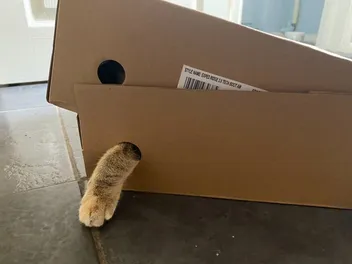
They defy all feline expectations. They are gregarious, outgoing, funny, even. They chase dogs around the neighborhood, while still timing their afternoon to be waiting at the bus stop for the kids at 3 pm sharp. You might think I’m joking, but I’m not. These cats defy expectations. More well-known examples might include Casper or the Alaskan city mayor Mayor Stubbs (great cat, met him back in the day!).
As a vet, I’ve worked with many dogs that have given me the side eye, an eagle I wouldn’t have trusted in a dark room, and one really wiley Chihuahua that hated post-it notes with a penchant and 99.9% of people. I can say, definitively, that personality has far more to do with anything than the particular species. Just as people all don’t like the same movies, foods, or forms of relaxation, so too, are animals individuals.
In practice, the elusive cat dog is easy to spot. It is the confident, relaxed patient that comes to my clinic, happy to be anywhere, and rolling with the punches. They are adored by their owners and fellow veterinarians. They are lovely cats -- easy to get along with, happy to do what is needed, and always a boon to the family they live with. If you have been lucky enough to experience a cat dog, you will know exactly what I mean.

Final Thoughts
So, while, science may still be out, the jury is not. Dog cats and feline personalities are the next stop in our feline journey of knowledge as we progress through the 21st century and encounter new ways to look at and engage with our feline companions. Let’s celebrate these unique cats, the hearts they capture, and the joy they provide to our homes. Indeed, cats are not small dogs, and dog cats are a law unto themselves.
This article is a part of Dr. Lauren, Pancake, and Tiller's series.
Expert cat care, straight to your inbox
News, insights, and useful advice, delivered to you.

No spam — unsubscribe anytime.
By signing up, you agree to our Terms & Conditions and Privacy & Cookies Policy.
How useful was this post?
Click a star to rate. You can leave written feedback afterwards. (We read all feedback.)
Dr. Lauren Demos DVM (Veterinarian)
As a veterinarian, Lauren is eager to share her experience in emergency medicine and cats, with our readers. She loves sharing helpful, real life tips for having cats as part of your life, and what to do in critical situations with your pets.
Lauren is a vet with over a ten years of experience in cats and dogs, along with infectious diseases. She enjoys teaching, and lectures for students, pet owners, and clinicians, on various topics.
Lauren received her degrees from Murdoch University, in Perth.