15 Surprising Facts About Kittens That Might Surprise You
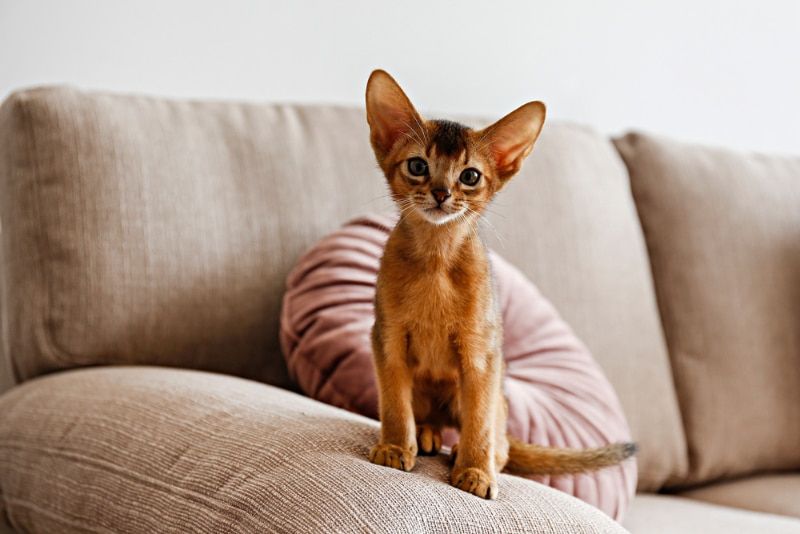
Since kittens are sweet, innocent, and immeasurably adorable, it’s hard not to fall in love with them. Youth is a precious time for cats and a crucial period for owners trying to raise a healthy, well-mannered pet. You may expect them to act like a mini version of an adult, but a kitten’s unique qualities can make them seem like an entirely different animal!
We often overlook the fascinating quirks that put kittens in their category. Discover all there is to appreciate about these little wonders by diving into these 15 surprising facts about kittens.

The 15 Surprising Facts About Kittens
1. Kittens Weigh 3–4 Ounces at Birth

Kittens come into the world at only 3–4 ounces. They then gain about 4 ounces weekly, weighing around 2 pounds by their eighth week. As small as they are light, kittens generally measure a minuscule 3–6 inches long at birth.
2. Newborn Kittens Don’t Open Their Eyes for a Whole Week
Kittens are some of the most fragile creatures you can imagine just after birth. Staying close to their mother to nurse and keep warm, they are helpless as they wait for their weak bodies to grow strong and their senses to develop enough to start exploring. For the first 8-12 days, kittens don’t even open their eyes! When they start to do so, it happens slowly over a few days.
3. All Kittens Have Blue Eyes

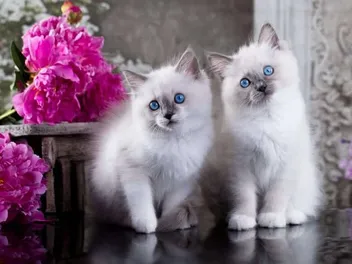
When cats finally crack their eyelids, you’ll invariably see stunning blue eyes behind them. Melanin production responsible for the eye color doesn’t occur until around week 7.
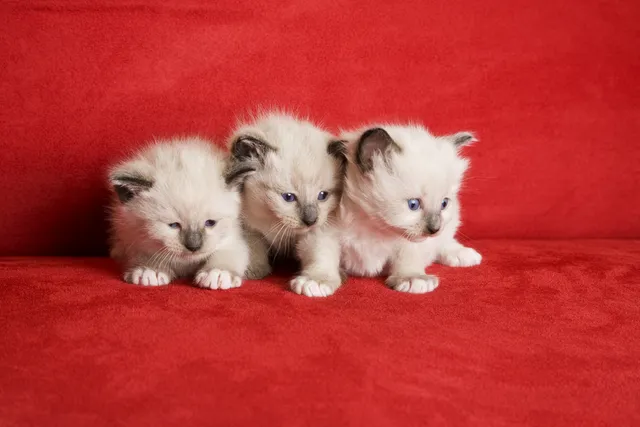
The initial lack of pigment gives us those aqua-colored eyes. Cats, like white or pointed breeds, often keep the blue hue, while others shift to green, hazel, or brown shades.
4. Their Mother’s Milk Is Crucial for Immune Development
Nursing is essential for kittens and not just because it gives them nourishment. Mother’s milk comes rich in immunoglobulins, or antibodies, giving kittens crucial immune and GI support to help them develop into healthier adults. During the first two days, the mother’s mammary glands produce colostrum, the most vital part of nursing.
Colostrum is packed with nutrients, antibodies, and protective compounds to optimize their benefits. Kittens must ingest it during their first 24 hours, and they can only absorb the antibodies into their circulatory system in this window.
Though short-lived, these immune boosters give kittens the defense they need for roughly 2-3 months.
5. Kittens Need Several Rounds of Vaccinations

Interestingly, mother-derived antibodies (MDA) can also hamper the effectiveness of immunizations. Before receiving their shots, kittens need to work out the MDA in their system to a point where they won’t block vaccines from activating the immune system. It can generally take 4 to 20 weeks for this to happen.
As you might expect, accurately predicting when the MDA levels drop and vaccines will be effective isn’t easy. To account for this, veterinarians administer a series of core vaccine shots 2-6 weeks apart. Core vaccines for kittens include:
By administering regular boosters, vets can provide a cat with an effective dose without leaving them vulnerable to disease for too long. Ask your veterinarian for advice in the unlikely event that your kitten did not receive any maternal antibodies.
6. You Shouldn’t Buy Kittens Under 8 Weeks Old
Kittens separated early from their mothers will experience more behavioral problems than other cats. They benefit from this time with their mother and siblings and learn many crucial social and mental skills. Breeders generally wait at least 8 weeks to ensure they’re well-socialized, well-behaved, and healthy. The crucial socialization period ends at 9 weeks, so by this time the kitten should have been introduced (in a very positive way) to all kinds of life experiences such as new people, car rides, grooming, and veterinary examinations.
7. You Can Hand Rear Kittens, But It Has Drawbacks
Mother cats make the owner’s role in kitten-rearing simple. Keep the mom comfy, and she’ll do the rest. But if she can’t raise her young, you’ll realize the exhaustive work needed to keep them healthy.
What does it entail? Alongside a demanding feeding schedule (as much as once every 2 hours), you’ll have to do many basic tasks kittens can’t perform themselves.
Kittens will need a milk replacement to replace nutrients they typically receive from their mother. Gentle cleanings will be essential, and you’ll even have to help them eliminate. Mothers lick their kittens to stimulate their private areas and make them pee and poop, so without her, that job falls to the owner.
Even with attentive care, you can’t 100% replicate all a mother provides. Kittens lacking social interaction may develop fine physically, but as adults will likely have some behavioral issues.
8. Kittens Can’t Thermoregulate
While you’re raising young kittens, you must maintain a consistent ambient temperature to ensure their survival. Until about 4 weeks old, cats are so helpless they can’t even thermoregulate, requiring them to seek sources of warmth to maintain their ideal body temperature (varies with age).
Without their mother’s warmth or an accommodating room temperature above 80°F (or more depending on their age), they can succumb to hypothermia. Warmth is a top priority. Without a comfortable body temperature, many of the kitten’s bodily functions will suffer, including their ability to eat and metabolize food.
9. Kittens Grow (and Lose) Baby Teeth

Kittens are born toothless, and their first set of teeth break through the gums at around 3 weeks. Thankfully, kittens don’t have any need for them during nursing. By the time they’re around 4 to 6 weeks, they’ll already have most of their 26 deciduous teeth , and all should be in by the time they finish weaning at 8 to 10 weeks.
Like humans, kittens lose their baby teeth to make way for adult teeth. By 6–7 months, their 30 adult teeth will come in to replace the baby teeth. Checking for normal teething is vital, as some baby teeth may not fall out (“persistent teeth”).
Cats can develop malocclusion or infections if their teeth jockey for space. But you may not notice when the baby teeth fall out because, like dogs, cats often swallow them!
10. Catnip Doesn’t Work on Young Kittens
Catnip is an adults-only treat, but not because of any regulations on the recreational substance. It's a matter of effectiveness. While some cats won’t respond to catnip at any age, kittens rarely react to it until 6-12 months of age.
The euphoria-inducing nepetalactone in catnip activates scent receptors which send a message to the cat’s brain, giving them 10+ minutes of positive energy and happiness. Since kittens don’t develop sensitivities for around 6 months, catnip has no effect on them. Based on genetics, some cats will never react to catnip.
11. Kittens Are Easy to Potty Train

Litter box training is often as easy as putting a box out and showing your kitten where to find it. Cats naturally want to bury their waste, and a litter box offers the perfect setting to satisfy them. In addition, they have probably learnt from their mother how to use the litter box.
From there, it generally doesn’t take long for them to figure out that it’s the best place to do their business. However, some cats will need some training to use the litter box.
12. Kittens Aren’t as Fussy About Food
Cats are well-known for being picky about their diet. For owners, it’s frustrating trying to find agreeable cat food and more than a little concerning when their pets won’t eat.
There are several methods to help a picky adult, though it can take considerable time and effort. The most efficient approach to ensure a diverse palate starts when they’re kittens.
Kittens are curious and open to trying new things. After weaning, you have a short window to offer a varied diet, expose them to new tastes, and make them more tolerant of a broader assortment when they grow up.
13. Kneading Behavior Starts with Kittens

Does your cat have a habit of making biscuits? Kneading is a unique behavior many cats use to convey happiness, make themselves comfortable, or possibly even mark their territory. It often starts with kittens.
While nursing, the gentle pushing of their paws on their mother’s belly stimulates milk flow, and as adults, it may provide the same feelings of comfort and security. There are several reasons a cat may knead, and not all adults do it, but their early experiences and associations may make it more rewarding when they’re older.
14. Kittens Learn to Socialize Early
Kittens are a blank slate when they come into the world, making the first 9 weeks extremely influential on their personalities.
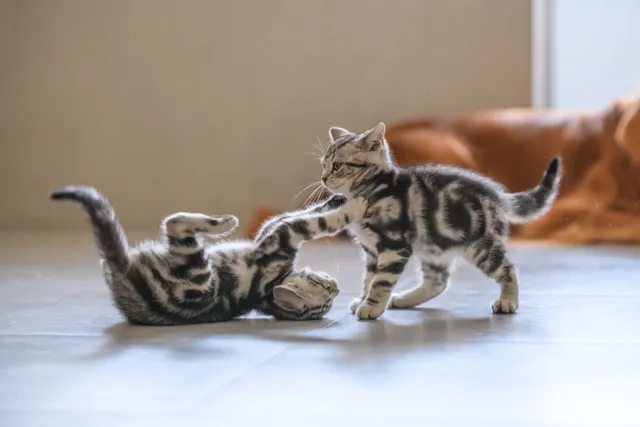
The sensitive period occurs between the third and ninth week. Following their mother’s cues, they learn who to trust and when to be wary. Playing with littermates under their mother’s guidance lets them develop coordination, practice life skills, and hone their social habits.
Human contact is equally essential during the socialization stage to reduce fearful responses and create positive associations with their owners. Exposure to various people, animals, and settings in a safe, controlled, and positive fashion will have long-lasting implications for their sociability as adults.
15. Kittens Can Get Pregnant

Although they may still be new to you, they can get pregnant when they’re as young as 5 to 6 months, with some capable of having offspring at only 4 months old! The age you spay or neuter them will depend on your circumstances, so ask your veterinarian for advice when the best time would be.
Conclusion
Cats astound us from day one, offering precious moments and joyous companionship to treasure for years. But as much as we enjoy the company of a cute kitten, we must also recognize the challenges of this critical moment in their lives. With close attention and care in the first few months, you can set the stage for a long, healthy, and fulfilling life.
Related read: Do Kitten Personalities Change?
Sources
Featured Image Credit: evrymmnt, Shutterstock
Expert cat care, straight to your inbox
News, insights, and useful advice, delivered to you.

No spam — unsubscribe anytime.
By signing up, you agree to our Terms & Conditions and Privacy & Cookies Policy.
How useful was this post?
Click a star to rate. You can leave written feedback afterwards. (We read all feedback.)

Christian started writing for a local newspaper as a teenager, and he's been involved in the publishing industry for most of his adult life. Combining his love of writing with a passion for animals, he is currently the Director of Editorial at Pangolia and the Editor-in-Chief at Catster.
Christian lives in the Philippines with his wife, son, and four rescue cats: Trixie, Chloe, Sparky, and Chopper.