Get

In Your Inbox

Catster is reader-supported. When you buy via links on our site, we may earn an affiliate commission at no cost to you. Learn more.

Camping With Cats: Vet-Approved Guide

Share

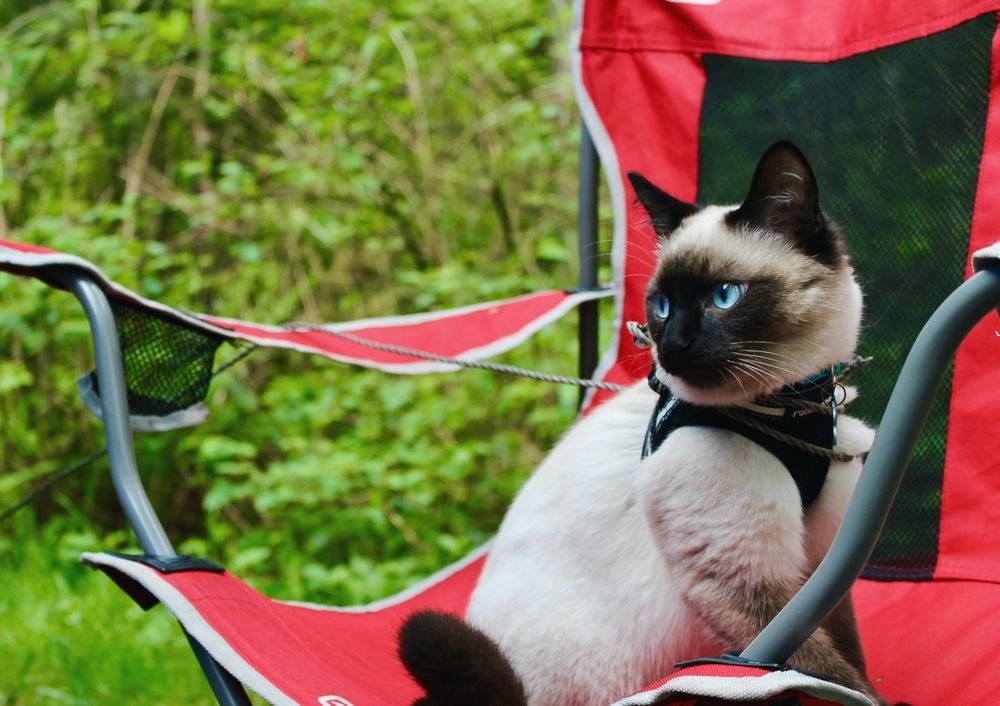
camping with siamese cat on leash

Dogs are often brought along as camping companions. But what about cats?

While cats may not be the stereotypical pet to bring on a camping trip, they can tag along if you take the correct steps and precautions. You can’t simply pack a cat leash and canned food and expect everything to turn out okay!

Many cats can adapt to the idea of camping if they’re acclimated correctly. However, some skittish felines are not going to have a good time, no matter what you do. Consider your cat’s personality before you hit the trail. You don’t want to deal with a stressed and fearful cat the entire trip.

Camping with cats can be a bit complicated. But it is often straightforward once you have the basics down. In this article, we help you learn everything that you need to know about taking your cat out of the house and into the woods.

divider 2 cats

The 8 Things to Know When Camping with a Cat

1. Consider the Trip

Not all trips are suitable for felines (or even dogs, for that matter). Heading to a campsite for a few days is one thing — doing days of hiking is another.

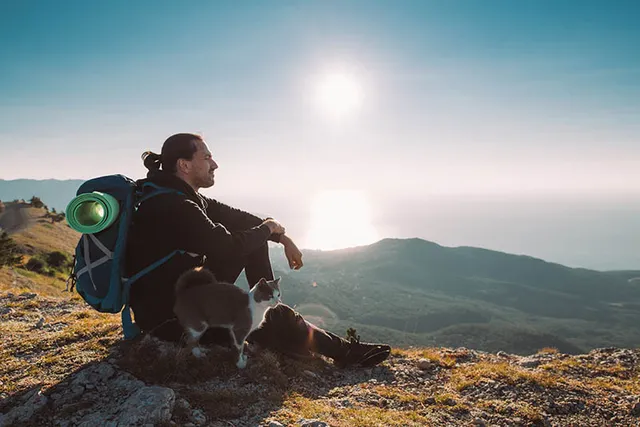
Cats are easy to take along in vans and cars. They’re less able to handle long miles of hiking.

It’s true that in the wild, cats would likely walk for miles a day, but your furry domestic friend likely doesn’t have the stamina for that. However, cats also need a suitable amount of exercise and can’t spend all day in the carrier. (Plus, you probably don’t want to spend the whole time carrying the carrier!)

Be sure that the trip you are planning is one that you can realistically take your cat on. Don’t expect your feline to adapt well to weeks out in the brush or miles of hiking trails.

man with her cat on a riverbank with kayak and tent
Image Credit: Fotangel, Shutterstock

2. Are Cats Allowed?

You may think that bringing your kitten along is a great idea, but the owners of the campground may think otherwise.

Some campgrounds do allow pets, including national parks. However, private campgrounds are a completely different beast. These locations will have their own policies, and some may decline any sort of pets, including cats.

Other places may allow pets but require extra payments. Some are refundable and others aren’t.


3. Stock Up on Gear

If you’re going to be spending most of the time in a camper, taking a cat along may not be a huge issue. However, any tent camping will require extra gear.

Here are a few essentials that you’ll need for most camping trips.
  • Portable water – Your cat needs to drink, even on the trail. You shouldn’t rely on outdoor water sources. Not only are they unreliable, but they can also make your cat sick. You can use purification tablets or a filter for these natural bodies of water, though. Be sure to pack a collapsible water bowl or a water bottle that your cat can drink out of.
  • Food – Your cat will need food while you’re camping. Bring a little extra just in case it is needed.
  • Medications and First Aid Kit – If your cat is on any medications, bring them! You likely won’t be able to pick up more while on the trail. Ask your vet about an extra supply if necessary. You should also bring a first aid kit of some sort. Your cat can get injured on the trail, just like you, and there aren’t any vets out in the woods.
  • Sunscreen – For sunny areas, your cat may need sunscreen. Lighter-colored cats are more prone to sunburn than darker color felines. However, it is better to not guess and to just pick up pet-friendly sunscreen.
  • Collar and ID tags – Hopefully, your pet wears these anyway. Be sure you bring them on your trip, just in case your pet gets lost. We highly recommend microchipping your feline as well. It is inexpensive and much more reliable. However, they should still wear a collar and ID tag so they aren’t mistaken as a stray.
  • GPS tracker – This is highly recommended if you move your cat to unfamiliar territory. This will be the only way to ensure they do not get lost as the app on your phone will always know their exact location. Also, please note that Bluetooth-based I-tags might not work out in the woods as they rely on the phone’s Bluetooth in the area to provide an estimated location. If there are no phones, there is no location, but GPS trackers use satellites.
  • Harness and Leash – Your cat should be on a harness and leash anytime they are outside. Be sure the harness is made for heavy use and has reflective strips. We recommend adding a bell as well. Sometimes, you can’t see your cat, so it helps to hear them.
  • Litter Box – You should never leave cat feces lying around. They can contain harmful bacteria that can harm the environment. You may be able to convince your cat to go outside like a dog and use poop bags. However, some cats require a litter box. Luckily, there are collapsible options.
  • Comfort Items – The new environment and traveling can seriously stress out some cats. Sometimes, items from home, like a favorite bed or blanket, can be exceedingly helpful. If your cat has anything that they seem particularly attached to, bring it along if you have the room.
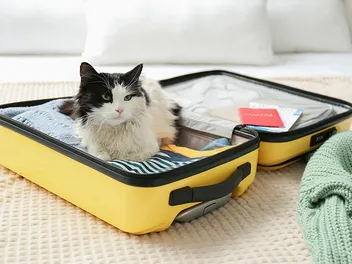
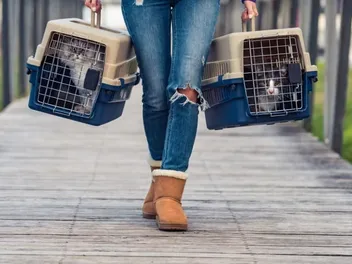
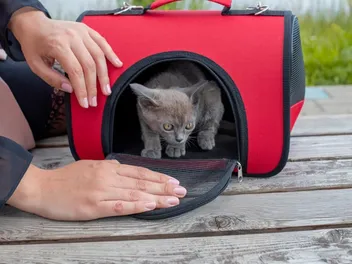
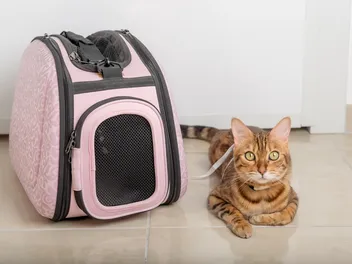
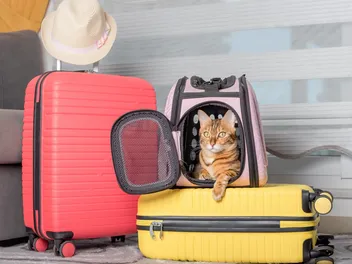
  • Consider a Carrier – You won’t always need a carrier. It depends on where you’re going and what you’re doing. If you’re traveling by car, you should always have a carrier for safety reasons. Plus, it’s the law in some areas. There are collapsible and backpack-style carriers for the trail, which will be far more practical than the large plastic ones. Many cats will sleep in their carrier at night, especially if you’re camping in a tent. This practice keeps them contained, so they don’t bolt out the door. If your cat isn’t crate trained, we recommend doing so before you take them camping.

4. Ensure That Any Necessary Training Is Complete

There are a few different things that your cat needs to be trained in before they are taken camping.

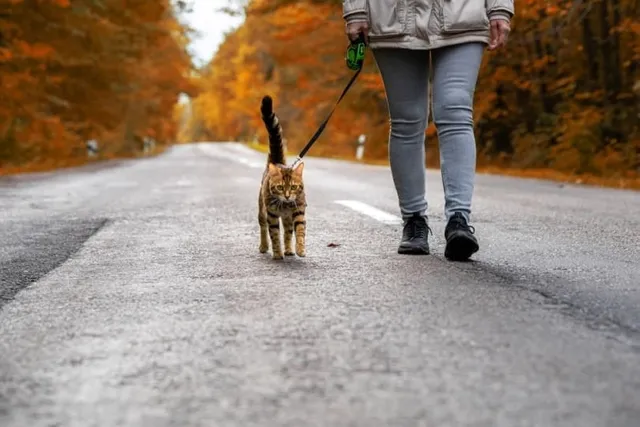
Walking on a leash is a must. Your cat needs to be leashed anytime that you’re outside, and when you’re camping, you’ll mostly be outside. If your cat isn’t used to the leash, you’re going to have a bad time!

You should also crate-train your cat. You won’t always need to crate your cat while camping, but it is recommended in many situations. If you’re sleeping in a tent, a carrier for your cat is recommended. They’ll also need to ride in a crate on the way to the campsite.

Crate training can prevent unnecessary stress in a situation that is already inherently stressful for your feline.

Grey cat fell asleep in crate
Image Credit: Chomphuphucar, Shutterstock

5. Desensitize

If your cat has never spent much time outside, you should get them used to it before your camping trip. There are many unusual sights, sounds, and smells outside, and most of them can be a bit scary for your average cat. You don’t want your cat to be terrified the whole time that they’re camping.

You should also get them used to a tent, preferably the one that you’ll be using. Set it up and get them in it. You may want to use a carrier for this, as fighting a cat into a tent can be a handful. We recommend spending a few nights in your tent if possible, especially if your cat will be sleeping in a crate.


6. Always Keep Your Cat on a Leash

You should always keep your cat on a leash at the campsite. Don’t let them roam. You don’t know what sort of wildlife might be around. Plus, your cat may not be able to find their way back. The campground is new and unusual (and a little scary).

tabby cat on a leash sleeping in a camping trip
Image Credit: Jesse Coggins, Shutterstock

7. Never Leave Your Cat

You should never leave your cat alone while camping. Don’t tie them out and leave them, even though this may be a common practice with dogs. Cats are far more susceptible to dangers from wildlife. If they’re tied up, they can’t get away.

You can bring a length of cord for when you’re at your campsite, however. Tie it between two trees and attach your cat’s leash to it. They’ll be able to walk around a bit more.

However, don’t leave your cat there if you aren’t supervising.


8. Supervision Is Key!

Keep a close eye on your cat when you’re camping. Not only are they prone to predator attacks, but there are also dangerous plants, venomous animals, and other potentially dangerous pets. Birds of prey can pose a severe risk to cats, especially smaller ones.

Of course, you should let your cat explore. But be sure to keep an eye on them while they do so.

divider 2 cats

Conclusion

Training your cat to go camping can be fun and rewarding, but you do need to approach it carefully.

Cats should have basic training down before they are taken on an exciting trip. A cat that can’t walk on a leash can’t be taken camping. Your bags should be packed carefully. It is easy to remember food and water, but what about a collapsible water bowl or an appropriate harness?

Desensitization and training are also essential. Don’t expect your indoor cat to suddenly love camping. Felines should be taken outside and inside a tent before it’s time for the trip.

Finally, don’t forget to have fun! All the safety information and packing can be overwhelming, but there is little point in taking your cat on a trip if you don’t have fun. Take care of all the logistical stuff before your trip so you can relax while you’re there.


Featured Image Credit: fchase, Shutterstock

Want content like this delivered to you?

Sign Up For Our Newsletter

News, insights, expert advice, and everything cat

* By submitting, you agree to our Terms & Conditions and Privacy & Cookies Policy.


How useful was this post?

Click on a star to rate (you can leave written feedback after clicking submit)

Help us improve Catster for pet parents!

Your feedback really matters.

What did you like about this post? Also how can we improve it?

Join the conversation

Leave a Reply

You’re very welcome to leave a comment or question. Please know that all comments must meet our community guidelines, and your email address will NOT be published. Let’s have a positive and constructive conversation.


Talk With A Vet Online

Peace of mind,
anywhere, anytime

Affordable vet advice

Do Cats Cause Schizophrenia? Scientists Find a Link – Here’s What It Means

Being a fierce advocate (and occasional recipient of) mental health support and awareness, the term ‘crazy’ is not one I like to fling...

One in 100 Cats Gets Diabetes – Here’s How to Catch It Early

One in every 100 cats develops diabetes.1 That’s not a rare, unlucky condition reserved for cats with obvious health problems. It’s common enough...

Dramatic Rescue Turns Into Dramatic Reunion

What started as a routine call for the RSPCA became a heroic, five-hour rescue featuring one trapped and traumatized cat, an emotional family...

Ask Dr. Paola – Help! How Do I Know if it’s Ear Mites! (May 4, 2026)

Welcome to our “Ask Dr. Paola” series, where every Monday we bring expert advice straight from Dr. Paola Cuevas (MVZ) to help our...

More related

Short-Haired Cat vs. Long-Haired Cat: Vet-Verified Differences (With Pictures)

If you’re thinking about bringing a cat into your home but are unsure whether to choose a long-haired or short-haired breed, you’ve come...

10 Vet-Verified Ways to Keep Cats Out of Flowerbeds: Easy & Expert Tips

We all love our feline friends. They keep us company and even add beauty and elegance to our houses. But there are probably...

9 Best Litter Boxes to Stop Tracking in 2026: Reviews & Top Picks

One of the most notable perks of owning a cat is that they can mostly care for themselves, especially in terms of keeping...

100+ Cool Cat Names: Ideas for Carefree & Easy Going Cats 

If there was ever a single word that captures the true essence of a cat, it’s probably cool. It’s just part of their...

Keep reading

Why Do Cats Fake Sleep? 7 Vet-Reviewed Possible Reasons

Cats sleep an average of 12 to 16 hours a day, which may seem like a lot of time compared to humans, but the busy little felines need a lot of rest. However, have you ever noticed your cat stretched...

cat-sleeping-with-their-face-down

Why Does My Cat Wiggle Before They Pounce? 4 Vet-Reviewed Reasons

The little wiggle that cats display before pouncing might be one of the most adorable things that you’ll observe as a cat parent. Whether your pet is stalking a live critter or a catnip-infused plush toy, before your cat gets...

a polydactyl cat ready to pounce

Cat Dandruff: Vet-Verified Signs, Causes & Care

If you ever notice white flakes on your cat’s fur or skin, you could find yourself wondering if it could be cat dandruff. Dandruff is very common in humans, but can cats get dandruff? Is dandruff a minor condition in...

cat fur with dandruff

Can You Put Baking Soda in Cat Litter? Vet Approved Facts & Safety Advice

Cat ownership changed forever when kitty litter was invented in 1947. You didn’t have to let the family pet outside to do their business anymore which was a relief for many pet owners. Absorbent clay did the job, but it...

woman in a yellow sweater with jar of baking soda

3 DIY Tuna Pumpkin Cat Treat Recipes: Vet Approved Treats

We all love treats, and you can find several commercial cat treats for your kitty. But have you ever considered making your own? Making cat treats isn’t as difficult as you might think, and most recipes involve few ingredients and...

cat eating from feeding bowl

Can I Crate My Cat During the Day? Vet-Approved Tips & FAQ

If your cat gets into trouble when left home alone, you might be desperate for a solution, especially if they’re prone to destructive behaviors. Maybe you’ve even wondered if you can crate your cat during the day like a dog....

Grey cat fell asleep in crate

Are Calla Lilies Poisonous to Cats? Vet-Verified Facts & Safety Guide

Are calla lilies poisonous to cats? This is a question that has come up many times and one that many people are unsure of the answer to. Calla lilies do contain a substance that causes harmful effects in cats. However,...

Catster_Are Calla Lilies Poisonous to Cats

Maine Coon Cat Size: Info, Pictures & Height Comparison Chart (Vet-Verified)

Maine Coons are known to be some of the biggest domestic cats there are. The breed originated in the US state of Maine, where they had to face brutally cold winters, helping them develop into a rugged breed that’s fit...

big-blue-maine-coon-cat-in-forest

Love Cats? So Do We! Join the Catster Community

Stay informed with expert pet care insights delivered straight to your inbox! Discover professional guidance on animal behavior, feeding tips, trusted product picks, and much more.


Sign up for the Catster Email Newsletter

Stay informed with expert pet care insights delivered straight to your inbox! Discover professional guidance on animal behavior, feeding tips, trusted product picks, and much more.