Do Cats Cause Schizophrenia? Scientists Find a Link – Here’s What It Means

Being a fierce advocate (and occasional recipient of) mental health support and awareness, the term ‘crazy’ is not one I like to fling about. However, as someone who has been labeled—both by myself and others—as a ‘crazy cat lady’ more than just a few times, it’s not a phrase I take too seriously. But what if there’s some truth to the stereotype?
In a paper published in December 2023, scientists have proposed that there is a direct link between cat ownership and the incidence of schizophrenia-related disorders. Initially, this may sound like one heck of a stretch, but it turns out there may actually be a scientific explanation.
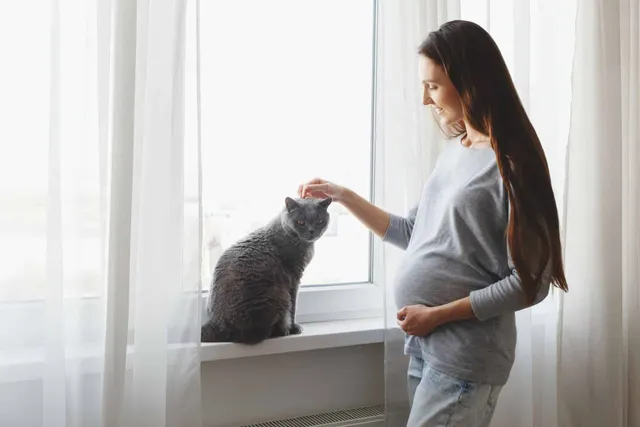
You may have heard that pregnant women shouldn’t handle cat feces. Ideally, none of us should be directly handling cat feces, but there is a specific risk to those ‘with child’—an intracellular protozoan parasite called Toxoplasma gondii. Whilst this particular parasite can also be picked up by eating undercooked meat, the feline litter box tends to get most of the credit. In the vast majority of cases, human infections are asymptomatic, with some individuals showing mild flu-like symptoms.1 Most significantly, Toxoplasmosis can result in miscarriage or birth defects, which is why pregnant women are strongly encouraged to hand over the litter scoop.
Similarly, most cats infected with T. gondii are asymptomatic, and only those with weakened immune systems tend to show signs of infection. Signs of Toxoplasmosis in cats are quite variable, depending on infection stage and location, but may include lethargy, fever, jaundice, inflammation of the eyes, or neurological disorders.

What Does Toxoplasmosis Have To Do With Schizophrenia?
Previous research has suggested that childhood exposure to T. gondii that results in the parasite persisting in the central nervous system may produce variable physiological changes in the brain and may even be responsible for the development of schizophrenia.2 However, similar studies have been unable to either definitively prove a link between the parasite and schizophrenia, or demonstrate how Toxoplasmosis produces the clinical signs associated with this disease.
In this more recent systematic review and meta-analysis, researchers found a significant association between cat ownership and an increased risk of schizophrenia-related disorders, with individuals exposed to cats approximately twice as likely to develop schizophrenia.
Did You Say TWICE As Likely?
That figure sounds pretty scary, and taken at face value, it is. However, this is not as simple as it sounds. With no clear causal relationship, the observation that ‘children with cats are twice as likely to become schizophrenic’ is merely a correlation. Just as one might notice that every time you wash your car, it rains the next day, we know that one does not actually cause the other. In the case of cats and schizophrenia, far more research is needed before we resort to raising the minimum age for feline interactions, but good litter box hygiene, clean hands, and properly cooked meat (or no meat!) are always a good idea.
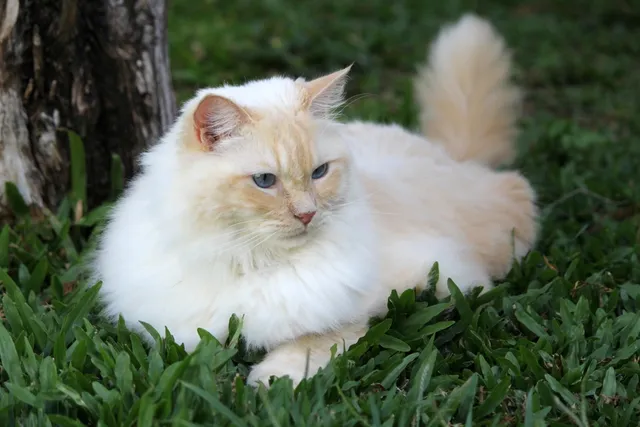
Feature Image Credit: Cat_Box, Shutterstock
Did You Know?
- Our brand-new posts are rounded up and included in our weekly emails. Don't miss out on the latest - sign up for our newsletter below!
Expert cat care, straight to your inbox
News, insights, and useful advice, delivered to you.

No spam — unsubscribe anytime.
By signing up, you agree to our Terms & Conditions and Privacy & Cookies Policy.
How useful was this post?
Click a star to rate. You can leave written feedback afterwards. (We read all feedback.)

Dr. Karyn Kanowski BVSc MRCVS (Veterinarian)
Dr. Karyn comes from Queensland, Australia, and has lived in the UK for the past 10 years. In 2010, she graduated from The University of Queensland School of Veterinary Science and also has a Bachelor’s degree in Zoology. She is passionate about using evidence, experience, and owner collaboration to provide the best solutions for pets, and believes in making reliable information about animal health accessible to all. Dr. Karyn shares her home with five cats, four dogs, and one husband. When she is not in the scrubs, she spends her time writing, gardening, and cleaning up pet hair!