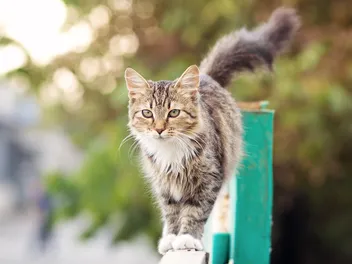
How to Tell If a Cat Is a Stray or Outdoor? Vet-Reviewed Differences & Recommendations


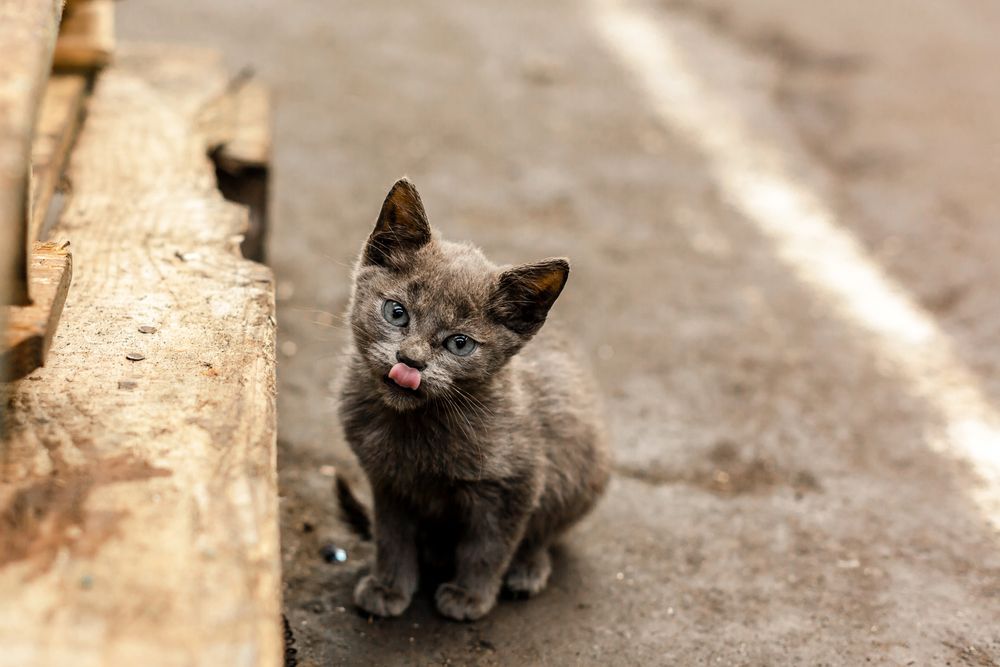
In this article
You’ve likely come across cats walking the streets in your community as you go on about your daily business. Have you ever wondered if one is a stray cat or just spending time outdoors? You should know the difference, especially if you’re considering helping a cat that you see in your neighborhood.
So, how can you tell if a cat is a stray or simply has an owner who lets them go outside? Here is what you should know.

The Importance of Learning the Difference
The reason that you should know how to tell if a cat is a stray or just hanging out outdoors is to help ensure that you take the right steps when dealing with them. An outdoor cat that has a home typically does not require help like a stray cat might. Some cats that are outdoors are indeed lost, but in that case, signs of wear and tear, illness, and/or being underweight are likely to be observed.
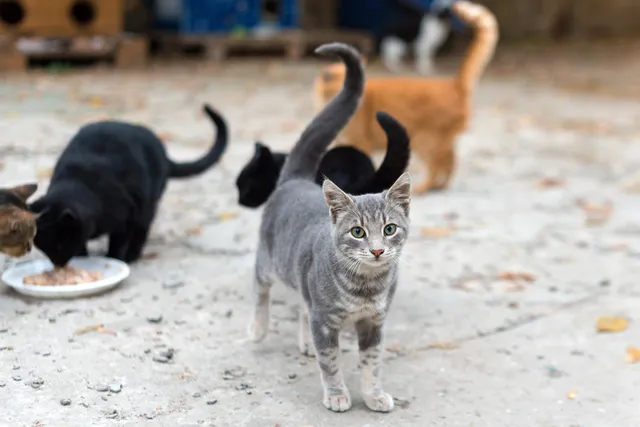
Cats that are simply spending time outdoors and away from their homes don’t require any assistance from strangers unless they are obviously injured or are otherwise in a dangerous situation. But when it comes to stray or feral cats, help may be a good thing to consider offering when you come across them. Stray and feral cats also have differences in terms of their socialization with humans. Ferals have never been socialized and are generally fearful of people, whereas strays have been socialized at some point in their lives.
So, knowing what to look for and being able to determine whether a cat is stray can help you decide whether help is necessary and what kind of assistance is best.

How to Tell If a Cat Is Stray or Outdoor
1. Their Appearance

The appearance of a cat can offer clues as to whether they’re an outdoor cat that is owned by someone or a stray one that has to fend for themselves to survive. An easy clue that an outdoor cat isn’t a stray is that they have a collar. However, not all pet cats wear collars. So, here are the prevalent differences between stray and outdoor cats when it comes to appearance:
2. Their Behavior
There can be a few differences between stray and outdoor cats when it comes to behavior and temperament. Outdoor cats that are used to human interaction are more likely to be curious about humans, if not downright friendly. However, you should keep in mind that all cats can be wary of strangers, so even outdoor owned cats that like human interaction might act skittish and scared if you try to approach them.
Stray cats can be friendly or scared depending on the situation, their personality and how long they have been stray for. Feral cats will normally be fearful of people and will generally not approach you, prefering to hide.
Therefore, it’s a good idea to observe from a distance to see how they react to you from afar. If they show no interest in you, don’t try to approach them, as chances are that they aren’t friendly toward humans. If they look like they are okay with your presence, they are likely used to being around humans in some capacity.
3. Their Schedule
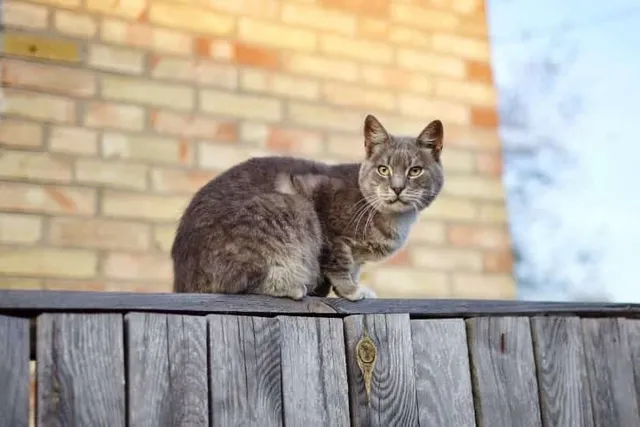
Both stray and outdoor cats can be seen wandering around during the day, particularly in good weather. However, stray cats can still be seen roaming the streets in adverse weather conditions and all times of day and night because they don’t have anywhere warm, safe, and comfortable to go.

4. Their Location
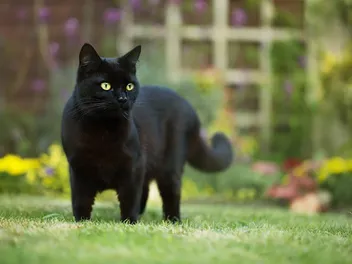
Another way that you might be able to tell the difference between a cat that is stray and one that’s just spending time outdoors is by observing where they are hanging out. Cats with homes that spend time outdoors don’t hide as often and may be found lounging in the grass or freely roaming around the neighborhood. Feral cats tend to hide out of sight and avoid contact with people and some live as part of a colony. A stray cat will be alone and not part of a group, they may approach people and houses depending on their personality and how well socialized they have been in the past.
What to Do
For a Stray Cat
If you believe that you have found a stray cat and they seem friendly, there are a few things that you can do to help them. First, you can try to confine them by putting a cat carrier out on the ground, leaving the door open, and putting food and water inside, toward the back of the carrier. Then, retreat from the carrier, and wait from a place where you won’t seem threatening. If the cat enters the carrier, close the door as quickly as possible.
You can then take the cat to a veterinarian and check for a microchip to make sure they don’t have an owner. If a microchip is found, the company that manages the chip will be contacted so the owner can be found. If no chip is found, you can take the cat to a shelter for much-needed help and hopefully, a new home. If you aren’t able or willing to do all that, consider calling the humane society to let them know where the cat was spotted and what they look like.

For an Outdoor Cat
If you are confident that the cat that you spot outside has a home based on their behavior and appearance, there is likely no need to worry about the situation. However, if the cat seems ill or injured, it’s a good idea to try to get them to a vet and to find the owner. If a microchip is not present, you can print “cat found” flyers around the neighborhood to see if anyone comes forward. Consider fostering the cat until you find the owner. If no owner can be found, you can always adopt the kitty yourself if you are in a suitable situation to do so. Check the relevant laws in your state/location, generally you cannot adopt a stray cat until the specified holding period for strays has expired, and you have made attempts to reunite the cat with their original owner.

Final Thoughts
Both stray and outdoor cats can be worrisome when we see them because we want to make sure they are going to be okay. Keep in mind that many cats spending time outdoors have safe and comfortable homes, so not every feline that you see is in trouble. However, it’s always a good idea to keep an eye out for signs of homelessness, illness, and injury so help can be offered if it is indeed needed.
Sources
Dundas Euclid Animal Hospital: Feral, Stray, or Outdoor Cat?
Should this perhaps be “…a Stray or Outdoor Cat”?
Featured Image Credit: Anna Vaczi, Shutterstock
Expert cat care, straight to your inbox
News, insights, and useful advice, delivered to you.

No spam — unsubscribe anytime.
By signing up, you agree to our Terms & Conditions and Privacy & Cookies Policy.
How useful was this post?
Click a star to rate. You can leave written feedback afterwards. (We read all feedback.)
Rachael has been a freelance writer since 2000, in which time she has had an opportunity to research and write about many different topics while working to master the art of fusing high-quality content with effective content marketing strategies. She is an artist at heart and loves to read, paint, and make jewelry in her spare time. As a vegan, Rachael is obsessed with helping animals in need both in her community and anywhere in the world where she feels she can make a difference. Animals also happen to be her favorite topic to write about! She lives off the grid in Hawaii with her husband, her garden, and her rescue animals including 5 dogs, a cat, a goat, and dozens of chickens.