9 Feral Cat Myths & Misconceptions: Unravelling the Truth
In this article
Social media and messaging boards are brimming with misinformation about feral cats, and what you should or shouldn’t do if you come across them. Some people say that feral cats aren’t even the same species as our fluffy house cats and that they're dangerous, while others believe that feral cats can be brought home and adopted.
In this article, we’ll share the truth about nine feral cat myths and misconceptions.

The 9 Feral Cat Myths & Misconceptions Debunked
1. “Feral cats are a different species to domesticated cats.”
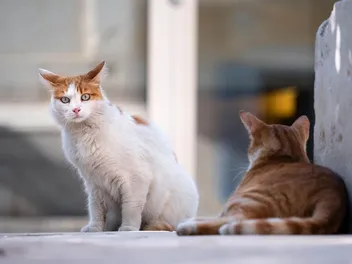
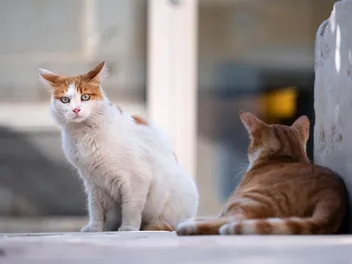
Fact: Feral cats, strays, and domestic cats are all the same species.1 The difference between them is that feral cats are born and raised outside a home, so they lack the level of socialization needed for them to tolerate and live happily with humans. Kittens need to be held and played with by loving humans from an early age to socialize properly. Unfortunately, feral kittens never have this opportunity, but that doesn’t make them a different species!

2. “Feral cats can be adopted and given a home.”
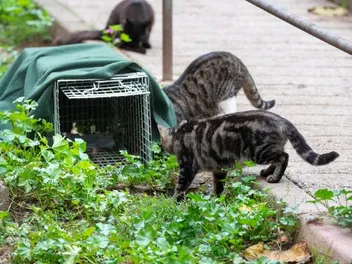
Fact: If a kitten is not socialized from a young age, it will grow up to become a feral adult cat. Feral cats can never get used to, or be happy, living inside a home with humans. As a result, if these animals are picked up by animal control or taken to a shelter, they will not be given up for adoption or given a home—instead, most will end up euthanized. TNR (trap, neuter, and return) programs run by some organizations will instead neuter feral cats and then return them to their colony.
3. “Feral cats are strays.”
Fact: There is a significant difference between feral cats and strays. Strays are cats that once belonged to a home but have either gotten lost or abandoned. These cats are used to living and interacting with people and have been socialized from a young age. If you find a stray cat finds its way to a shelter, it can be adopted and given a new home.
If a stray cat remains out in the community and gives birth to a litter, the kittens will grow up to be feral—unless they are found and socialized at a young age. Feral cats have never had the opportunity to be properly socialized.

4. “Exterminating feral cats will solve a problem.”
Fact: Exterminating feral cats is neither a humane nor an effective solution to controlling the feral cat population. If all the feral cats from a community are taken away, it will create a vacuum in the ecosystem, which will quickly be filled with more feral cats moving in. Trap, neuter, and return programs instead focus on spaying and neutering these cats so the population doesn’t grow. Additionally, it benefits feral cats by giving them a better quality of life.
5. “Feral cats can attack humans.”
Fact: It is very unlikely that a feral cat would attack a human! Most of the time, these cats will run and hide if they see someone. Feral cats tend to come out at night when there are fewer humans around.
Like any animal, if a feral cat feels threatened or trapped, it may lash out to defend itself, but it will not attack someone without provocation, and even then, if it has an escape route, it’s more likely to run away in fear.

6. “Feral cats transmit diseases to humans.”
Fact: Feral cats can only transmit cat diseases such as FIV and FeLV to other cats unless they’ve been vaccinated through a TNR scheme. It’s unlikely for a cat to pass a disease onto humans, but if it does happen, it’s usually through contact with the cat’s feces. Domestic cats and dogs can also spread disease in the same way, however.
7. “Feral cats are depleting bird populations.”
Fact: There’s no doubt that bird populations are declining, but this is more likely due to issues such as loss of habitation and diseases. The State of the Birds 2014 report claimed that “habitat loss is by far the greatest cause of bird population declines”.
Feral cats are more likely to hunt rodents and feed on scavenged scraps where they can. Studies also show that cats tend to hunt birds that are weak and sickly—this does not harm the bird population in the same way as loss of habitat does.
Unfortunately, inaccurate science is being cited as fact in many of today’s cat predation research articles published online.

8. “If you don’t feed a feral cat, it will go away.”
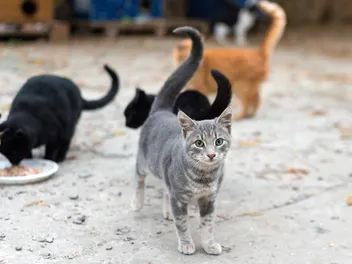
Fact: Cats are incredibly resourceful animals that are attached and protective of their territory. If you won’t feed a feral cat, it will hunt and scavenge for food elsewhere. The chances are, other people in your community will leave food out for the cats. Either way, a feral cat will not leave its territory just because one person stopped feeding it. It may expand its search and hunt area, but it will always return to its territory.
Feeding a feral cat is likely to make it easier to trap them for a TNR process. In addition, studies show that regularly fed free-roaming cats are less likely to hunt and kill wildlife.
9. “Trap, neuter, return (TNR) is cruel and ineffective.”
Fact: According to Alley Cat Allies, Trap-Neuter-Return improves the lives of feral cats, addresses the complaints and concerns of community members, and stops the breeding cycle.
Neutered and spayed cats lead healthier and longer lives than unfixed cats. According to the PDSA, neutering has the following benefits:
Getting feral cats neutered before returning them to their community will stop their population from growing, without creating a vacuum for other feral cats to move in—which is why it’s a more effective method of control than extermination, not to mention more humane.

What to Do if You Find a Feral or Stray Cat
The first step to take if you have found a community cat is to determine whether it is a stray or a feral cat. Stray cats tend to be friendlier than feral cats—they may beg for food and even approach you or your home. A stray cat is likely to display the same behavior as a domestic cat, for example holding their tail up and making eye contact or blinking at you slowly.
Feral cats are unlikely to blink, purr, or meow at you. They won’t approach a human, and they’ll likely stay huddled close to the ground, with their tail wrapped around themselves for protection. Feral cats will probably have a relatively clean and well-kept coat, while a stray will appear disheveled and dirty.
Once you’ve determined whether the cat is stray or feral, you can decide what to do next.
Stray Cats
If the cat is a stray, provide it with clean water and food, and ask your neighbors if they know whose cat it is. If you do not find the owner, call up your local shelters and report that you have found a cat. Your local shelter should be able to advise you on what to do next. Hopefully, you'll be able to help reunite the cat with its owner, or it will be adopted and given a new loving home.
If the stray has kittens, they can be socialized as long as they are younger than 8 weeks. As they get older, these kittens will become more difficult to socialize. Before passing kittens onto a new home, make sure they are neutered or spayed.
Feral Cats
If the feral cat has a tipped ear, it is a sign that they are a fixed community cat—they have previously been trapped and neutered. If their ears are untipped, the best thing to do is to have them trapped, neutered, and returned to their community.
Give the cat clean water and food, and contact an organization such as Alley Cat Allies, that provide support and information on TNR. Some local animal shelters also provide information on low-cost cat neutering, so it’s always worth calling them to find out more.
If you do take responsibility for getting a community cat neutered and vaccinated, then remember that you will probably need to feed them and provide them with an outdoor shelter, for the rest of the cat’s life.
Conclusion
Feral cats are cats that are born in the wild. These cats have not had the opportunity to socialize with humans, so they're fearful of people, and will not interact with them if they can help it.
Feral cats cannot adapt to living in a home, so they can’t be adopted, however, you can improve a feral cat’s life significantly by getting them neutered and vaccinated, and providing them with food and outdoor shelter. Aside from saving the cat’s life, this will also help to control the population of feral cats.
Related Reads:
Sources
https://www.alleycat.org/resources/the-wisconsin-study-bad-science-costs-cats-lives/
https://www.alleycat.org/resources/feral-and-stray-cats-an-important-difference/#Next
https://www.felineresearch.org/post/issue-brief-wildlife-impacts-of-outdoor-cats
https://www.allaboutbirds.org/news/2014-state-of-the-birds-report-analysis-action-and-hope/
https://www.felineresearch.org/post/issue-brief-why-feral-cat-feeding-bans
https://www.sciencedirect.com/science/article/pii/S2351989418301665
https://www.alleycat.org/resources/the-vacuum-effect-why-catch-and-kill-doesnt-work/
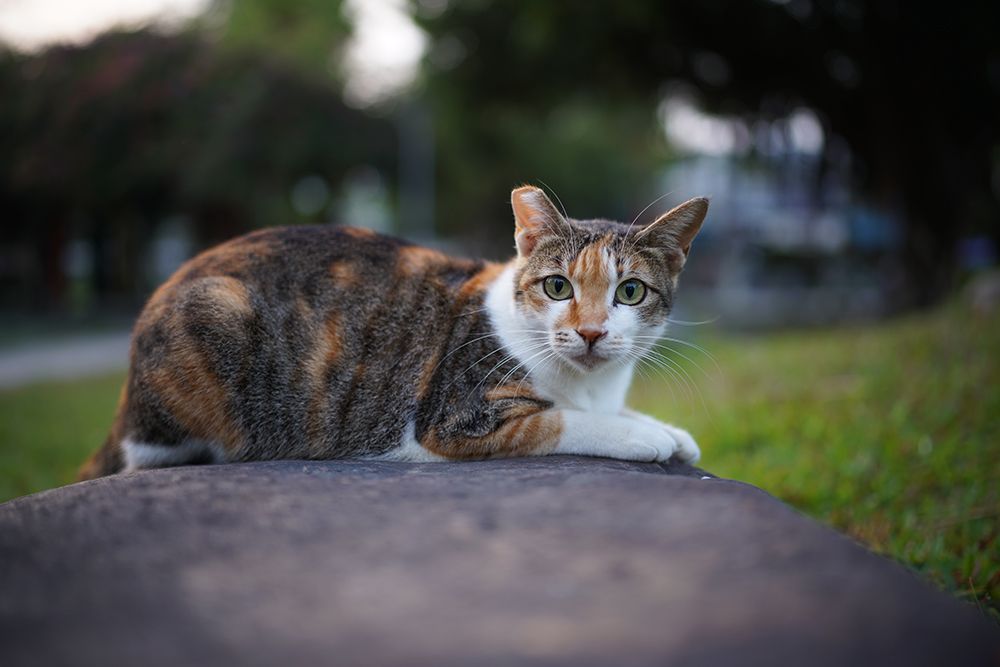
Featured Image Credit: Krishna777, Shutterstock

Expert cat care, straight to your inbox
Vet-reviewed advice, behavior tips, and the best of Catster. Free, and you can unsubscribe anytime.
By signing up, you agree to our Terms & Conditions and Privacy & Cookies Policy.

Christian started writing for a local newspaper as a teenager, and he's been involved in the publishing industry for most of his adult life. Combining his love of writing with a passion for animals, he is currently the Director of Editorial at Pangolia and the Editor-in-Chief at Catster.
Christian lives in the Philippines with his wife, son, and four rescue cats: Trixie, Chloe, Sparky, and Chopper.
Join the conversation
Ask a question, share your story, or send private feedback.