How to Tell If a Cat Is Feral: 7 Questions to Ask Yourself


Have you ever seen a cat wandering around your trash or a dumpster looking for food? Or have you noticed a strange cat taking a nap on your porch, and you're unsure how to approach it? If it's a feral cat, is it safe to approach it? Many people have been in this situation before, wondering if the cat is just lost and belongs to someone or if the cat is feral.
In this article, we'll discuss the seven signs to look for to help determine if the cat is a feral.

Difference Between a Feral Cat and a Stray Cat
Some people may refer to a wandering cat as strictly a stray cat, but in actuality, a stray cat and a feral cat are very different. Stray cats are cats that have had owners at one time and may be lost or, sadly, abandoned. These cats are accustomed to human interaction and are probably socialized, whereas feral cats are not. Now, let's move on to how to tell if a cat is feral.
The 7 Questions That Can Confirm if a Cat Is Feral
1. Is the Cat Afraid of You?
A feral cat will more than likely run away from you or lash out when you try to approach it. This, however, is not a telltale sign because strays may run from you if they have been mistreated or abused. A stray may also run from you if they have always been aloof with strangers. The difference is, over time, a stray may start to relax around you and allow some form of interaction, whereas a feral cat will not need you and is used to fending for itself.

2. Does the Cat Approach You and Meow?
It's very unusual for a feral cat to meow at you. Domesticated cats only meow for humans because they have learned vocalization, which results in a response from you. If the cat meows, it is either a stray cat or one that has a home but has wandered off. A rule of thumb is a meowing cat is not a feral cat. You can also look for a collar, which is a sure sign the cat is not feral.
3. Is the Cat Clean or Dirty?
Feral cats are used to being on their own and will keep their coats cleaned and groomed. On the other hand, a stray may be dirty and have a shabby look. A stray may abandon grooming itself and won't care one inch about its hygiene if lost due to the stress.
4. Does the Cat Have a Corner Missing From an Ear?
A program called the Trap, Neuter, Vaccinate, and Release (TNVR) humanely catches feral cats, neuters or spays them, administers necessary vaccines, such as a rabies shot, and releases the cat back to where it was captured to keep the cat healthy and not spread disease. The program also helps cut down on the feral cat population. One can tell if the cat has been through the program if a little notch is missing, usually from the left ear, but it can be either. If you see a missing tip, the cat is feral.

5. What Time of Day Do You See the Cat?
Feral cats tend to have more of a nocturnal behavior, meaning they prowl around at night more so than during the day. Stray or outdoor cats tend to roam more during the day, at dawn or dusk. If you see the cat mostly at night, it is most likely feral. Feral cats tend to avoid human contact, whereas stray cats are more likely to be seen in your or your neighbor's gardens—possibly trying to get into the house!
6. What Is the Cat's Body Language?
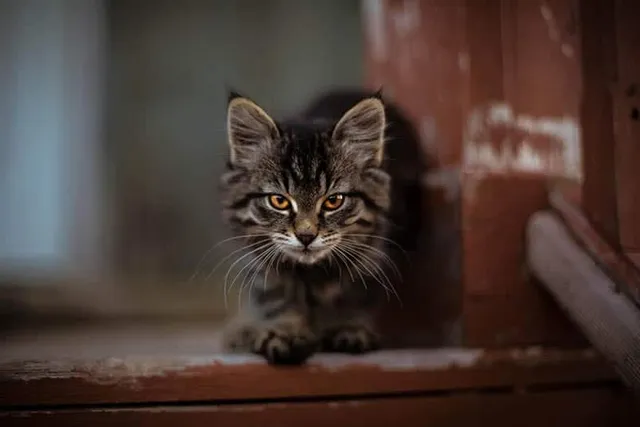
Feral cats will likely hover or crouch near the ground when they see you. They will also freeze in their tracts. Feral cats are much more vigilant when protecting themselves around humans because they are not used to them. If the cat is walking around with its tail in the air and in a more relaxed manner, the cat's probably a stray or simply lost.
7. Is the Cat Solo or With a Group of Cats?
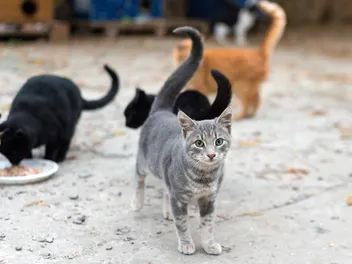
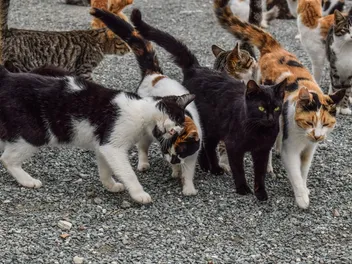
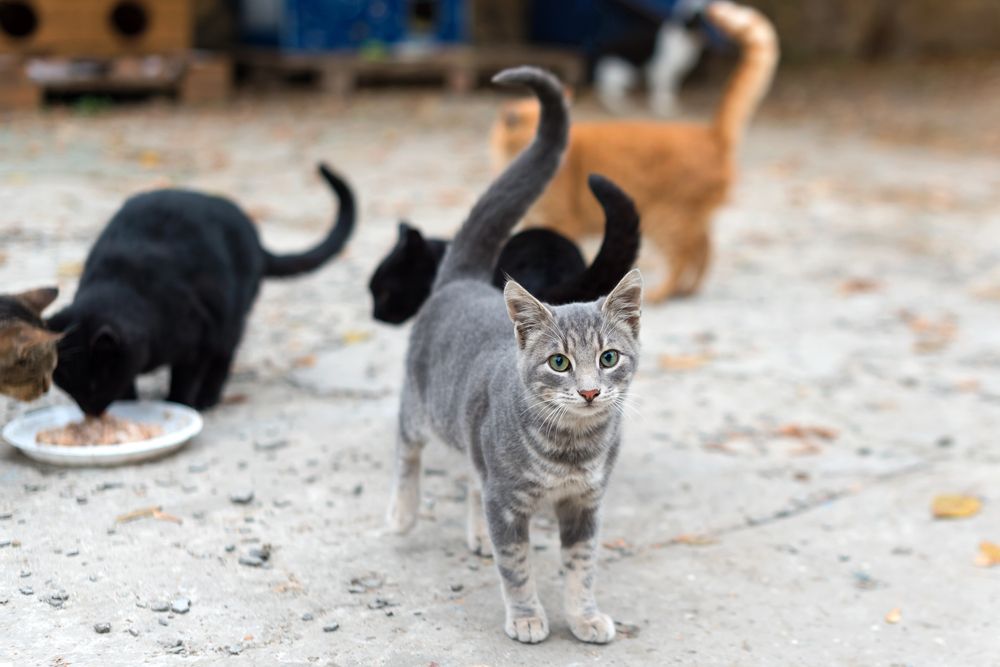
Feral cats can live alone but may be in groups or "colonies", usually formed around available food sources. These are small groups of cooperating female cats and kittens. Relationships are complex, and there can be a loose hierarchy. Some individuals will groom each other, and females will often help raise any kittens born into the group. They also share hunting territories but will hunt alone. A stray cat is used to humans being part of its group and will usually be alone. However, a lone cat may be accepted into a group of feral cats over time.

Are Feral Cats Dangerous?
Remember the TNVR program we discussed? This program vaccinates the cats, spays or neuters them, and releases them back from where they were caught. Much debate surrounds this program, but advocates for the program feel that feral or "community cats" do not pose a risk to humans or the environment, but arguments are plenty.
For starters, even though a feral cat has been through the TNVR program, there is no way to keep these cats on a proper schedule for vaccinations, such as a rabies vaccine. While the program helps keep the feral cat population down, feral cats may still pose an environmental risk due to contaminating soil with parasites that can spread to other animals by ingesting contaminated poop.
Another concern is the killing of wildlife, especially birds. Feral cats are likely to blame for the extinction of around 63 species of birds, mammals, and reptiles.
How Can I Help a Feral Cat?
Feral cats are used to fending for themselves, but you can help them if you wish by setting out nutritional cat food, providing fresh water, and offering some sort of outdoor shelter, particularly in winter months. It's best not to approach these cats once you have learned they are indeed feral due to the possibility of the cat carrying rabies or other diseases and parasites.
The TNVR program is ideally the best option for these cats. Find out if there is a TNVR program in your community and contact them so they can capture the feral cat and provide medical care through the program.
Conclusion
As you can see, there are a few differences between feral cats and stray cats. You can help feral cats by setting out nutritional food, providing fresh water, and providing some sort of shelter. Check to see if the TNVR program is available in your area and contact them so they can administer vaccines and spay or neuter to keep the population down.
You might also like: How to Tell If a Cat Is a Stray or Outdoor? Vet-Reviewed Differences & Recommendations
Featured Image Credit: IMG Stock Studio, Shutterstock
Expert cat care, straight to your inbox
News, insights, and useful advice, delivered to you.

No spam — unsubscribe anytime.
By signing up, you agree to our Terms & Conditions and Privacy & Cookies Policy.
How useful was this post?
Click a star to rate. You can leave written feedback afterwards. (We read all feedback.)
Rachel Giordano is a Pensacola, Florida-based musician and writer. She lives with her partner and their two dogs, Sophie, a Boston Terrier, and Aero, a Border Collie/Sheltie mix. Rachel holds a Bachelor of Arts degree in communication and loves writing about all types of cat breeds. When she’s not writing about cats, she loves to write suspense/thriller novels. A musician by night and writer by day, she enjoys sharing her knowledge of the needs and requirements of our furry friends.