Pittsburgh Refrigerator Cat: The Myth Explained
In this article
Have you ever heard of the Pittsburgh refrigerator cat? If not, you’re certainly not alone. We hadn’t heard about it either. Don’t feel as if you’ve been missing out on learning about an incredible cat breed, though. Despite the fact that the refrigerator cat has been repeated as a fact in many cat books throughout the decades, it isn’t a breed that ever existed at all. The story of the Pittsburgh refrigerator cat is an interesting one that dives deep into the phenomenon of urban legends and humanity’s fascination with animals.
Read on to learn more about the myth and how it spread so rampantly in the late 1800s and early 1900s

What Is the Pittsburgh Refrigerator Cat?
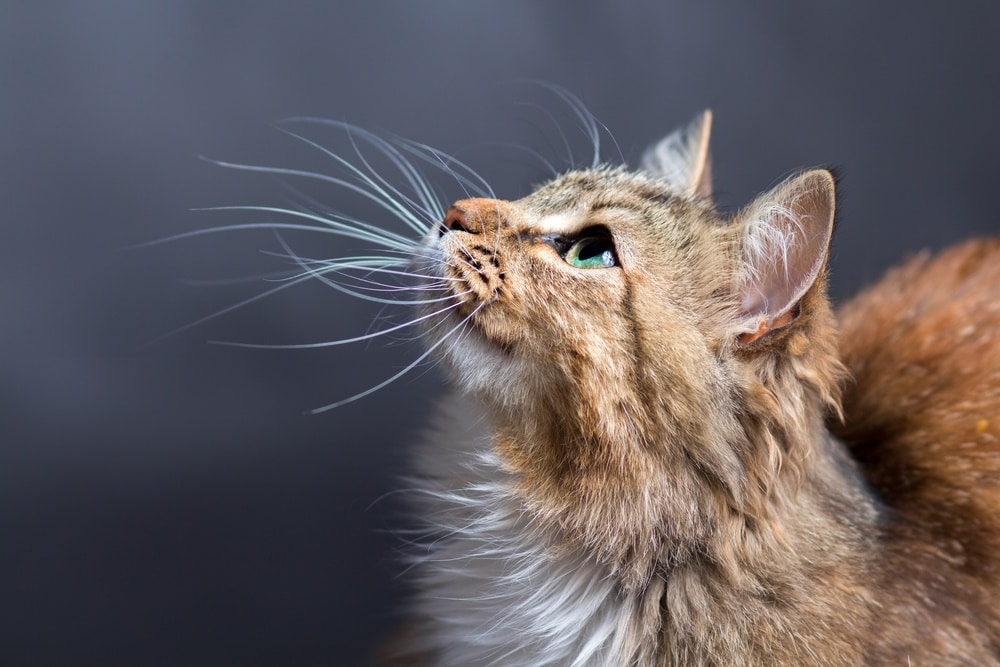
The Pittsburgh refrigerator cat is a mythical cat breed that was said to open fridge doors and slink inside to steal food or have a cozy nap in the cold comfort of a kitchen appliance. They were said to have whiskers of five to six inches in length due to their need to live in semi-darkness and dependence on their sense of touch.
It was believed that these cats would suffer from seizures or heat exhaustion if they were removed from their homes in the cold warehouses.

The Origin of the Myth
In July 1984, the New York Times wrote a news story about a breed of thick-furred and short-tailed cats that had naturally arisen in the chilly storage warehouses of Pittsburgh. The report said that these cats were developed as a way of controlling the thick-furred rat populations that were commonly found in storage warehouses throughout Pittsburgh. The writers claimed the cats were “of great economic importance” as, without them, the cold storage rats would take over and destroy the perishable produce throughout all of Pittsburgh.
The tale of the refrigerator cat took on a life of its own when it started to get reprinted in other papers across the country. Some papers reported that the cats originated in Svalbard, an archipelago in the Arctic Ocean, which explained why they were able to adapt to the cold climate in the warehouses and why they were better equipped to handle the freezing temperatures than the rats running rampant in these storage units.
It wasn’t just the newspaper that perpetuated the myth of the refrigerator cat. Even respected English naturalist Richard Lydekker took the Pittsburgh refrigerator cat story at face value. It was, in fact, his monograph in one of the volumes of Allen’s Naturalist’s Library that coined the term “refrigerator cat.” In his later book, A Handbook to the Carnivora: Part 1, Lydekker went on to describe the conditions in which these cats lived, their appearance, and how they’d develop seizures if they roamed too close to a stove.
The First Time the Myth Is Debunked
The authenticity of the tale of the Pittsburgh refrigerator cat first came into question in the summer of 1895 by The American Naturalist, a monthly peer-reviewed scientific journal. In the article, the writer spoke about how Alice Bodington, a British-Canadian science writer, wrote a letter to the secretary of a cold storage company to make out the facts about the so-called refrigerator cat breed. She received a response that claimed there may be some “foundation” for the articles about the cats living in the warehouses, but they’re exaggerated.
The cold storage warehouse staff did indeed have a cat they took from the “ordinary atmosphere” of the building and moved her to the cold rooms to deal with the rats. While she was living there, she birthed a litter of kittens. Once they were old enough to care for themselves, the mother was taken out of cold storage to live back in her original quarters. However, she soon fell so sick that the staff became concerned for her well-being. They thought that the change in temperature may have negatively impacted her, so they returned her to the cold room, where she recovered. They found that it was impossible to keep her in good health in the warmer rooms of the warehouse, so they took this to mean that she had evolved in the refrigerated rooms to be a “cold storage cat."
The secretary wrote that the whiskers were not five to six inches long but were instead regular whisker length. However, they did comment that the fur was thicker than an average cat’s fur.
The American Naturalist concluded that the cats living in the cold rooms grew thicker coats as a response to being in a colder climate. This isn’t anything new, as many animals’ coats will change naturally due to the changing of the seasons. They also concluded that the reason the mother cat fell ill when moved from the cold storage to rooms with warmer temperatures was because she was finding the sudden shifts in temperature uncomfortable.

The Myth, Resuscitated
It would seem as if that would be the end of the Pittsburgh refrigerator cat myth, but the story received a new lease on life in 1901 when it was, once again, widely spread through newspapers. This resurrected story added new fictitious details and completely disregarded the previously debunked myth.
The Chicago Tribune published an article in February 1901 describing the refrigerator cat as a result of a deliberate breeding program. The offspring of the original pair were apparently able to withstand even the lowest temperature settings in the storage rooms. The paper also reported that these cats were born with whiskers like walrus bristles and that they had to be sent in ice-lined boxes when shipped to other cities; otherwise, they’d suffer in the heat.
The story then went quiet for several years until 1912, when the New York Mail published a report on cats that were employed by the government. Again, the story spread across the country, as it would periodically throughout the 20th century.
Finally, Debunked Once and for All
In 1949, a cat expert named Ida Mellen took it upon herself to investigate the refrigerator cat myth. According to her research, there had never been any cats in Pittsburgh cold storage warehouses, as there weren’t any rats there to begin with as the extreme cold temperatures kept them away.
Mellen found that there was, indeed, a cat that gave birth to and raised a litter of kittens in one of the cold storage warehouses. However, these kittens were far from the super-felines reported in newspapers around the country. They weren’t capable of withstanding frigid temperatures, nor were they distributed to other warehouses throughout the city. Quite the opposite, in fact, as these kittens did not thrive in the cold at all.
Mellen did uncover one interesting tidbit about these kittens living in the warehouse, however. The mother was a pink-eyed albino, as were all of her kittens. While the father’s eye color was unknown, it was assumed he was either a carrier of the albinism gene or also a pink-eyed albino. It is entirely possible that the parents were also closely related. While the kittens and mother cat all had fantastic hearing, none of them were able to tolerate bright lights due to the nature of their unpigmented eyes.


Final Thoughts
As cute as a cat with thick, winter-hardy fur and six-inch-long walrus-like whiskers would be, there sadly was never a refrigerator cat breed. This myth, which evolved over decades, highlights the sensationalism of an urban legend as well as the fascination we, as a human race, have with animals.
Featured Image Credit: DimaBerlin, Shutterstock

Expert cat care, straight to your inbox
Vet-reviewed advice, behavior tips, and the best of Catster. Free, and you can unsubscribe anytime.
By signing up, you agree to our Terms & Conditions and Privacy & Cookies Policy.

For Chantelle, writing and animals are the two driving forces in her life. Growing up on the Canadian prairies surrounded by pets, she now shares her home with five cats, two guinea pigs, and a bearded dragon. Chantelle, her husband, and their child pride themselves on being dedicated pet parent, even spending a fortune on wall-mounted cat shelves to provide their cats with an indoor jungle gym. When she's not snuggling with her cats or photographing their humorous moments, Chantelle is exploring the Rocky Mountains, rewatching her favorite Netflix series, and reading up on various random subjects.
Join the conversation
Ask a question, share your story, or send private feedback.