Is It Possible to Transmit Ringworm from Cats to Humans? Vet-Verified Info & Care Tips


In this article
Nobody wants to deal with a fungal infection, especially when it is on your cat. Treating your cat’s ringworm can be a pain, but did you know it can put you at risk if you aren’t careful? That’s right; your cat’s ringworm can be transmitted to you.
If you come into contact with an infected cat's lesion or the infected hairs that are shed around the home, there is a chance that you may catch your cat’s ringworm. In order to stay vigilant and prevent this from happening, you must be aware of exactly what ringworm is, the signs of infections in cats, and how to avoid being infected.

What Is Ringworm?
Ringworm is a fungal infection of the hair and skin, typically affecting the face, ears, feet, and tail. The name is based on the appearance of the infection: a round, red ring of inflammation. The name can be a bit misleading for some. Although the name has the word “worm” in it, it is not actually caused by a worm-type parasite. Likewise, not all infections are ring-like in appearance.
The ringworm fungus is a part of an infectious group known as dermatophytes. While some of these dermatophytes are infectious only to a specific species, the kind that most commonly infects cats, Microsporum canis, can also infect humans and dogs. The infection can occur in cats of any age, but adult cats tend to be asymptomatic carriers while kittens and immunosuppressed adults will show clinical signs.

Signs That Your Cat Has Ringworm
To avoid becoming infected by your cat, you first need to recognize if your cat has ringworm. There are a few signs you will want to watch out for.
It is important to note that signs may be harder to identify when it comes to long-haired cat breeds. There is also a chance that your cat will be an asymptomatic carrier, meaning they will not show any signs of infection while they are contagious.
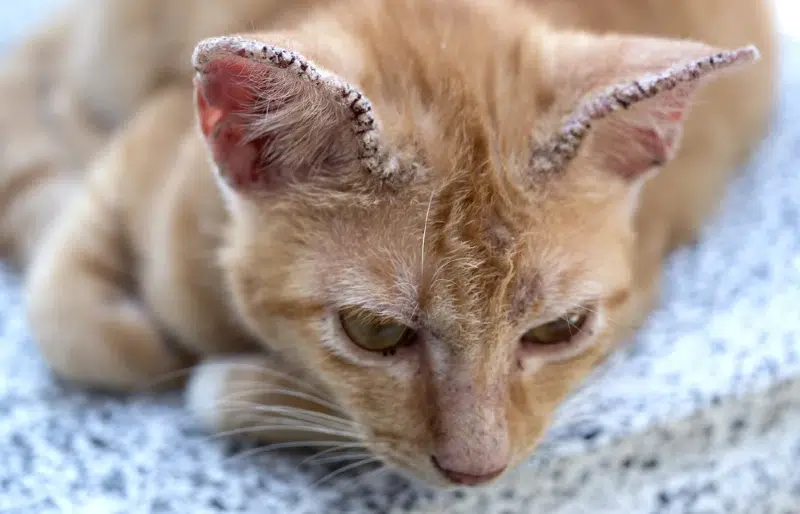
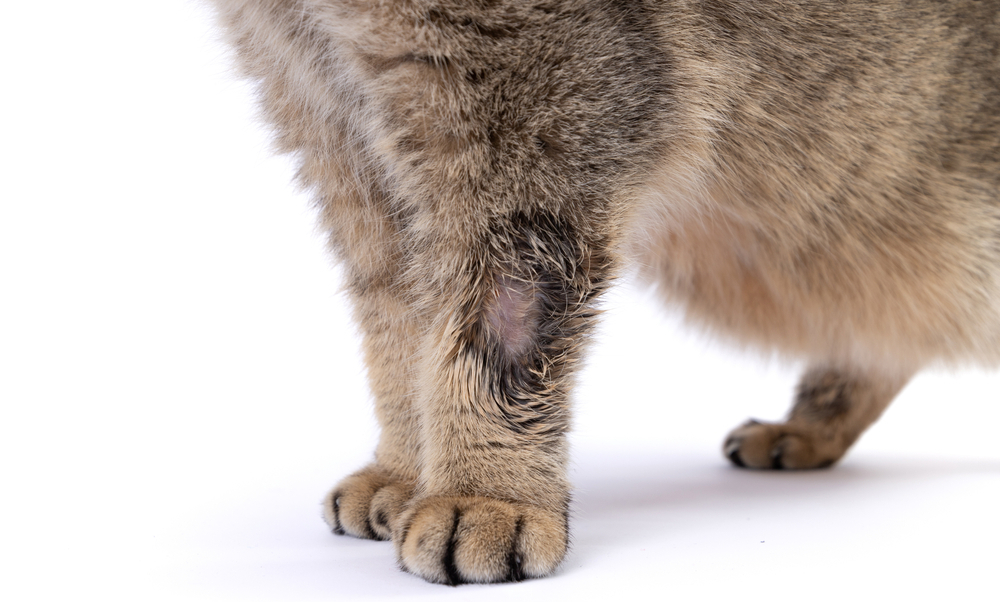
If your cat shows signs, they may experience some fur loss and scaling. This is because the fungi can infect the hair shaft and can cause the hair to fall out easily. Your cat’s fur may also become duller in color, they may have dandruff, and even lesions on claws or nail beds.
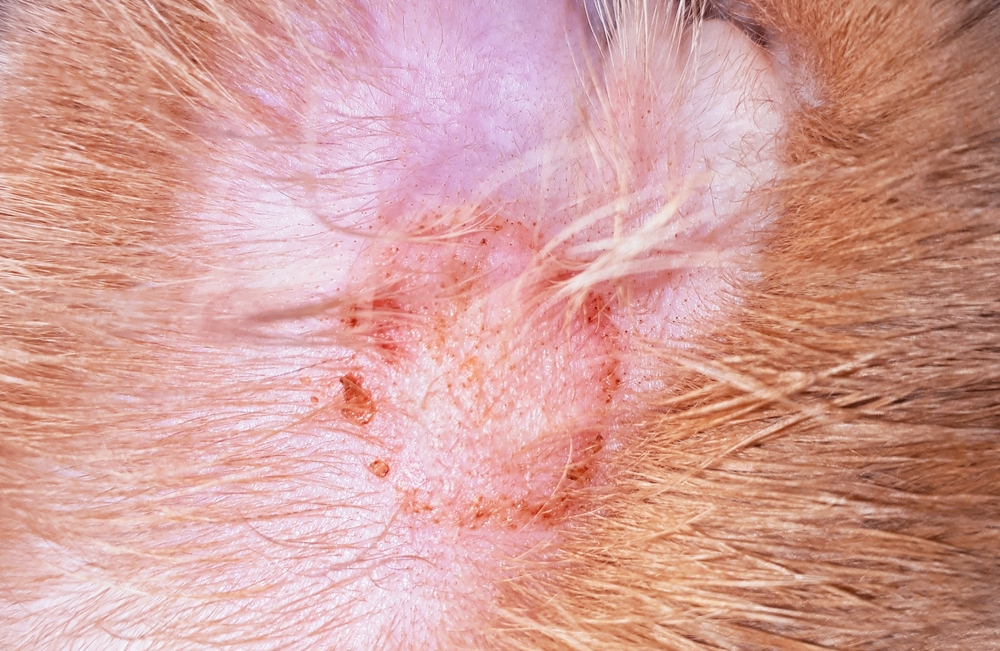
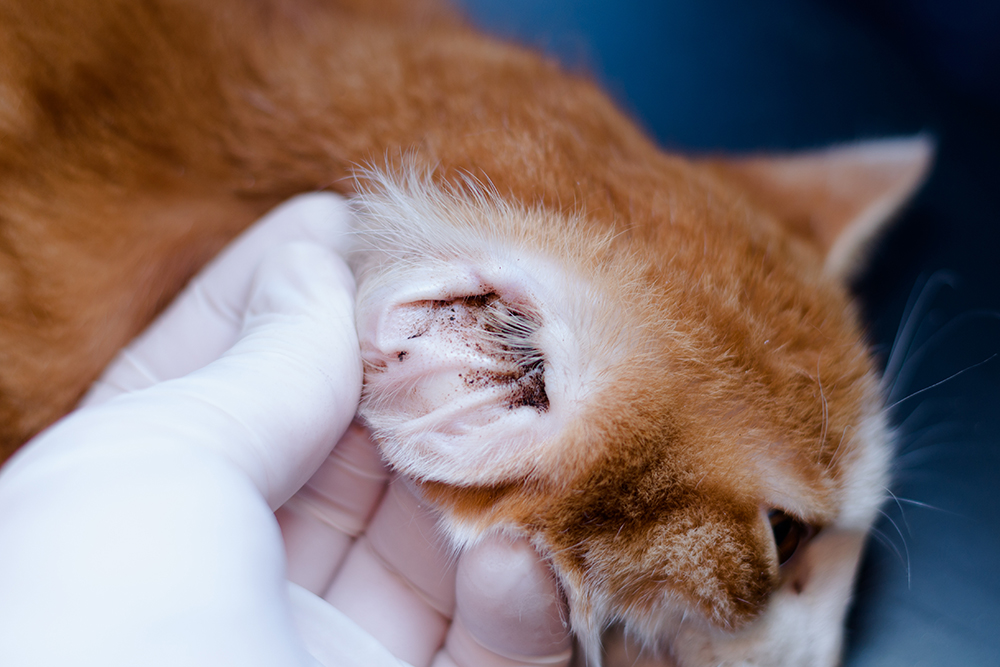
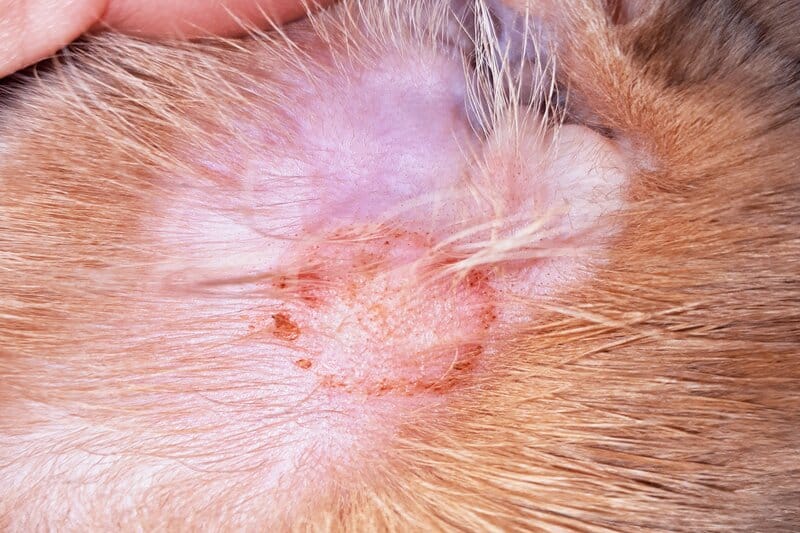
Lesions may appear on your cat’s face and ears. These lesions will often be reddish or grayish and may have scaling. You will most likely find these spots on your cat’s head, but other parts of their body may also be affected such as the distal part of the legs and the tail. They may not be itchy initially, but they can become irritated if scaling or an infection develops.
In some cases, ringworm may cause your cat’s skin to develop crusting and oozing lesions. If you notice any abnormality on your cat’s skin or hair, do not hesitate to speak with your veterinarian.

How Do Cats Catch Ringworm?
It is common for strictly indoor cats with no contact with other cats to catch ringworm. Cats need contact with an infected cat to catch ringworm, or they need to have contact with a contaminated environment. If you have a household with multiple cats, the infection will spread very easily. Ringworm can spread through the infected dander and hair shafts that your cat sheds. Any direct contact with ringworm spores can cause an infection; these spores are highly resistant and can survive on surfaces for 12 months or more.
If your cats are indoor cats that do not interact with animals outside of your household, it is easier to prevent infection. But if your cats are free to roam outdoors and interact with any animals they see, you will have significantly less control over what your cat may bring with him when he walks through the door.
Who Is at a Higher Risk of Catching Ringworm From a Cat?
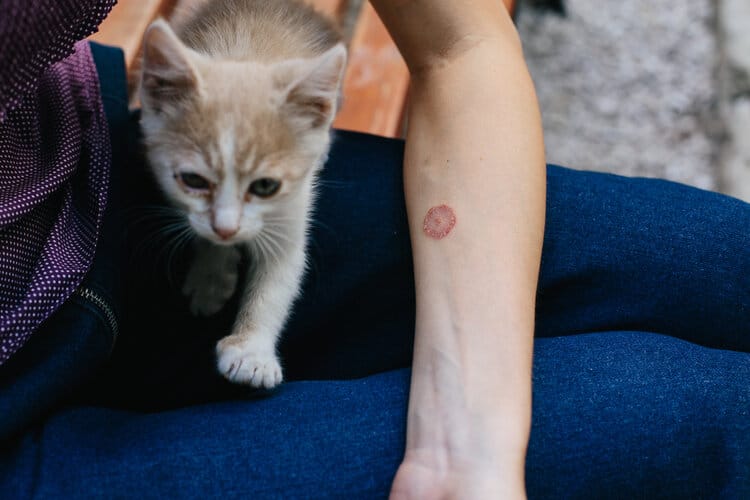
Ringworm can travel fairly easily from cats to humans, although some people are at a slightly higher risk of infection. People with weaker immune systems are at a particular disadvantage. This includes children, the elderly, and those undergoing chemotherapy or taking immune-suppressive medications. If your cat has ringworm and anyone in your house is at high risk, it is best to keep them separate until the situation is sorted out.
How to Handle a Cat With Ringworm
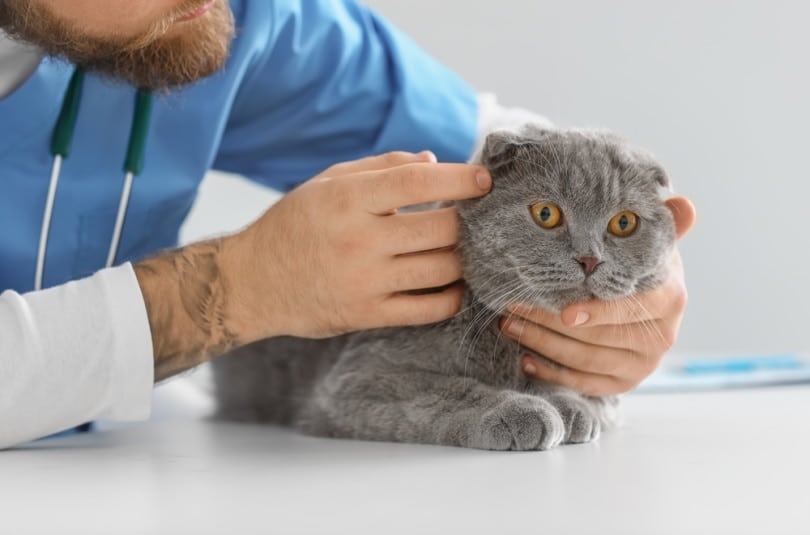
Treating a cat with ringworm requires veterinary intervention. Your vet will be able to diagnose your cat accordingly and give you the best treatment for them, depending on the severity of the signs. Topical and oral treatments are available. You should be careful while treating your cat to avoid infections, wear gloves and an apron when treating your cat, and then wash your hands and body.
Ideally, infected pets should be separated from other pets to avoid infection and further spread of the spores in the environment. You should clean and disinfect the environment to get rid of any shed spores and avoid recontamination and reinfections. In some cases, other pets in the house should also be treated, consult your veterinarian for advice. Since cats can pass their infection to humans, dogs, and other cats, no one can be considered safe from the infection, even if they do not show signs yet.
Conclusion
Ringworm is a fungus that can be transmitted from cats to humans. But thankfully, effective treatments are available. Since the infection is transmitted through direct contact with the spores, environmental disinfection is very important for its eradication. If you live in a multiple-pet household, make sure to separate infected pets. Consult your veterinarian about any needed treatments for your cat and other pets, and your GP if you notice any lesions on your skin. If you act promptly yet cautiously, you can prevent ringworm from spreading from your cat to the rest of your family.
Related Read: Can Cats Get Ringworm?
Featured Image Credit: Yaya Photos, Shutterstock

Expert cat care, straight to your inbox
Vet-reviewed advice, behavior tips, and the best of Catster. Free, and you can unsubscribe anytime.
By signing up, you agree to our Terms & Conditions and Privacy & Cookies Policy.
Christian started writing for a local newspaper as a teenager, and he's been involved in the publishing industry for most of his adult life. Combining his love of writing with a passion for animals, he is currently the Director of Editorial at Pangolia and the Editor-in-Chief at Catster.
Christian lives in the Philippines with his wife, son, and four rescue cats: Trixie, Chloe, Sparky, and Chopper.
Join the conversation
Ask a question, share your story, or send private feedback.