Do Feral Cats Hunt In Groups Or Share Their Kill? Facts & 3 Ways to Help

In this article
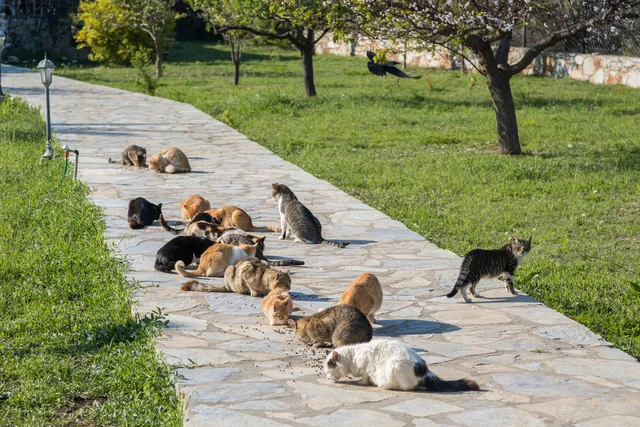
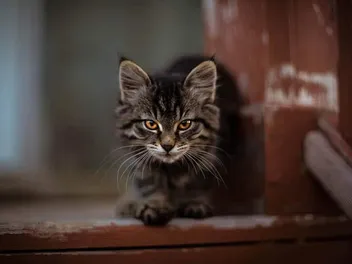
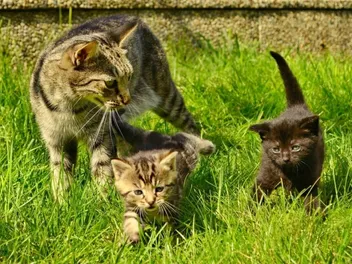
Feral cats don’t usually hunt in groups. Most prefer to catch prey on their own, and sharing food is mostly limited to feral moms providing food to their kittens. However, the ways in which feral cats live and hunt varies quite a bit. Some live on their own, and others form colonies.
Most stray and feral cats find scavenging far easier than hunting, making it generally the preferred option for finding lunch and dinner. While precise numbers are difficult to obtain, there are most likely anywhere from 60 to 100 million feral and stray cats in the United States1.

What’s the Difference Between a Feral and a Stray Cat?
It’s often difficult to determine the difference between feral and stray cats, which is why outside cats without owners are often referred to as community cats. Feral cats are animals that have never been socialized to accept human contact. Cats are naturally fearful of humans if they aren’t socialized to accept people during their first few months of life. Most become nervous and anxious around people and do their best to limit human interactions.

Feral Cats
Adult feral cats usually don’t make great pets, as they often have trouble adjusting to indoor life and become stressed when forced into close quarters with loving and well-intentioned humans. Kittens born to feral mothers can usually be socialized and adopted if exposed to people while young. The optimal period for socializing kittens lasts from around 2 weeks old until they hit 14 weeks or so. Socialization often takes a bit longer with older kittens.
Stray Cats
Stray cats were socialized to accept human contact, and many are former pets. Stray cats can become feral if they remain isolated from people for long enough. But some that haven’t been on their own for too long are happy to be adopted by loving families. Cats willing to interact with people are generally approachable and often allow themselves to be touched by people they trust.

Where Do Feral Cats Live?
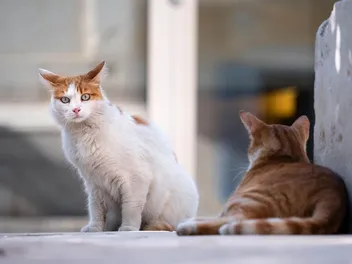
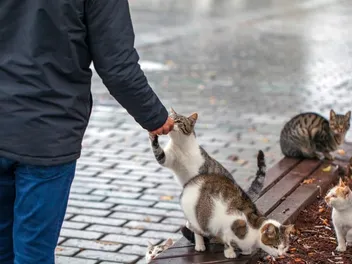
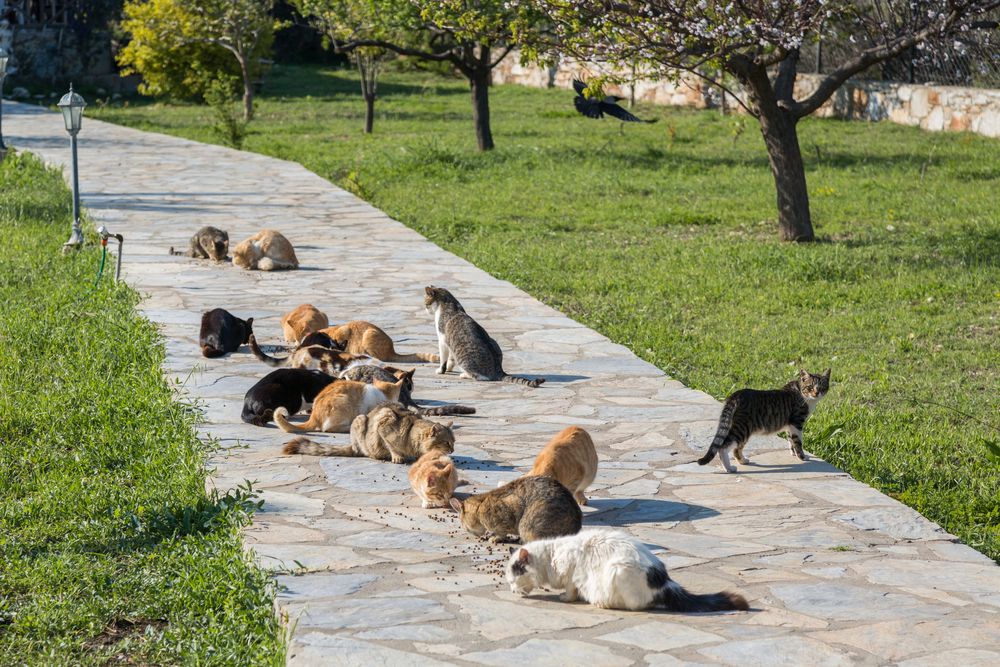
While some feral cats live in colonies, others are happy on their own. Colonies are often made up of several queens and their kittens. Groups vary in size but often contain cats that are related to each other. Males are sometimes tolerated but usually live on the outskirts of the group. Queens in colonies often nurse and care for kittens from other mothers. Interactions are reciprocal, and inter-colony aggression is rarely seen.
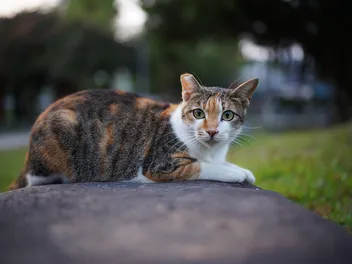
Some independent feral cats stay in semi-secluded areas close to humans where they can score food from trash cans and prey on rodents attempting to do the same. However, other independent feral cats live in wooded environments and find food in the wild where they live. They survive more by hunting than by scavenging.
What Do Feral Cats Eat?
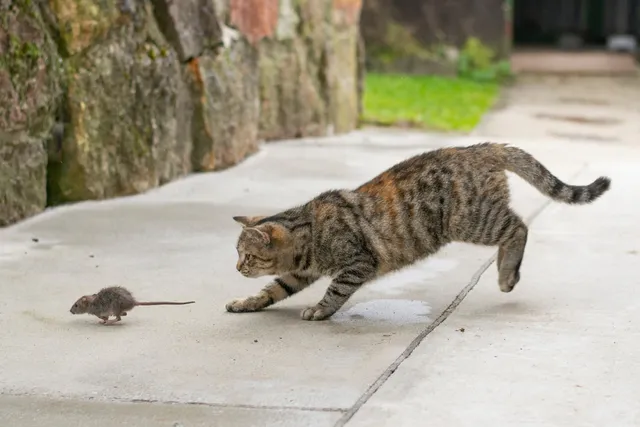
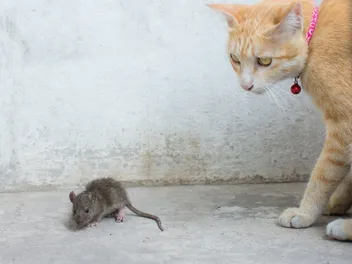
Feral and stray cats of all stripes are primarily scavengers, often living off food thrown into the trash by people and the rodents garbage attracts. Most only actively hunt when easily accessible food sources become unavailable. While feral cats will kill birds and small mammals, rodents appear to be the kitties’ meal of choice when forced to hunt for dinner.

Top 3 Ways to Help Feral and Stray Cats
There are several ways to help community cats, but first, you’ll need to earn the animal’s trust to determine the best course of action.
1. Providing Food and Water
Start with giving the cat food and water. Talk softly, move slowly, and let the cat know what you’re doing. Leave the food and water and back away. Give the cat time to approach and eat, but don’t expect much interaction. Truly feral cats probably won’t eat with you nearby. Some stray cats that aren’t frightened of people may begin to eat with you in the vicinity as they become comfortable with your presence.
2. Adopting a Cat
Stray cats can often be coaxed to return to the leisure of indoor life! But before you welcome a stray into your family, consider taking them to the veterinarian or a local shelter for a quick microchip scan since the animal may be lost. Pets with properly registered microchips can be reunited with their families. If your new buddy’s old family can’t be found, you can celebrate a new addition to your home if you have the time, space, and interest.

3. Building Shelters and TNR Programs
On the other hand, feral cats are almost never as happy as indoor or pet cats. Some with dedicated caregivers become comfortable enough to approach those individuals. But others never get to the point where they’re relaxed enough to be touched by or eat in the presence of humans. Building and maintaining community cat shelters and participating in trap neuter and release (TNR) programs are two ways to help community cats.
TNR programs trap and neuter feral cats before returning them to their natural environments. Reach out to a feral cat organization for information on the best practices for feeding and providing shelters for community cats or to get more information about participating in TNR programs.
Conclusion
Feral cats can be found living in colonies and on their own. Cat colonies are usually made of several related queens and their kittens, and there are also independent cats that live on their own close to humans and in rural environments. Many feral cats prefer to set up shop close to areas where they can scavenge human trash for food, as it’s often simpler, more reliable, and safer than hunting. When feral cats hunt, most do so alone. Food sharing is rare, except between queens and kittens.
Related read: Can Cats Survive On Their Own By Hunting Wildlife?
Featured Image Credit: Murat An, Shutterstock
Expert cat care, straight to your inbox
News, insights, and useful advice, delivered to you.

No spam — unsubscribe anytime.
By signing up, you agree to our Terms & Conditions and Privacy & Cookies Policy.
How useful was this post?
Click a star to rate. You can leave written feedback afterwards. (We read all feedback.)
Lorre Luther is a writer who is firmly convinced that cats are smarter than humans. She left her law career in the United States and moved to the Netherlands to follow her dream of becoming a writer. Lorre currently lives in Rotterdam, she enjoys traveling and greatly appreciates the beauty of nature. Lorre has a spot for animals and admires the intelligence of cats.