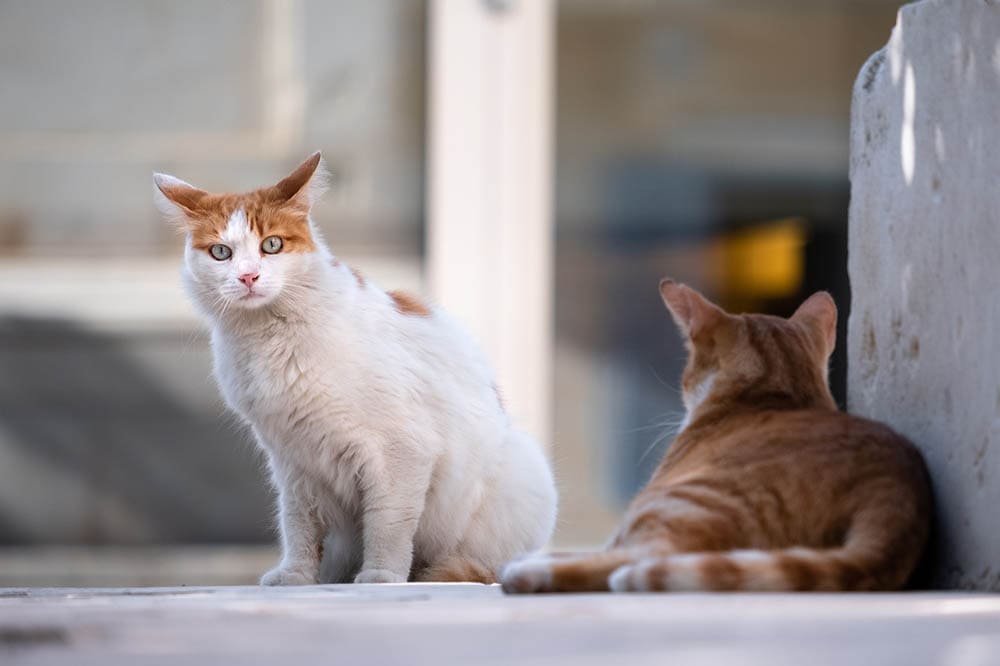
14 Incredible Feral Cat Facts You'll Be Surprised to Learn

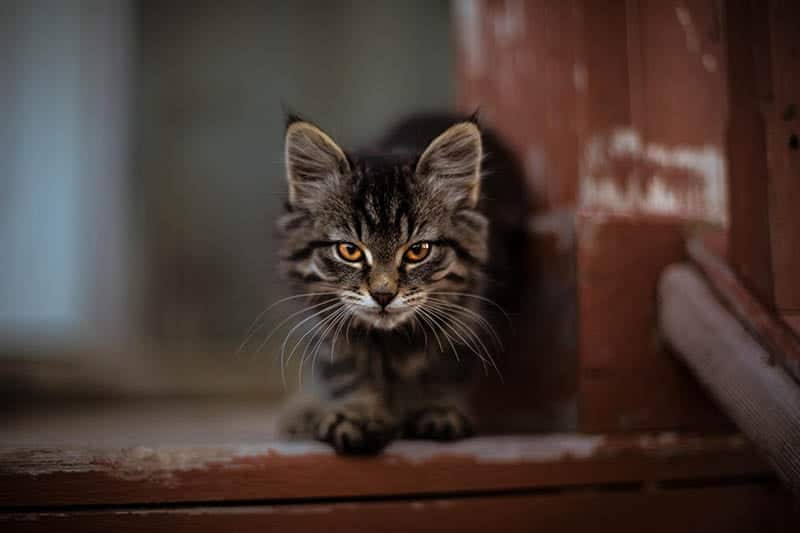
Trying to get to know “that one cat” that lurks around your neighborhood? Feral cats are a bit of a mystery. They hide, hunt, and hustle away from humans as much as possible, living in their own little wild world. Today, we share some incredible facts about feral cats you probably didn’t know.

Top 14 Facts About Feral Cats
1. Feral Cats Don’t Meow as Much as Domesticated Cats
Contrary to popular belief, cats typically use scent and body language as their primary source of communication—not meowing. Normal cat behavior shows cats don’t meow much when communicating with other cats.
Interestingly, cats have learned to communicate with humans through meowing. However, since feral cats are seldom in the presence of humans, they don’t meow as much as socialized cats.

2. Feral Cats Consume Some Bug Protein
A cats gotta eat, and feral cats persistently seek their next protein-rich meal. While most know that cats eat birds and mice, insects are also a part of their diet.
3. Feral Tomcats Have Larger Heads
The hormone testosterone allows a tomcat’s body to grow larger than a female cat's. Typically, male cats have larger heads, are more muscular, and even have more prominent cheeks. However, male cats neutered at a young age never had enough testosterone to become thick and muscular.
Of course, the breed also plays a part. For instance, Maine Coons are known for being ample cats, even females. But generally, feral male cats will be larger because they’re not neutered.
4. Feral Cats Are More Active at Night
Cats are crepuscular, and feral cats like to do much of their hunting and prowling at night, including looking for mates. You may even hear a feral cat howling from afar.

5. Feral Cats Are Wild, Not Domesticated
Felis domesticus is the scientific term for the common house cat, regardless of whether the cat is socialized. Since feral cats have seldom (or never) interacted with humans and lived as true wild cats, they’re also considered wild Felis domesticus.
6. Feral and Stray Cats Are Not the Same Thing
Stray cats differ from feral cats because they’re used to human interaction and will willingly communicate with humans, unlike feral cats. Even a scared stray cat will exhibit different body language when around humans.
7. Feral Cats Avoid and Are Scared of Humans
Because feral cats seldom interact with humans, they quickly shy away from human interaction. Even eye contact will send a feral cat running.

8. Most Feral Cats Have Kept Coats, While Strays Do Not
Feral cats know a thing or two about survival. It’s hot-wired in their blood to hunt, stalk, and groom without the help of humans. On the other hand, stray cats who once had a home struggle with survival because they don’t do it full-time. They can learn to care for themselves in time, but it’s hard at first.
9. Many Feral Cats Have Tipped Ears
Ear tipping is common for those who practice TNR (trap-neuter-release). This is when intact stray or feral cats are trapped, taken to a vet for a neutering surgery, then released back where they came from.
Knowing if a cat has already been trapped is difficult. So, many vets will clip the top ⅜ inches off a cat’s ear. It signals from afar that this cat can be left alone.
10. TNR Aims to Protect Endangered Species From Feral Cat Predation
TNR (trap-neuter-release) helps minimize cat reproduction and overpopulation. Without excessive cat breeding, there is less predation for food.

11. Feral Cats Are Not The Same As “Community Cats”
A community cat is a homeless cat that is cared for by the community. While they may have been born in the street or abandoned, they are used to humans and are not wild animals. A community cat has no specific home, owner, or place to eat. Everyone chips in to care for the cat. Feral cats cannot be community cats, while strays may learn how to become one.
12. Feral Cats Will Have a Lack of Interest in Household Sounds
Since unlike strays, feral cats aren’t used to the sound of a can opener, the jingle of a favorite toy, or your voice, they’ll ignore these sounds and move on.

13. Feral Cats Are Best Left on the Streets
Feral cats cannot be socialized since they’re used to the wilderness. They have a better chance of surviving the streets and since cats are so prolific, they should be neutered. Unfortunately, feral cats are often euthanized when taken to shelters.
14. Feral Cats Can Still Mate With Community, Stray, or Even Intact Pet Cats
The importance of neutering cats goes beyond just ferals or strays, it helps to protect all cats. While we can divide cat populations according to their behaviors and habits, the populations are fluid, and if not desexed, cats will be cats and mate. This puts all the cats and the ecosystem at risk. If your unneutered tom returns home safe, this does not mean that this escape won't result in more feral kittens, and your cat’s health might also be at risk.
Conclusion
Feral cats are unlike house cats. They don’t shy away from survival, mainly because they have no choice. However, they do shy away from human interaction, so don’t expect to become best friends with one after bringing one into your house; that may never happen.
The best way to help them is to support trap neuter and release (TNR) efforts and campaigns. The main goal is to reduce the overall population of cats on the streets.
See Also:
Sources
Featured Image Credit: 42 North, Unsplash

Expert cat care, straight to your inbox
Vet-reviewed advice, behavior tips, and the best of Catster. Free, and you can unsubscribe anytime.
By signing up, you agree to our Terms & Conditions and Privacy & Cookies Policy.
Cassidy's journey from vet tech and professional pet sitter to pet writer showcases her lifelong passion for animals, both domestic and wild. Throughout the years, she has cared for many pets and enjoys writing about the animal-human bond. She and her husband have settled in Wichita, where they live with their German Shepherd, Raven, two cats, Lucy and Strudel, and a small flock of backyard chickens.
Join the conversation
Ask a question, share your story, or send private feedback.