Get

In Your Inbox

Catster is reader-supported. When you buy via links on our site, we may earn an affiliate commission at no cost to you. Learn more.

How Often Will a Feral Cat Move Her Kittens? Vet Approved Facts & FAQ


Share

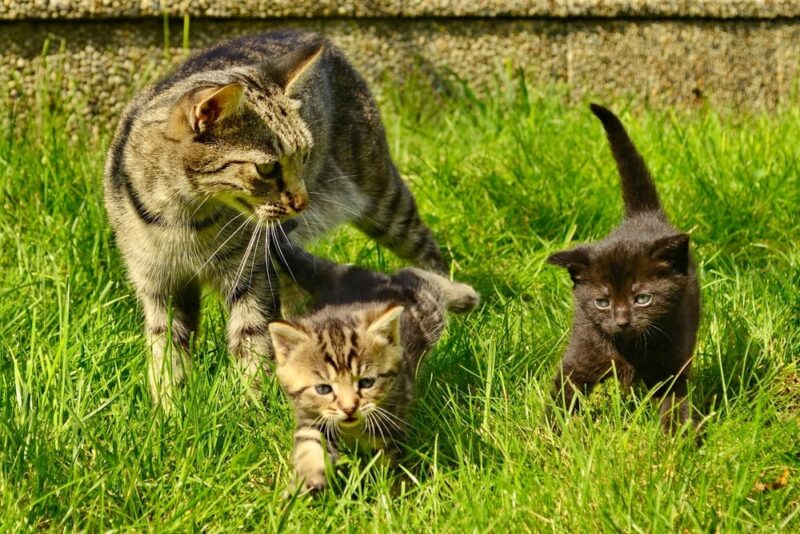
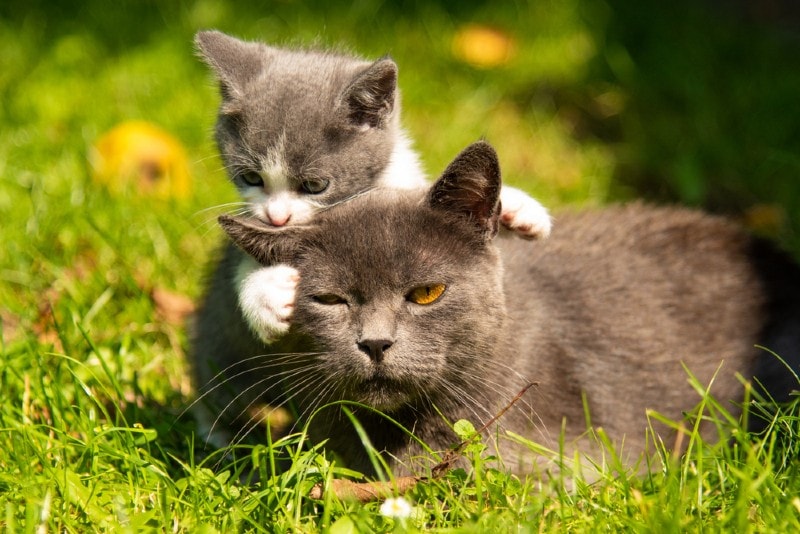
kittens in the grass with their mother

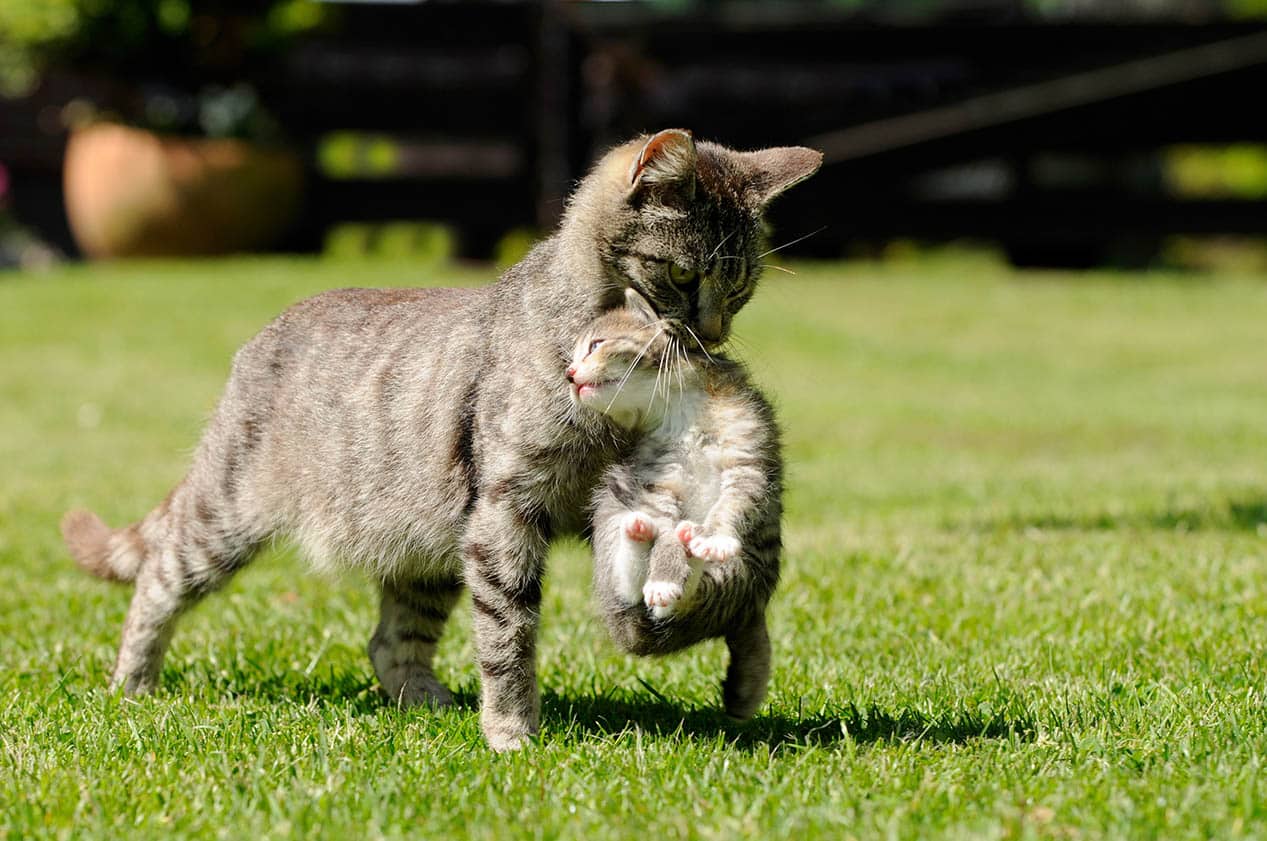
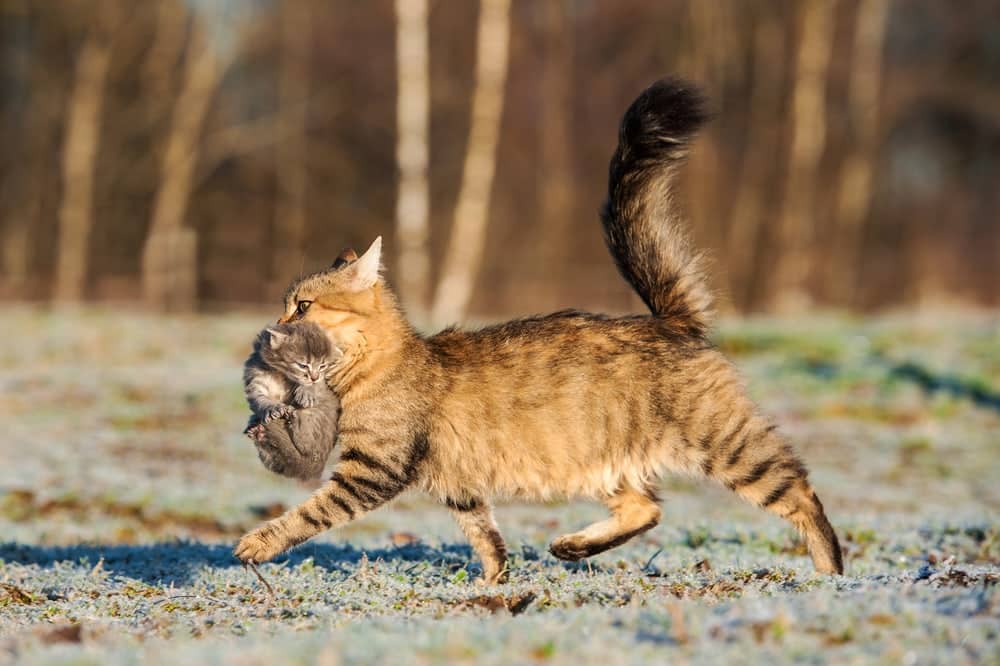
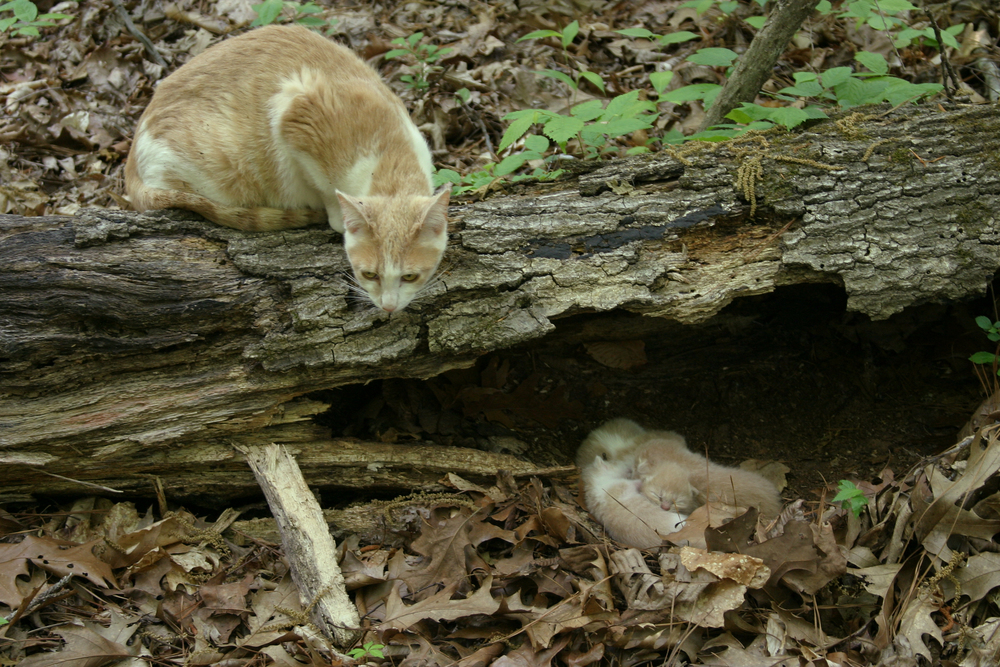
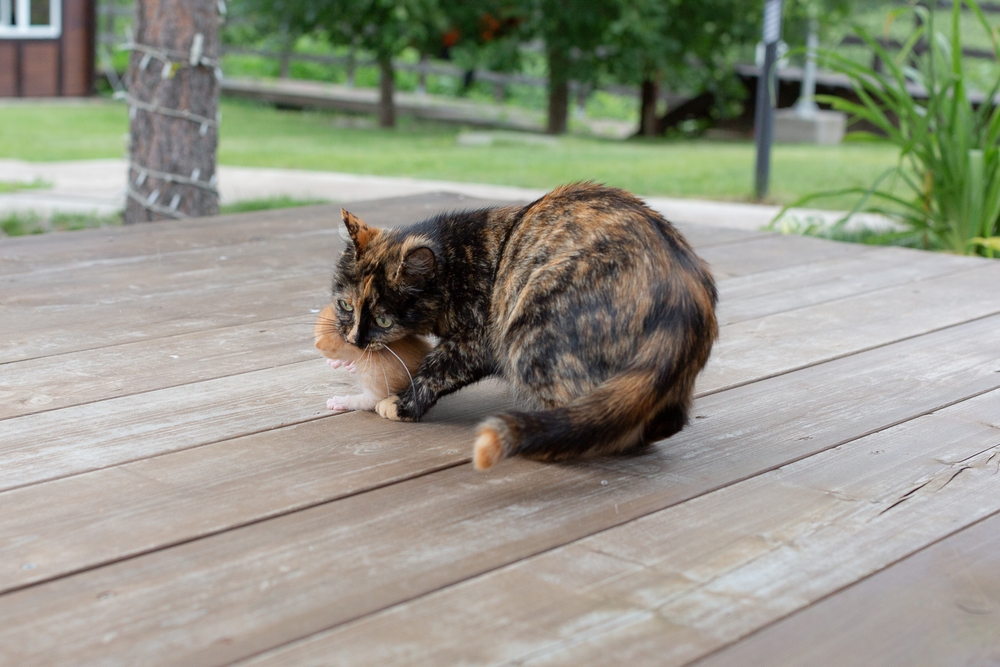
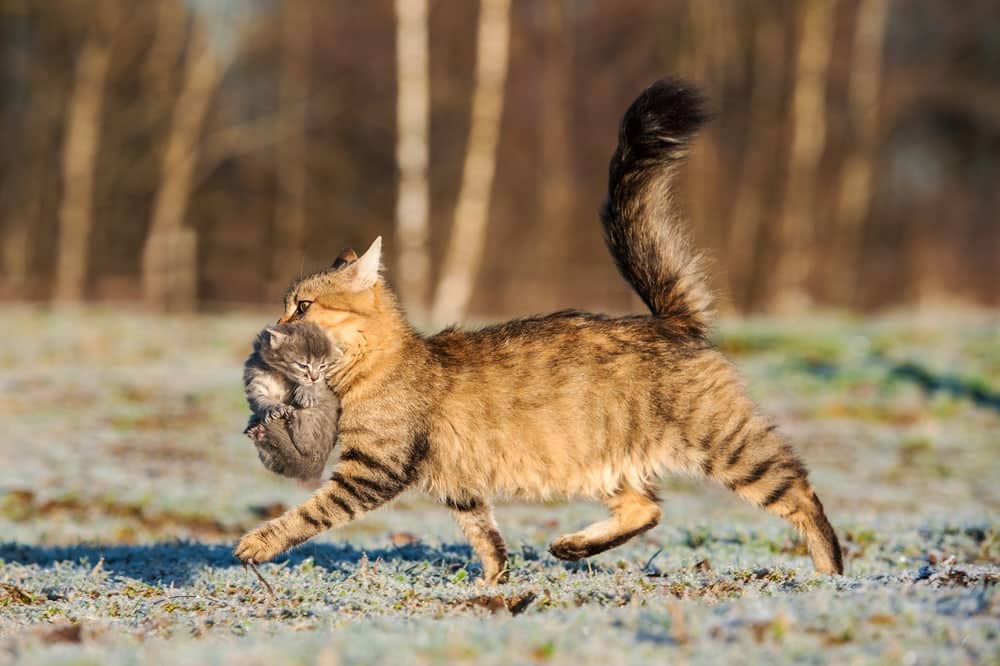
You may have seen your domestic mama cat move her kittens more than once, and the same behavior is common for feral mother cats. Feral cats will move their kittens for various reasons. If the mother cat is unsatisfied with the feel and safety of the nest, she will move her kittens repeatedly until she’s satisfied with the living conditions and feels that the nest is safe.

Instinctively, many mother cats will relocate their kittens at least once. They do this once the kittens are 3–4 weeks old. It is thought that they do so because after a while, the quality of the nest may no longer be ideal. However, if the mother cat feels safe and the nest has everything that she and the kittens need to survive, she might not move them at all and will wean them where they are. Clean bedding, food, water, and privacy are all things that a feral mother cat requires.

If the conditions are bad, such as a dirty environment with little access to food and water, the mother cat will move her kittens as often as possible to keep them safe, clean, and secure. Let’s talk more about feral cats and kittens and why they move them.

divider cats oct 2024

Why Do Feral Cats Move Their Kittens?

As with humans and other animals, a feral mother cat’s maternal instinct is typically very strong. Here, we give you a few more reasons that feral cats move their kittens.

Reasons a Cat May Move Her Kittens
  • The nest is dirty or otherwise a mess.
  • The nest isn’t secure or safe.
  • The nest isn’t private enough.
  • She smells another animal close to the nest.
  • The kittens need a larger area to continue growing.
  • Water and food have become harder to find.


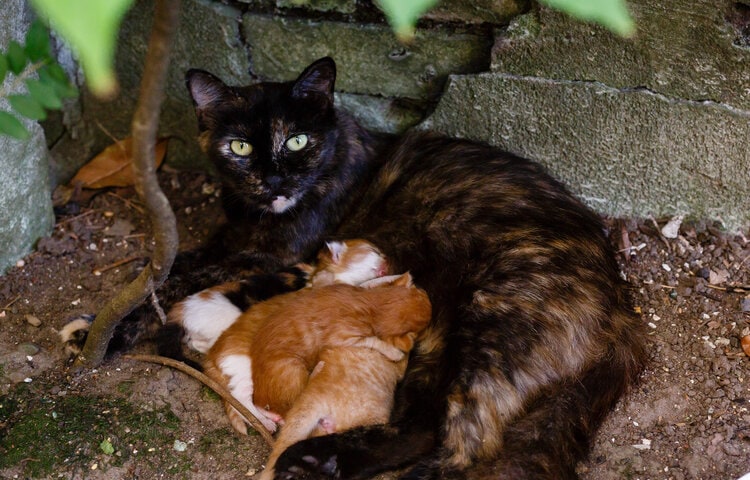
cat nursing kittens outside
Image By: Flower_Garden, Shutterstock

Why Would a Feral Mother Cat Walk Away From Her Kittens?

Cats usually wean their kittens when they are 6 to 8 weeks old. However, there are some instances when a mother cat leaves her kittens before that time.

Instincts Haven’t Kicked In

Sometimes, a mother cat’s instincts never kick in, and she just walks off and leaves her offspring behind. For example, a first-time mother could walk away from her newborns and abandon them if she goes into estrus again. This is very dangerous for the kittens, as they can’t survive independently and will die quickly in the wild.

She Is Lost and Can’t Get Back

A feral mother cat may wander off to find food or a safer place to take her kittens and be unable to find her way back due to unforeseen circumstances (such as a sudden rainstorm, noise that spooks her, fights with other cats, and so on). She may be trapped and relocated by a human; either way, she won’t be able to find her way back to her litter.

She’s Been Injured or Killed

Another reason a feral mother cat may seem to have abandoned her kittens is if she’s been injured and can’t get back to them. Sadly, the mother cat faces numerous dangers in the wild. For example, she could be attacked by a predator, consume pesticide, or get struck by a car.

The Mother or Kittens Are Ill

When kittens are born, they have no immune system and receive passive immunity from their mother’s milk. If they don’t receive adequate milk from their mother, their immune system may be compromised, so the mother may have to abandon a sick kitten to save the other kittens in the litter. By the same token, if the mother cat is ill, she may not be able to hunt, provide for, and feed her kittens and may choose to abandon them.
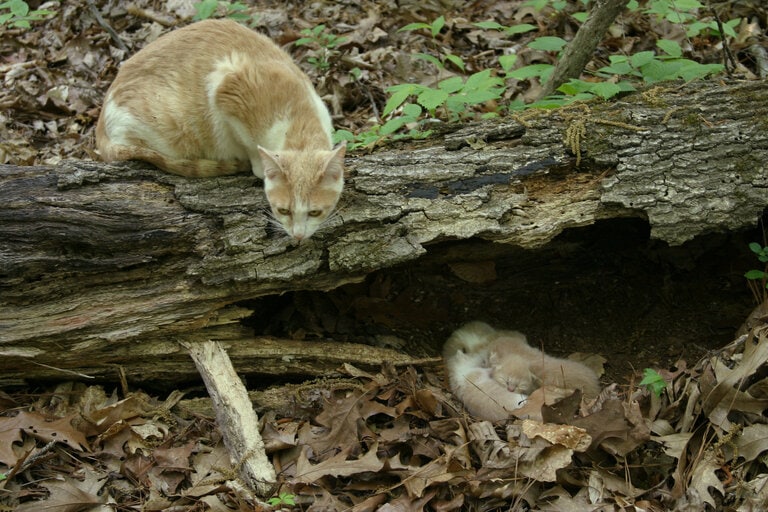
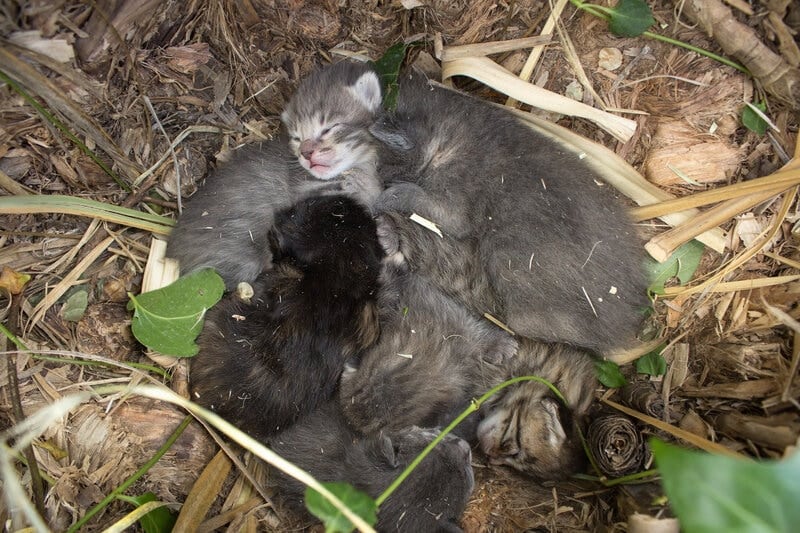
hiding litter of kittens
Image credit: Thomas Nord, Shutterstock

What Can You Do to Help?

If you find a group of feral kittens whose mother seems to have abandoned them or even a sick kitten, you can do a couple of things to help and save the litter.

Ways to Help
  • If you have the space and the resources, you can try taking care of the kittens yourself, but remember, that is a huge undertaking, and they might not make it to adulthood.
  • You can contact a local animal rescue organization to get the feral kittens and nurse them to adulthood.
  • You can also find a foster mother cat that can feed the kittens.

Whichever option you choose, it’s essential to get help for the kittens right away, as they can’t make it for very long on their own. If you keep the kittens, you’ll need a veterinarian’s help to feed and care for the cats. If the mother leaves the litter before they can eat solid food, you’ll need to follow the vet’s instructions carefully if you have to give the kittens a liquid diet from a syringe. Also, they’ll need full checkups and vaccinations before settling into your home.

If you need to speak with a vet but can't get to one, head over to PangoVet. It's an online service where you can talk to a vet online and get the advice you need for your pet — all at an affordable price!

PangoVet_Mention-in-Content for PangoVet2 save money

divider cats oct 2024

Wrap-Up

Feral mother cats move their kittens to ensure they are warm, safe, and dry and can find food and water themselves. It’s more challenging and dangerous for feral cats because they are trying to protect their young ones in the wild, whereas domestic cats have the comfort of a home to raise their kittens.

Like humans, mother cats only want the best for their kittens and will do whatever it takes to make that happen. If you find a litter of kittens that looks like they’ve lost their mother, it’s best to take the kittens to the vet to be examined, and the vet will recommend the best course of action for taking care of them. If you cannot keep the kittens, try calling a local animal rescue to take care of them.


Featured Image Credit: Petrik Ondrej, Shutterstock

Want content like this delivered to you?

Sign Up For Our Newsletter

News, insights, expert advice, and everything cat

* By submitting, you agree to our Terms & Conditions and Privacy & Cookies Policy.


How useful was this post?

Click on a star to rate (you can leave written feedback after clicking submit)

Help us improve Catster for pet parents!

Your feedback really matters.

What did you like about this post? Also how can we improve it?

Join the conversation

2 Responses

  1. why does my cat chew on paper? i find mail i have left on the countertop or on my desk chewed up and have seen him do it!is it instinct,fun,playfulness or is there some element in paper that makes their teeth or mouth feel great??thanks

    1. Hi MARY SUSAN WATKINS, you know cats can develop several unusual behaviors. To better understand the possible reasons you may be interested in reading: https://www.catster.com/cat-behavior/why-does-my-cat-eat-chew-paper/
      Additionally, if you wish to get personalized advice and tips to fix this behavior, please feel free to contact www.pangovet.com

Leave a Reply

You’re very welcome to leave a comment or question. Please know that all comments must meet our community guidelines, and your email address will NOT be published. Let’s have a positive and constructive conversation.


Catster's Digital Magazine is Back!

Vet-approved health & behavior advice

Real cat stories & community features

Chatting About the Rainbow Bridge, Euthanasia, and Laughter During Grief | Chatty Cattys, Episode 24

If you’ve ever felt the loss of a beloved cat, or are dreading the day when your pet crosses the rainbow bridge, you’ll...

The Simple Reasons Cats Refuse to Let Anyone Use the Bathroom Alone

Cats have an extraordinary talent for making themselves present in the most inconvenient places, and the bathroom ranks near the top of the...

A Paw-sitive Milestone: Canada Officially Becomes a Declaw-Free Nation

Canada has officially become a declaw-free nation. On May 25, 2026, a new regulation was filed in Ontario under the Provincial Animal Welfare...

The Surprisingly Simple Ways to Help a Cat With Hairballs

Cats spend an astonishing amount of time grooming. It is part hygiene routine, part comfort ritual, and part instinct that traces back generations....

More related

Can a Cat Go to the Bathroom on a Plane? Pre-Flight Tips

When planning an extended trip away from home that involves flying with your cat, there are a few key things to remember. Successfully...

When Do Kittens Calm Down and Begin to Mature? Vet-Reviewed FAQ & Tips

Kittens can be downright crazy, and any cat lover knows it is true, regardless of how cute their little faces are. It seems...

How Do I Give CPR to a Cat? Vet-Verified Step-by-Step Guide

Performing a feline cardiopulmonary resuscitation (CPR) is a procedure every veterinarian and technician master, but likely not every cat companion. CPR is used...

Excited Cats Is Now a Part of Catster

Catster is purring with delight to welcome the newest addition to our family: Excited Cats! We have always aimed to be the most...

Keep reading

Do Cats Get Morning Sickness? Vet-Approved Signs & Facts

Morning sickness is a widely known issue for pregnant women. Hormonal and physical changes lead to nausea, especially during the morning throughout the first trimester of pregnancy. It can be a really miserable experience, especially if you can’t get the...

sad sick cat

Is Bird of Paradise Toxic to Cats? Vet-Reviewed Houseplants Examined

The Bird of Paradise is a large houseplant with beautiful foliage and unique flowers. But is Bird of Paradise toxic to cats? While it’s a common sight to see at plant stores, it’s not a good idea to bring one...

Catster_Is Bird of Paradise Toxic to Cats

Is Your Cat a Vertical Pee-er? What to Do & How to Help (Vet-Reviewed)

Cats can develop strange habits that leave us feeling perplexed. One such strange behavior is vertical peeing. Cats can start to pee vertically for a variety of reasons. Sometimes, it has to do with marking their territory, while other times,...

Cat Pee Spray

Can Cats Eat Toothpaste? Vet-Verified Risks & Precautions

Toothpaste is a standard personal care item found in most homes and some handbags and briefcases. If your beloved feline has found their way into your dental care products, you might be wondering if toothpaste can be harmful to cats....

Can Cats Eat Toothpaste

Can Cats Eat Mussels? Vet-Verified Nutritional Facts & FAQ

Slimy—yet satisfying. If you grew up eating seafood, you’re probably familiar with mussels. These shellfish are full of health benefits for humans, but don’t be afraid to share. Your cat would probably enjoy a little bit of your mussels too,...

Can Cats Eat Mussels

Can Cats Eat Sage? Vet-Reviewed Nutritional Facts & FAQ

If you have a cat and like plants, you know how hard it is to keep your furry friend away from them. We try our hardest to shoo them away, but our cats always seem one step ahead of us....

Can Cats Eat Sage

How to Make My Cat More Active: 10 Vet-Approved Exercises & Tips

Do you have a lazy cat? Are you trying to figure out how to make your cat more active? Cats are undoubtedly different from dogs in this department, and sometimes, it takes a little creativity to ensure your cat is...

cat-playing-ball

Why Do Cats Suck Their Tails? 7 Vet-Reviewed Reasons

Tail-sucking is a confusing yet somewhat common feline behavior regardless of their age. Still, suckling is usually associated with nursing kittens, so it can be strange to observe this behavior in adult cats. Some cats might suck their tails habitually,...

Orange cat sucking on their tail

Love Cats? So Do We! Join the Catster Community

Stay informed with expert pet care insights delivered straight to your inbox! Discover professional guidance on animal behavior, feeding tips, trusted product picks, and much more.


Sign up for the Catster Email Newsletter

Stay informed with expert pet care insights delivered straight to your inbox! Discover professional guidance on animal behavior, feeding tips, trusted product picks, and much more.