What Is a Feral Cat Colony? Important Facts, How to Help & More
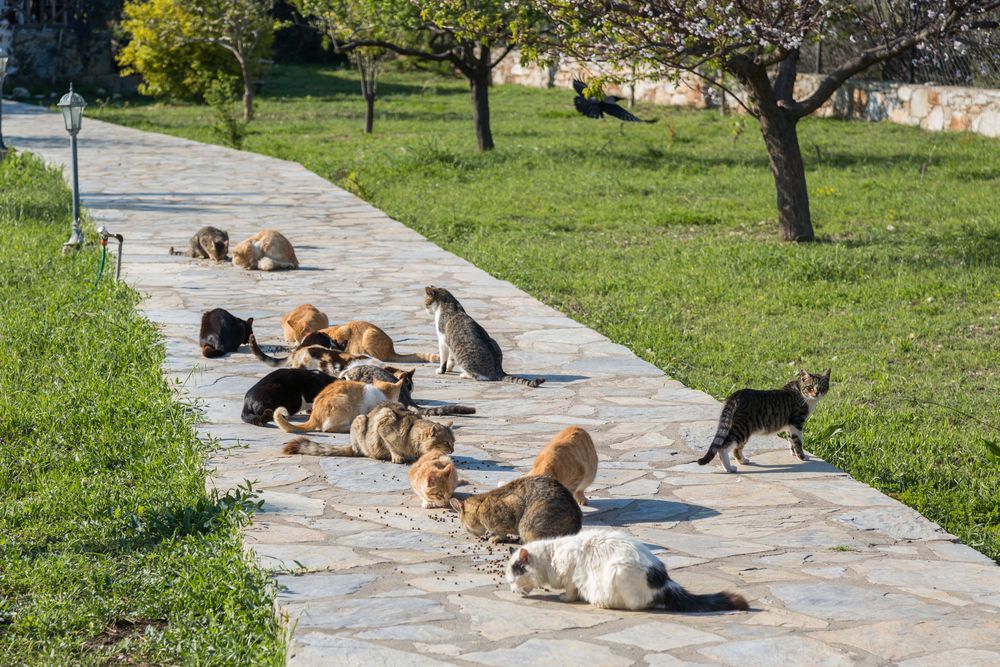
The U.S. has over 60 million unowned cats roaming its streets and alleyways1. Feral cats are undomesticated cats that live in groups or colonies. They’re not wild and still rely on human-based food and shelter for survival.
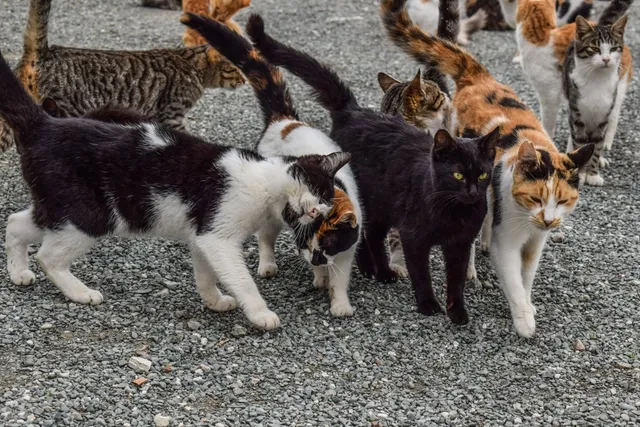
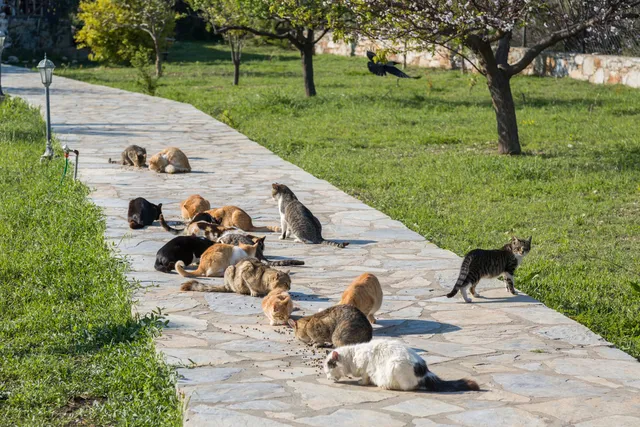
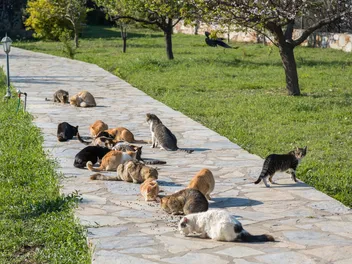
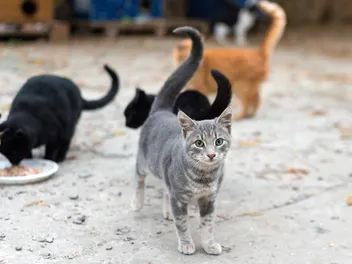
A feral cat colony is a group of feral cats that live together and share the same food source. Grouping into colonies makes it easier for the feral cats to find food and ward off predators. The social dynamics of these colonies vary from one to the next, but survival remains central to all of them. Keep reading to learn more about feral cats and their colonies.

Where Do Feral Cats Come From?
Most feral cats are the offspring of unneutered indoor-outdoor or stray cats that reproduce outdoors. A stray cat is a lost or abandoned feline that has lost their human owner and now lives entirely outside. Like feral cats, stray cats will eventually avoid humans and may form part of a feral cat colony.
Feral cats typically run away from humans but will come closer if you offer them food. Unfortunately, rehabilitating feral cats is almost impossible, especially for adult cats. Efforts to rehabilitate feral cats don’t bear fruit in most cases.

Why Do Feral Cats Form Colonies?
Although some feral cats live solitary, most form small colonies around food resources.
You'll find most feral cat colonies in:
Most feral cat colonies have a very loose hierarchical structure with no linearity. This means no leaders or members of the colony rank higher within the colony. However, colony members will recognize their own and sometimes get into scuffles with non-members. Sometimes, a stray cat will get accepted into the colony after numerous interactions.
The 5 Reasons Why Feral Cats Live in Colonies
1. Protection
Living outside comes with a unique set of threats for cats. The biggest are predators like feral dogs, dingoes, coyotes, caracals, and birds of prey. They also face invasions from other colonies looking to claim their food resources.
Feral cats protect themselves and their resources by grouping into colonies. Doing so gives them a more threatening presence that intimidates predators and other cats. They also warn each other of approaching threats so they can hide or scamper to safety.
2. Lack of Competition
Feral cats in colonies form between familiar individuals that do not compete for food and resources. Cats do not have a pack mentality, nor do they do group hunting strategies. Instead, they are solo hunters that can learn to “tolerate and allow” familiar cats if the resources enable that to happen. These include food, water, and shelter.

3. Socialization
Feral cat colonies typically contain between three and 15 cats. But some feral cat colonies can reach higher numbers. Living in groups allows for socialization, which is crucial for cats’ mental and behavioral development. Cats in the colony play, groom, and hunt with each other and form strong social bonds. Colonies work better when there’s familiarity between members and no internal competition for resources.
4. To Claim Territories
Like other members of the cat family, cats are extremely territorial, a survival tactic they use to maintain their resources and hunting areas. Living in colonies makes it easier for feral cats to defend and expand their territories. However, the cats will still hunt and eat their kill individually, except when they have a strong social bond.

5. Reproduction
Colony members mate to produce offspring. Female cats reproduce up to five times a year with litters of up to one to 12 kittens in each reproductive cycle. Living in colonies expands the members’ mating pool and promotes hybrid vigor.
The females in the colony, known as queens, work together to raise the kittens and protect them from predators. They nurse and groom their young ones until maturity, when the now-adult kittens become active colony members.
What Determines How Feral Cats in a Colony Are?
There’s always the question of what truly makes a cat feral. For instance, if you lose your cat for 3 days, does that make them a feral cat? Or is a domesticated feral kitten still a feral? Here are a few factors that determine “ferality” in a cat colony.
Age
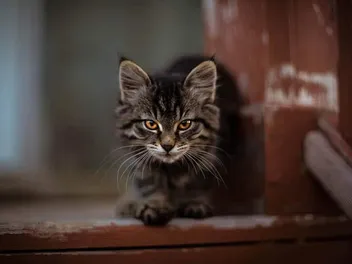
Kittens less than 8 weeks old can still be domesticated if rescued early enough. These kittens sit between being feral and domesticated. Kittens born and raised in a feral colony past 4 months will become fully feral. Such kittens are difficult to rehabilitate and will likely retain feral traits even after domestication.
The Number of Generations
Feral cat colonies are usually groups of cooperating females, so it’s not uncommon to see cats belonging to several generations of related females that cooperate with the lactation and care of the litters.

Amount of Human Contact
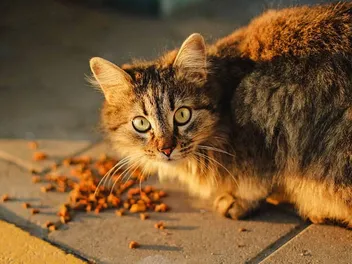
Feral cats used to humans are less feral and more social than those that barely come into contact with humans. Food is an easy way to facilitate interaction with feral cats, but there’s no guarantee they’ll always yield to the temptation.
Are Feral Cat Colonies Dangerous to Humans?
No, feral cat colonies aren't dangerous to humans and will rarely bite or attack people unless provoked. Most feral cats scurry away if they spot humans and limit interactions to only those involving food.
It’s common for feral cats to carry disease-causing bacteria, viruses, and parasites. These diseases include rabies, toxoplasmosis, and salmonellosis, among others. Since feral cats rarely interact with humans, though, it’s hard for you to contract these diseases from these felines.
However, there are a few preventative measures you can take to be on the safe side.
They include:
Do Feral Cats Need Our Help?
The answer to this question is not a straightforward one, as most feral cats in colonies can live for 2 to 3 years without human intervention. However, the harsh outside conditions expose feral cats to a host of risks like predators, diseases, and traffic.
Feral cat colonies are responsible for the predation of many wildlife species, including birds, reptiles, and small mammals, which is undesired for environmental health. That said, in certain areas, they play a role in keeping vermin and pests under control.

How Can We Help Feral Cat Colonies?
Get in touch with a local organization, as the staff can inform you about the status of your local feral cat colonies and the wildlife in your area. Keep in mind that in many jurisdictions, feeding or housing feral cats is against the law. The AVMA doesn’t recommend feeding feral cats for public health reasons.
Shelter Them
Professional organizations, such as humane societies, rescue centers, and animal shelters might be able to offer feral cats a place to stay. However, many of these organizations work with limited resources and space ,so any donations to help them continue their labor are always welcome.
Feed Them
Feeding feral cats through an organization or to rescue and rehome them is considered acceptable in most instances. However, randomly feeding feral cats with no plans or intention of providing them with a better future is counterproductive to animal welfare. This will increase their reproductive success rate, resulting in even more feral cats.

Consider Adopting a Feral Kitten
If you spot a kitten or two in the cat colony that visits your porch for food, consider welcoming them into your home. Kittens are still malleable, and with a bit of effort and patience, you can domesticate them into your house pets. Doing so guarantees their safety and reduces the feral cat population.
What Is the Trap-Neuter-Return Program for Feral Cats?
Feral cats have become a nuisance for most neighborhoods with their scavenging antics. Given the booming feral cat population, programs like Trap-Neuter-Return (TNR intend to help keep it in check. TNR is a community-centric program that involves trapping feral cats, neutering them, and returning them to their homes. Doing so helps control the feral cat population so we have fewer cats at risk of predators and disease and prevent straining resources among feral cat colonies. Hundreds of communities participate in the TNR program. It also aims for feral cats to be vaccinated against various diseases. Disclaimer: Several organizations are against the TNR programs because they may not be as effective as expected. TNR programs are legal in some jurisdictions but illegal in others. This division can be confusing, so becoming familiar with your local laws is strongly suggested.
Final Thoughts
Feral cat colonies are part and parcel of most neighborhoods across many countries. These felines usually live in a difficult situation and might be responsible for wildlife population decreases. If you spot a feral cat colony, you should keep in mind that while some cases are heartbreaking, by feeding the cats, you are unfortunately participating in the perpetuation of the cycle. If you wish to help, get in touch with a public organization and find out the best way to help the ownerless cats in your community. See also:
Do Caracals Make Good Pets? Vet-Verified Ethics, Legality & Facts
What To Feed A Colony of Feral Cats? 12 Vet Approved Tips & Advice
Sources
Featured Image Credit: Murat An, Shutterstock
Expert cat care, straight to your inbox
News, insights, and useful advice, delivered to you.

No spam — unsubscribe anytime.
By signing up, you agree to our Terms & Conditions and Privacy & Cookies Policy.
How useful was this post?
Click a star to rate. You can leave written feedback afterwards. (We read all feedback.)

Christian started writing for a local newspaper as a teenager, and he's been involved in the publishing industry for most of his adult life. Combining his love of writing with a passion for animals, he is currently the Director of Editorial at Pangolia and the Editor-in-Chief at Catster.
Christian lives in the Philippines with his wife, son, and four rescue cats: Trixie, Chloe, Sparky, and Chopper.