Get

In Your Inbox

Catster is reader-supported. When you buy via links on our site, we may earn an affiliate commission at no cost to you. Learn more.

What Do Feral Cats Eat in The Wild? Vet Reviewed Facts & FAQ

Share

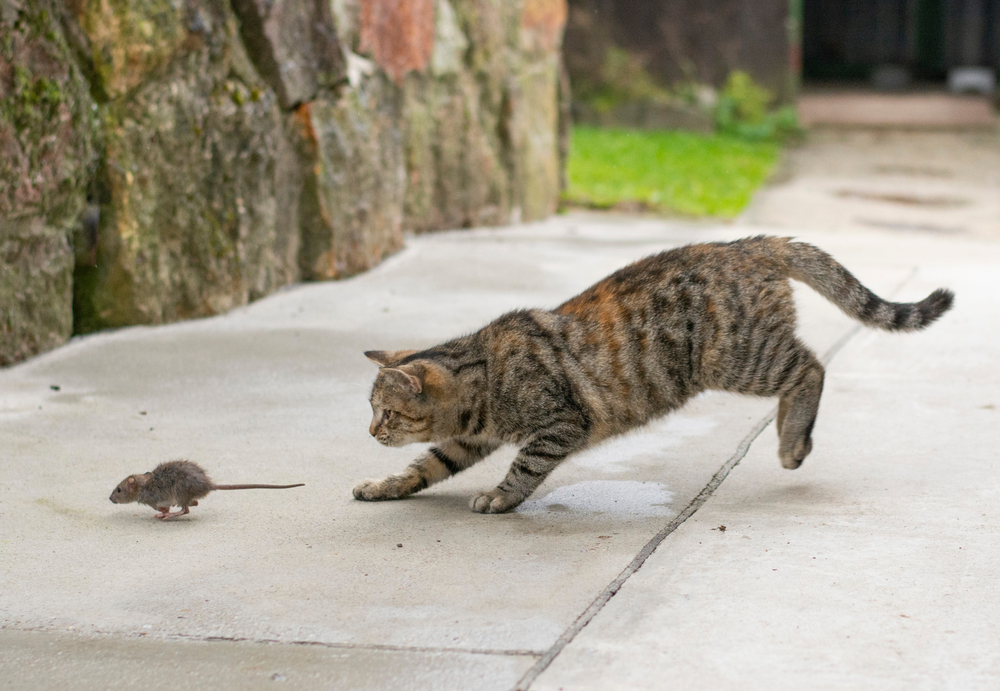
cat hunting a rat

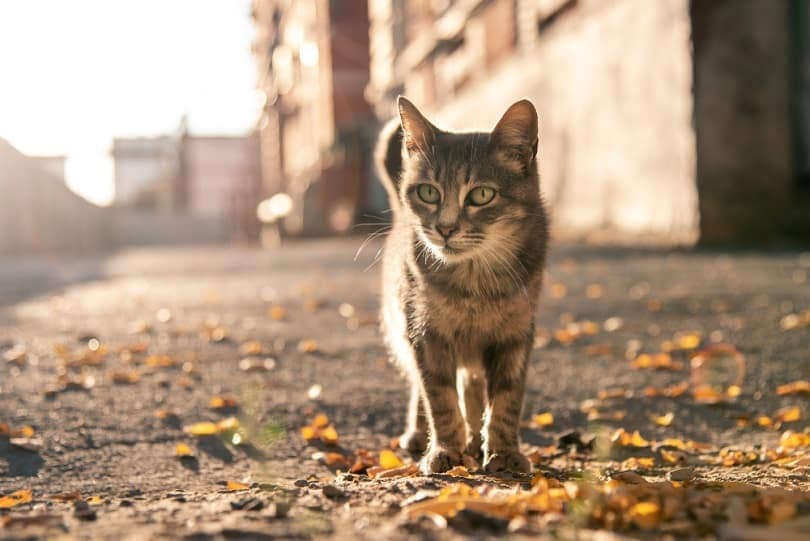
Feral cats aren’t domesticated, prefer living outdoors, and often avoid human contact. They are normally considered mesopredators in their ecosystems and are most active after dusk. In addition, since they reproduce rapidly and are skilled hunters, conservationists find them devastating to wildlife.

It seems like the feral cat community has a stable supply of food in the wild to encourage its rapid population growth. They will go through garbage and eat rodents amongst other things. Read on below to find out more about what feral cats eat in the wild.

divider 3 paws

The 6 Foods That Feral Cats Eat in The Wild

1. Small Rodents

Feral cats, and all cats, are obligate carnivores. Their body metabolism and gastrointestinal tracts are all designed to digest meat efficiently. Of course, they can survive without it, but they won’t be healthy. Our feral friends love hunting rats, mice, squirrels, and other rodents.

It can be beneficial to humans since the cats can help us manage the rodent population in regions that typically offer optimal conditions for their growth. Rodents are a threat to people and pets; they spread diseases and damage crops.

black and white young cat looking at a mouse outdoor
Image Credit: 165106, Pixabay

2. Birds

It’s no secret that feral cats are opportunistic hunters, and birds are one of their favorite targets. According to the National Audubon Society, we have approximately 60 million feral felines in the U.S.1 According to researchers, they are the chief cause of the extinction of more than 33 bird species worldwide.


3. Reptiles & Insects

Besides birds and rodents, feral cats also hunt insects and small reptiles. This includes worms, crickets, and even cockroaches. If they come across a snake or lizard, they’ll pounce on them, bite the head off, and carry them back to their feeding grounds.

Kitten with a dead cockroach beside
Image Credit: GooseB, Pixabay

4. Water

All animals need water to survive, including feral cats. In the wild, they drink water from the river, pond, lake, pothole, manhole, etc. Some of the water sources aren’t clean, and that’s one reason diseases are prevalent in feral colonies. The diseases are often caused by fungi, parasites, bacteria, and viruses.


5. Vegetables & Fruits

Feral cats don’t need fruits or vegetables. Even though they have nutritional value, meat is almost always a preferred option. However, they’ll snack on grasses and plants occasionally.

Detox juice fruit_iriska_ira_shutterstock
Image Credit: Iriska Ira, Shutterstock

6. Garbage

We’ve all been woken up in the middle of the night by the noises made by raccoons and feral cats rummaging through our dumpsters or trash cans. They usually survive on our leftovers, especially during winter when the temperatures are too low, and prey is scarce.

divider 3 paws

FAQ

Why Are Feral Cats Not Considered Apex Predators?

An apex predator should be at the top of the food chain. In other words, apex predators don’t have any known enemies in their ecosystems. But in the case of feral cats, they can be hunted, killed, and eaten by owls, hawks, coyotes, and foxes.

Can You Domesticate a Feral Cat?

Domesticating a wild or feral cat is a tall order. Some would even say it’s impossible, given they are not used to human contact. If you desperately want to tame one, a kitten is much easier to train. Teaching it how to be friendly towards other pets or people is not going to be easy, but your chances of succeeding are higher than raising an adult.

Are Feral Cats Nocturnal?

For the most part, the free-roaming cats have nocturnal tendencies. Although cats are crepuscular, most feral felines prefer coming out at night when everybody’s gone to bed to sleep. They primarily rest during the day to avoid interacting with humans. If you see a feral cat out in the middle of the day, it’s either running away from a predator or too hungry to wait for dusk.

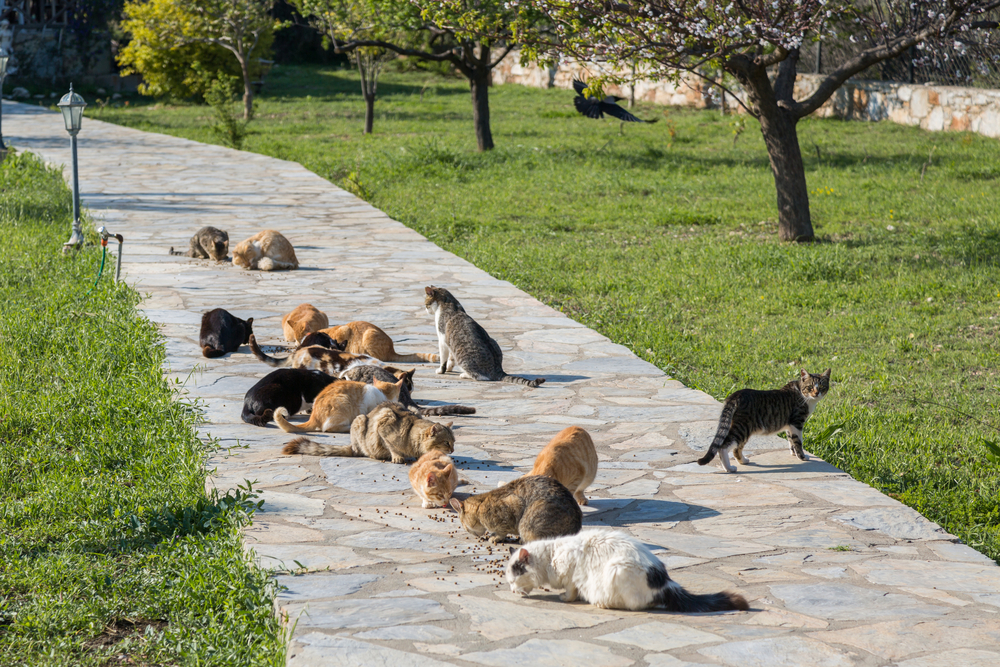
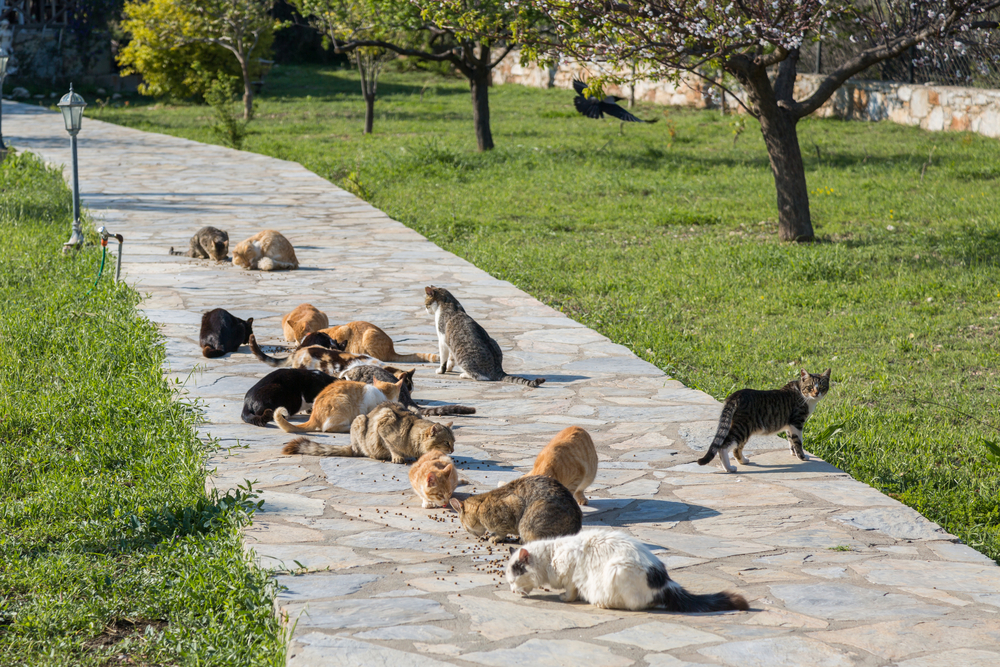
feral cats resting outdoor
Image Credit: Dmitris Vetsikas, Pixabay

divider 3 paws

Conclusion

It’s okay to leave some food out for your feral guests, but remember that they will keep coming back. And when they do, their colony will be larger than the previous one. While it’s natural to want to help the cats by feeding them, in most cases, they are pretty adept at finding food on their own.


Featured Image Credit: Stefan Sutka, Shutterstock

Want content like this delivered to you?

Sign Up For Our Newsletter

News, insights, expert advice, and everything cat

* By submitting, you agree to our Terms & Conditions and Privacy & Cookies Policy.


How useful was this post?

Click on a star to rate (you can leave written feedback after clicking submit)

Help us improve Catster for pet parents!

Your feedback really matters.

What did you like about this post? Also how can we improve it?

Join the conversation

Leave a Reply

You’re very welcome to leave a comment or question. Please know that all comments must meet our community guidelines, and your email address will NOT be published. Let’s have a positive and constructive conversation.


Catster's Digital Magazine is Back!

Vet-approved health & behavior advice

Real cat stories & community features

When a Cat Becomes a Water Fountain – Why Cats Vomit After Drinking

Seeing a cat drink water and then promptly bring it back up can be confusing. Sometimes the explanation is fairly simple, particularly if...

Chatting About Sleeping Positions, Loafing & Cats in Tubes | Chatty Cattys, Episode 33

In this episode of Catster’s Chatty Cattys podcast, Dr. Karyn and Nicole dive deep into the fascinating world of feline sleep behaviors. From...

The Bite Stuff: The Truth Behind a Cat’s Sudden Nip

A cat bite that seems to come out of nowhere is one of the more confusing things a cat owner deals with. Everything...

Your Cat’s Purr Proves They’re One of a Kind

There are few sounds more comforting to a cat parent than the familiar rumble of a purring cat. You probably know your own...

More related

Is Catnip Bad for Cats? Vet-Verified Facts to Know

If you have seen your cat go crazy for catnip and act as if they are “high” and you want to know if...

100+ Twin Cat Names for Best Friends & Siblings

New pet owners may find comfort for their pets by adopting them in pairs. Whether it be siblings or simply two inseparable cats,...

How to Make a DIY Cat Door Climber: 6 Easy & Practical Ideas

Cats are natural athletes that crave every chance they can get to show off their lithe grace. Whether it’s making a jungle gym...

Laser Declawing Your Cat – Vet-Reviewed Facts & Considerations

Veterinary professionals and reputable veterinary and animal welfare organizations, such as the American Veterinary Medical Association and the American Society for the Prevention...

Keep reading

Mobile Vet Clinics & Care: Our Vet Discusses Pros, Cons & FAQ

Your cat is wonderful at home but turns into some sort of Tasmanian devil the moment she gets to your veterinarian’s office. Is there an easier way to get her preventative care done so that you know she’s healthy? Let...

vet holding a cat

What Is a Normal Heart Rate for a Cat? Vet-Approved Facts & Health Tips

Cats have smaller bodies than we do, so it’s only natural that they’d have faster heart rates. The normal cat resting heart rate is between 160–220 beats per minute (bpm). Recent physical activity will influence a cat’s heart rate, so...

veterinarians examining a grey cat

Can Cats See Fire? Explaining Feline Vision & FAQ

Cats have long fascinated humans with their enigmatic behaviors and extraordinary senses. We are often told that cats have superior senses compared to us, enabling them to perceive the world in a unique way. One intriguing question that often arises...

Glass Fireplace

Can Cats Smile? 5 Vet-Approved Ways to Tell if Your Cat is Happy

Sometimes cats make a face that makes you wonder: is my cat actually smiling at me? It looks just like a smile: closed eyes and a mouth turned upward. Cats do have the muscular ability to make facial expressions that...

happy cat

Can Cats Eat Cheetos? Vet Approved Nutrition Facts & FAQ

We’ve all seen the Cheetos commercials with a cartoon jaguar. He’s technically a cat, so can cats eat Cheetos? Truthfully, even humans probably shouldn’t even eat Cheetos. They are chock-full of preservatives, artificial dyes, and harmful additives. The same sentiment...

Can Cats Eat Cheetos

Can Cats Eat Truffles? Vet-Reviewed Facts & FAQ

Cats are carnivores, so they don’t need to eat plant foods to stay healthy. However, this doesn’t mean that they cannot eat them. In fact, some cats seek out foods like carrots and grapes because they like the texture or...

Can Cats Eat Truffles

Earthborn Cat Food Review of 2026: Recalls, Pros & Cons

Review Summary Earthborn Holistic offers both wet and dry cat food variants and all but one range is grain-free food. The food is made to enhance nutrition in your cat, and the manufacturer claims to use fresh ingredients. They contain...

Earthborn Cat Food Review

How to Give a Cat a Bath (Without Getting Scratched): Expert Tips & Tricks

If you have owned a lot of cats, you know how much they hate water. If you are a new pet owner, you are likely in for a big surprise when you attempt to give your cat their first bath....

Clutch being his usual calm self in the bath

Love Cats? So Do We! Join the Catster Community

Stay informed with expert pet care insights delivered straight to your inbox! Discover professional guidance on animal behavior, feeding tips, trusted product picks, and much more.


Sign up for the Catster Email Newsletter

Stay informed with expert pet care insights delivered straight to your inbox! Discover professional guidance on animal behavior, feeding tips, trusted product picks, and much more.