What Really Goes on Inside a Cat's Head All Day


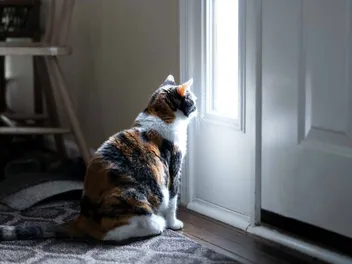
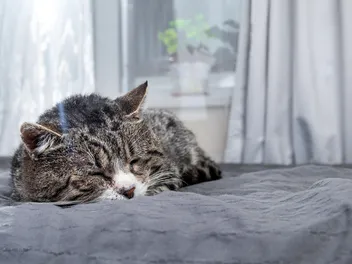
Cats can spend a remarkable amount of time simply sitting and staring. It is easy to imagine that a cat gazing out a window or lounging on the couch has a complicated train of thought running through its head. But figuring out what happens inside a cat's mind is much harder than reading its body language.
Although we can infer a reasonable amount from the study of feline brains and behavior, plenty remains a mystery. Cats do not have the same brain structures humans use for complex language, so it’s unlikely that they’re thinking in words or having an internal conversation made up of meows and purrs. What they are thinking about may be much more connected to what is happening around them in the moment.
The Power of Now
Humans often struggle with mentally reliving the past and catastrophizing about the future. Staying focused on the present can be harder than it sounds. But for cats, it is likely to be the opposite.
One of the clearest ideas about feline thinking is that cats are highly tuned into their immediate surroundings.
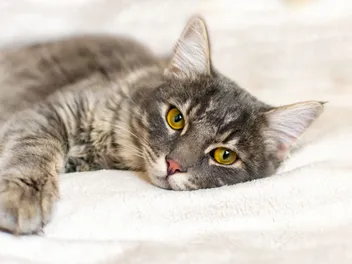
When a cat is playing with a toy or working out a puzzle, its attention is likely concentrated on that activity. Relaxation may work in a similar way. A warm blanket, a comfortable couch, or an interesting view through a window can provide enough stimulation for a cat to simply experience the moment without the kind of constant internal chatter humans often deal with.
This doesn’t necessarily mean that cats completely empty their minds when they are at rest, but it is likely that their attention is more closely tied to what is happening around them rather than engaging in the kind of extended mental reflection people experience.

Cats Don't Dwell On The Past
Cats have long memories, particularly when an experience was significant in some way. Positive and negative experiences can stay with them for years, and memories can influence how they respond in the future. Not only is this an important survival strategy, but it has also allowed cats and humans to form close bonds.
It is less clear if cats spend much time deliberately thinking about those memories.
A cat relaxing on the couch is probably not replaying the events of the previous evening in its head. Instead, memories may become relevant when something in the present triggers the memory of an earlier experience. A familiar smell, sight, or situation can elicit a response connected to something that happened before.
Memory can also help cats solve problems. Experiences associated with positive outcomes, such as food, praise, or attention, can help cats learn which actions are worth repeating when they encounter a similar challenge. Similarly, actions that have previously resulted in unpleasant or painful consequences are stored away in the memory banks so as to not be repeated in the future.
In other words, the past can influence a cat's behavior without necessarily becoming the subject of extended reflection.

The Question of the Feline ‘Self’
Humans spend plenty of time thinking about themselves. We reflect on past behavior, worry about mistakes, consider our current circumstances, and imagine what we want from the future. In short, we have hopes and dreams, worries and regrets.
There is no clear evidence to suggest that cats engage in that kind of self-reflection.
One of the most significant indicators of higher intelligence is self-awareness; something believed to be limited to humans, great apes, cetaceans (dolphins and whales), and elephants.
It remains unknown whether cats have enough self-awareness to analyze their past and present experiences and build a picture of themselves. Their behavior around mirrors offers no simple answer, either. Some cats appear to show little surprise when they see their reflection, while others react as though another unfamiliar cat has appeared.
That leaves an important question unresolved: how much self-awareness does a cat actually have?
Do Cats Miss People?
Cats can be affected by separation from familiar people and animals.
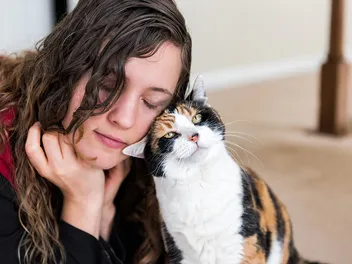
Some cats experience separation anxiety when they spend too much time away from people they have become attached to. Cats can also be affected when another pet or person they are familiar with moves away or dies.
Those feelings may become less intense as a cat adjusts to life without that companion, but the memories associated with them may not disappear completely.
It is possible that familiar scents can bring those memories back. A scent associated with someone a cat knows may trigger recognition and an emotional response, although there is no way to know exactly what a cat experiences internally in those moments. Are they simply making a connection between the scent and a feeling, or is the memory more complex?

Mysteries of the Feline Mind
There is no way to know exactly what a cat is thinking at any given moment, and some of the most interesting questions remain unanswered.
Cats can remember significant experiences. They learn from what happens to them and use those experiences to solve problems and navigate the world. They can also become distressed by separation from familiar people and animals. What remains much less clear is whether they spend time deliberating over the past, thinking about themselves, or contemplating their future.
That may make the next long stare out a window even more interesting. A cat sitting quietly may not be contemplating the meaning of life or replaying the day's events. They may simply be paying close attention to what is happening in the present, which for humans, can be surprisingly difficult to understand.
For cats, it may be exactly the point.
Featured Image Credit: Esin Deniz, Shutterstock
Did You Know?
- Our brand-new posts are rounded up and included in our weekly emails. Don't miss out on the latest - sign up for our newsletter below!
Expert cat care, straight to your inbox
News, insights, and useful advice, delivered to you.

No spam — unsubscribe anytime.
By signing up, you agree to our Terms & Conditions and Privacy & Cookies Policy.
How useful was this post?
Click a star to rate. You can leave written feedback afterwards. (We read all feedback.)
Dan has been working in the pet world for over 4 years covering cats, dogs, and all other pets in between. He loves helping pet parents keep their companions happy, healthy, and of course, totally spoiled! Originally from London, Dan now travels and works remotely, which unfortunately means no pets at home, but it gives him plenty of opportunities to fuss over other people's furry friends.