Why Do Cats Stare at Nothing? 4 Possible Reasons


In this article
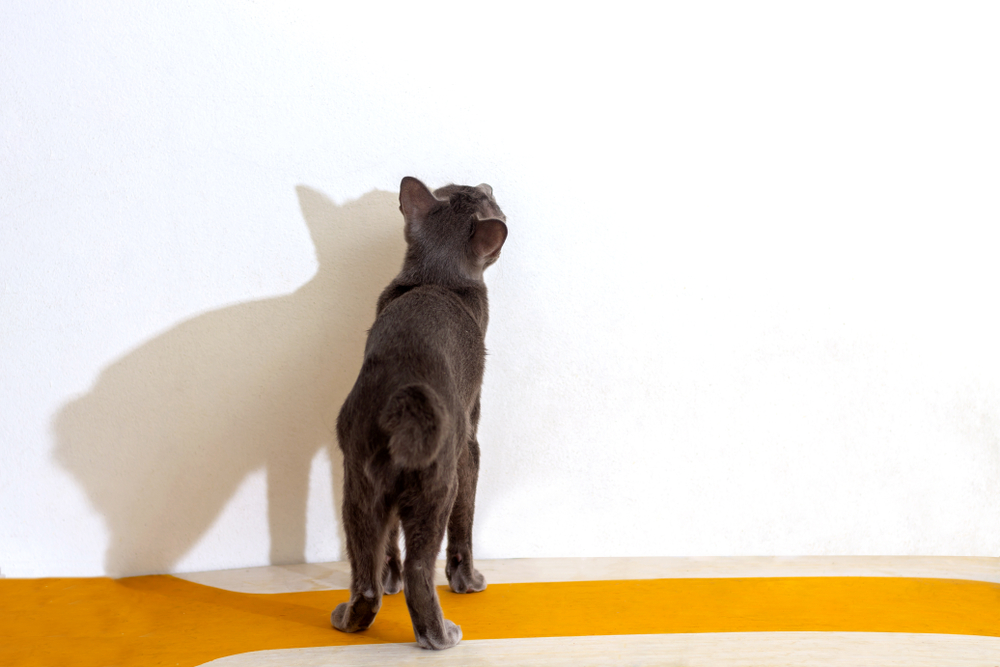
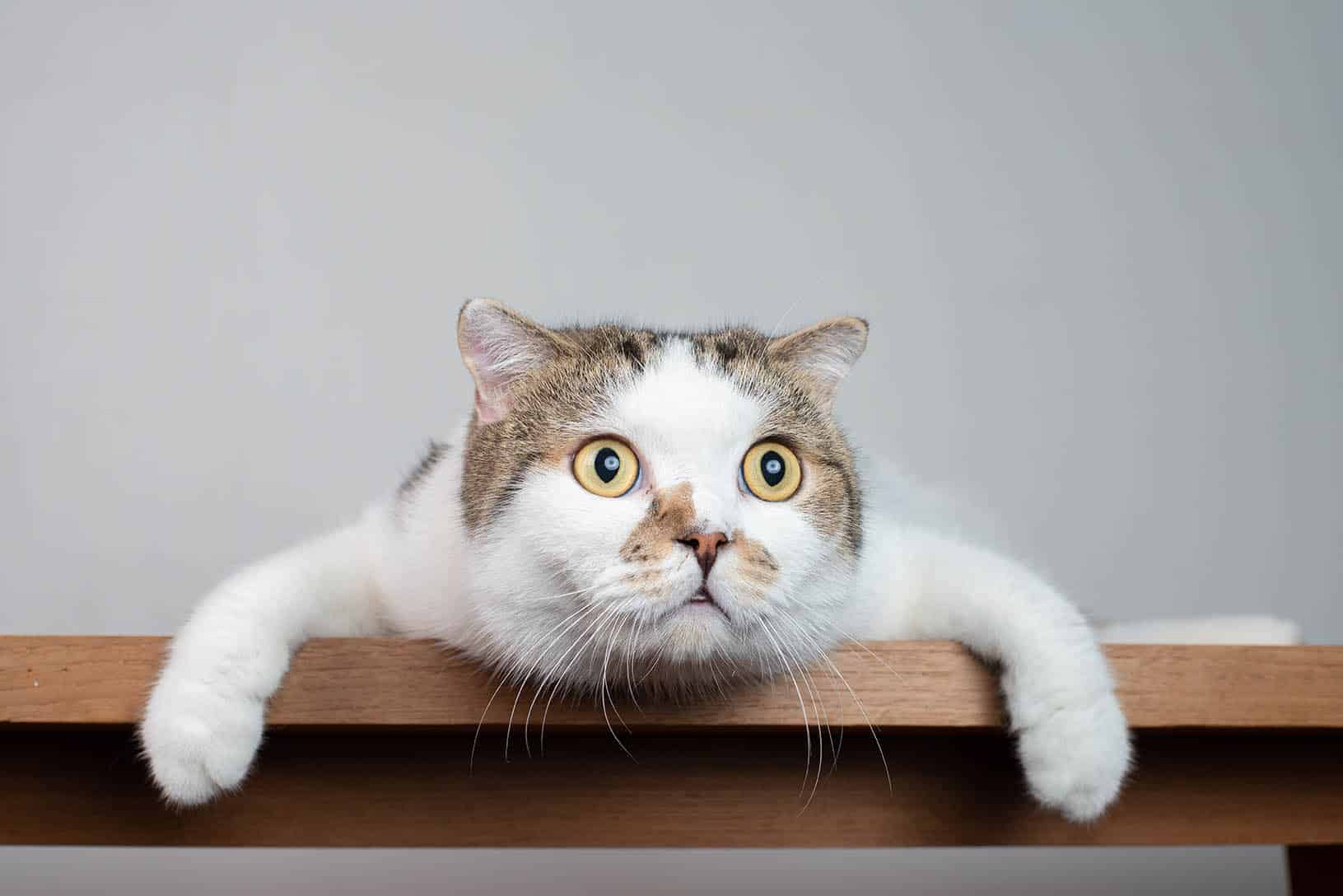
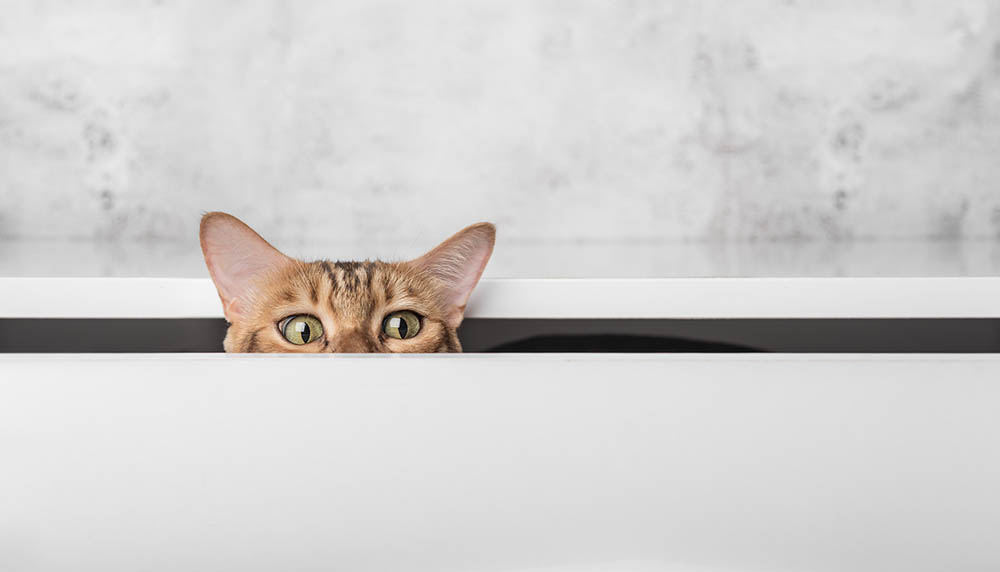
Experienced cat owners know that no matter how much we bond with and learn about our pets, there will always be at least a few behaviors that leave us scratching our heads. Cats have all kinds of quirks ranging from entertaining to frustrating to just plain creepy, and if your cat is the type to stare at nothing, you know how eerie it can be.
Cats don’t sense an unseen spirit when they gaze into the distance, but they usually perceive something we can’t notice. If this is a common occurrence in your home, we’ll explain five reasons cats stare at nothing and when it should be cause for concern.

The 5 Reasons Cats Stare at Nothing
1. They See, Smell, or Hear Something Nearby
Most of the time, a cat seemingly staring at nothing is indeed alert to something we simply don’t notice. As a natural predator, cats have highly tuned senses to pick up minor movements and faint traces of prey to aid them while hunting.
Cats Have Sharper Senses
Cats have remarkable hearing. They pick up frequencies up to 64,000 Hz (versus our 23,000 Hz maximum) and catch noises from further away than humans can, capturing sounds we could never hear.
Meanwhile, a superior nose allows cats to register smells up to 14 times better. With their sharp eyesight, which some believe can process UV light, we can see they have several ways of sensing stimuli that pass right under our noses.
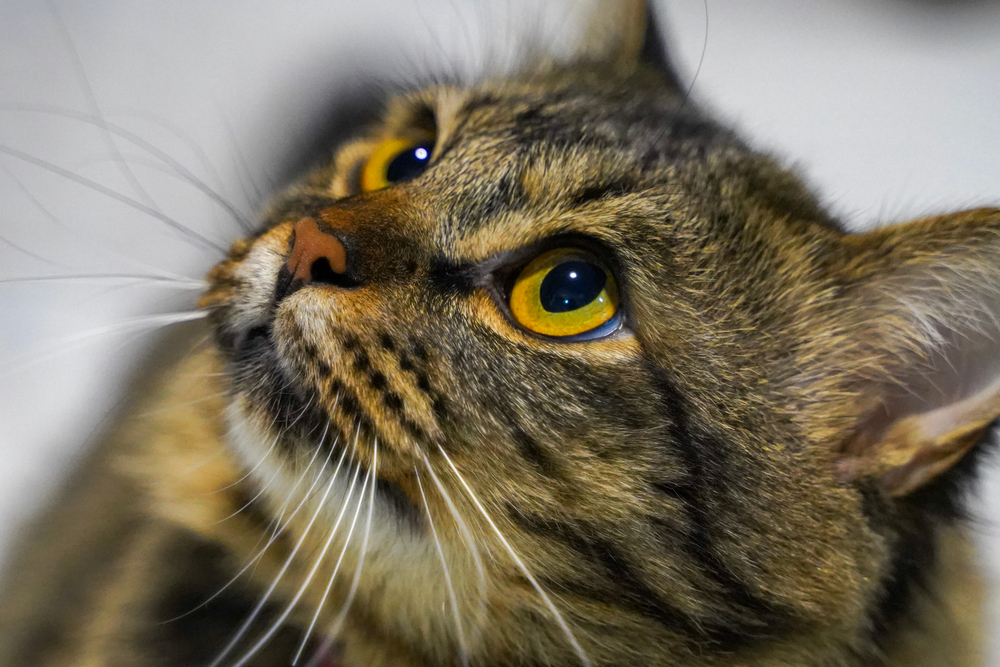
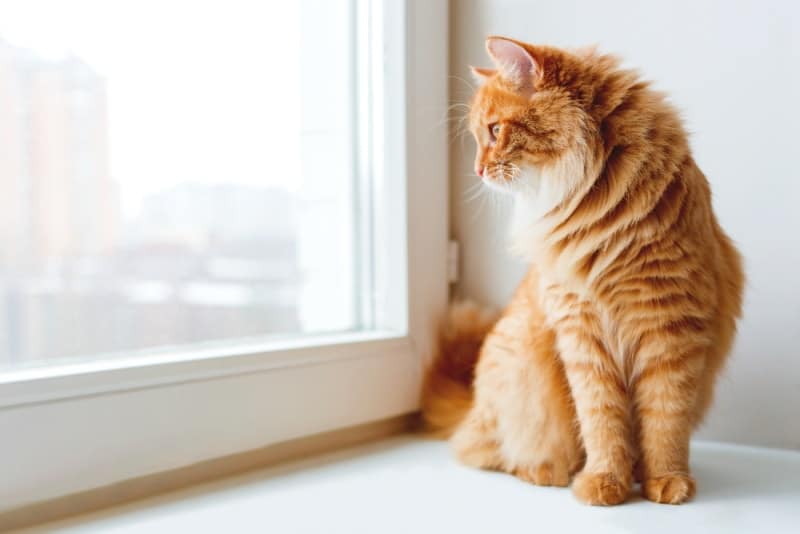
When cats stare intensely at nothing, their keen senses may reveal something as minor as an insect, a leaky pipe in the wall, or a flash of light. If you catch your cat looking intently in a random direction, watch their ear pinnae.
As they stare, their ears will orient in the direction of your cat’s gaze to help them localize the sound source, telling you they heard something you didn’t.

2. Cognitive Dysfunction
Cognitive dysfunction is a common occurrence as cats age. Most cats experience some form of cognitive decline over 11 years old, with memory, awareness, learning ability, and sensory perception potentially failing gradually.
As cats experience confusion that comes with mental decline, they may stare blankly at walls or off into space, often showing additional signs such as:
- Aimless wandering into unfamiliar areas
- Getting lost in familiar places
- Becoming stuck around furniture and other obstacles
- Inappropriate elimination
- Disinterest in play or interactions
- Decreased activity, eating, and grooming
- Increased agitation and restlessness
- More vocalizing at night
Your vet can evaluate your pet to rule out other underlying causes of these behaviors. If they find your cat suffers from age-related cognitive decline, they may offer anti-anxiety medications and provide at-home tips to accommodate your pet's changing needs and slow the effects.
3. Focal Seizures
Affecting roughly 1%–2% of the cat population, seizures occur when abnormal electrical activity in the brain causes various physical effects, notably mouth movements and twitching.
Unlike generalized seizures that occur when both brain hemispheres are affected, a focal seizure refers to unusual activity in a particular region. Restricted or involuntary movements are often limited to one area, such as the face, with visible signs varying depending on which part of the brain is affected.
Altered mentation may happen during a focal seizure, causing cats to stare blankly at nothing.
Additional signs may include:
Cats may also snap their mouths in a behavior called fly-biting, with some swatting at the air or becoming aggressive. In rare instances, episodes can progress to generalized seizures.

4. Petit Mal Seizures
Petit mal seizures, or absence seizures, are rare forms of generalized seizures typically only showing minor, non-motor signs. Cats may not go into convulsions but instead act disoriented, unresponsive, and unaware of their surroundings, often staring into space for several seconds.

What To Do If Your Cat Stares at Nothing
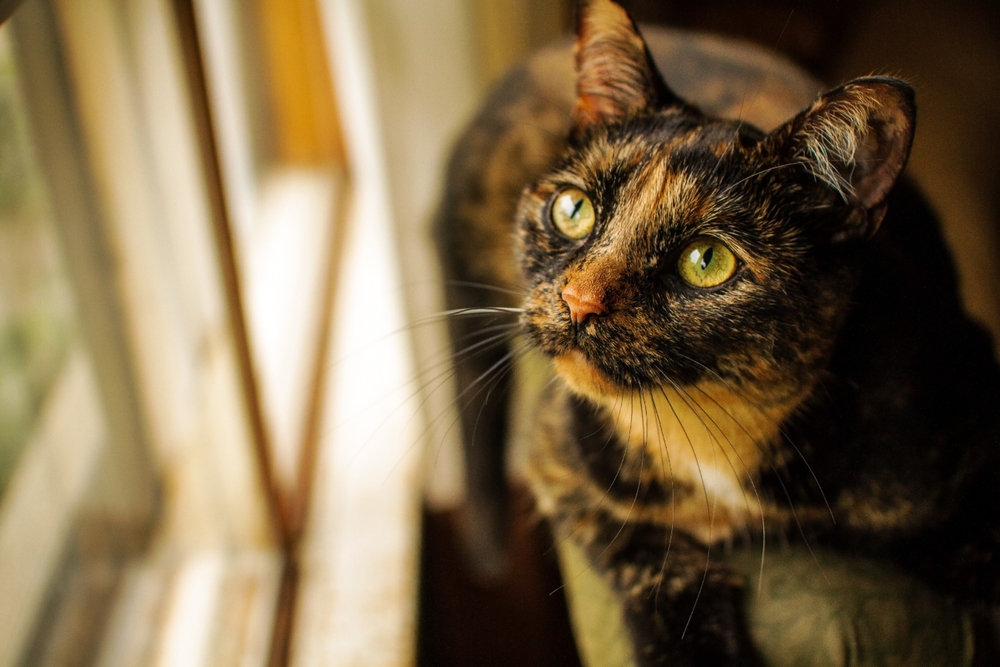
Cats are prone to staring at what seems like nothing, and it’s rarely cause for concern. They’re simply engaging their drive for predation or self-preservation, noticing an odd noise and orienting towards it to determine if they should pursue, retreat, or do nothing.
The behavior can be problematic if your cat’s staring is stressful or accompanies signs of seizures, FHS, or cognitive decline. While some causes, like sporadic focal seizures, may not need treatment, frequent staring and additional signs of health problems should warrant a vet visit.
Stressful stimuli may also catch your cat’s attention. Investigate the source of their staring to determine if it’s an isolated behavior, especially if your cat stares at the same place at predictable points during the day. They may notice outdoor movements, changes in light, or sharp sounds that make them anxious. Sometimes, something as easy as closing the curtains is enough to give them relief.
The behavior can be problematic if your cat’s staring is stressful or accompanies signs of seizures, or cognitive decline. If you notice your cat is frequently staring at nothing and you can not find a source even

Conclusion
With their heightened senses and unique ways of thinking, cats almost seem to live in another world entirely. While we might think they’re staring at nothing, we likely aren’t appreciating the minute disturbances that put them on the alert.
Health issues may be at play in rare instances, but more often than not, this behavior is just one of the many fun quirks that make life with pets so magical.
Sources
Featured Image Credit: Jilin Su, Shutterstock

Expert cat care, straight to your inbox
Vet-reviewed advice, behavior tips, and the best of Catster. Free, and you can unsubscribe anytime.
By signing up, you agree to our Terms & Conditions and Privacy & Cookies Policy.
Nicole is a lover of all animals, especially of the feline variety. She's mom to four, three fur babies and a human baby. She and her husband, John, live on a large forest property down in New Zealand.
Their beautiful Burmese cat Baby (who is now 17 years old) was their first child, though he is now called Baby Cat since their human baby joined the party in 2022. The dogs Rosa and Mac also love cats, but the whole family agrees that King Baby Cat is enough cat for this household.
Nicole is the Director of Content Management at Catster and Pangolia. With a Bachelor's degree in Education and years of online experience, she shares her pet knowledge and the knowledge of other professionals with the world, aiming to improve pets and pet parents' lives.
Join the conversation
Ask a question, share your story, or send private feedback.