Giardia in Cats: Causes, Signs & Care (Vet-Approved Facts & FAQ)


In this article
One of the most distressing experiences as a cat parent is suspecting or learning that your cat is unwell in some way. To add to your woes, medical terminology can sometimes be hard to process, especially when you’re under duress.
If you suspect that your cat has giardiasis, which is a type of infection in the intestines, or your cat has been diagnosed with this condition by a vet and you still have questions, we endeavor here to help you get a better idea of what exactly giardiasis is and address any concerns that you may have.

What Is Giardia?
Cats can suffer from a variety of intestinal infections, and giardiasis is one of them. However, unlike some other infections, it is not caused by a virus or bacteria. Rather, it’s caused by something called Giardia duodenalis, which is a single-celled parasite (though not a worm) that falls into the protozoa category.1
Giardia can affect humans and other animals, can occur anywhere in the world, and is a very contagious condition. It comes in two forms: trophozoite, which lives in an animal’s gut and feeds there, and a cystic form that exits the body in the animal’s feces. The cystic form of Giardia can survive for a long period outside of the body. It tends to thrive best in damp conditions and in water.
In total, there are seven Giardia genotypes, ranging from type A to type G. Type F is the genotype that usually affects cats, whereas types C and D are more common in dogs, and A and B are most common in humans.
One example of how Giardia can affect humans is traveler’s diarrhea, which causes gastrointestinal issues like diarrhea and abdominal cramping when food or water contaminated with Giardia is consumed.2
What Are the Signs of Giardia?
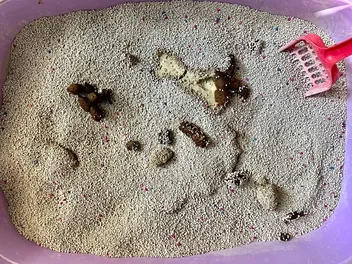
Soft or watery diarrhea is one of the most common signs of a Giardia infection, especially diarrhea with a strong, foul odor. Diarrhea caused by giardiasis is typically severe and comes on suddenly, without warning, and can have a green tint and/or in some cases, blood and/or mucus. Chronic infections cause intermittent diarrhea.
Other signs include being more gassy than usual, a decrease in or loss of appetite, weight loss, vomiting, fatty feces, excessive grooming around the perineum, and lower activity levels. You might also spot your cat going to the bathroom more than they normally would.
If signs of a Giardia infection are displayed, they could last for a number of weeks, though in some cases, there are no signs at all. You’re more likely to notice signs of Giardia in younger cats than in older cats.

What Are the Causes of Giardia?
Giardiasis occurs when a cat ingests Giardia. The Giardia is first consumed in its cystic form—the form found in feces, soil, or contaminated water. Ingesting soil during grooming, or consuming food contaminated with Giardia is another possibility, though this typically only happens if a cat spends time outdoors. Once the Giardia cyst has been eaten, two trophozoites are released in the gut and start to feed and reproduce by splitting in two in a process called binary fission. After between 5 and 16 days, the cat will be shedding Giardia cysts in feces, and the cycle continues.
Infection in other animals is possible straight away after the cat has passed infected feces. Giardiasis is more common in immunocompromised cats suffering from other infections, in kittens, and in cats that live in densely populated situations. This could be an animal shelter, a pet boarding facility, or almost anywhere a cat is surrounded by many other cats.
Fortunately, giardiasis can be treated with medication, and the outlook is often positive if a cat has undergone treatment. If a cat does not receive appropriate treatment, they could die from the dehydration that giardiasis causes. This is more likely in kittens. Furthermore, treatment is crucial for preventing your cat from suffering the pain that giardiasis can cause.

How Do I Care for a Cat With Giardia?
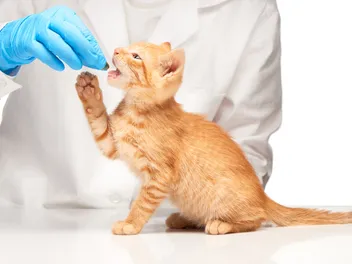
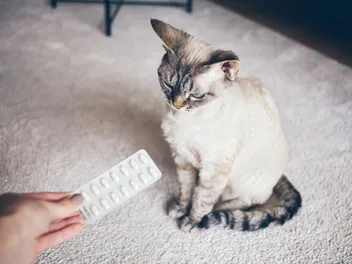
If you suspect your cat has a Giardia infection, the first thing you need to do is contact your vet. Giardiasis is commonly treated with metronidazole and fenbendazole, which are antibiotics, though your vet may prescribe other medications if necessary. You’ll then need to carefully follow your vet’s instructions for administering these medications while your cat recovers at home. Your cat will also need to be bathed to remove any contaminants that may have stuck to their fur, as will any other pets in your household.
The course of treatment typically lasts up to 1 week, and the medications are notoriously unpleasant to taste, so you may find it challenging to get your cat to take them. Metronidazole, for example, can be compounded into special formulas that make it taste more appealing to cats—ask your vet for more information on these.
Make sure your cat gets the entire course of treatment as prescribed by your vet, even if they start to feel better. When they have been fully treated, they will need to be tested again to make sure the Giardia infection has gone.

How to Eliminate Giardia From the Home
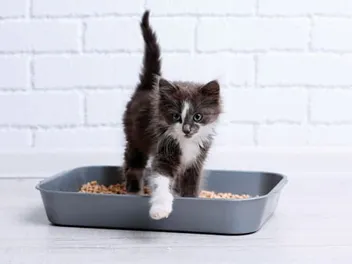
While your cat recovers at home, keep them comfortable and in a calm, stress-free environment indoors. Meanwhile, you’ll need to disinfect anywhere your cat has access to in your home to help prevent reinfection. This includes removing any feces from your yard and/or litter boxes, thoroughly cleaning litter boxes and your cat’s sleeping area, laundering clothes, and washing objects like food bowls your cat has contact with.
Common products used to eliminate Giardia include quaternary ammonia and bleach diluted with water. Steam cleaning after removing fecal residue is the best course of action for soft surfaces. For outdoor contaminants like soil or standing water, these products simply won’t work. If possible, outdoor contaminants will need to be removed. If not, you’ll need to find a way to make sure your cat avoids them.
Frequently Asked Questions (FAQ)
Can My Cat Pass a Giardia Infection to Me?
Yes, cats can pass giardiasis to humans. To reduce the risk, in addition to treating your cat as soon as possible, it’s wise to disinfect your home and keep up with personal hygiene (e.g., regular hand washing) if your cat has been diagnosed with giardiasis.

Can Giardia Kill a Cat?
While Giardia itself typically doesn’t cause death, severe digestive signs from the infection can lead to dehydration and other complications, which could become life-threatening if left untreated. The risk is higher in kittens and weakened cats.
Can Cats Get Giardia Again?
Yes, reinfection with Giardia is possible and actually quite common, because cats don’t develop immunity to the parasite after an infection. This is why disinfecting your environment is so crucial to stop the cycle from continuing.
Can Giardiasis Go Away on Its Own?
Giardiasis in cats might seem to improve on its own, especially since some cats don’t show any signs of the disease. However, even asymptomatic cats can carry and potentially spread the parasite, meaning that the infection may still be present without visible signs. The only way to confirm whether a cat has cleared the infection is through a fecal test. Given the zoonotic risk of Giardia, meaning it can potentially infect humans, as well as the risk of reinfection and transmission to other cats, it’s recommended that all cats, whether symptomatic or asymptomatic, receive medical treatment.

When Will My Cat Feel Better?
With treatment, most cats stop showing signs of a Giardia infection within 5 to 7 days.
Conclusion
To recap, giardiasis is a contagious gut infection caused by Giardia duodenalis, an infection that humans can also contract. Medical treatment and environmental management and maintenance are the most important factors in eliminating a Giardia infection from both your cat and your home.
We hope that we’ve been able to clear up some of your concerns about Giardia and the infection it causes. If you still have questions or concerns, please contact your vet.
Related Reads:
Sources
Featured Image Credit: Vladimir Gudvin, Shutterstock
Expert cat care, straight to your inbox
News, insights, and useful advice, delivered to you.

No spam — unsubscribe anytime.
By signing up, you agree to our Terms & Conditions and Privacy & Cookies Policy.
How useful was this post?
Click a star to rate. You can leave written feedback afterwards. (We read all feedback.)
Kit Copson is a freelance writer and lifelong animal lover with a strong interest in animal welfare. She has parented various furry beings over the years and is currently a proud cat mom of two—one very chilled (unless hungry) Siamese and a skittish but adorable Domestic Shorthair—and dog mom of one—an adopted Bichon Poodle cross. When not writing about or spending time with animals, Kit can be found doodling in her sketchpad, reading, or more often than not, drinking tea.