My Cat Has Fleas! How Do I Clean My House? Vet-Approved Advice & Best Practices


In this article
No matter how much you may try to prevent it, sometimes cats get fleas. This can even occur if your cat doesn’t go outside. Fleas can get in through open windows, so if your cat likes to lounge in the window and enjoy the sun, fleas have a prime place to settle once they make their way inside.
If you notice that your cat has fleas, the good news is that you can fix the problem! In this article, we go over what fleas are, how to get them off your cat, and how to clean your house afterward. Let’s get started.

What Is a Flea?
A flea is a small, wingless, bloodsucking insect. Fleas are parasites that can spread disease and cause a great deal of discomfort and pain to their hosts. They grow up to ⅛ of an inch (1–3 mm) long and have rounded reddish-brown bodies.
Will Fleas Bite People?
Yes, they will! Fleas will bite anything that they can find that will serve as a host for them. This means anything with blood. Animals, adults, kids, and babies are all at risk of getting bitten by fleas.
Fleas prefer to live and feed on animals, as they have fur that gives fleas great places to hide and reproduce. But fleas on the animal lay eggs that fall off your pet and then develop into larvae, pupa, and eventually adults in our furniture and other places in the home. In their search for a food source, they’ll bite and suck the blood of people if they come into contact with them.

How Will I Know If My Cat Has Fleas?
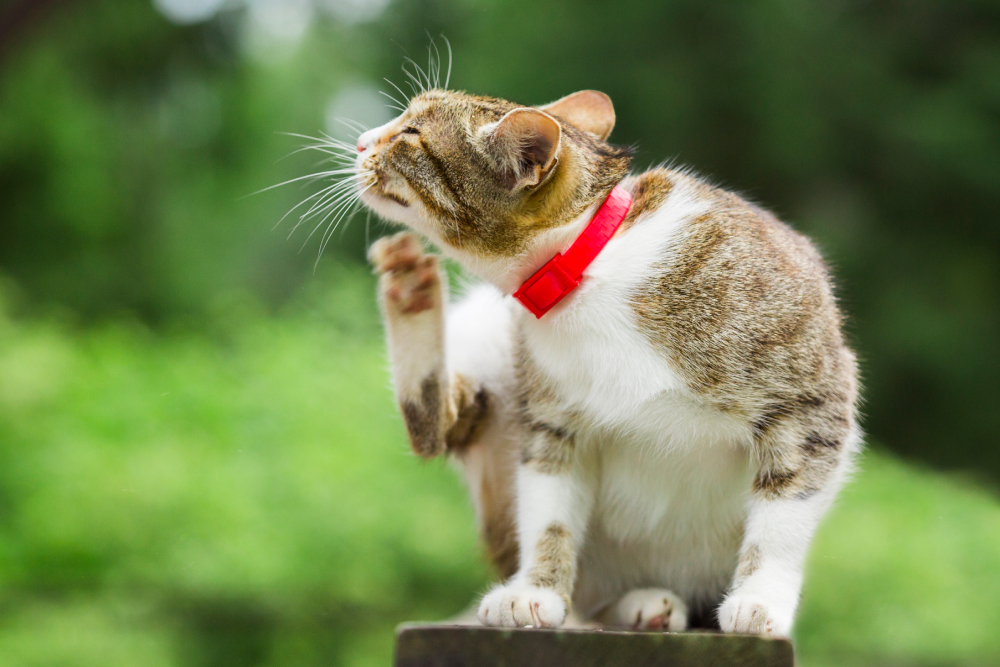
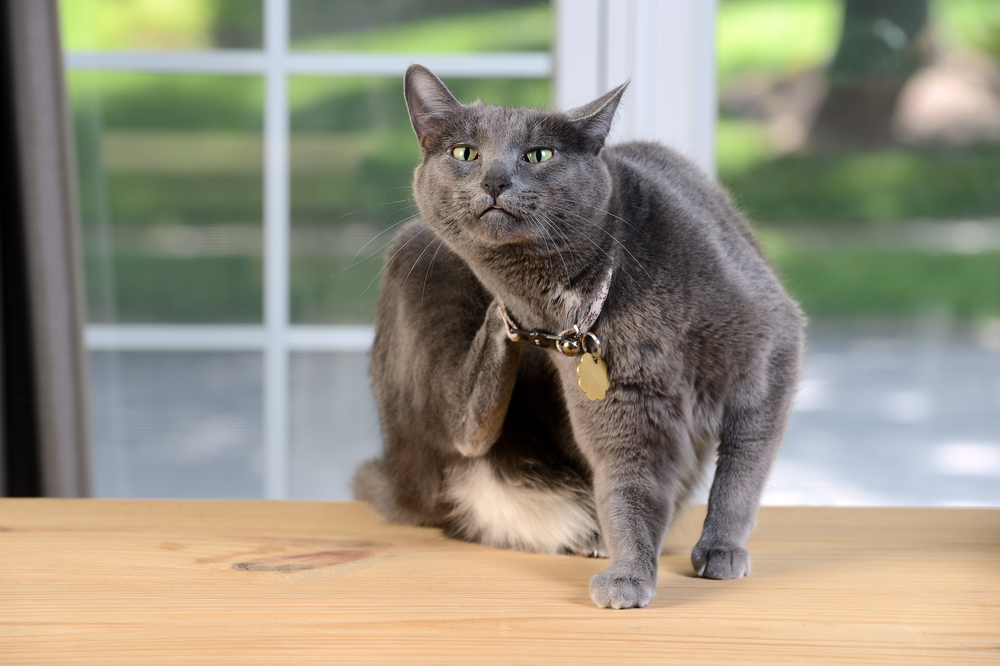
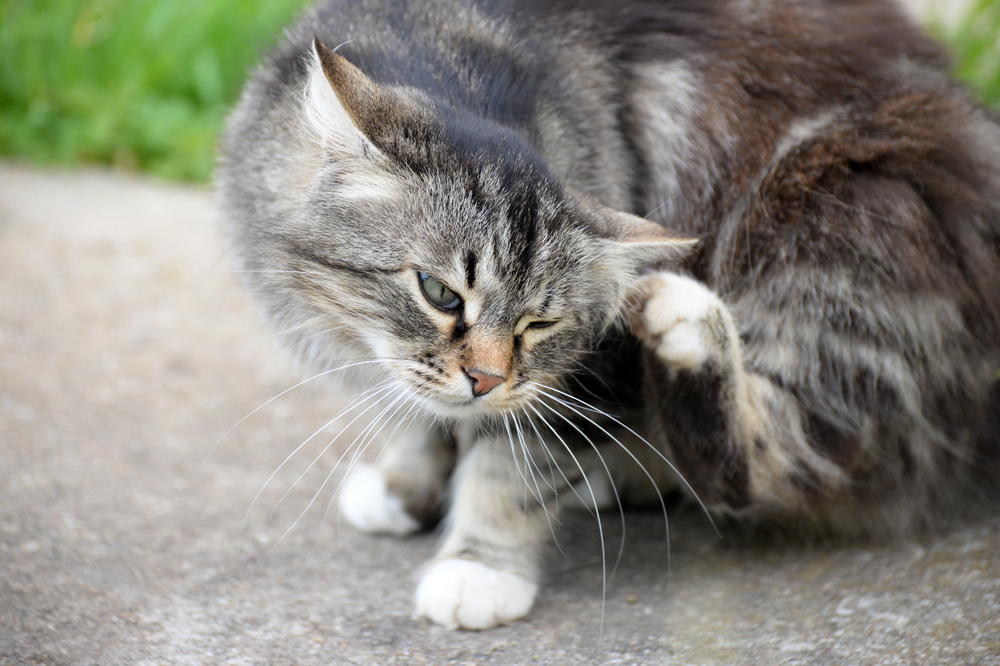
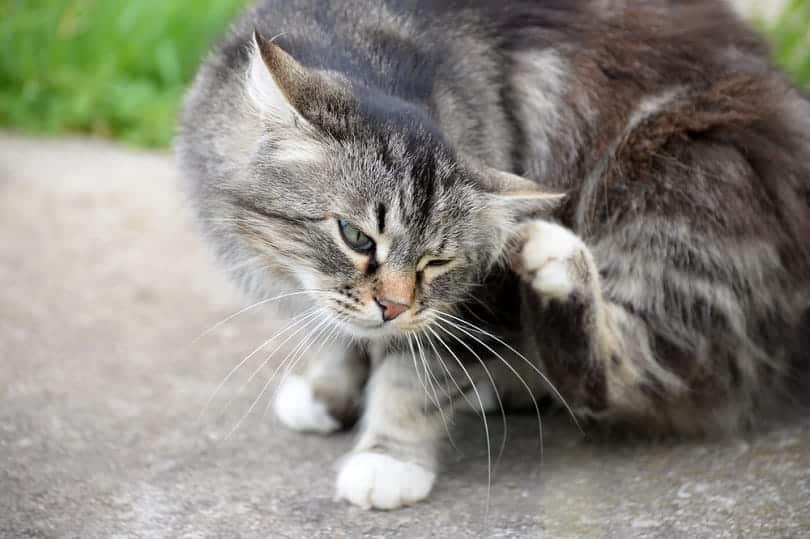
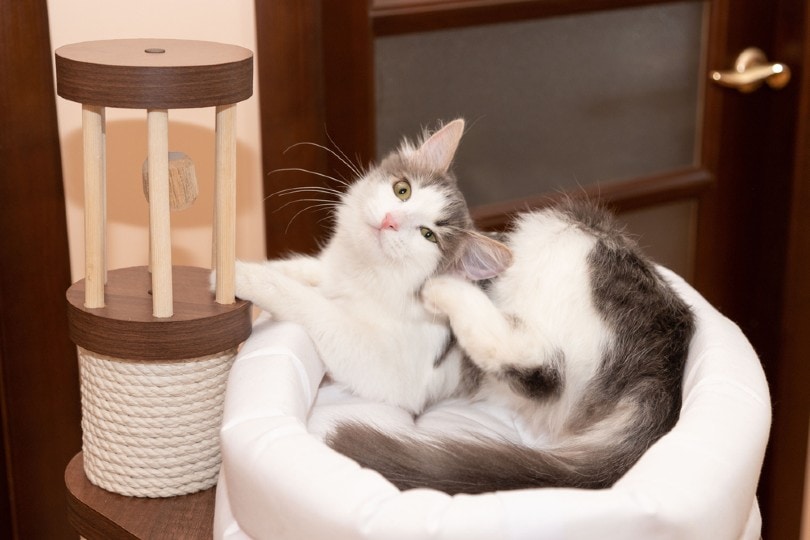
Cats with fleas tend to show that they have an infestation by excessively scratching and chewing their skin. If you notice that your cat cannot seem to get comfortable, check them for fleas. This is easy to do.
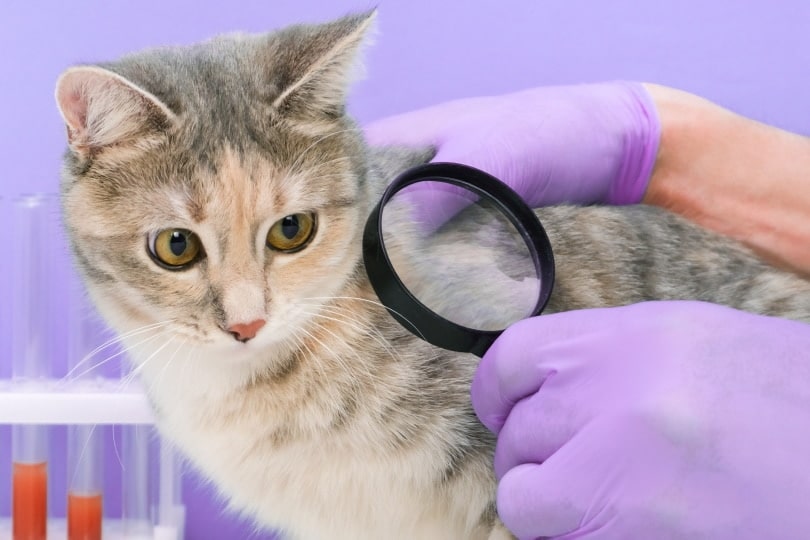
Start by separating their hair until you can see down to their skin. Watch for insects running and crawling. Fleas move fast, so you’ll see them darting around if you expose them. Separate the hair in other spots on your cat’s body. Fleas like to hide around the ears and neck, where the legs meet the body, and where the hair is the thickest.
If you see these insects moving, your cat has fleas. If you notice flea dirt, your cat likely has fleas. Flea dirt is flea poop. It looks like reddish-brown or black tiny flecks of dirt. If you’re still unsure, comb your cat with a flea comb. It has teeth designed to pull fleas and eggs out of the hair.
My Cat Has Fleas. Now What?
If you spot fleas on your cat, you may be immediately tempted to start thoroughly cleaning the house. This needs to be done, but it won’t be effective until you treat your cat for fleas first.
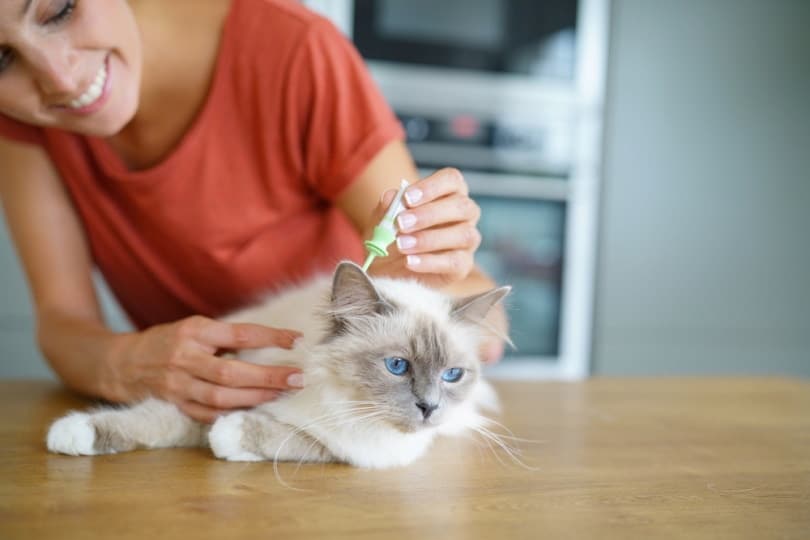
You can give your cat a bath using flea shampoo to instantly remove as many fleas as possible, although some may remain. Flea shampoos are medicated to kill adult fleas and eggs on contact. The bath may need to be repeated depending on how many fleas you still see.
We recommend that you contact your vet for a flea-control treatment.
Oral medications work quickly to kill adult fleas, but without the effort to remove eggs and other forms from the environment, the effects don’t last. Pour-on flea control medication is applied once monthly and works to control fleas until the next application. Be sure to consult your vet first (you’ll likely need a prescription, anyway), and only use a product that is made for your cat’s age and weight. If you have more than one pet, all of your pets will need to be treated for fleas.
A word of caution: Only use cat flea medication on your feline, as certain over-the-counter dog flea treatments have chemicals that are toxic to cats. Even applying such medication to your dog and allowing them to have close contact can put your cat at risk, so it's best to ask the vet for something safe and effective for both dogs and cats.
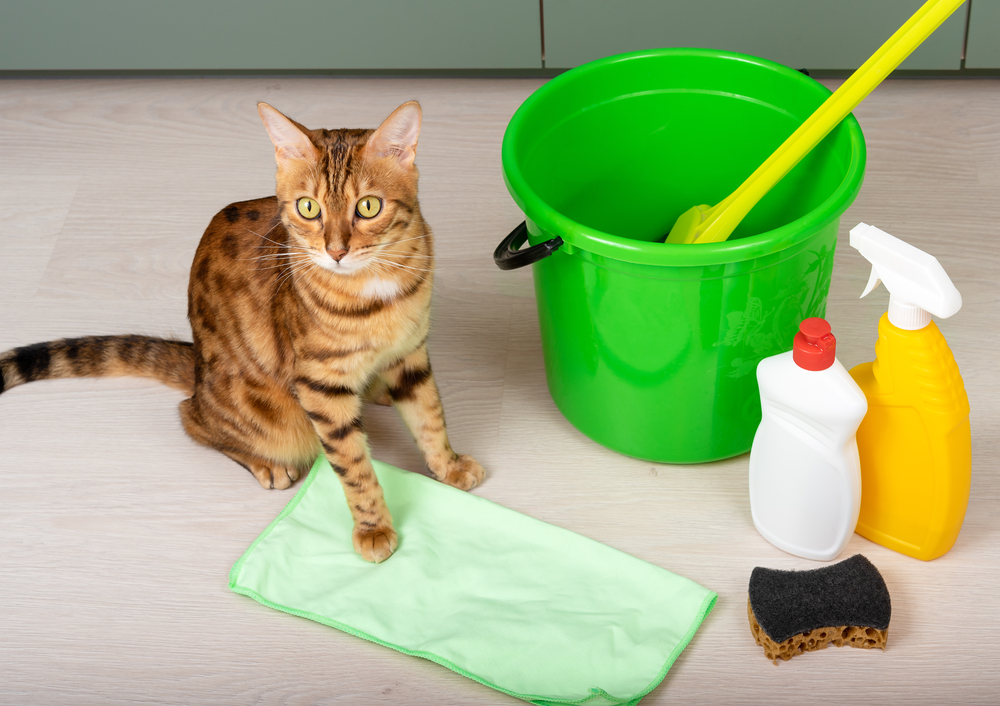
How to Clean Your House
If you spot the flea infestation and get to work quickly with flea treatment for your cat (and other pets) and cleaning the house, you can get the problem under control in a short time. It can take weeks for all the fleas around the home to die, though. Treating your cat with something long-lasting is important because if the fleas try to use your cat as a host again, the medication will kill them before they start reproducing again.
1. Strip the Bedding
Remove all bedding and furniture covers that can be machine-washed. This includes your cat’s stuff and yours. If you have curtains that can be washed, throw those in too. Wash everything in hot water with detergent, and dry it on a high-temperature setting.

2. Vacuum
While you have the beds and furniture stripped, use a powerful vacuum on the floors and furniture, between couch cushions, under any furniture that you can reach, and on every mattress.
It’s important to use a vacuum bag that can be disposed of outdoors. If your vacuum has a canister that must be emptied, do this outdoors without coming into contact with the contents. Then, wash the inside of the canister with hot, soapy water.
3. Use Steam
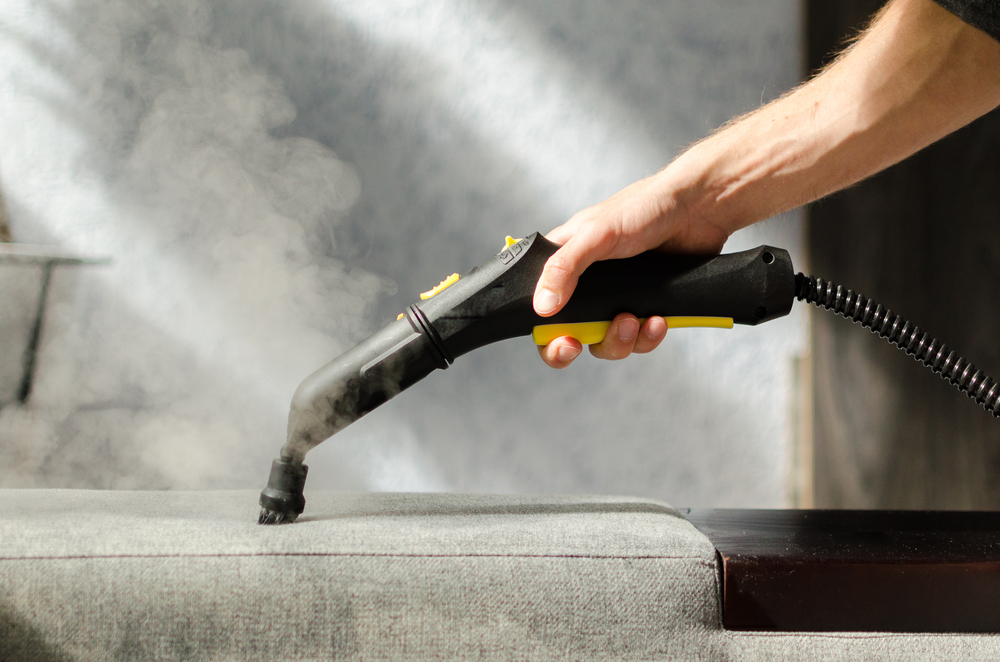
Once everything is vacuumed thoroughly, use a steam cleaner for carpets. If your cat has a bed that cannot be machine washed, steam clean that too. Carefully steam clean any areas that your cat spends a great deal of time in, like cat trees or hammocks.

4. Use Aerosol Spray
This step is optional. Most flea infestations can be eradicated by diligently accomplishing the previous steps. However, aerosol insecticides can help you reach areas that you may not have been able to get to with a vacuum or steam cleaner.
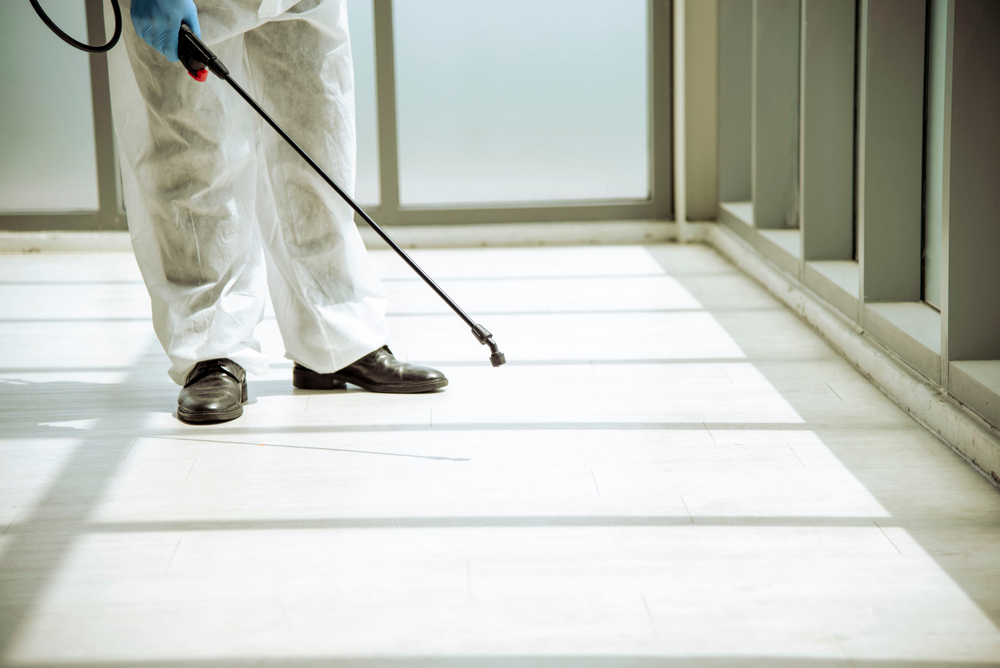
While this step is usually not necessary even if you missed a few spots, you may choose to do it just to be safe. If so, use caution. Insecticides can be toxic to humans and pets. Once you use one, no pets or people should come into contact with the area until it’s completely dry. Be sure to wear gloves to keep the product off of your skin.
Choose an insecticide that is specific for fleas. It should contain an insect growth regulator that is safe to use around cats, such as lufenuron. This kills all stages of the flea’s life cycle. Avoid spraying this product on animals or people.
Repeated Cleanings
Since flea eggs can be missed during cleaning and then hatch around the house, this cleaning process should happen at least twice a week until you’re sure the flea problem is gone. The entire process should be done at once when you notice fleas. Afterward, if you don’t want to do it all again, choose one day each week to do one step. Vacuum one day, wash the bedding and furniture covers on another day, and so on until the process is complete.
Once you’re sure the fleas are gone and you don’t see any more of them on your cat, your job is done.

Why Is It Important to Remove Fleas?
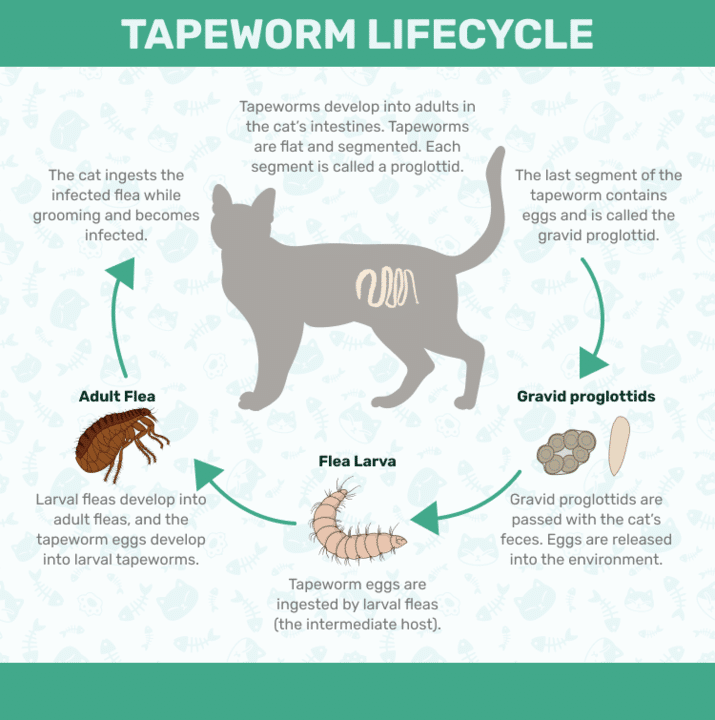
Fleas can make life miserable for your cat. They can also spread diseases and parasites. If left untreated, flea infestations could lead to tapeworms. Some cats can also develop an allergy to flea saliva, which causes them inflammation, extreme discomfort, and itchiness. Constant scratching and biting of their skin can cause skin infections and wounds.
Additionally, fleas can bite humans, causing itchiness and pain.
If Your Cat Goes Outside
If your cat ventures outdoors, there’s no guarantee that they won’t bring home fleas again unless they are treated monthly with flea prevention. Even flea collars aren’t guaranteed to work completely. They only kill fleas that get close to the collar, so the insects could still live in other areas of your cat’s body.
Fleas like to live in places that are humid, shady, and warm. They like cat hair for the same reasons. If your cat likes to hang out in the backyard, consider doing the following to help keep it flea-free for them:
- Mow your lawn regularly to remove tall grass for fleas to hide in.
- Remove any garden debris and dead leaves.
- Spread cedar chips wherever you can to repel fleas.
- Remove any standing water.
Final Thoughts
A flea infestation on your cat can be frustrating and overwhelming, but you can stop the problem in its tracks and eliminate it. Killing as many fleas as you can by treating your cat with flea medication and cleaning your house will stop the issue from spreading out of control.
The cleaning may need to be done several times before the infestation is gone. Treating your cat for fleas while also cleaning your home is important. Doing one without the other could be pointless. The fleas will overwhelm you if you don’t cut them off from both sources.
By using these methods, you can get and keep your home flea-free for you and your cat.
See Also:
Featured Image Credit: lev.studio, Shutterstock

Expert cat care, straight to your inbox
Vet-reviewed advice, behavior tips, and the best of Catster. Free, and you can unsubscribe anytime.
By signing up, you agree to our Terms & Conditions and Privacy & Cookies Policy.
Christian started writing for a local newspaper as a teenager, and he's been involved in the publishing industry for most of his adult life. Combining his love of writing with a passion for animals, he is currently the Director of Editorial at Pangolia and the Editor-in-Chief at Catster.
Christian lives in the Philippines with his wife, son, and four rescue cats: Trixie, Chloe, Sparky, and Chopper.
Join the conversation
Ask a question, share your story, or send private feedback.