Get

In Your Inbox

Catster is reader-supported. When you buy via links on our site, we may earn an affiliate commission at no cost to you. Learn more.

How Much Do Male Cats Purr? Facts & FAQ

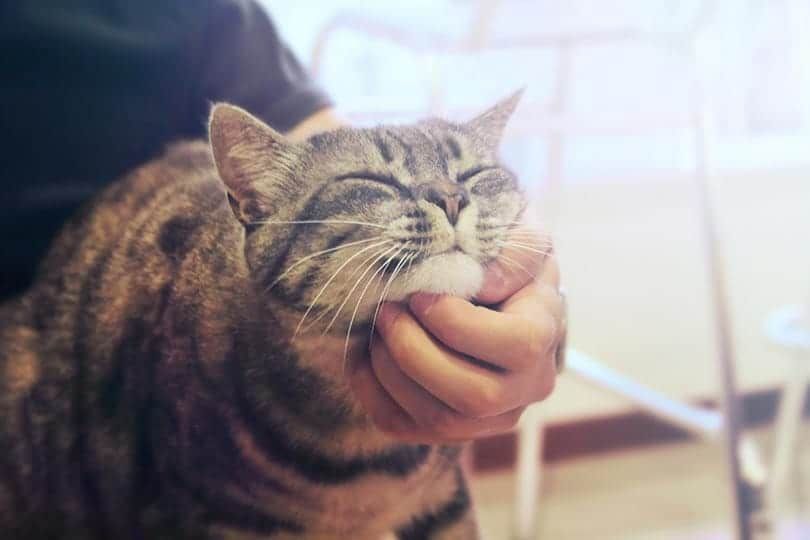
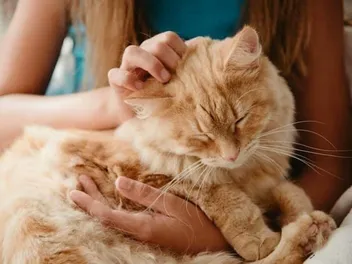
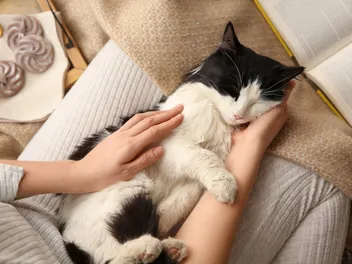
adorable cat get pampered by owner

A cat’s purr is an incredibly comforting sound, to both us and them, but how much a cat purrs depends on their personality. Male or female, there’s no quota for how much a cat should or should not purr—some cats barely purr and others are like little engines! In general, males purr the same amount as females, though there are cases where females may purr a bit more.

Here, we discuss how and why cats purr and why they may be purring more or less than usual.

divider 3 paws

How Do Cats Purr?

Although the exact mechanics of how a cat purrs aren’t certain, scientists have found that the most likely explanation is that the muscles in a cat’s larynx are responsible for producing the purring sound1.

The movement of these muscles causes the glottis to dilate and tighten, which in turn, causes air to vibrate as the cat inhales and exhales. This is what produces the purr. The purring frequency is between 25 and 150 Hertz.

cat resting with owner on sofa at home
Image Credit: U__Photo, Shuterstock

Why Do Cats Purr?

Cats purr for a wide range of reasons. Sex does not affect how much a cat purrs, though there are some instances when female cats may purr more. If a female cat goes into heat, she may vocalize and purr a lot more than usual.

When a mother cat gives birth, she may use purring as a way to bond with her kittens. Likewise, kittens purr as a way to communicate with their mother—some even start purring within a few days of being born. Female cats also purr during labor as a way of soothing themselves.

Although it’s commonly believed that cats only purr when they’re happy or enjoying a good scratch behind the ears, it’s actually also a soothing mechanism for when they’re feeling stressed, afraid, or in pain. According to investigations, it’s very likely that purring promotes healing and supports bone density, which is why cats may purr when they’re feeling unwell.

Of course, cats also purr as a way of expressing contentment. This is why you’ll often hear your cat purring when you stroke them or when they’re resting after a long, hard day of being adored. They may also do it as a way of communicating with you, like when they’re ready for dinner and want to make sure you know it.

cat sleeping on owners lap
Image Credit: Karpova, Shutterstock

How Much Purring Is Normal?

Every cat is unique and will have different purring habits regardless of sex—some cats purr a lot and others barely or not at all. Some purr so quietly that it’s hard to hear them, and some will use alternative communication methods instead of purring. If your cat has never been big on purring, it’s likely just their character.

Sometimes, though, cats that used to purr stop doing so, which may be the result of an illness or injury. While a cat stopping purring might be nothing to worry about, it’s best to get them seen by a vet to make sure.

If you need to speak with a vet but can't get to one, head over to PangoVet. It's an online service where you can talk to a vet online and get the advice you need for your pet — all at an affordable price!

PangoVet_Mention-in-Content for PangoVet2 save money

Likewise, as discussed previously, cats sometimes purr more than usual—sometimes when they’re stressed out or in pain. If your formerly moderate or infrequent purrer suddenly starts purring an awful lot, you might want to take them to a vet to make sure they’re not in pain or suffering from anxiety.

On a final note, here among the Catster team, one of our cats rarely used to purr, and around 2 years ago, she started purring! This began when we adopted another cat, so it’s possible that she started purring more as a means of communicating with the new cat. She’s very happy and healthy, so changes to a cat’s purring frequency don’t necessarily mean something’s wrong.

divider 3 paws

Final Thoughts

In short, how much a cat purrs isn’t affected by whether they’re male or female—it depends more on their personality. Cats communicate in a variety of ways aside from purring, including using body language, meowing, touching you with their paws, or rubbing against you.

It’s not unusual for some cats to rarely purr but use other means of communicating with you. On the flip side, some cats seem to never stop purring! If you’re concerned about how much your cat is purring or their lack of purring, it might be worth seeing a vet for peace of mind.


Featured Image Credit: Fabrizio Misson, Shutterstock

Want content like this delivered to you?

Sign Up For Our Newsletter

News, insights, expert advice, and everything cat

* By submitting, you agree to our Terms & Conditions and Privacy & Cookies Policy.


How useful was this post?

Click on a star to rate (you can leave written feedback after clicking submit)

Help us improve Catster for pet parents!

Your feedback really matters.

What did you like about this post? Also how can we improve it?

Join the conversation

Leave a Reply

You’re very welcome to leave a comment or question. Please know that all comments must meet our community guidelines, and your email address will NOT be published. Let’s have a positive and constructive conversation.


Talk With A Vet Online

Peace of mind,
anywhere, anytime

Affordable vet advice

Do Cats Like To Play Hide And Seek? 9 Vet-Verified Tips On Playing With Your Cat

Cats are playful animals, especially kittens, and enjoy playing different games that mimic hunting behavior. In fact, many owners notice that their cats...

We Talk to Mari Lowery About Her Marvelously Creepy Cat Art

The other day, I came across a small image of some cats looking like they were plucked from a Victorian-era horror story. Reading...

9 Best Diabetic Cat Foods in 2026: Reviews & Top Picks

A diabetes diagnosis can seem like a life sentence for your cat. However, the disorder can often be treated using a mixture of...

Here’s Your New Feline Comic Reporting Service — It’s Called “Breaking Cat News”

Do you ever find yourself wondering why there is not a dedicated cat-centric news outlet? Ponder no more, as Breaking Cat News is...

More related

9 Types of Somali Cats: Colors & Patterns (With Pictures & Vet Verified Facts)

The Somali cat is an absolutely gorgeous feline with a bushy tail, expressive eyes, and tall, pointed ears. In fact, they’re often compared...

“Kedi” Is a Gorgeously Vexing View of Istanbul’s Street Cats

The film, Kedi introduces us to a big family with many pets. The family, in this case, is the human population of Istanbul,...

How to Take Care of Your Cat’s Teeth: 8 Vet-Verified Tips

Dental problems are pretty common in cats. When plaque sits on their teeth, it hardens and develops into tartar. Tartar around the gum...

We Interview Cat-Centric Tattoo Artist Kapten Hanna

There are few things that bring me more joy than cats, tattoos, and the people who love them. I talked with legendary tattoo...

Keep reading

Do Cats Shed More in Summer? Vet-Reviewed Facts & Maintaining Tips

It’s no secret that our feline friends shed. No matter if you have a short-haired or long-haired variation, they require frequent brushing and maintenance to keep their shedding at manageable levels, and even then, they’ll still shed! Cats are avid...

Adult-ragdoll-cat-lying-relaxed-in-the-garden

How Long Can Cats Go Without Food? Vet-Verified Dangers & Tips

Cats are often hungry little monsters devouring their food rapidly. Conversely, they may be picky eaters that refuse to eat anything but their favorites! In either case, if your cat stops eating, this is a cause for concern. Cats are...

well-fed-cat-looking-for-food-and-not-eat

When to Switch From Kitten Food to Cat Food? Vet-Reviewed Facts & FAQ

Cats, like people, have different nutritional and dietary requirements at different stages of life. Kittens have seemingly boundless energy, and they need to consume the nutrients to match this. When they cross into adulthood, they will be burning off a...

little kitten sitting by a bowl of milk

Does Vinegar Stop Cats From Pooping Where They Shouldn’t? Vet-Verified Tips & Reasons for This Behavior

Having to deal with a cat that has a bad habit of pooping somewhere they shouldn’t can be frustrating. Fortunately, vinegar could help. Cats generally dislike the smell of vinegar, which means it can act as a natural deterrent and...

a jar of vinegar

Why Does My Cat Sleep Next to Me? 5 Vet-Reviewed Reasons for This Behavior

Cats are interesting animals. They are quite independent, yet they insist on regular attention from their human family members. They sleep frequently, but they can be playful while they are awake. They can be loud and annoying sometimes, while they...

woman-sleeping-with-her-cat

Why Did My Cat Have Only One Kitten? 3 Possible Reasons

If your cat mistakenly or intentionally became pregnant, you’re probably excited about the birth. But if the big day comes and you keep checking the mother to see how many little kitties you have to love on, you might be...

mother cat giving birth to her child

Is Lethargy Normal After Surgery In Cats? Vet Approved Care & Health Facts

Whether it’s a routine operation or major surgery, cats need time to recover after any surgical procedure. They need extra care and attention, although some cats will prefer to be left alone rather than fussed over. Your vet should give...

vet putting on surgical suit to a cat after surgery

Can Cats Eat Spiders? Precautions & Facts

Whether you’re a seasoned kitty owner or brand new to the feline community, chances are you’ll notice your cat taking an interest in spiders. Most likely, your cat will bat them around and play with them, then before you know...

Can Cats Eat Spiders

Love Cats? So Do We! Join the Catster Community

Stay informed with expert pet care insights delivered straight to your inbox! Discover professional guidance on animal behavior, feeding tips, trusted product picks, and much more.


Sign up for the Catster Email Newsletter

Stay informed with expert pet care insights delivered straight to your inbox! Discover professional guidance on animal behavior, feeding tips, trusted product picks, and much more.