Oral Tumors in Cats: Our Vet Explains the Causes, Signs & Care

In this article
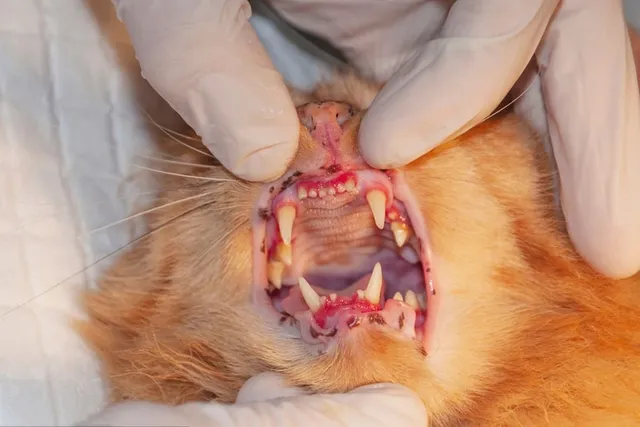
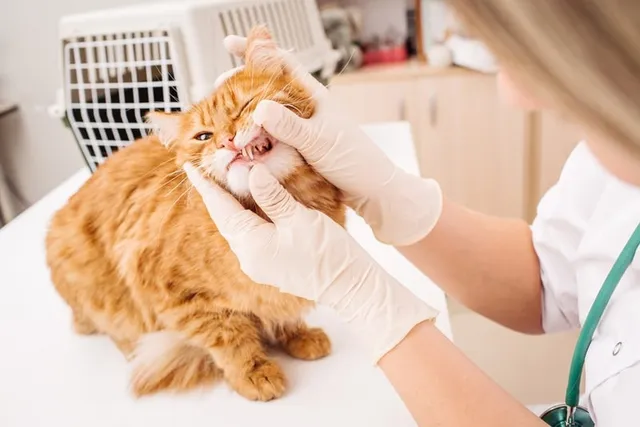
We don’t spend a lot of time looking inside our cat’s mouths, and sometimes, getting too close can mean getting bitten! That is why abnormal growths inside their mouths often go unnoticed until they are causing problems. If you’re lucky, your vet may find a growth while it’s still small during routine dental cleanings.
Regardless of how it was found, if your cat has an oral tumor, you’ll want all the information. Is the growth benign or malignant? What treatment is available? How can you keep your cat as comfortable as possible? We will discuss all this and more, so keep reading.

What Are Oral Tumors?
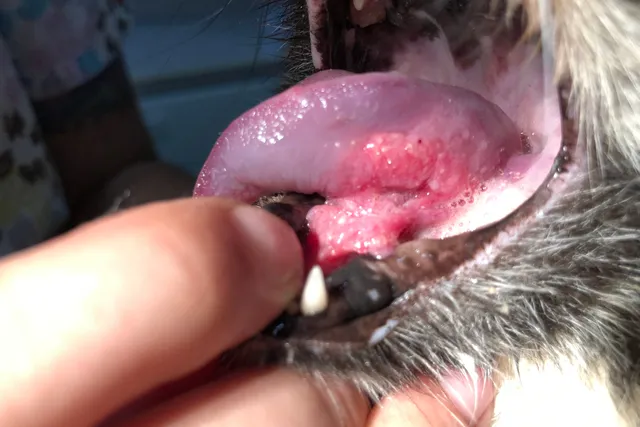
Oral tumors are abnormal growths inside the oral cavity. They can arise from the gums, tongue, tonsils, or other structures inside the mouth. Tumors arise from a cat’s own cells, which multiply uncontrollably due to genetic mutations.
If the tumor has the potential to spread to other areas of the body, it is considered malignant; if not, it’s considered benign. Some tumors are locally invasive, meaning they infiltrate other surrounding tissue like bone. Locally invasive tumors are more commonly malignant.
Around 90% of true oral tumors in cats will be malignant, and they are the fourth most common type of cancer in cats. Environmental carcinogens such as tobacco smoke may contribute to the development of oral tumors.
Exposure to canned food and flea collars are also possible risk factors for feline oral tumors. However, genetics and random chance play a role in cancer development.

What Are the Signs of Oral Tumors?
If your cat has an oral tumor, other than seeing a mass, you might notice signs of issues around their mouth. Oral tumors can be painful, limit normal movements, become infected, or die off, leading to signs like:
- Bad breath
- Drooling
- Gagging
- Difficulty chewing and swallowing
- Preference for soft food
- Blood in saliva
- Loose teeth
- Reduced appetite
- Pawing at the mouth
- Reactivity to touch
- Noisy breathing
- Facial swelling
- Lethargy
- Weight loss
What Are the Causes of Oral Tumors
Oral tumors are caused by benign or malignant growths of a cat’s own cells. Each growth is named for the tissue it arises from and how aggressive it is. A diagnosis of the growth is obtained through a biopsy.
Benign Growths
As previously mentioned, benign oral tumors are uncommon in cats, making up only around 10% of cases. However, the most commonly noted benign growths are fibromas. Fibromas arise from the periodontal ligament, which surrounds the tooth root and holds it in place.
These growths can become large with time but are not invasive. Eosinophilic Granuloma Complex (EGC) isn’t a true growth but rather an inflammatory reaction that can lead to masses in the mouth. It is thought to be a reaction to allergens in food or on fleas and can easily be confused with an oral tumor.

Malignant Growths
These growths can metastasize, and successful surgery alone may or may not cure your cat, depending on whether the tumor has already spread. If your cat has been diagnosed with any of the following tumors, you will probably be offered a consultation with a veterinary oncologist who specializes in cancer treatment for animals.
- Squamous Cell Carcinoma is the most common malignant oral tumor in cats. Typically, by the time it is found, squamous cell carcinoma is not amenable to surgery and has spread to the lymph nodes.
- Fibrosarcoma is the second most common malignant oral tumor in cats. They arise from the connective tissue in the oral cavity and are locally invasive.
- Lymphoma is a cancer arising from a type of white blood cell called lymphocytes.
- Osteosarcoma is a bone tumor that can occur in the jaw bones. It can be seen on X-rays since it involves the bone.
- Melanoma is another malignant tumor that is invasive and quickly spreads. It arises from the pigment-producing cells in the epithelium.

Diagnosing Oral Tumors in Your Cat
The diagnosis of an oral tumor starts with a veterinary consult. Your vet can assess whether the tumor looks resectable (meaning it can be removed with surgery) or not, which will guide them as to the type of biopsy they will take for diagnosis.
If the mass is resectable, an excisional biopsy will be performed. The vet will surgically remove the entire mass and send it away for diagnostic testing at a veterinary laboratory. The laboratory will also determine the surgical margins.
When removing a lump, the vets aim to take a portion of healthy tissue surrounding the mass. A clean margin means no cancer cells are at the margin, which is a good sign that the lump was entirely removed.
If the mass is not resectable, you might choose to have an incisional biopsy performed, where the vet removes a small portion of the mass for diagnostic purposes. This is typically done if you want a diagnosis or are interested in a referral for further procedures, such as advanced imaging, possible extensive surgery, chemotherapy, or radiation therapy.

How Do I Care for a Cat With an Oral Tumor?
The first step in caring for your cat is to seek veterinary help. Your veterinarian can perform diagnostics and recommend treatments that can help your cat. The best-case scenario is that the tumor is benign or can be removed through surgery. However, to determine whether or not surgery is possible, advanced imaging, such as CT and MRI, can sometimes be needed. If a tumor involves the bone, for example, a referral to a surgeon who can remove a portion of the jaw could be required. Chemotherapy and radiation therapy could also potentially be treatment options for your cat. If all of this sounds too expensive or impractical, don’t worry. You won’t be forced to agree to a treatment that is not right for you. There are still palliative care options that can improve your cat’s quality of life for a short time. Depending on the severity of your cat’s condition, they could live with a malignant oral tumor for weeks to months.
At-Home Care
At home, there are a few things that might help your cat, whether they are recovering from surgery or receiving palliative care.
You can talk to your veterinarian about which interventions would be right in your situation, but we recommend the following:

Frequently Asked Questions (FAQ)
What Is Palliative Care for Cats With Oral Cancer?
Palliative care aims to maximize your cat’s quality of life as much as possible without curing their disease. There is usually an understanding that your cat will die from the cancer.
Palliative care may be as intensive as surgery, radiation, and chemotherapy or could be as simple as controlling your cat’s pain and providing good nursing care. Medications to reduce nausea or increase appetite might also benefit cats with oral cancer.
Are Cats in Pain With Mouth Cancer?
Invasive mouth cancer is usually painful for cats. Signs of pain to look for in your cat with mouth cancer are a reluctance to eat, pawing at the mouth, reactivity when touched, and changes in behavior. Your vet can prescribe pain relief for your cat, and some cats with mouth cancer take multiple pain relief medications to remain comfortable.

When Should I Euthanize My Cat With Oral Cancer?
You should euthanize your cat when their quality of life declines despite providing all the reasonable treatment that you can. Not everyone is in the same position in terms of time and finances available, so what’s right for you may not be right for someone else.
If your cat won’t eat, is in pain, doesn’t enjoy normal activities, and doesn’t want to interact with you anymore, it’s probably time to make that final decision. If you're unsure, discuss your situation with your vet.

Final Thoughts
True oral tumors in cats are usually bad news. While a lot of what happens is outside of your control, paying attention to your cat’s oral health and getting any lumps in the mouth checked by your vet as soon as possible can improve the outcome for your cat. If your cat has an oral tumor, we wish the best for you both and hope you find some helpful information here.
Sources
Featured Image Credit: Ermolaev Alexander, Shutterstock
Expert cat care, straight to your inbox
News, insights, and useful advice, delivered to you.

No spam — unsubscribe anytime.
By signing up, you agree to our Terms & Conditions and Privacy & Cookies Policy.
How useful was this post?
Click a star to rate. You can leave written feedback afterwards. (We read all feedback.)
Dr. Ashley Darby BVSc (Veterinarian)
Ash has worked in mixed and small animal emergency clinics and general practice ever since 2017 after graduating from Sydney University. She grew up in South Africa and England before moving to Australia, and her passion for animals came from many childhood safaris in the Kruger National Park.
Ash lives with her husband Ben, two energetic Springer Spaniels, and one very tolerant black cat. She also competes in dressage, eventing, and show jumping with her horse, Atlas.