Can Cats Eat Honey? Vet-Reviewed Facts & FAQ

In this article
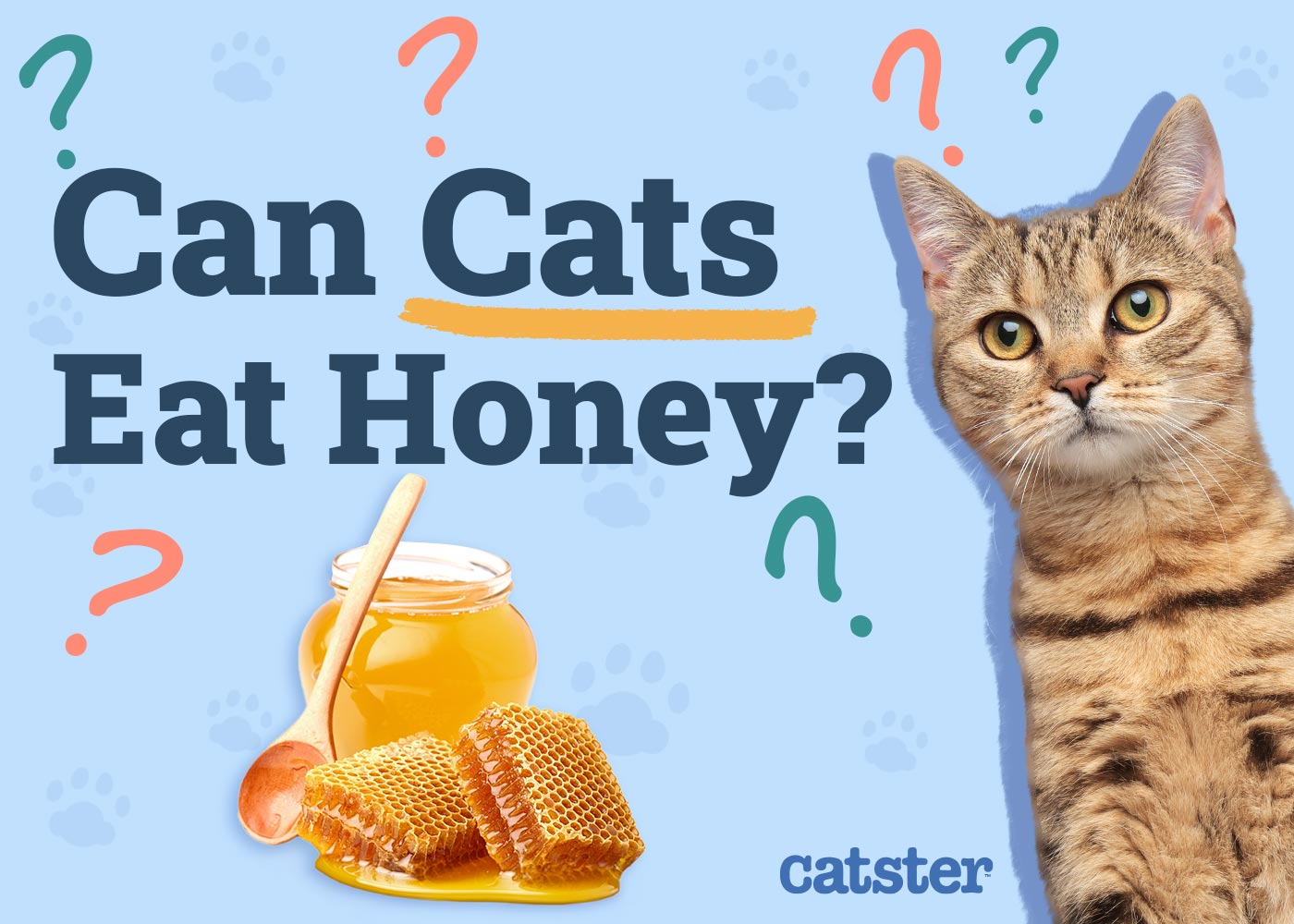
If you love eating honey yourself, you probably know that it has antibacterial properties and is packed full of antioxidants and vitamins. It’s good for us humans, but does that mean it could be good for our cats too? So can cats eat honey? And if so, is it safe to give your cat some as a sweet treat every now and again?
In short, while honey isn’t toxic to cats, it’s not a recommended food either. So a little bit of honey eaten by accident shouldn’t do any harm, but most vets would suggest avoiding purposeful feeding of honey to your cat.
Let’s take a look at why.

What’s Good About Honey?
Honey can be used to help with a range of issues for humans:
- It’s thought that local, unpasteurized honey can soothe allergies
- Honey is rich in antioxidants
- Honey has anti-inflammatory and anti-bacterial properties
It’s also thought that honey may help allergies in cats too, but currently, there isn’t any scientific research to back up this claim.

Cats and Honey
Did you know that cats are “sweet blind?” Thanks to their obligate carnivore digestive systems, cats actually lack the ability to taste sweet flavors. So while you might think they would enjoy a sweet substance like honey as much as we do, the sweet taste of this sticky food is totally lost on them.
Cats are more likely attracted by the fat content of things we consider “treats,” like cream or ice cream.
If you want to treat your cat, you’re far better off selecting a high-protein treat like plain boiled chicken or a commercially available high-quality treat that’s been formulated specifically for cats.


Is Honey Bad For Cats?
Cats can eat a small amount of honey without suffering any adverse effects, but whether or not their digestive system can actually extract any goodness from it is another matter. Cats are carnivores, and their digestive systems are designed to process meat, meat, and more meat.
Of course, they also need some fiber, as well as vitamins and minerals. But they certainly don’t need to eat the varied diet that we, as omnivores, do.
Honey is primarily made up of fructose and glucose, and a cat’s digestive system simply isn’t designed to break down these sugars.
If you’re tempted to give your cat honey to help ease allergies, or because you think they may benefit from its antioxidants, we recommend holding off. Speak to a veterinarian first, and the chances are they will be able to suggest a much more effective and safer alternative.
Never feed a diabetic cat honey. Because it’s basically pure sugar, honey should definitely be off the menu for a diabetic cat.
The same goes for an overweight or obese cat. Obesity is a health threat, and with an estimated 60% of cats in the United States being overweight or obese, it makes sense to reduce the amount of carbohydrates your cat is getting in their diet. Honey is one sugar that doesn’t provide them with any nutritional benefits!
What Might Happen if My Cat Eats Some Honey Accidentally?
Most cats won’t eat honey intentionally, but they may eat some accidentally. A small amount is unlikely to do them any long-term harm, but it could cause minor health complications, including:
- Diarrhea
- Vomiting
- Abdominal pain
If your cat has eaten a little bit of honey, monitor them carefully over the next 24 hours, and call a vet if they exhibit any of the above signs or show any other signs of discomfort.

Should You Give Your Cat Honey Intentionally?
Honestly, it’s probably best to skip this ingredient as a home remedy.
Unprocessed honey is thought to help with certain allergies in humans, but you’d need to seek this out from an independent apiarist. Supermarket honey is almost always pasteurized, so it won’t offer this benefit (which is unproven as it is). It also needs to be local honey; otherwise, the pollen content won’t correspond to your area. None of these potential benefits have been proven to be successfully extrapolated to cats. As we mentioned already, there are other more effective allergy medications that you can speak to your vet about.
Manuka honey from New Zealand is well-known for its incredible anti-bacterial, anti-viral, and antioxidant benefits. Some vets may use it as a wound treatment, but you shouldn’t attempt to replicate this at home without their guidance.
Can Kittens Have Honey?
While adult cats should be able to process a small amount of honey, you should try to make sure your kitten never has the opportunity to eat any honey. Their delicate digestive systems are more prone to picking up botulism from the bacterial Clostridium botulinum spores sometimes found in raw honey.


Wrapping It Up
So when it comes to cats and honey, there are plenty of reasons to avoid giving it to them and no real reason to add this ingredient to their diet.
Honey is packed full of sugar in the form of fructose and glucose, neither of which can be processed by your cat’s specially designed digestive system. Honey can put your cat at risk of becoming obese, suffering from tooth decay, or suffering from complications if they have diabetes.
While a small amount of honey eaten by accident shouldn’t be a serious issue for an adult cat, it can still cause diarrhea and vomiting. If you’re worried that your cat or kitten has eaten honey, speak to your veterinarian if they seem unwell.
If you’re looking to add some antioxidants to your cat’s diet, consider a dietary supplement, some treats, or switching to a cat food containing blueberries.
In the meantime, leave the honey on the table for the human members of your family, and keep it well out the reach of your curious feline friends!
Featured Image Credit: Catster.com

Expert cat care, straight to your inbox
Vet-reviewed advice, behavior tips, and the best of Catster. Free, and you can unsubscribe anytime.
By signing up, you agree to our Terms & Conditions and Privacy & Cookies Policy.
Emma is a freelance writer, specializing in writing about pets, outdoor pursuits, and the environment. Originally from the UK, she has lived in Costa Rica and New Zealand before moving to a smallholding in Spain with her husband, their 4-year-old daughter, and their dogs, cats, horses, and poultry. When she's not writing, Emma can be found taking her dogs for walks in the rolling fields around their home...and usually, at least some of the cats come along, too! Emma is passionate about rescuing animals and providing them with a new life after being abandoned or abused. As well as their own four rescue dogs, she also fosters dogs for re-homing, providing them with love and training while searching for their forever homes.
Join the conversation
Ask a question, share your story, or send private feedback.