My Cat Is Bored but Won’t Play, What’s Wrong? 6 Common Reasons


Most cats play throughout their life, though they are most playful in their kitten years.Under human care, cats don’t need to hunt or do many other things to aid in their survival. Therefore, they often have a lot of pent-up energy. Most cats like to hunt so they may find “hunting” their toys and companions fun. In the wild, this playfulness would likely occur much less often, as cats would be hunting for survival.
However, cats have different preferences, just like us. Some cats might not play all that much, while others may be more playful.
Still, playing is vital for many cats, as it helps them exercise. A cat that doesn’t play may become overweight and obese, leading to the development of many diseases. Therefore, it is important to get your cat to play at least once a day. Some cats need more help accomplishing this than others.
If your cat isn’t playing, there is a chance that they are simply on the lazier end of things. They may not want to play. However, other times, it can be caused by something more sinister.

The 6 Reasons Why Your Cat is Bored But Won't Play
1. Health Issues
Cats are very good at hiding their health problems. In the wild, cats need to hide their weakness from predators or other cats, or they may become easy targets. Therefore, under human care, many cats hide their illnesses out of instinct. You may not notice anything wrong with your cat until its condition progresses.
However, one of the first things you may notice is a decrease in activity. Cats may stop moving as much as they used to simply because they don’t feel good. Therefore, if your cat suddenly stops playing, it may be time to visit the vet.
2. Stress
Cats that are stressed won’t let go and play. Instead, they spend much of their energy worrying and may spend more time hiding. A cat that is anxious isn’t going to think about playing as much as a carefree feline.
Some cats are more prone to stress than others. However, all cats seem to be a bit more prone to stress than most cat owners give them credit for. Sometimes even small changes in their environment can make a cat stressed. Changing your schedule or rearranging the furniture can make a cat anxious.
In many cases, the only thing you can do is wait for your cat to adjust. However, chronically stressed cats may need to visit the vet to help them manage their anxiety.
3. Your Cat Doesn't Have the Right Toys
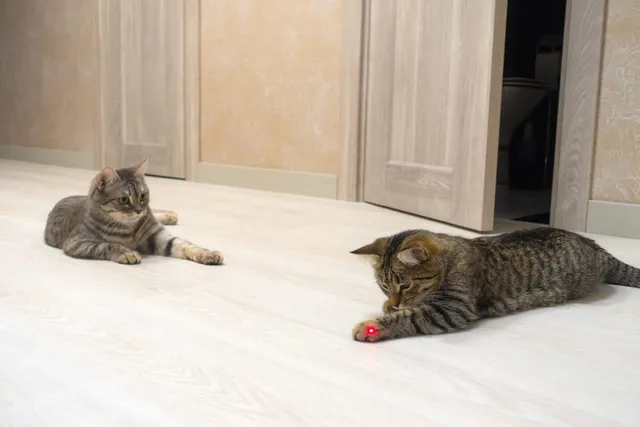
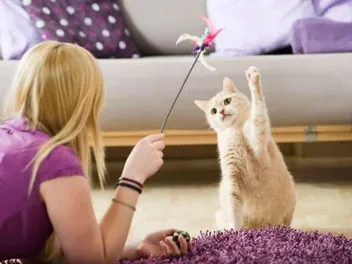
Some cats may develop the urge to play by themselves. These cats get along great with balls and toy mice, as they often swat at them when they’re feeling playful. However, other cats need to be drawn into play. These cats may never swipe at a ball that’s just lying there. Therefore, if your cat doesn’t interact with typical cat toys, you may need a more interactive option.
Interactive toys often move by themselves to some extent. These movements may draw your cat into play in a way that more simple toys just don’t. Puzzle toys with food are another way to encourage play, though these toys often don’t promote as much movement as others.
Plus, some cats will simply prefer certain kinds of toys. Therefore, we recommend choosing various toys to determine what your feline likes. Their preferences may change as they age, too.
Our Favorite Catnip Toy
Great cat toys are crucial to keeping your cat happy and healthy. We love Hepper's Catnip Stick Toy because it's handmade in the USA, available in a cool range of colors, and sturdy enough to withstand your cat's sharp claws. Best of all, you won't find any filler here – just 100% organic catnip!

- No Filler - Like all the best cat toys our is stuffed with 100% organic catnip. Cheap cat toys with filler leave your cat bored and disinterested. Our pets deserve to be excited and engaged.
- Flexible Play - Simple plush shape is great for biting, scratching and pawing. It can start life as a teething toys for kittens then soon your furry friend will be using it as a cat kick stick. Play for any mood
- Durably Designed - Our cat safe toys are hand-stitched with a double-lined exterior construction for hours of playtime, perfect cat kicker toys for cats indoors and even outdoors. Your cat will tire out before the toy does!
At Catster, we’ve admired Hepper for many years and decided to take a controlling ownership interest so that we could benefit from the outstanding designs of this cool cat company!
4. Short Attention Span
Cats have very short attention spans; that’s one reason they are harder to train than dogs. Therefore, you’ll likely need to break their daily play session into many sessions. Getting a cat to play for five minutes should feel like an accomplishment. Don’t expect your cat to play for hours like a dog might.
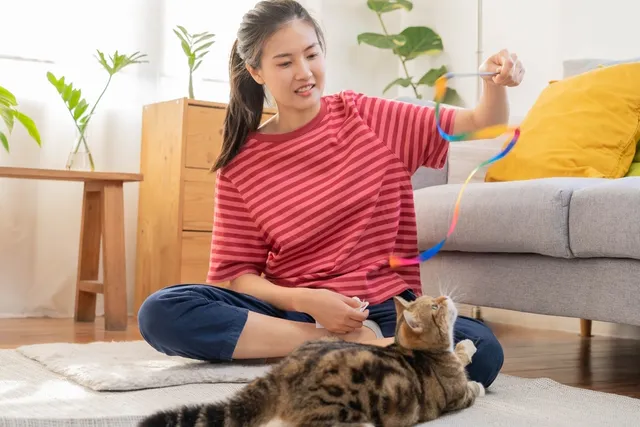
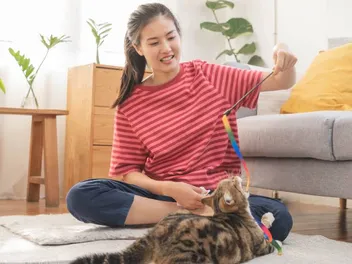
You should aim for about 30 minutes of moderate play each day. However, don’t plan for this all to happen at once. Instead, get a few interactive toys so that your cat will play by themselves. Then, bookend your day with two play sessions. You can use a cat wand or other toy to play with your cat.
Many cats may need to work up to 30 minutes of play a day. You may want to start with only a morning play session. Play until your feline gets bored. Then, add an evening session. Finally, try a few different interactive toys to encourage your cat to play when you aren’t available.
5. Not Enough Stimulation
In the wild, cats typically don’t jump at the first prey item they see. Instead, they have to conserve their energy for the perfect moment to improve their chances of being successful. In our homes, cats often won’t pounce the first time you roll a ball. It takes them a minute to get “in the mood.” Therefore, you may roll the ball a dozen times before your cat moves toward it.
This is completely normal. If you stop after only a couple of rolls, you may never stimulate your cat enough to get them to play. Plan on lots of lead-up before your cat seems interested.

6. They Need Varied Types of Play
When we imagine a cat playing, most people think of cats chasing around toy mice or swatting at a cat wand. However, this is only one type of play. While many cats enjoy this type of play, others may prefer other types. Most cat toys are focused on stimulating the hunting instinct but, you should also consider stimulating other natural feline behaviors to achieve play responses.
Other play responses include:
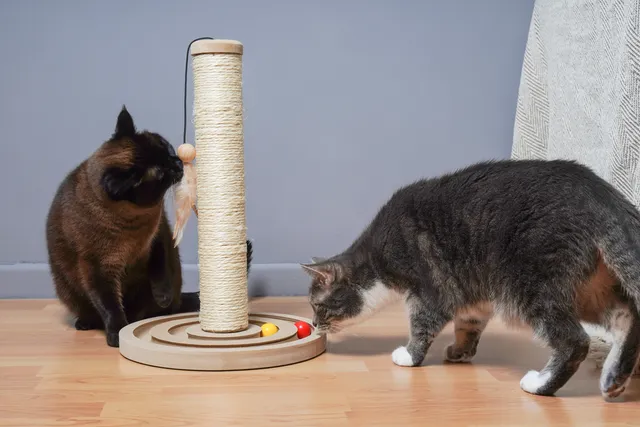
Some cats would rather climb on a cat tree than play with a ball. That is fine! Climbing also provides exercise and stimulates a cat. If your cat falls in this category, consider investing in climbing furniture instead of more cat toys.
Other cats like to hide. You can purchase cat beds with built-in blankets, play tunnels, and cat trees to stimulate this sort of play. Many cats that like to hide will also like to “pounce” on toys from their hiding place, but they may only interact once before running off to hide again.
Perching cats may prefer climbing structures with high points they can jump between. Installing shelving on the wall made for climbing cats may be useful in this situation.
Scratching is a full-body exercise that many felines enjoy, as well. There are many different-shaped scratching posts out there that you can use to mix up your cat’s routine and exercise different muscle groups.
Conclusion
Encouraging a lazy cat to play may seem impossible. However, there are many ways you can encourage more movement. Firstly, you should make sure your cat is healthy and not stressed, as discomfort can prevent play.
Next, we recommend starting a play routine. Plan on adding only one or two sessions at first, but slowly build up to 30 minutes a day. Try different toys to find your cat’s likes and stay persistent during the sessions. It may take a minute until your cat responds.
Furthermore, stimulating different types of play can help encourage a lazy cat to move. Some cats prefer different types of play, and others may get bored with the same type repeatedly, so variety is a must.
Featured Image Credit: Kginger, Shutterstock
Expert cat care, straight to your inbox
News, insights, and useful advice, delivered to you.

No spam — unsubscribe anytime.
By signing up, you agree to our Terms & Conditions and Privacy & Cookies Policy.
How useful was this post?
Click a star to rate. You can leave written feedback afterwards. (We read all feedback.)
Kristin is passionate about helping pet parents create a fulfilling life with their pets by informing them on the latest scientific research and helping them choose the best products for their pets. She currently resides in Tennessee with four dogs, three cats, two fish, and a lizard, though she has dreams of owning chickens one-day!