Get

In Your Inbox

Catster is reader-supported. When you buy via links on our site, we may earn an affiliate commission at no cost to you. Learn more.

Do Cats Have Bones in Their Tails? Feline Anatomy Explained (Vet Verified)


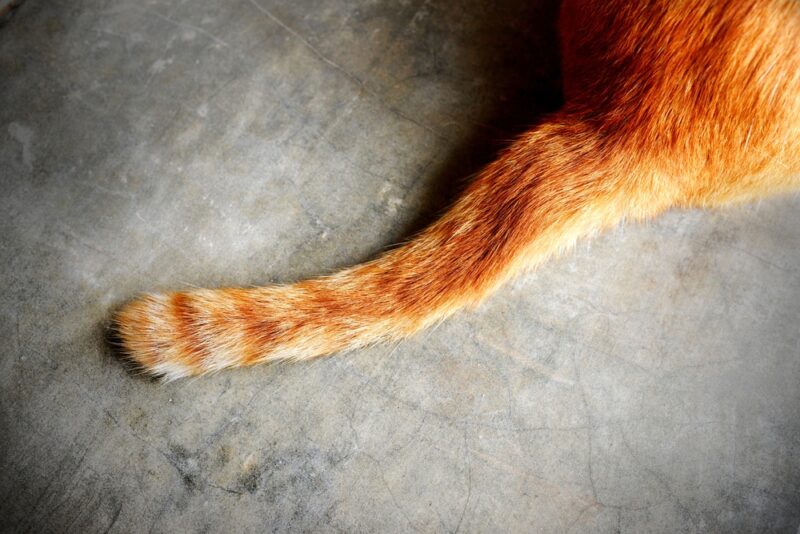
tail of a cat on vintage background

A cat’s tail is a fascinating and finely tuned structure adapted for survival in the wild, and yes, it has bones. These are called caudal vertebrae. Long-tailed cats can have anywhere from 19 to 23 bones in their tails. Short-tailed cats or those with no tails understandably don’t have as many vertebrae in their tails.

Your cat’s tail does more than simply tell you when your furry friend is feeling relaxed or annoyed. In this post, we share the basics of cat tail anatomy and cool facts about how tails function.

divider 2 cats

Cat Tail Anatomy Basics

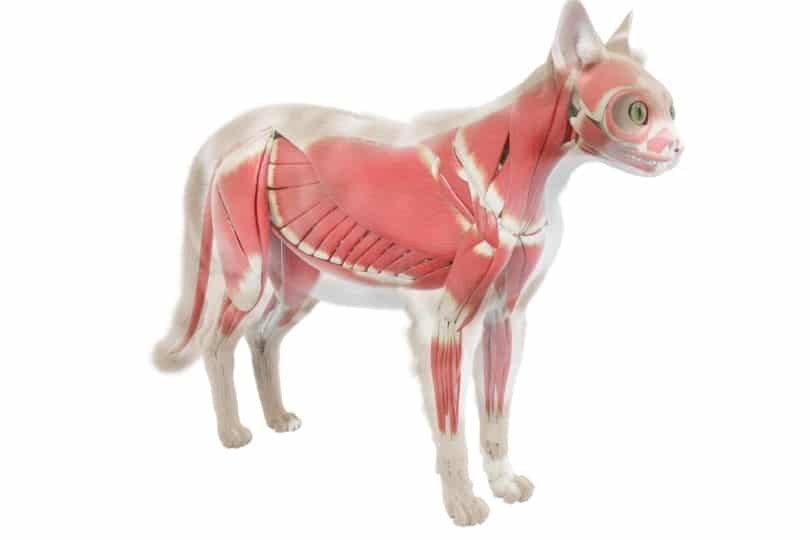
Cat Skeletal System
You are free to use this image but we do require you to link back to Catster.com for credit

A cat’s tail is made up of a combination of bones, nerves, blood vessels, and muscles. In a long-tailed cat, the tail contains up to 23 vertebrae, which are called caudal vertebrae. Comparatively, humans only have three to five caudal vertebrae, which are fused together to form the coccyx.

At the base of a cat’s tail, the vertebrae are at their largest, and they get smaller along the length of the tail toward the tip. The vertebrae that form the tail are an extension of the cat’s spine. In between the vertebrae are soft discs that enable flexibility of movement.

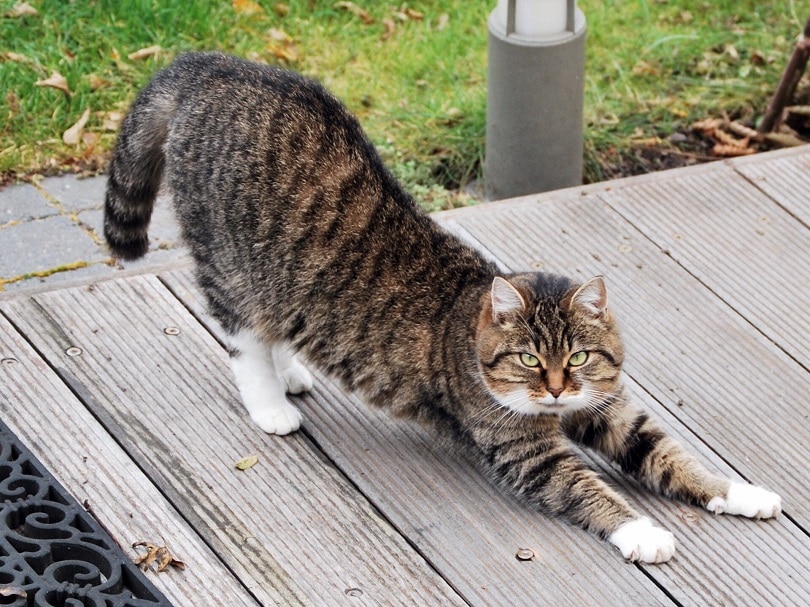
Anyone who’s observed a cat’s tail is well aware of how flexible it is, as it’s able to move in many directions effortlessly. This is due to the fact that unlike humans, all of a cat’s vertebrae (including those in their tail) are held together by muscles, not ligaments. This gives cats far more flexibility and enables them to bend their spine in an impressive arch (though this is also a popular yoga stretch for us!).

red cat arching its back
Image Credit: YULIYA Shustik, Shutterstock

divider 2 cats

The 4 Cat Tail Facts

If you’re curious about how your cat’s tail functions and the range of emotions it can express, here are some amazing cat tail facts.

1. Tail Pulling Is Dangerous

Since a cat’s tail connects to their spine, pulling it is extremely painful and dangerous for the cat. Doing it hard enough can cause permanent nerve damage. As such, you should never pick up a cat by their tail. Also, if you suspect that your cat is suffering from a tail injury, please see your vet.

If you need to speak with a vet but can't get to one, head over to PangoVet. It's an online service where you can talk to a vet online and get the advice you need for your pet — all at an affordable price!

PangoVet_Mention-in-Content for PangoVet2 save money


2. Cats’ Tails Help Them Balance

If you’ve ever spotted your cat effortlessly navigate a narrow fence and wondered how they manage it, it’s partly because their tail acts as a counterweight to help them stay upright. It also helps them make sharp turns without toppling over, which is important in the wild because it means cats can catch prey more effectively.


3. Tails Are Tools of Communication

Your kitty may not be able to verbally tell you something, but pay attention to their tail, as cats use it to convey a wide range of emotions. For example, if your cat’s tail is thumping on the ground and whipping back and forth, it may indicate that they’re irritated or in attack mode, so you might want to back off.

However, tail language on its own isn’t an indication of a cat’s state of mind and should be cautiously interpreted with the rest of their posture (the position of their ears, the sounds they’re making, their pupils, their body stance, and so on).

Cat chasing tail on horizontal scratching post
Image by: CarruthersCat, Shutterstock

4. Cats Can Balance Without Tails

Some cats, like Manx cats, are born tailless, and others must undergo amputation due to an injury. Cats born without tails don’t have any issues with balance. While those that lose their tails later in life will likely have some problems with balance and movement at first, as they heal, the cat should start to adapt to life without a tail.

divider 2 cats

Final Thoughts

To recap, cats do have bones in their tails. Long-tailed cats have up to 23 tail bones, which are also known as the caudal vertebrae. The tail is a truly intriguing part of a cat’s anatomy that serves a great number of purposes in terms of survival and communication. Damage to a cat’s tail can affect other areas of their body and cause some serious issues, so be sure to take special care of your kitty’s behind! If you suspect that your cat is suffering from a tail injury, please see your vet.


Featured Image Credit: italay, Shutterstock

Want content like this delivered to you?

Sign Up For Our Newsletter

News, insights, expert advice, and everything cat

* By submitting, you agree to our Terms & Conditions and Privacy & Cookies Policy.


How useful was this post?

Click on a star to rate (you can leave written feedback after clicking submit)

Help us improve Catster for pet parents!

Your feedback really matters.

What did you like about this post? Also how can we improve it?

Join the conversation

Leave a Reply

You’re very welcome to leave a comment or question. Please know that all comments must meet our community guidelines, and your email address will NOT be published. Let’s have a positive and constructive conversation.


Talk With A Vet Online

Peace of mind,
anywhere, anytime

Affordable vet advice

10 Pet-Friendly Hotels in Myrtle Beach, SC (2026 Update)

Myrtle Beach is a cool town that is great to visit. It has plenty to do, including a large beach, numerous attractions, manicured...

Chocolate Point vs Seal Point Siamese Cat: Key Differences (With Pictures)

A colorpoint cat is one that has light-colored fur with darker-colored ears, face, feet, and tail, which are referred to as the points...

Oregon Rex Cat: Info, Pictures, Traits & Facts

The Oregon Rex is an extinct breed of cat that was in America between the 1940s and 1970s. It began in 1944 after...

How to Get Your Cat to Cuddle: 5 Vet-Approved Tips for Better Bonding

It’s most cat owners’ dreams to have a cute and cuddly cat that sits on their laps and curls up with them in...

More related

Purebred vs Mixed Breed Cats: Pros, Cons & Which To Choose? (Vet-Verified Comparison Guide)

Are you in the process of bringing a new kitten into your home? If so, you know that there are countless questions that...

How to Tell If My Cat has a Fever: 10 Vet-Reviewed Signs

For us, it’s easy to tell if we have a fever by feeling our foreheads or using a thermometer. Unfortunately, it’s not as...

Cat Paw Pads: Vet-Verified Anatomy & Functions Explained (With Diagram)

While we know a lot about cats, some of their physiology and behavior remain astounding. We marvel at their excellent hunting ability and...

Why Cats Can’t Be Considered Low Maintenance: Vet-Verified Reasons

Dogs are very high-maintenance pets as, in addition to food, attention, and affection, they also need daily exercise and training. Some dogs, especially...

Keep reading

Can I Crate My Cat During the Day? Vet-Approved Tips & FAQ

If your cat gets into trouble when left home alone, you might be desperate for a solution, especially if they’re prone to destructive behaviors. Maybe you’ve even wondered if you can crate your cat during the day like a dog....

Grey cat fell asleep in crate

Why Is My Cat Not Losing Weight? Vet Approved Reasons & Advice

Weight control is critical for your cat—and you! If you’ve ever tried to shed a few pounds, you know how challenging it can be. Temptation is everywhere, and it’s not too different for your pet. However, the secret to losing...

veterinarian weighs an overweight pet on a scale

My Cat Has a Front Paw Limp, What’s Wrong? Vet Approved Advice

When you notice your cat limping or favoring a certain leg, it can trigger your alarm bells. The good news is that, in many cases, a limp is often temporary and may resolve on its own. In other cases, it...

cat sitting in park with one front leg lifted up

Is Your Cat Constipated? 12 Simple Remedies Vets Recommend Trying at Home

Few things worry cat parents more than when their kitty can’t go. Constipation is one of the most common digestive issues cats face — and one of the most uncomfortable. While some cases are mild and manageable at home, others...

cat outside the litter box

What Are Cats Scared Of? 8 Vet-Reviewed Feline Fears & How to Help 

Cats are highly attuned to their environment and are sticklers for routine. This sensitivity can make them easily startled by certain objects, sounds, and situations, and it all comes down to a cat’s natural instinct for self-preservation and unease surrounding...

scared cat hiding behind the drawer

How to Calm a Scared Kitten: 7 Vet-Reviewed Methods

Bringing home a new cat is a magical time for you, but have you ever stopped to think about how it might appear to your kitten? After all, they’ve just been carried into a strange new environment by an unknown...

scared kitten hiding

9 Best Cat Foods for Cats with Allergies in 2026 – Reviews & Top Picks

While food allergies are rare in cats, they can cause significant issues and discomfort for cats that are allergic to certain foods. It’s often challenging to find cat food that doesn’t irritate their skin or cause an upset stomach. When...

tabby cat eating from metal bowl

Mange Spreads Fast in Feral Colonies – Here’s How to Stop It

If you care for feral cats, or if you interact with them every so often, you likely already know how tough it can be to keep them healthy. When intense itching, hair loss, and scabby skin enter the picture, things...

Cat-with-clinical-sign-of-sarcoptic-mange-infection_