Why Do Cats Have Tails? Vet-Reviewed Science & Facts


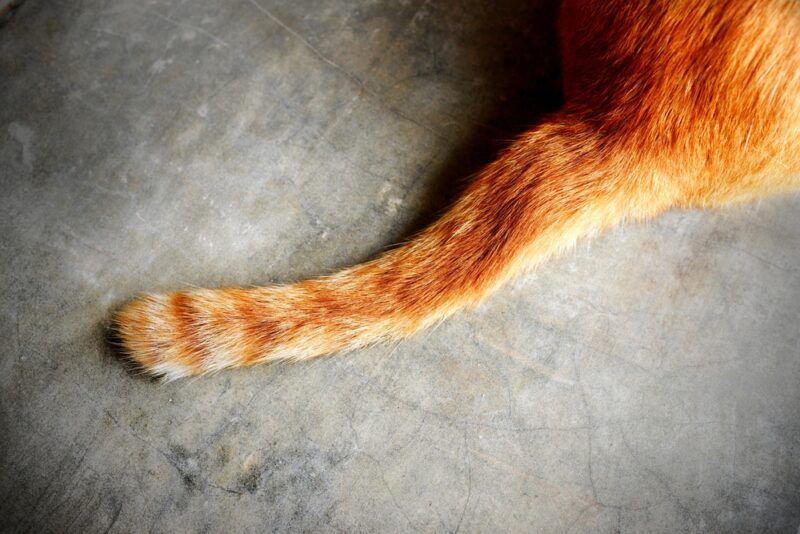
Cats move their tails in different positions when showing affection or communicating with humans or other cats. As a cat parent, you may have seen your feline rubbing their tail against your legs when asking for food. Some cats even stick their tails in their owners' faces to get attention or sleep with them.
A cat’s tail is crucial, as it helps them express their feelings to their owners and interact with other cats. But primarily, it enables these animals to maintain balance on different surfaces when walking, jumping, or hunting their prey.
As a pet owner, you must know what your cat tries to convey with different tail positions. Are they angry, scared, happy, or asking for food? You can understand all these things just by noticing the movement of their tail. Let’s learn how!

What Does a Cat’s Tail Do?
The use of a tail varies from cat to cat, but they’re primarily used for maintaining balance and agility. After all, these animals are always on the run—chasing a rat, playing with a cotton ball, or just wandering here and there. So, they need additional balance to jump, hunt their prey, and climb different objects smoothly.
The tail also helps cats counterbalance when walking through narrow spaces or rough terrains, such as bookshelves, hills, fences, or windows. Without the tail, felines probably wouldn’t have such agility and flexibility as they do.
What Does a Cat’s Tail Consist Of?
A cat’s tail is an extension of the spinal cord, containing vertebrae, muscles, blood cells, scent glands, and nerves. Here is how each element functions.
Vertebrae
The bones comprising the tail are known as caudal vertebrae. Typically, one tail has between 22 to 23 of these vertebrae. However, not every cat has the same number of vertebrae. Some cats lose their tails in an injury or trauma, while others are born without them, like Manx breeds. A few cat breeds also have very short tails due to fewer caudal vertebrae.
The base of a cat’s tail also contains other vertebrae to function appropriately, called the sacral vertebrae.

Nerves
The nerves in the cat’s tail help the animal feel and gather information from their surroundings. Since the tail is a continuation of the spinal cord, it has many nerves located inside it. These nerves pick signals and send them to the feline’s brain to help the animal react and interact with their surroundings instantly.
Muscles
Like humans, muscles control the tail’s movements in the felines. Each side of the tail has six muscles that help the tail move in various directions. Most of these movements are subconsciously done by a cat’s brain, as the tail needs to quickly move around as a counterbalance when a cat is ambushing its prey.

Blood Vessels
The tail also has multiple blood vessels from the feline’s circulatory system. You may have seen your vet extracting blood from your cat’s tail—that’s actually from these blood vessels. In fact, zookeepers train lions and tigers—the big cats—to let the volunteers draw blood from their tails.
Scent Glands
Lastly, a cat’s tails contain scent glands known as caudal glands, which help them leave marks in specific areas. This way, felines can claim their favorite spots as their territories.
The 6 Facts About a Cat’s Tail
A cat’s tail is not only expressive but functional in many ways. Check out these seven fascinating facts about a cat’s tail to be a more aware pet owner:
- One: A cat’s body comprises of 230 bones, and around 10% of them are in the tail.
- Two: Many cats have unusually small tails, measuring about 1 to 4 inches. These breeds include the Japanese Bobtail, Kurilian Bobtail, American Bobtail, Highlander, and Pixie Bob cats.
- Three: When a cat’s tail is in the air, it sometimes means the feline is inviting other cats to smell them.
- Four: Any injury to your cat’s tail can lead to permanent nerve damage, affecting muscle control and defecation. In fact, pulling the tail too harshly can also damage nerves. They may heal with time, but sometimes, the damage can be permanent.
- Five: Cats can survive fine without tails. Although their tails maintain the overall body balance, the feline can quickly learn to compensate for their amputated or lost tail in case of an injury. Many cat breeds are born with no tails. However, the lack of a tail doesn’t offer them any benefits over cats that do have a tail, and these cats perform worse on agility courses in experimental circumstances.
- Five: While some cats like petting and cuddling from their owners, others don’t like to be touched on their tails.

What Does the Position of Your Cat’s Tail Say?
You know cats move their tails in different positions, but what does each indicate? The tail movement says many things about what’s going on in the feline’s mind. While they primarily use their tails for communication, there is much more you need to know as a cat parent.
Below are some common movements that a cat’s tail makes to display a cat's emotions.

Tail Up
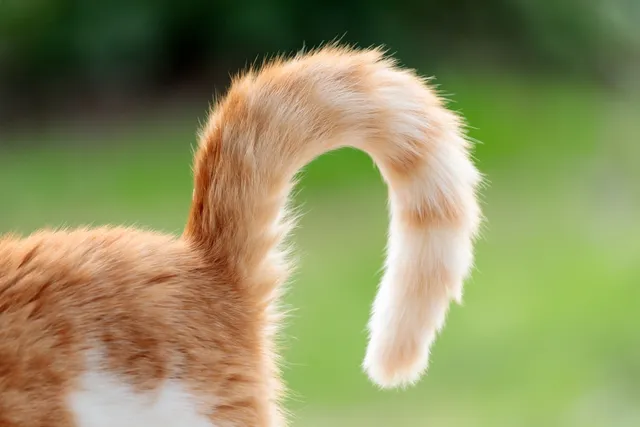
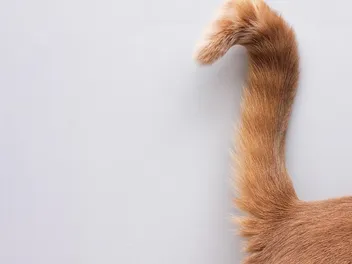
When your cat holds their tail upright, they feel confident and want to socialize with other living beings. You’ll likely see a little hook at their tail’s tip. This position can also show that your cat is hungry and asking to be fed.
Cats can also hold their tail upright when interacting with other cats. It indicates they’re inviting them to their abode for some playtime.
Tail Down
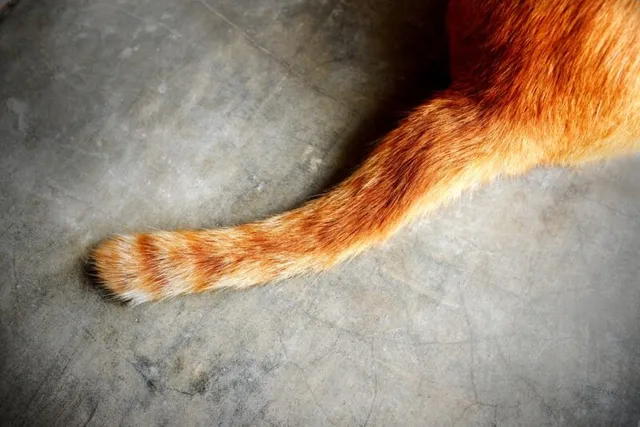
Cats usually keep their tails down or between their legs when nervous or aroused. In such situations, their tails become rigid with a flick at the end.
Your cat may also start walking low on the ground to find a spot to hide. It may not seem unusual, considering these animals usually walk with their tails down, but there is a distinction. When aroused or nervous, their tails are rigid instead of loose or relaxed.
Tail Thrashing
Stay miles away from your cat when they start thrashing their tails dramatically, especially in a side-to-side movement. This behavior shows that your feline is either angry or scared. They keep their tails low and rigid, accompanied by tight body language and continual staring eyes.
Cats thrashing their tails are more likely to show aggression. It’s challenging to identify whether your adorable pet is scared or angry. Thus, you can simply try to calm them down and keep your other pets away from the feline. You can’t predict their next move!

Tail Quiver
Cats hold their tails upright and start quivering near their owners when greeting them. This shows that they’re super happy with human presence. You can also call it positive arousal or excitement.
When unneutered cats move their tails upright, they also mark their territory with their scent glands. It could also be associated with their reproductive behavior.
Cats are intriguing animals who sometimes have odd interests and indulge in unusual behavior. Understanding them might be tough but providing a toy that fosters their instinctual needs and curiosities is simple.The Hepper Hi-Lo Cat Scratcher encourages playtime and offers a cat-appropriate place to scratch.
It’s unique 3-position design and cardboard scratch pad allow your cat to explore different levels, improves their health, satisfies natural feline impulses, and deters your cat from delving into places they should not. Show your cat how much you love and appreciate their quirks by gifting them the Hepper Hi-Lo Cat Scratcher.
At Catster, we’ve admired Hepper for many years, and decided to take a controlling ownership interest, so that we could benefit from the outstanding designs of this cool cat company!
Tail Flicking
While some cats quiver in excitement, some flick their tail’s end to show their playful mood. Your pet may accompany tail quivering with flicking when they’re positively aroused. The flicking will be super quick.
In this situation, try to spend more time with your furry friend and allow them to channel their energy freely.
Conclusion
A cat’s tail helps them maintain balance and agility on different surfaces. This body part is an extension of the spinal cord, consisting of blood vessels, up to 23 vertebrae, muscles, nerves, and scent glands. All these elements perform different functions for the feline.
However, not every cat has a tail, and some can survive after getting their tail amputated in an injury. Many cat breeds have relatively shorter tails. Despite the length, felines use their tails to communicate their feelings to their owners and invite other cats for playtime.
As a pet owner, you must learn about your cat’s tail movements to understand their needs and feelings. After all, you can’t comprehend their meows, right?
Sources
Featured Image Credit: italay, Shutterstock
Expert cat care, straight to your inbox
News, insights, and useful advice, delivered to you.

No spam — unsubscribe anytime.
By signing up, you agree to our Terms & Conditions and Privacy & Cookies Policy.
How useful was this post?
Click a star to rate. You can leave written feedback afterwards. (We read all feedback.)
Jeff is a pet parent who loves writing. He is a data privacy tech professional with 20 years of experience leading teams at various Fortune 100 startups. Jeff's hobby is photography.