Catster is reader-supported. When you buy via links on our site, we may earn an affiliate commission at no cost to you. Learn more.

Lifestyle

5 Fascinating Vet-Verified Cat Tail Facts You Need to Know (With Infographics)

By Christian Adams · Reviewed & fact-checked by Dr. Maja PlatisaVet Approved
Dr. Maja Platisa
Reviewed & Fact-Checked byDr. Maja PlatisaDVM MRCVS (Veterinarian)
Maja joined our team in March 2023 as one of our in-house veterinarians. She is passionate about animals and their health and loves to help the readers with any issues or questions they have regarding their four-legged friends and other animal companions. Her passion is small animal medicine and emergency work, while she also has a great interest in animal welfare.View authorThe information is current and up-to-date in accordance with the latest veterinarian research. Read about our vets
Share
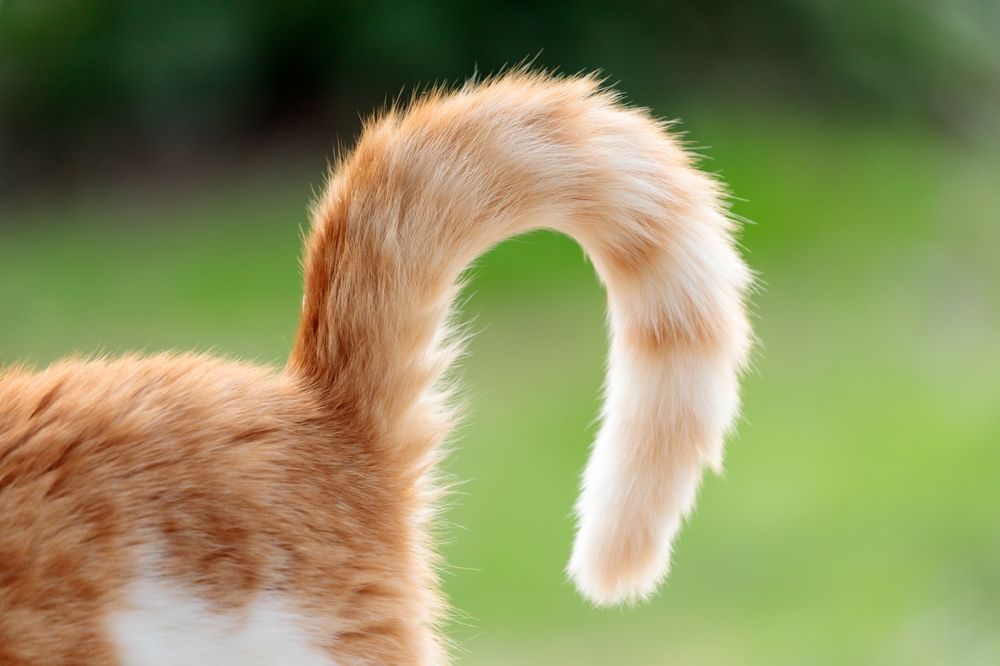
A-curled-cats-tail-close-up

While they’re not always as expressive or attention-grabbing as a dog’s tail, cat tails are no less vital to their social and physical functioning. We may not give them much consideration, but cat's tails perform essential roles for our kitties as much as they impart critical information to others. Let’s discover all we can learn from our pets with this breakdown of five interesting cat tail facts.

divider cats oct 2024

The 5 Fascinating Cat Tail Facts

1. Cat's Tails Are Crucial for Balance

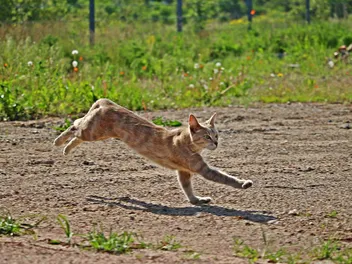
Offering far more than looks, the tail performs several jobs for cats. Chief among them is balance. A cat’s superior agility and climbing ability are due to the tail acting as a counterbalance and control for the cat’s center of mass while changing directions quickly, jumping, climbing, or adjusting to sudden shifts underfoot.

cat tail walking
Image Credit: Buenosia, Pexels

2. Not All Cats Have Tails

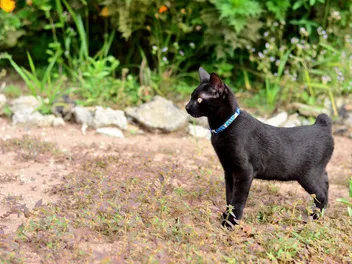
A bare rump is the first thing you’ll notice about a Manx cat, a native to the Isle of Man that may appear similar to a British Shorthair body type save for the lack of a tail.1 This characteristic can also occur in other cat breeds due to various genetic mutations. Despite the missing accessory, some of these cats can thrive and still show off the same spryness as tailed cats, including the uncanny righting reflex that allows them to land on their feet, but this will greatly depend on other possible spinal defects they may have.

Sadly, Manx are prone to severe spinal issues. The dominant genetic mutation causing the missing tail can also lead to painful spinal issues and fatal defects in kittens that inherit two copies of the gene from breeding two tailless cats.2

Tailless cats, even with only one copy of the mutated gene, that survive can suffer from Manx syndrome, a collection of painful lifelong problems, including spina bifida, incontinence, urine and fecal scalding, weakness, and partial paralysis. Due to the quality-of-life issues, many have raised ethical concerns about breeding these cats.

Manx calico cat no tail standing outside
Image by: PradaBrown, Shutterstock

3. Tails Are Valuable Communication Tools

Cats use their body language to communicate with other cats and their humans, and the tail is one of the vital non-verbal indicators for nearby cats, other animals, and people. One of the most recognizable signals is the tail-up display, sometimes with a hook at the tip, which is often a friendly gesture cats use when approaching others to show they're interested in socializing and playtime. If your cat is following you around with their tail up while meowing and chatting, they may be saying they want some food.

Common meanings behind various tail movements may include:

  • A quivering tail held up indicates excitement
  • A twitching tail may display irritation, frustration, or concentration while hunting
  • A heavy thumping and thrashing tail indicates annoyance or anger
  • A slow, swishing motion means intense focus, usually on some type of prey or a toy
  • A puffed-up or low tail tail show fear or defensiveness

Cats will pair tail movements with other cues, like ear positioning, to create more diverse and specific messages. Although cats have adapted their communication with their tails to suit people, owners must look at all their cat’s signals to understand their true feelings.

You are free to use this image but we do require you to link back to Catster.com for credit
Catster_Cat Tail Language_Negative Signs_Infographic_v1-4 FINAL_Mar 6 2024
You are free to use this image but we do require you to link back to Catster.com for credit

4. Cats Can Break Their Tails

Despite their flexibility, the incredible control cats show over their tails can leave many wondering: Do cat tails have bones? There are 20–23 caudal vertebrae lining up from the tail base, dwindling in size as they near the tip. Cats control the position and movement of their tail, assisted by six muscles running along either side of the tail.

Since their tails contain bones, cats can break them just as they would a leg. Limpness, swelling, wounds, and visible deformities like kinks can all be signs of a fracture. Breaks around the tail’s tip are generally easier to manage, while fractures near the base may come with more severe nerve damage.

Cat Skeletal System
You are free to use this image but we do require you to link back to Catster.com for credit

5. Cat Tail Injuries Can Be Debilitating

Although the vertebrae extend into the tail, the spinal cord ends in the far back of the lumbar area, although the nerves extending from it in the tail are really just a continuation of the spinal cord. Many issues, like bites, cuts, and infections, can heal quickly with appropriate veterinary care without causing anyneurological problems. Still, nerves extending into the tail can stretch or rupture from aggressive pulling on the tail or fractures near its base.

Signs of a nerve injury in the tail could include a drooping tail, lack of tail movement and sensation,urinary and fecal incontinence, lack of anal tone, and hind leg mobility issues. Cats may need a partial amputation following severe trauma, though many can lead normal lives afterward if the nerve damage isn’t permanent.

divider cat paw scratch oct 2024

Final Thoughts

Although we’ve evolved past them, tails play vital roles in the modern domestic cat’s physical, social, and emotional health. See what you can glean from your cat the next time they walk into the room. From head to tail, our pets constantly communicate, revealing plenty of subtle insights into their health and mood for anyone willing to pay attention.

Sources

Featured Image Credit: olivier.laurent.photos, Shutterstock

The Catster Newsletter

Expert cat care, straight to your inbox

News, insights, and useful advice, delivered to you.

No spam — unsubscribe anytime.

By signing up, you agree to our Terms & Conditions and Privacy & Cookies Policy.

Click a star to rate. You can leave written feedback afterwards. (We read all feedback.)

Christian Adams
Authored by

Christian Adams

Leave a Reply

You're very welcome to leave a comment or question. Please know that all comments must meet our community guidelines, and your email address will NOT be published. Let's have a positive and constructive conversation.

Why Do Cats Have Tails? Vet-Reviewed Science & Facts

Why Do Cats Have Tails? Vet-Reviewed Science & Facts

Cats move their tails in different positions when showing affection or communicating with humans or other cats. As a cat parent, you may have seen your feline…

Jeff Weishaupt
By Jeff Weishaupt ·
Do Cats Have Bones in Their Tails? Feline Anatomy Explained (Vet Verified)

Do Cats Have Bones in Their Tails? Feline Anatomy Explained (Vet Verified)

A cat’s tail is a fascinating and finely tuned structure adapted for survival in the wild, and yes, it has bones. These are called caudal vertebrae. Long-taile…

Kit Copson
By Kit Copson ·
How to Spot a Broken Cat Tail: 5 Vet-Reviewed Steps

How to Spot a Broken Cat Tail: 5 Vet-Reviewed Steps

Cats have very flexible tails, and you may even see them with “kinks” and strange angles. Usually, this doesn’t mean that the cat’s tail is broken. However, ca…

Kristin Hitchcock
By Kristin Hitchcock ·
Why Is My Cat’s Tail So Long? Our Vet Explains Tail Genetics, Function & FAQ

Why Is My Cat’s Tail So Long? Our Vet Explains Tail Genetics, Function & FAQ

If you’ve ever looked at your cat’s tail and wondered why it’s as long as it is, you’re not alone. Cat tails are fascinating for many reasons, including their…

Dr. Luqman Javed
By Dr. Luqman Javed ·

6 Common Cat Tail Types (With Pictures)

Cats are found in all sorts of coat colors, patterns, and body shapes. When it comes to pedigreed breeds, the Cat Fancier’s Association recognizes 44, while Th…

Lindsey Lawson
By Lindsey Lawson ·
6 Common Cat Tail Types (With Pictures)

Ever Wonder Why Your Cat’s Tail Is So Long? Here’s Why

Your cat just leaped onto the bookshelf, tail streaming behind them like a banner. As they settled in, their tail curls around their paws. You've probably neve…

Dan Seymour
By Dan Seymour ·
Ever Wonder Why Your Cat’s Tail Is So Long? Here’s Why

21 Fun & Vet-Reviewed Facts About Cats For Kids

Getting a new cat can be a lot of fun for the entire family, but it can be hard to know how you should behave around them if you're not familiar with them. Inv…

Ed Malaker
By Ed Malaker ·
21 Fun & Vet-Reviewed Facts About Cats For Kids

Why Are Cats So Flexible? Vet-Verified Facts & Reasons

Cats are amazing creatures capable of some fantastic feats of strength and agility. For example, did you know that a cat can jump up to nine times its height f…

Gregory Iacono
By Gregory Iacono ·
Why Are Cats So Flexible? Vet-Verified Facts & Reasons

Longest Cat Tail In The World: 2026 Record Holder

The record for longest tail belonging to a living domestic housecat belongs to Altair Cygnus Powers, a Maine Coon belonging to Dr. William Powers, a Michigan H…

Codee Chessher
By Codee Chessher ·
Longest Cat Tail In The World: 2026 Record Holder

Do Cats Always Land on Their Feet? Vet-Approved Science & Info

Most people have heard that cats have the ability to always land on their feet. Despite the popularity of this notion, is it true? Even though many things are…

Emma Stenhouse
By Emma Stenhouse ·
Do Cats Always Land on Their Feet? Vet-Approved Science & Info

6 Cat Breeds With No Tails (Vet-Reviewed Info With Pictures)

To some, it may seem impossible to imagine a cat with no tail. After all, it’s such an integral part of their communication. Think of a cat slowly swatting the…

Christian Adams
By Christian Adams ·
6 Cat Breeds With No Tails (Vet-Reviewed Info With Pictures)

The Catster Digital Magazine: Fall 2026 Issue

The Catster Magazine is back for fall! As a thank-you for being a subscriber, we're giving you FREE access to our Fall 2026 issue!

Amanda Lin
By Amanda Lin ·
The Catster Digital Magazine: Fall 2026 Issue

Love Cats? So Do We! Join the Catster Community

Stay informed with expert cat care insights delivered straight to your inbox! Discover professional guidance on feline behavior, feeding tips, trusted product picks, and much more.

You may opt-out at any time. View our Privacy Policy for more information.

The Catster site on a phone