Get

In Your Inbox

Catster is reader-supported. When you buy via links on our site, we may earn an affiliate commission at no cost to you. Learn more.

Do Cats Have Bones in Their Tails? Feline Anatomy Explained (Vet Verified)

Share

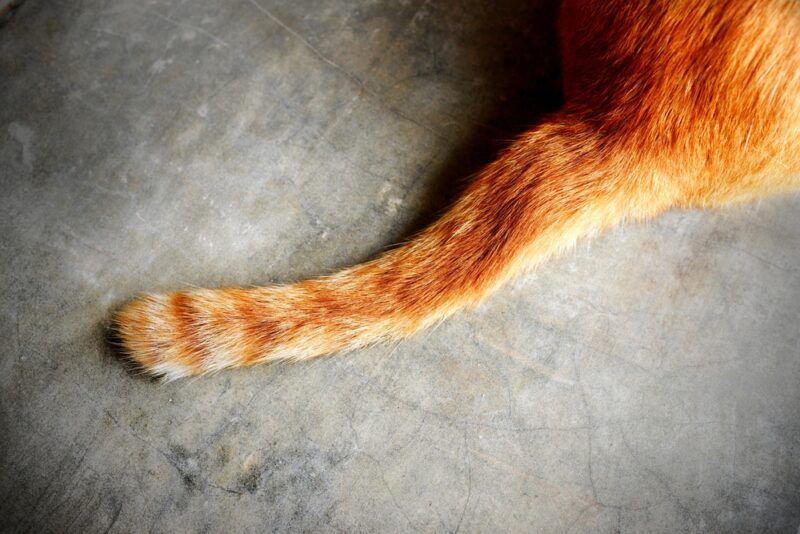
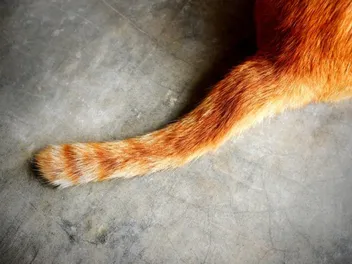
tail of a cat on vintage background

A cat’s tail is a fascinating and finely tuned structure adapted for survival in the wild, and yes, it has bones. These are called caudal vertebrae. Long-tailed cats can have anywhere from 19 to 23 bones in their tails. Short-tailed cats or those with no tails understandably don’t have as many vertebrae in their tails.

Your cat’s tail does more than simply tell you when your furry friend is feeling relaxed or annoyed. In this post, we share the basics of cat tail anatomy and cool facts about how tails function.

divider 2 cats

Cat Tail Anatomy Basics

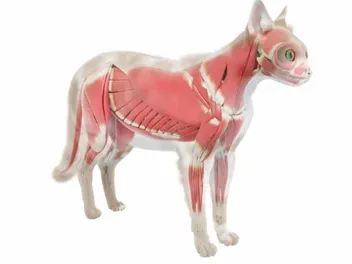
Cat Skeletal System
You are free to use this image but we do require you to link back to Catster.com for credit

A cat’s tail is made up of a combination of bones, nerves, blood vessels, and muscles. In a long-tailed cat, the tail contains up to 23 vertebrae, which are called caudal vertebrae. Comparatively, humans only have three to five caudal vertebrae, which are fused together to form the coccyx.

At the base of a cat’s tail, the vertebrae are at their largest, and they get smaller along the length of the tail toward the tip. The vertebrae that form the tail are an extension of the cat’s spine. In between the vertebrae are soft discs that enable flexibility of movement.

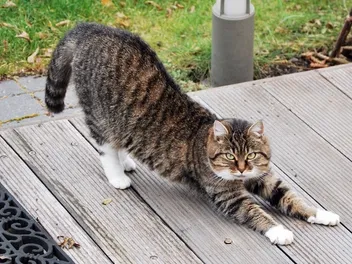
Anyone who’s observed a cat’s tail is well aware of how flexible it is, as it’s able to move in many directions effortlessly. This is due to the fact that unlike humans, all of a cat’s vertebrae (including those in their tail) are held together by muscles, not ligaments. This gives cats far more flexibility and enables them to bend their spine in an impressive arch (though this is also a popular yoga stretch for us!).

red cat arching its back
Image Credit: YULIYA Shustik, Shutterstock

divider 2 cats

The 4 Cat Tail Facts

If you’re curious about how your cat’s tail functions and the range of emotions it can express, here are some amazing cat tail facts.

1. Tail Pulling Is Dangerous

Since a cat’s tail connects to their spine, pulling it is extremely painful and dangerous for the cat. Doing it hard enough can cause permanent nerve damage. As such, you should never pick up a cat by their tail. Also, if you suspect that your cat is suffering from a tail injury, please see your vet.


2. Cats’ Tails Help Them Balance

If you’ve ever spotted your cat effortlessly navigate a narrow fence and wondered how they manage it, it’s partly because their tail acts as a counterweight to help them stay upright. It also helps them make sharp turns without toppling over, which is important in the wild because it means cats can catch prey more effectively.


3. Tails Are Tools of Communication

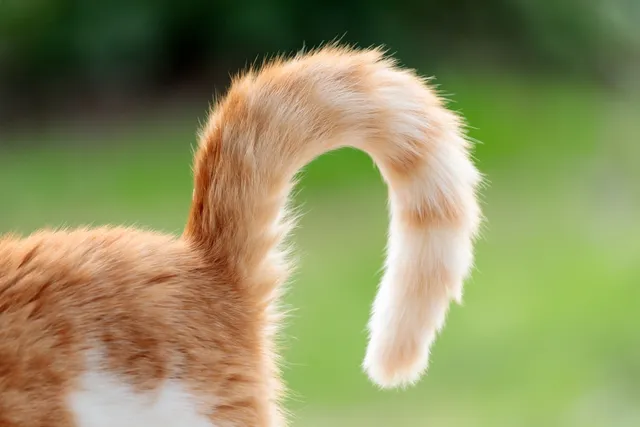
Your kitty may not be able to verbally tell you something, but pay attention to their tail, as cats use it to convey a wide range of emotions. For example, if your cat’s tail is thumping on the ground and whipping back and forth, it may indicate that they’re irritated or in attack mode, so you might want to back off.

However, tail language on its own isn’t an indication of a cat’s state of mind and should be cautiously interpreted with the rest of their posture (the position of their ears, the sounds they’re making, their pupils, their body stance, and so on).

Cat chasing tail on horizontal scratching post
Image by: CarruthersCat, Shutterstock

4. Cats Can Balance Without Tails

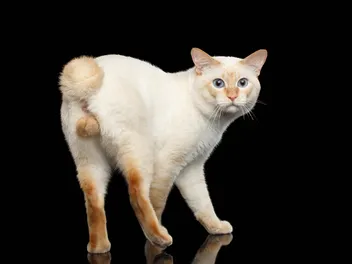
Some cats, like Manx cats, are born tailless, and others must undergo amputation due to an injury. Cats born without tails don’t have any issues with balance. While those that lose their tails later in life will likely have some problems with balance and movement at first, as they heal, the cat should start to adapt to life without a tail.

divider 2 cats

Final Thoughts

To recap, cats do have bones in their tails. Long-tailed cats have up to 23 tail bones, which are also known as the caudal vertebrae. The tail is a truly intriguing part of a cat’s anatomy that serves a great number of purposes in terms of survival and communication. Damage to a cat’s tail can affect other areas of their body and cause some serious issues, so be sure to take special care of your kitty’s behind! If you suspect that your cat is suffering from a tail injury, please see your vet.


Featured Image Credit: italay, Shutterstock

Want content like this delivered to you?

Sign Up For Our Newsletter

News, insights, expert advice, and everything cat

* By submitting, you agree to our Terms & Conditions and Privacy & Cookies Policy.


How useful was this post?

Click on a star to rate (you can leave written feedback after clicking submit)

Help us improve Catster for pet parents!

Your feedback really matters.

What did you like about this post? Also how can we improve it?

Join the conversation

Leave a Reply

You’re very welcome to leave a comment or question. Please know that all comments must meet our community guidelines, and your email address will NOT be published. Let’s have a positive and constructive conversation.


Catster's Digital Magazine is Back!

Vet-approved health & behavior advice

Real cat stories & community features

Weird Cat Behaviors That Actually Make Perfect Sense

We have been sharing our lives with cats for thousands of years, yet we still find ourselves genuinely stumped by what they get...

The Dream of Talking to Cats Just Got Closer to Becoming a Reality

If you’ve ever wished your cat could simply tell you what they wanted, you’re not alone. From the meow that wakes you before...

Kizzy: The Feline Princess With a Purpose

We were first introduced to Miss Kizzy after she won a licky-treat challenge hosted by Professor Fluffovich, our resident feline research specialist. While...

Chatting With Sally About Mission Meow & Helping Cat Rescue Organizations Collaborate | Chatty Cattys, Episode 24

In this episode of Catster’s podcast, Chatty Cattys, Nicole and Dr. Karyn sit down with Sally Williams, the founder of Mission Meow, for...

More related

Bugs on Kittens: Our Vet Explains How to Protect Them From These Nasties

Few people out there enjoy bugs crawling all over them, let alone all over their new kitten. Rather than treat the problem, it’s...

How to Clean Cat Paws: Vet-Approved Step-by-Step Guide

Cats are typically considered naturally clean creatures. However, that doesn’t mean that they don’t experience some poor hygiene problems, especially if they spend...

Pittsburgh Refrigerator Cat: The Myth Explained

Have you ever heard of the Pittsburgh refrigerator cat? If not, you’re certainly not alone. We hadn’t heard about it either. Don’t feel...

Do Ragdoll Cats Scratch Furniture? Vet-Verified Common Causes & Prevention Tips

Furniture scratching is a huge thorn in the side of cat parents everywhere. If you’re thinking of getting a Ragdoll and are wondering...

Keep reading

Ways to Discipline Your Cat: 5 Proven & Effective Methods (Vet-Verified)

Cats can be creative regarding the activities they enjoy, and their human companions don’t appreciate some of them. Cats sometimes scratch furniture to the point of destruction, jump on counters, and launch sneak attacks, which can lead pet parents to...

young man and brown tabby cat smell or looking each other

How to Tell if Your Cat Was Poisoned: 8 Vet-Reviewed Signs

If your cat is acting strange and exhibiting unusual behavior, it may be due to poisoning. Knowing the signs of poisoning will help you identify the problem in time and react accordingly. Of course, if you suspect your cat has...

vet checking up the cat

Is Vinegar Bad for Cats? Vet-Reviewed Safety Concerns

Vinegar is one of the wonder products many regularly use for different purposes such as cleaning. So, is vinegar bad for cats? Vinegar is incredibly acidic and can irritate their mucous membranes if consumed undiluted. However, if it’s mixed with...

Is Vinegar Bad for Cats

Average Cost of a Vet Visit for Cats in 2026: How Much You Can Expect To Pay

Cats require our love, care, an enriched environment to express their natural behaviors, and high-quality food to thrive. They also need to see the veterinarian regularly to ensure their health stays strong throughout their life. It is easy to tabulate...

Vet doctor holds cat in his arms and talking to the owner

How to Help a Cat Give Birth: 5 Vet-Reviewed Tips

Giving birth can be a very stressful situation for cats. We are used to seeing cats being independent animals, but even for them, giving birth is a challenging task. This period is very stressful for cats and also the owners....

mother cat gave birth to kitten

9 Best Tartar Control Products for Cats in 2026 – Reviews & Top Picks

Every cat owner knows that their feline companion can spend hours upon hours grooming themselves, but one area they can’t clean is their teeth. Dental hygiene is paramount to the health of your cat, and the smell of your cat’s...

tabby maine coon teeth brushing

Why Do Cats Chirp? 3 Vet-Reviewed Reasons for This Behavior

Cats are known for meowing and hissing, but they can also chirp. This is a communication noise that most people are not aware of unless they have experience as cat parents. Chirping, or chirruping, is a normal noise for cats...

cat outside the window

Is My Cat Stressed or Sick? Vet-Reviewed Signs & Ways to Help

Cats can struggle with change just as any species, so in times of stress, it is important to be more cautious of their needs. This is tough since cats don’t always outright tell us what is wrong and what we...

tired sick cat lying on bed

Love Cats? So Do We! Join the Catster Community

Stay informed with expert pet care insights delivered straight to your inbox! Discover professional guidance on animal behavior, feeding tips, trusted product picks, and much more.


Sign up for the Catster Email Newsletter

Stay informed with expert pet care insights delivered straight to your inbox! Discover professional guidance on animal behavior, feeding tips, trusted product picks, and much more.