Get

In Your Inbox

Catster is reader-supported. When you buy via links on our site, we may earn an affiliate commission at no cost to you. Learn more.

Do Cats Breathe Faster When They Purr? Vet-Verified Facts & FAQ

Share

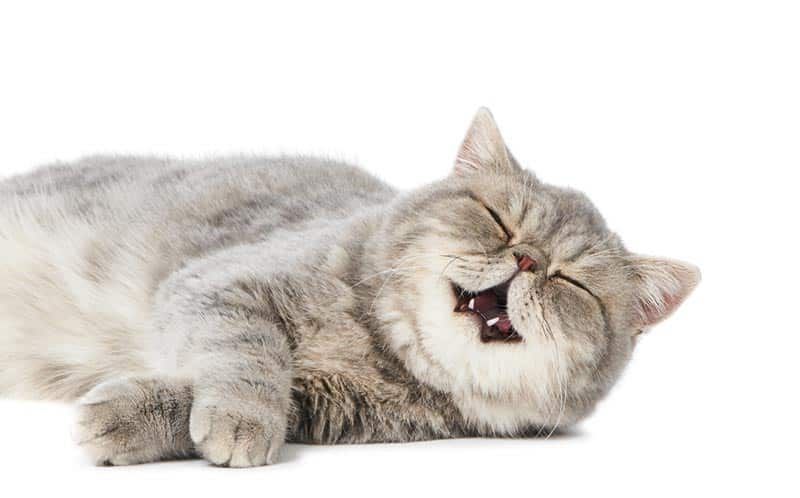
british shorthair cat yawning and purring

Felines have an impressive arsenal of vocalizations, and purring is one of the most adored. A cat’s purr is a comforting sound to many people and is instantly recognizable as a sound of contentment. When cats purr, it’s usually a long and slow sound; however, cats can sometimes breathe faster when they purr, which is normally not a happy purr at all.

divider 3 paws

Purring and Breathing Fast in Cats

Cats can purr when they’re in pain, and the purring of a cat in pain is usually fast and short, matching the cat’s faster breath. Tachypnea is the technical term for faster breathing than usual and is one of the ways cats can express pain. If your cat is purring and breathing rapidly, they could be anxious or in pain.

A cat’s body language can also help you identify the type of purr. For example, a cat lying on their back and purring, with their eyes half closed and tail relaxed, usually means they’re very content. Cats in pain may purr quickly and hunch over or hide.

Flattened ears and dilated pupils are also signs of pain in cats, but always check with your veterinarian when in doubt. Some researchers suggest cats purr when in pain to try and comfort themselves, as a child would with their blanket, in a self-soothing way.

Other reasons cats purr when they’re in pain include:

  • For physical pain relief
  • To control their breathing as tachypnea often occurs with painful conditions
  • To speed up healing

Amazingly, cats purr at a very specific frequency. They purr at 25Hz to 100Hz, which is associated with increased bone and tissue growth to promote healing.

bengal cat being stroked by man's hand and purring
Image Credit: PHOTOCREO Michal Bednarek, Shutterstock

divider 3 paws

Is My Cat Purring or Breathing Heavily?

If you’re concerned about your cat breathing heavily, you can first look at their body language. If your cat is happy and relaxed, listen to them closely; if you hear a slow, continuous rumbling, your cat is purring.

A cat’s rumbling purr is air traveling through the larynx (the voice box) to produce a sound, which is why purring continues when the cat breathes in and out. Usually, heavy breathing will not be rumbling, but it might sound different than normal. Signs that your cat is breathing heavily or is having trouble breathing include:

Signs that your cat is having trouble breathing include:
  • Breathing from their tummy (known as abdominal breathing)
  • Breathing with their mouth open
  • Blue gums (known as cyanosis)
  • Crackling sounds or wheezing

If your cat displays any of these signs, you must take them to a vet immediately since a cat who cannot breathe is in a very serious and dangerous condition.

If you need to speak with a vet but can't get to one, head over to PangoVet. It's an online service where you can talk to a vet online and get the advice you need for your pet — all at an affordable price!

Preventative wellness PGV mention keep cat healthy Preventative wellness PGV mention keep cat healthy mobile

How Do I Know if My Cat Is Breathing Too Fast?

To check that your cat is breathing normally, or if you’re worried about your cat’s breathing, you can set a timer on your phone or use a watch to count down 30 seconds. Then, count how many breaths your cat takes in 30 seconds (or a minute if they’ll stay still that long). This should only be done when they aren’t purring and are at rest, not playing.

If your cat takes more than 30 breaths in one minute (15 breaths in 30 seconds) when resting, they are experiencing tachypnea and are breathing too quickly. If your cat is breathing too quickly but isn’t experiencing signs of struggling to breathe, take the same measurements over the next 30 minutes.

If your cat is still breathing too fast or is experiencing signs of struggling to breathe, such as having a blue tongue or gums or breathing with their mouth open, contact your veterinarian immediately. Cats can sometimes breathe too quickly if they are stressed or have recently been exercising, but if your cat is breathing too fast at rest, they’re having trouble breathing.

divider 3 paws

Final thoughts

Cats often purr when they breathe in and out. Air is breathed in and taken through the larynx, vibrating against the vocal cords and making a deep purring sound. Cats normally purr when they’re content or excited, and it’s usually a low and slow sound. However, if your cat is breathing quickly and the purring is rapid, it may mean that your cat is in pain and should be examined by your veterinarian.


Featured Image Credit: Dmitry Kalinovsky, Shutterstock

Want content like this delivered to you?

Sign Up For Our Newsletter

News, insights, expert advice, and everything cat

* By submitting, you agree to our Terms & Conditions and Privacy & Cookies Policy.


How useful was this post?

Click on a star to rate (you can leave written feedback after clicking submit)

Help us improve Catster for pet parents!

Your feedback really matters.

What did you like about this post? Also how can we improve it?

Join the conversation

Leave a Reply

You’re very welcome to leave a comment or question. Please know that all comments must meet our community guidelines, and your email address will NOT be published. Let’s have a positive and constructive conversation.


Talk With A Vet Online

Peace of mind,
anywhere, anytime

Affordable vet advice

Do Cats Cause Schizophrenia? Scientists Find a Link – Here’s What It Means

Being a fierce advocate (and occasional recipient of) mental health support and awareness, the term ‘crazy’ is not one I like to fling...

One in 100 Cats Gets Diabetes – Here’s How to Catch It Early

One in every 100 cats develops diabetes.1 That’s not a rare, unlucky condition reserved for cats with obvious health problems. It’s common enough...

Dramatic Rescue Turns Into Dramatic Reunion

What started as a routine call for the RSPCA became a heroic, five-hour rescue featuring one trapped and traumatized cat, an emotional family...

Ask Dr. Paola – Help! How Do I Know if it’s Ear Mites! (May 4, 2026)

Welcome to our “Ask Dr. Paola” series, where every Monday we bring expert advice straight from Dr. Paola Cuevas (MVZ) to help our...

More related

Can Cats Eat Cream Cheese? Vet-Reviewed Nutrition Facts & FAQ

Most cats love dairy foods. The stereotypical cat loves milk, though it may upset most actual cats’ stomachs. But what about cream cheese?...

My Cat is Leaving Blood Drops Everywhere, What’s Wrong?

Anytime your cat bleeds, it is concerning. Often, bleeding that continues for more than a few minutes is a sign that your cat...

Newborn Kitten Care 101: Guide & Care Sheet for a Healthy Kitty

The thought of looking after an adorable newborn kitten can be appealing, but it’s incredibly hard work! Whether you find yourself helping your...

Sudden Blindness in Cats: 4 Vet Approved Possible Causes and What to Do

Cats are known for having great peripheral and night vision. They spot things like mice and flies much easier than we humans can....

Keep reading

Why Is My Cat’s Nose Dripping When Purring? 3 Vet-Reviewed Reasons & FAQ

Have you ever been quietly petting a purring cat, only for them to stick a wet nose in your hand? The first time it happens, this might seem like a random coincidence. But if your cat’s nose is often wet...

person cleaning cat's nose

11 Best Cat Shampoos for Shedding – 2026 Reviews & Top Picks

Shedding can be a big pain to deal with, especially if your cat spends most or all its time indoors. Cats just love to leave a little sprinkling of their hair everywhere they go, and it can be normal. However,...

shorthair cat in pink towel shampoo bubble bathroom

Can Cats Get Ringworm? Vet-Approved Facts & FAQ

Ringworm is a skin infection that affects humans, cats, and other animals. So, yes, cats can get ringworm. It’s one of the most common skin conditions found in household pets and, if caught early, is easy to treat and typically...

scottish fold cat checked by vet

Can Cats Get Lyme Disease? Vet Approved Facts, Treatment & Prevention Tips

Owning a cat, especially one that enjoys roaming outdoors, comes with the concern of seasonal ticks. As a human, finding a tick firmly attached to your skin is concerning, and it evokes immediate worry about tick bite fever and Lyme...

removed tick from cat

Is Your Cat Your Bathroom Buddy? 7 Vet-Reviewed Reasons Why Cats Sit At Your Feet

If you’re a cat owner, you know how much your feline loves to join you in the bathroom. Your cat often interrupts what feels like a private and quiet time, leaving you with the question, “Why does my cat sit...

light grey cat with rubber ducky bath bathroom shampoo

Is Vaseline Safe for Cat Paws? Vet Reviewed Facts & FAQ

Vaseline is a type of petroleum jelly that is commonly used as a method to trap moisture in the skin. It is also used for makeup removal and has been shown to help small cuts and wounds during the healing...

Catster_Is Vaseline Safe for Cat Paws

Are Sunflowers Toxic to Cats? Vet-Verified Facts & Safety Tips

Bright, colorful, and towering far above most of our heads in their natural growth state, sunflowers are the kind of bloom that makes a statement. If you’re a cat owner, however, you’re probably wondering if you can make a statement...

Catster_Are Sunflowers Toxic to Cats

How to Retrain a Cat to Use a Litter Box: 13 Vet-Approved Tips

Inappropriate elimination can be difficult to deal with, resulting in ruined belongings and strained relations between cats and their favorite people. It’s one of the most commonly reported behavioral problems in cats. Litter box issues are often caused by stress,...

Ginger cat in blue litter box

Love Cats? So Do We! Join the Catster Community

Stay informed with expert pet care insights delivered straight to your inbox! Discover professional guidance on animal behavior, feeding tips, trusted product picks, and much more.


Sign up for the Catster Email Newsletter

Stay informed with expert pet care insights delivered straight to your inbox! Discover professional guidance on animal behavior, feeding tips, trusted product picks, and much more.