Why Is My Cat’s Tail So Long? Our Vet Explains Tail Genetics, Function & FAQ

In this article
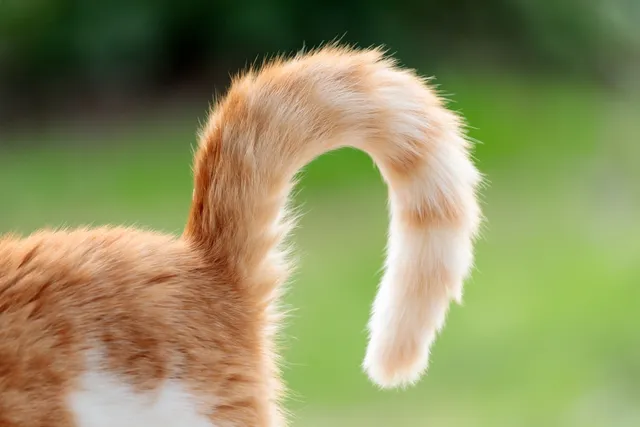
If you’ve ever looked at your cat’s tail and wondered why it’s as long as it is, you’re not alone. Cat tails are fascinating for many reasons, including their length - some cats sport tails that are up to 12 inches (30 cm) long!
Cat tails serve several useful functions, but their length is determined by your cat’s genetics, which we’ll explore in detail in this article. Read on to learn more about your cat’s tail.

Why Is My Cat’s Tail So Long?
The length of your cat’s tail is almost entirely determined by their genetics 1. Specifically, a gene known as the T-gene seems to play a very large role in determining the length of your cat’s tail. Another factor is likely the transcription protein Brachyury.
Though the genetics of a cat’s tail is complex, in the simplest of terms, mutations or alterations along the T-gene results in a tail that’s shorter, a mere stump, or no tail at all (as in some breeds, such as the Manx).
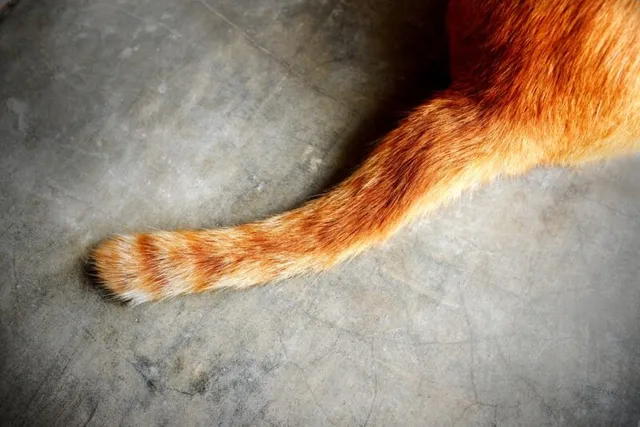
Conversely, a normal T-gene will result in a long tail, averaging anywhere from 8 to 12 inches!

What Do Cats Use Their Tail For?
A cat’s tail is not just for show - it also serves several purposes.
1. Balance
The reputation cats have for being agile and always landing on their feet when they fall is in part due to their tail. Tails act like a fifth limb for cats, and it’s responsible for maintaining great coordination when jumping and climbing. When cats walk a narrow beam, their tail acts as a counterbalance of sorts. Likewise, when cats fall, their tail helps rotate them to the correct orientation before they land.
That doesn’t mean cats with short tails or no tails are clumsy because there’s more to a cat’s balance than just a tail. A cat’s sensitive inner ear can determine when they are off-balance and will quickly readjust. Though the tail is involved in feats of balance, it isn’t the sole component that ensures a cat’s balance.

2. Communication
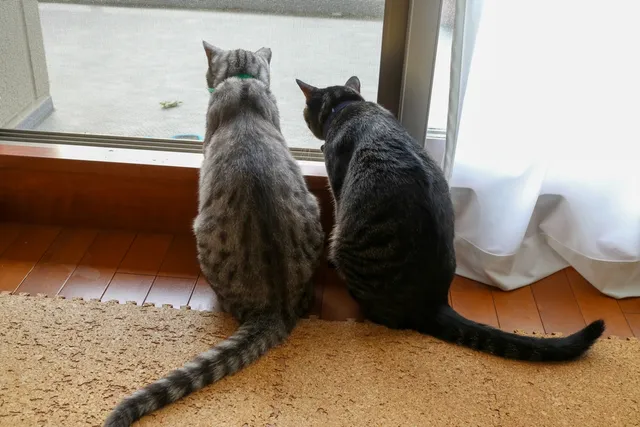
Cats are thought to be much more subtle about what they’re feeling than dogs. But an excellent insight into their innermost thoughts is their tails. Cats communicate in various ways, from growling, yowling, hissing, meowing, and chirping, but their tails give even more clues. For example, a tucked-in, stiff tail suggests that your cat feels fearful or uncertain, while an upright tail communicates that your cat is happy. Often, the tail works in conjunction with other forms of body language.

3. Hunting
If your cat is currently curled up next to you, imagining them as a wild animal chasing down their next meal is a challenge. However, that is precisely what their tails help with. Hunting requires decisive, quick, and balanced action. Tails also keep your cat balanced when they pounce; without it, they may struggle to make rapid turns during a high-speed chase.

Frequently Asked Questions
What Breeds of Cats Typically Have Long Tails?
Cats that generally have long tails include:
The average length of a cat’s tail is around 8-12 inches, and the current record holder for the world’s longest cat tail is held by a Maine Coon called Altair Cygnus Powers, whose tail is 16.07 inches long. The title belonged to Altair’s half-brother Cygnus Regulus Powers in 2018, and his tail was a whopping 17.58 inches!

What Breeds of Cats Typically Have Short Tails?
There are many breeds with bobbed tails or no tails at all, and while much rarer than cats with longer tails, they're only growing in popularity.
Cats with short tails include:
The breeding of these cats and breeds remains somewhat controversial. The lack of a tail doesn’t significantly impact their quality of life. However, lacking a tail doesn’t offer them any benefit over their long-tailed counterparts.
Can Cats Live Without Tails?
If a cat’s tail is injured beyond salvation, a veterinarian may recommend its amputation. Such cats will learn to adapt to the loss. However, that doesn’t mean that tail injuries should ever be overlooked. You should always avoid pulling a cat's tail, which can cause damage. The common signs exhibited after the injury include pain, blood clots, bowel blockages, and even neurological problems where the cat feels intense sensations near the tail and will bite and injure it.

Conclusion
There are many reasons cats have long tails and many ways they use them! It provides a cat with balance, the ability to communicate, and aids in pursuit of prey. That doesn’t mean cats with shorter tails live shorter lives, however. Several breeds have bobbed tails or no tails, and they’re just fine. Nonetheless, the breeding of such breeds and cats remains controversial, as the lack of a tail doesn’t offer these cats any benefits over their long-tailed counterparts.
You might also like: Why Is My Cat So Clumsy? Cerebellar Hypoplasia Explained (Vet Answer)
Sources
Featured Image Credit: italay, Shutterstock
Expert cat care, straight to your inbox
News, insights, and useful advice, delivered to you.

No spam — unsubscribe anytime.
By signing up, you agree to our Terms & Conditions and Privacy & Cookies Policy.
How useful was this post?
Click a star to rate. You can leave written feedback afterwards. (We read all feedback.)
Dr. Luqman Javed DVM (Veterinarian)
Dr. Luqman (also known as Dr. Lucky) grew up with an immense passion for animals of all kinds. By becoming a veterinarian, he turned his childhood dream into reality. Now, his goals are focused on providing help to cats all around the world by helping to cat owners understand their feline friends better to ensure the best quality of life for them. His passions are wildlife, exotic pets, pet owner education, and animal welfare. He graduated with his DVM from the Universiti Putra Malaysia in 2020. He has worked with a variety of animal species and has decades of personal experience with keeping many different types of exotic pets, such as turtles, hamsters, freshwater fish, chickens, songbirds, and parrots (and he has extensive skills in training parrots, too).