Get

In Your Inbox

Catster is reader-supported. When you buy via links on our site, we may earn an affiliate commission at no cost to you. Learn more.

Hard Lump on Cat’s Lower Jaw: Causes & Care

Cat with a bad jaw

If a cat pet parent were to find a lump on their cat’s lower jaw, they are likely to be very concerned. While there could be various causes or medical issues present, having the cat seen promptly allows for the extent of the issue to be determined and for an attempt at diagnosis and potential treatment to be made.

In this article, we’ll explore some of the potential causes of such a lump, and some recommended temporary care tips while awaiting having your cat seen by their doctor.

divider cat faces oct 2024

A Word on the Lower Jaw

The jaw itself consists of upper and lower bones that form the framework of the mouth entrance, and which hold the teeth in place. In addition, the jaw bones, coupled with the surrounding temporomandibular joint, allow for movement to open and close the jaw as well as for the grabbing and handling of food. In mammals, the lower jawbone can also be referred to as the mandible.

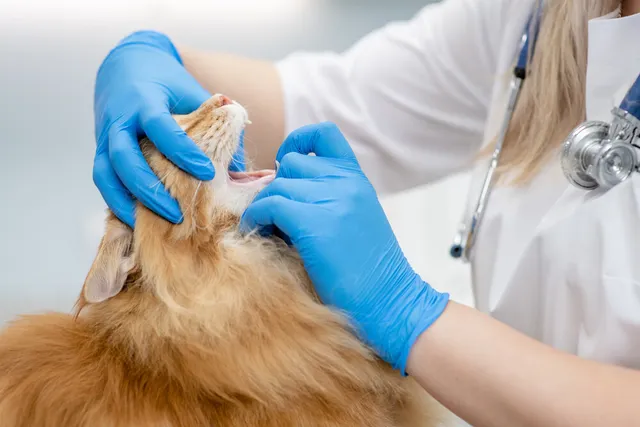
To a pet parent, “a lump on the jaw” may mean one thing, but to the veterinarian, it will prompt more investigation to determine exactly where it is and how far it may extend. Is it cutaneous (on the skin) nearby or directly over the area of the jaw? Is it bony (literally on the bone of the jaw)? Is it within or in between the jaw bones? Close to, but not exactly on the jawbone? Is it facing the inside of the mouth or on the exterior surface of the face? Is it towards the front tip of the jaw or the back?

As you can see, the lower jawbone can actually encompass many areas, and vets need to define it as accurately as possible to help in the next steps.

cat with open mouth and teeth
Image Credit: birgl, Pixabay

divider cat faces oct 2024

Causes of a Hard Lump on the Jaw

Let’s get into what some different causes of a lump on the lower jaw could be. While not an exhaustive list, these are some important and potential categories.

1. Infection

tired or sick cat
Image Credit: Kginger, Shutterstock

An infection could be on or in an area of the jawbone itself. It could be a bone infection from bacteria or fungi and is termed osteomyelitis. An abscess, which is an area of walled-off infection that typically contains pus can also be responsible. It is not uncommon to see a tooth root abscess or a rotten tooth in this area. In addition, an abscess could also be from a bite or scratch in an altercation with another animal.

Care tips:
If your cat is afflicted with an area of infection, it will likely be swollen and painful. It is important to NOT give any medication to a cat without the direction of a veterinarian. Human medicine that helps decrease pain and inflammation (such as acetaminophen, ibuprofen, aspirin, etc.) can make a cat more ill and may even be fatal.

If a cat is in pain, allowing them a low-stress, comfortable, and quiet place to be until they can be seen is best.

Switching food quickly can cause an upset gastrointestinal (GI) tract so if they already eat canned food, you should continue to offer this. If they normally eat dry food, pre-moistening it in warm water or some low-sodium chicken broth may help soften it and make it less painful to eat than hard food.

Get in touch with a veterinarian for guidance and advice on the best course of action.


2. Enlarged Lymph Nodes

Submandibular (under the mandible) lymph nodes are present in an area just underneath the jawbone of a cat. There is one on the left side and one on the right. If one (or both) are enlarged, this could be due to various reasons such as inflammation, infection, or tumor cells.

Care tips:

While waiting for your cat’s appointment, pay attention to any noted health changes so this can be relayed to the veterinarian. Signs such as when the lump was first noticed, if any weight loss or loss of appetite are present, as well as weakness or pain can all be helpful. Allow your pet to do as much as they are comfortable with if they are not feeling well.


3. Cyst

domestic striped kitten with a sad face feels sick
Image Credit: Julia Cherk, Shutterstock

A cyst is a non-cancerous sac or lump that contains liquid and/or solid materials. This may be from body secretions (such as sebum, a substance made from oily wax) or the breakdown of cells. They are often small and round in size, and there are various types including true cysts, sebaceous cysts, follicular cysts, etc. While they are most often harmless, in some circumstances, they may need to be surgically removed.

Care tips:

Try to keep your cat from bothering or scratching at this area as much as possible so it is less likely to bleed or get infected. If they are bothered by it, a proper fitting cone of shame (Elizabethan collar) may temporarily come in handy.


4. Granuloma

This is a firm mass of immune system cells that accrue over time due to inflammation. The grouping of immune cells functions to wall off something that the body views as harmful which could include a foreign object, bacteria, etc.

In cats, there is a condition called the feline eosinophilic granuloma complex (EGC) that can consist of three different reaction patterns that are most often thought to be associated with allergic hypersensitivity. Only one of the three patterns, called an eosinophilic granuloma, is an actual granuloma. It can be found across the body, but one common area is inside the mouth.

Care tips:

Even if the cat is in pain, please do not give medication to them without consulting a veterinarian. As discussed, if feeding dry food, one can mix warm water with kibble to decrease potential pain from eating hard food. The source of the granuloma will need to be found before treatment can be tailored to the cause.


5. Tumor

Hand petting old sick brown striped sad senior cat
Image Credit: catinrocket, Shutterstock

Some kinds of cancer can be more commonly seen within or around the jawbone. In fact, for cats, the oral cavity is the fourth most common area where cancer is seen.  Depending on the type, some tumors may primarily affect or secondarily invade bone.

Some tumor types in this area could include:
  • Squamous cell carcinoma: This is the most common and consists of more than 75% of all oral tumors. It forms on the tissues around the teeth or underneath the tongue.
  • Fibrosarcoma: These are the 2nd most common oral tumor in cats.
  • Oral melanoma: This is an aggressive cancer that occurs in the mouth, is invasive to bone, and can metastasize quickly.
  • Osteosarcoma: This type of cancer is of the bone and while not very commonly seen in the bones of the jaw/mouth, is still possible.
  • Lymphoma (LSA): While there are various forms possible, peripheral nodal LSA is one type that takes place in a lymph node, chain of nodes, or lymph nodes throughout the body.
Care tips:

Without sampling and looking at the cells under the microscope, there is no way to know for sure if the lump is cancerous, and if so, the type of tumor. If it is a tumor, the smaller it is, the easier it will be for removal or therapy and overall treatment. Once oral cancer reaches a certain point, removal may no longer be an option, and remaining care may focus on attempting to delay tumor growth and/or hospice care.

Therefore, regularly inspecting for physical changes in your cat, including in their mouth if they will let you safely, may allow for the process of earlier diagnosis and treatment.

divider cat faces oct 2024

Common Signs

Some common signs of a lump on (or around the jaw) that may be seen include oral pain, becoming “head shy” which is not wanting to be touched on the head, very bad breath, drooling, loss of teeth, facial swelling, decreased appetite or difficulty eating, and lymph node enlargement.

If your cat shows signs of the symptoms above or you suspect they might be suffering from underlying health issues, you should contact your vet.

Diagnosis and Treatment

A thorough oral exam and full physical exam of your cat will help the veterinarian formulate a list of potential diagnoses. To start the process of confirming a diagnosis, this may begin with a fine needle aspiration (FNA), which uses a small needle to take a sampling of the cells to be observed under the microscope. Further testing may be indicated such as with radiographs (X-rays) or a biopsy (larger sample of tissue to be examined under the microscope). In some instances, further care from specialists, such as a veterinary surgeon or oncologist, may be utilized. 

Treatment of the lump will depend on the exact cause. If a tooth is infected, it will need to be removed. An abscess is often cleaned out very well before medications are started. If there is an infection, bacteria will be treated with antibiotics and a fungal infection with antifungals. In most instances, medication for pain and inflammation will be needed. Other types of diagnoses may need surgery with or without chemotherapy and/or radiation.

divider cat faces oct 2024

Conclusion

As we have learned, a lump on your cat’s jaw could have a variety of medical implications which range from minor to very serious. If a lump on the jaw is observed, receiving veterinary medical attention quickly can help your cat not only relieve their pain and discomfort but in some cases, also have a higher chance of resolving the medical issue.

Thus, it is vital to contact your veterinarian promptly if you ever encounter a lump of this kind on your cat.


Featured Image Credit: zeelbervarg, Shutterstock

Want content like this delivered to you?

Sign Up For Our Newsletter

News, insights, expert advice, and everything cat

* By submitting, you agree to our Terms & Conditions and Privacy & Cookies Policy.


How useful was this post?

Click on a star to rate (you can leave written feedback after clicking submit)

Help us improve Catster for pet parents!

Your feedback really matters.

What did you like about this post? Also how can we improve it?

Join the conversation

Leave a Reply

You’re very welcome to leave a comment or question. Please know that all comments must meet our community guidelines, and your email address will NOT be published. Let’s have a positive and constructive conversation.


Talk With A Vet Online

Peace of mind,
anywhere, anytime

Affordable vet advice

National Foster A Pet Month 2026: When & What Is It?

National Foster a Pet Month is a month-long celebration in June. This campaign encourages people to open their homes to animals in need....

EveryCat Health Foundation Honored Recipient of Cat Writers’ Association Annual Fundraiser in 2024

EveryCat Health Foundation has been honored with the November 10th Donation Award from the Cat Writers’ Association, in conjunction with the CWA’s 30th...

Burmese Cat Health Problems: 14 Vet-Verified Issues

Bringing a cat into your home is always a fun and exciting prospect, but it also involves learning a lot about your new...

73 Adorable Bombay Cat Names – Unique & Fun ideas

For centuries, many cat owners have wondered what it would be like to have a big cat living in their home. There’s something...

More related

Cat Cake Recipes: 5 Vet-Approved Homemade Treats

What’s more festive or celebratory than a decadent cake? We can’t imagine a birthday or holiday without one, and sharing these moments with...

Why Is My Cat Vomiting Blood? Our Vet Explains 10 Possible Causes

Occasional vomiting by a cat is not necessarily an issue, but a cat throwing up blood is a sign of a health problem...

12 Vet-Approved Homemade Cat Treat Recipes (With Instructions)

We all like to over-indulge once in a while, and sometimes, we would like to indulge our cats as well. Most cats are...

Having a (Not So) Blast on the Fourth of July: Dr. Lauren’s Tips

Hi, I’m Dr. Lauren! Read my introduction to learn more about me and my two adventurous cats, Pancake and Tiller. When the 4th...

Keep reading

Do Cats Get Embarrassed in the Same Way Humans Do? Vet-Reviewed Feline Behaviour

Embarrassment is a very human emotion that we experience on a number of occasions, whether you walk out of a bathroom with toilet paper on your shoe or slip on stage at your graduation. Oftentimes, we see our cats do...

shy cat in bucket

What Is High-Rise Syndrome? Cat Balcony Safety Explained

Cats have a way of turning a clumsy fall into a graceful landing by hitting the ground on all fours with their dignity well intact. While it’s true that they have a natural ability to position themselves during a fall...

cat sitting on the roof

Treating Heartworm Disease in Cats: Can It Be Cured? Vet-Approved Info

Finding out your cat may have heartworm can be a shock, although the diagnosis may be quite challenging to establish. Heartworms are parasites that live inside the heart and large blood vessels, causing it to function incorrectly and even stop...

bengal cat and vet

Can Cats Be Gay, Bisexual, or Lesbian? Vet Reviewed Feline Sexuality Facts

Some of the behaviors our pets exhibit mimic our own, but many of their quirks seem strange. It’s difficult to interpret a feline’s behavior when you relate their actions to those of humans. One of the most common questions people...

two gay cats

Why Do Cats Like Wet Hair? 9 Vet-Reviewed Reasons

Cats do a lot of things that we consider a bit strange. How many cat owners have woken up in the middle of the night to find their cat staring at a spot on the wall and there’s nothing there?...

a woman holding a cat that's licking its mouth

Senior Cat Grooming: Vet Approved Facts & Tips

Felines are fastidious creatures. They love to be clean and spend much of each day grooming themselves. As cats age, they sometimes have trouble grooming those hard-to-reach places. Older felines can have trouble contorting into the needed position to reach...

man brushing norwegian forest cat

10 Natural Home Remedies for Cats With Fleas (Vet-Verified)

Fleas can be a real pest to deal with once your cat picks them up, and if left untreated, fleas can become very dangerous for pets, leading to anemia and spreading disease. While humans aren’t primary hosts for fleas, that...

grey cat scratching itself indoors

4 Vet-Reviewed Natural Home Remedies for Blood in Cat Stool

Since cats normally do their business in the same place, it can be easy to tell when something is amiss. Changes to your cat’s stool or urine are usually simple to see in a box full of litter. Noticing these...

Veterinary placing a catheter_Studio Peace_shutterstock

Love Cats? So Do We! Join the Catster Community

Stay informed with expert pet care insights delivered straight to your inbox! Discover professional guidance on animal behavior, feeding tips, trusted product picks, and much more.


Sign up for the Catster Email Newsletter

Stay informed with expert pet care insights delivered straight to your inbox! Discover professional guidance on animal behavior, feeding tips, trusted product picks, and much more.